By Enver Memishaj
Part One
Memorie.al / Many families who, with devotion and love for their homeland and freedom, gave everything they could in very difficult times were covered with the dust of oblivion during the communist dictatorship. One of these families that should be remembered and honored is that of Numan Lepenica. Numani was born in Lepenicë, Vlorë, in 1892, and completed his higher education in Istanbul. He served his country for 32 years, from 1912, as an officer in Ismail Qemali’s government, was wounded in the Vlora War of 1920, served as mayor and sub-prefect until December 31, 1944, and like his friend Ali Asllani, died without a pension, in misery. Numani married for love the teacher Zenep, daughter of Mustafa Xhomo, a fallen bey from Leskovik, and granddaughter of the Vlora family.
His three daughters – Tefta, Afërdita, and Elisabeta – following their parents’ example, became activists as fighters for the advancement of Albanian women and as freedom fighters against the fascist occupier. They were imprisoned, interned, and met a tragic end. Today, from that famous and respected family, only one daughter remains, Donata. It is a patriotic and cultural duty to shed light on the civic and patriotic activity of the three Lepenica sisters.
TEFTA LEPENICA
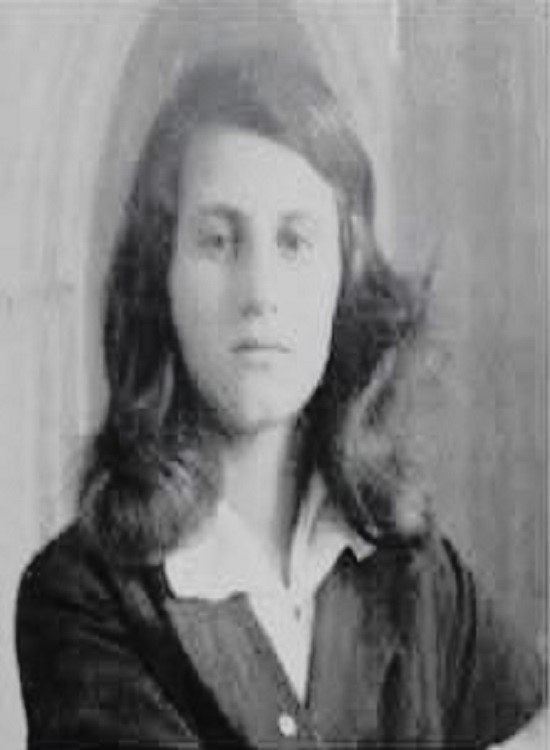
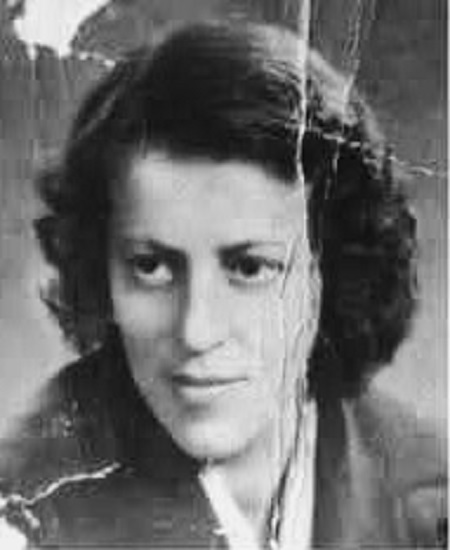
Tefta was born in Vlorë on April 28, 1917. She won the competition to attend the “Nana Mbretëneshë” (Queen Mother) Women’s Institute. During her studies in Tirana, she fell in love with Emin Selenica from Korça, a relationship that was crowned with marriage on December 27, 1934, as recorded in the Civil Registry.
Marriage did not prevent her from continuing school. With strong will, she graduated in the 1936-1937 school year, with high results, from the high school branch.
In the library of the Lepenica sisters, we were able to find a postcard on the back of which was written: “Donated to Tefta Lepenica, ‘Nana Mbretëneshë’ Women’s Institute, for good grades.” Below on the postcard it notes: “Always behave well towards animals…”
From this postcard and other oral sources, we learn that Tefta was an excellent student. Alongside her diploma, Tefta also mastered the Italian language very well, while in the family she had acquired basic knowledge of Turkish, French, and Greek from her parents.
As a sign of remembrance and honor for those girls who became standard-bearers of progress and the fight for freedom, we mention the graduates of this school year:
High school branch: Musine Kokalari, Vera Bogdo, Agllaia Harito, Tefta Lepenica, Qamuran Toptani, in the autumn session.
Normal school branch: Gjylsyme Dervishi, Liri Poshi, Margarita Nosi, Pullumbe Libohova, Eleni Toroshani, Ganije Bejko, Ganimet Gjilani, Gliqeria Koça, Gjenovefa Bojaxhi, Mukadez Serezi, in the autumn session.
On the occasion of the graduation of the first matriculation class of the “Nana Mbretëneshë” Institute, the contemporary press wrote:
“If today we have secondary schools that honor us, the ‘Nana Mbretëneshë’ Institute is in the first rank. Our country greatly needed an enlightening and educational shelter for the rising female generation. And that need was fulfilled with the opening of this Institute, which for four years has worked tirelessly for the education of over 500 Albanian girls…!
It has been proven that the Albanian girl is capable of working just like other women of the civilized world. The desire and will of the Albanian girl for progressive enlightenment have been clearly seen.” (Magazine “Diana”, No. 32, July 1937, p. 32).
After the occupation of Albania by Fascist Italy, all three Lepenica sisters – Tefta, Afërdita, and Elisabeta – thanks to family tradition and the example of their parents, found themselves in the front line of resistance and the fight for freedom from the very first days. Their house in the “Lirim” neighborhood, together with that of Aleksandra Premti, etc., their neighbor, was turned into bases of the freedom struggle.
In July 1939, Tefta, together with Viktori Gjikondi, a veteran of the Anti-Fascist Movement in Vlorë, were assigned to accompany Albanian children going to Italian camps.
The two friends continued to make unceasing propaganda against fascist occupation, but fascism – just like communism later – had agents in every cell of society.
Thus, fascist agents managed to uncover the anti-fascist activity of these two girls. The Federation of Combatants in Brindisi, on July 7, 1939, wrote to the fascist Giovanni Giro, Inspector in Tirana:
“Referring to the telegraphic communication of comrade Bianchi, two teacher-interpreters of the camp, Mrs. Tefta Lepenica and Mrs. Viktori Gjikondi, appeared yesterday.
According to the instructions of comrade Poli, whom I telephoned, I propose their immediate repatriation for the following reasons: They have shown little enthusiasm for their arrival in Brindisi, speaking with one of my collaborators, they expressed themselves as follows:
We were satisfied with King Zog (the mask-and-coward King), because he was the expression of a free and independent state.
We do not understand how Italy has taken away the freedom of one million Albanians, who want to live free.
When the Republic of Venice had good trade relations with Albania, it was not this Italy of today that invades small states.
You Italians know your history as you have been taught it in your books. Our history – we will teach it to you, the true history that is known internationally.
We are nostalgic for Albania, which for us remains our beautiful homeland.
We came to Italy for a reward of 400 liras and to have the opportunity to buy some dress or other items.
All the other teachers were sent by force.
We want to be free, especially in the evenings for entertainment.
I consider it necessary to note that one of the two has claimed to be the daughter of the mayor of Vlorë.
Please take urgent measures to return the two teachers who are in Brindisi to their country. Likewise, the other two teachers – one is Bulgarian and does not know a word of Italian, while the other knows little Italian.”
Federal Secretary
Franko Fedele Bozi
(AQSH, F. 161, V. 1939, D. 975, f. 1)
It was not difficult for the fascists to immediately verify that it was about the mayor, Numan Lepenica, Tefta’s father, against whom they would also take revenge. To the above document, on July 8, 1939, the Fascist Party of Albania, Central Directorate, Tirana, replies: “Reply of Francesco Jacomoni, Lieutenant General of the King-Emperor, Tirana.
The Albanian teachers Tefta Lepenica and Viktori Gjikondi who accompany the children to the colonies of the Brindisi Federation have manifested anti-Italian feelings; moreover, they expressed themselves at a moment when the organ of the National Fascist Party is lovingly caring for the little Albanian guests.
The behavior of the two Albanian teachers, as appears from the report of the Brindisi Federation, is unacceptable, and I necessarily request their prompt dismissal from the service they perform. In such bad elements, malicious spirit is combined with obscurity.
While protecting our service, we take advantage of the work of political and moral renewal, and with great trust and great enthusiasm we embrace the cooperation between Albanians and Italians.
The two aforementioned teachers in the colony of the Brindisi Federation will be replaced by others that I will reserve the right to designate.”
Inspector P.N.F.
Giovanni Giro
(AQSH, F. 261, V. 1939, D. 975, f. 2-3)
The Secretary to the Lieutenant General has placed this note for S. Ernest Koliqi: “The report sent on July 8, 1939, by the P.N.F. inspector, sent for information by E.V., reinforces the idea that the two Albanian teachers, Tefta Lepenica and Viktori Gjikondi, who have demonstrated incompatibility with the new situation, be dismissed from service. I am grateful to E.V. if he will inform us in due time regarding the matter.”
Secretary to the Lieutenant General
(AQSH, F. 261, V. 1939, D. 975, f. 6)
The Minister of Education, Ernest Koliqi, on July 13, 1939, responds to the fascist concerns: “With regret I have received notification regarding your document of July 8, 1939. The companions Tefta Lepenica and Viktoria Gjokondi are not teachers, but merely former students of the ‘Nana e Skënderbeut’ (Skanderbeg’s Mother) Women’s Institute in Tirana, where they completed high school in the 1938-1939 school year.
I have taken note that any eventual request of theirs for work or scholarship should not be taken into consideration. The aforementioned persons were sent quickly from Vlorë to replace two other companions who had fallen ill.”
Minister Ernest Koliqi
(AQSH, F. 261, V. 1939, D. 975, f. 5)
The persecution by the fascist authorities continues. On July 24, 1939, regarding the Albanian teachers Tefta Lepenica and Viktori Gjikondi, we also find this information: “Valuable informants report that the Albanian teachers have manifested such an attitude toward the situation that it was sufficient for their repatriation…! It is also in continuation… precautionary measures for their dismissal.”
Francesco Jacomoni
(AQSH, F. 261, V. 1939, D. 975, f.7)
The year 1939 had come black for Albanians, but especially for those who found themselves in the front line of resistance and the fight against fascist occupation. Tefta’s father, Numan Lepenica, the mayor, who had been active with anti-fascist circles, was dismissed from his job on October 10, 1939.
Tefta was repatriated from Italy, with a note that she should not be employed in the state administration and should not be allowed with a scholarship to attend university in Italy, as I cited above the decision of Minister of Education Ernest Koliqi.
Those girls who completed the high school branch at the “Nana Mbretëneshë” Institute, which the fascists renamed “Nana e Skënderbeut,” had the right to pursue university studies in Europe.
But Tefta, because of her anti-fascist stance and that of her family, could not pursue studies in Italy; this is the reason why her father sought another path to educate his daughter.
She managed to register for the competition at the University of Zagreb, for pharmacy. Tefta won the competition, followed the studies, and graduated as a pharmacist.
We lack information about the time she spent studying in Zagreb. She must have graduated in 1944, and after returning to Albania, with the help of her father’s friends, she opened a pharmacy in Durrës. The communists who had come to power looked with suspicion at the daughter of a high official of Zog’s “anti-popular” regime.
Thus, she worked under difficult conditions, and around 1947 (?), she was found poisoned, at the age of 30, without having started a family and without enjoying life, in circumstances that remained unexplained.
It is an opportunity to make a comparison between the fascists and the communists: Tefta, for her anti-fascist opinions, was only repatriated from Italy. Her sister Afërdita, as we will see below, for the same opinions – but now against the communists – in 1950, at the age of 24, was tried, and the prosecutor requested the death penalty, but the court “mercifully” gave her only 10 years in prison! / Memorie.al