
Part One
Memorie.al / The CIA have shown the great role that the Soviet Union had in communist Albania. In several documents “Top Secret” but declassified for years, it is shown that the USSR built several important military bases, especially in the South of the country. There, the submarines that Moscow had on Sazan Island and in the Bay of Vlorë are detailed, as well as the air bases, such as those of Rinas, Kuçova, etc. Then a panorama of political developments is given, where the dismissal of the Minister of Defense Beqir Balluku in the summer of 1974, from all functions in the army and party, is mentioned.
July 1961
Soviet Activities in the Albanian Army
Albania’s rugged mountains are being turned by the Soviets into a “Red Gibraltar” in the middle of the Mediterranean. Since Yugoslavia’s expulsion from the Cominform communist community, great importance has been given to Albania by the USSR. They are equipping the Albanian army with modern means and have established naval and missile bases in Albania.
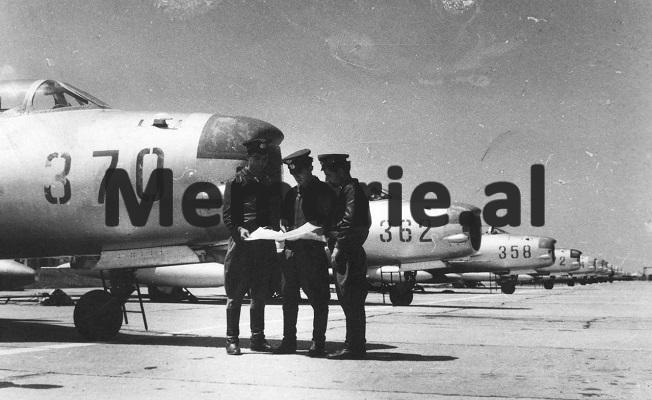
Soviet engineers and technicians have been working in the country for years and have modernized the bases. They now control seven air bases and five submarine bases. The air base of Rinas near Tirana, Devolli and Diranova near Berat, Ergiri in Gjirokastër, Delvina and Aulona near Vlorë, and Ishmi, a village near Tirana.
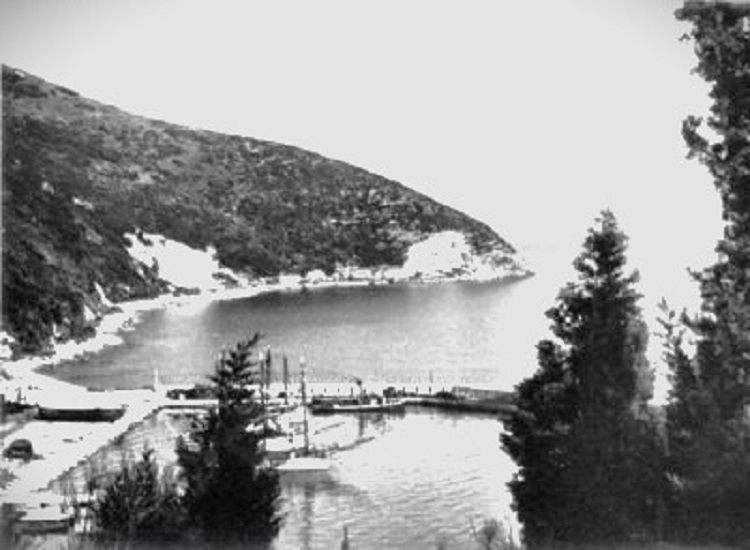
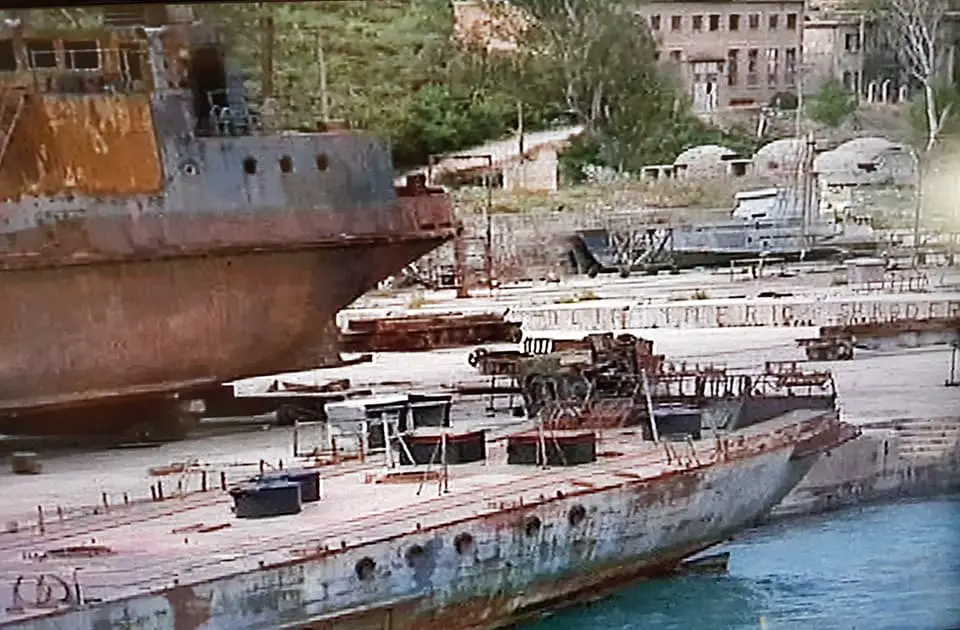
Four naval bases have been established around Vlorë. One of them is at Cape Linguetta, northwest of the Bay of Vlorë, two bases are located in the Bay of Vlorë, and one on Sazan Island. Soviet submarines are believed to be deployed at these bases. Albania regained Sazan Island after World War II.
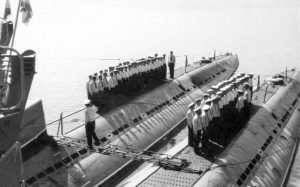
The Soviets realized its strategic importance and began building facilities for the placement of submarines. It is believed that about twelve underwater berths for submarines have been built on Sazan Island, while after the Suez Canal crisis; it was decided to build five more. Four underground fuel depots have been built, while about 12 submarines are currently stationed on the island.
The last three submarines came here during the visit of the Soviet fleet. Sazan Island has also been fortified with heavy artillery placed on rails. Civilians are not allowed there, and ships are not allowed to pass near the island, as the area is strictly controlled by the Soviets. The oil produced in Kuçova comes to Vlorë via a pipeline network.
The Soviets have begun construction of an oil refinery, as part of building the complete support infrastructure for the Sazan naval base. The Russian naval fleet at Sazan has as its target the U.S. Sixth Fleet and its support ships. Six of the Russian submarines deployed at Sazan have been observed following the Sixth Fleet and its supply ships.
They are “W”-class submarines with a cruising range of up to 5,000 miles without resupply needs, meaning they can easily sail from the Aegean to the Mediterranean and the African coasts. The Soviets are also capable of sending their submarines to Vlorë in disassembled form, to then assemble them there.
More than 400 Albanian workers and Russian experts work on assembling Soviet submarines. In recent years, it has been observed that some of the submarines are being built under secrecy measures at the Vlorë base. Other reports say that in the tunnels of the base, a large number of submarine parts ready for assembly are believed to have been stored.
Air Bases
The Soviets have at least six air bases in Albania and at least seventy-five MIG 21 fighter jets. A seventh Soviet air base is being built in Ishëm near Tirana. The Soviet personnel, about 4,000 military and technical staff, are supplied with regular air and sea shipments from the ports of Burgas and Constanța. The MIG 21 aircraft are reported to make regular patrols, and two aircraft from the squadrons are always in the air. The Soviets demand 24-hour air security.
Their patrols focus on the coasts of Albania and against known naval and aerial targets. The Soviets have completed the installations of two missile units and have begun construction of a third ballistic missile site. The launchers have a medium range of 2,500 km. The launch sites are located near Tirana, and their existence is a closely guarded secret. Recently, the number of Russian MIG 19 aircraft deployed in Albania has greatly increased.
Naval Forces
Albania’s navy has been reinforced with the addition of two warships from Russia. For the moment, their Soviet personnel have not yet been replaced. The Soviets have promised to bring three more warships for Albania. Soviet fishing vessels equipped with radars and electronic antennas are conducting hydrographic surveys at several points in the Mediterranean Sea.
At the same time, these ships patrol the Mediterranean and keep the U.S. Sixth Fleet under surveillance. Russian fishing vessels are showing great attention in tracking and surveilling the Sixth Fleet and are performing many other secret operations besides map-making. The Soviets have reinforced the Albanian army with heavy weapons and the latest military electronic equipment.
Considerable activity has been noted among the Soviet military mission and technicians in Albania. The goal of the USSR’s expenditures and efforts in Albania is to enable the control of European military forces off the North African coast, in the North Atlantic area, and in Western Europe.
November 1975
Albanian leader Enver Hoxha appears to be continuing attacks and oversight of the country’s intellectuals and bureaucrats. Mahmut Bakalli, president of the League of Communists of Kosovo in neighboring Yugoslavia, said there had been “great political shifts in Albania’s administration.”
Bakalli, who is closer to events in Albania than people outside it can be, said the attacks on intellectuals come as a result of Hoxha’s fear of pro-Soviet tendencies among some officials in Tirana, and that the shifts are still continuing in the government and in the country’s economic spheres.
Reports of purges of officials in Albania have now reached the European media. Tirana’s silence on the dismissals further increases speculation from abroad, but it seems clear that they are linked to the dismissal of Defense Minister Beqir Balluku in the summer of 1974.
His departure occurred amid growing signs of clashes within the party between the hard-line communists in Albania and in foreign policy, and those advocating a more moderate stance.
Bakalli seemed convinced that this summer’s purges stemmed from the debate over economic planning and foreign trade. Two of the purged officials were the minister and deputy minister of trade. Bakalli said that Albania’s need for capital would force Tirana to look toward the West, but so far there have been no signs that Hoxha and his regime are interested in this.
Tirana continues to maintain its stoic line of refusing cooperation with Moscow. While in Moscow, this year’s military parade in Red Square did not include the large missile vehicles usually seen in the past.
The U.S. observed two full rehearsals of the parade and we noted only half the equipment and none of the large vehicles seen in previous years. The rehearsals usually match the main parade itself clearly, although it has happened that in the annual November 7 parade, other equipment not seen during the rehearsals has been presented.
If the large equipment has been eliminated from the parade, this may indicate that the Kremlin seeks to lower the profile of the celebrations and the display of force, which is in line with the current “peace” program since the Helsinki Conference.
Last year, the closing civilian part of the parade was suddenly canceled, officially due to bad weather, but most likely to protect the health of the elderly Soviet leaders on the podium. Hence, the dominance of its military part brought condemnation from the Western press and consequently closer surveillance of this year’s parade.
But perhaps for this year’s reductions in military displays, there may also have been less important reasons, such as protecting the boulevard roads that have recently been paved. / Memorie.al