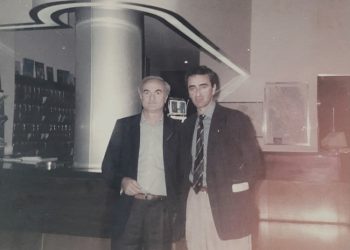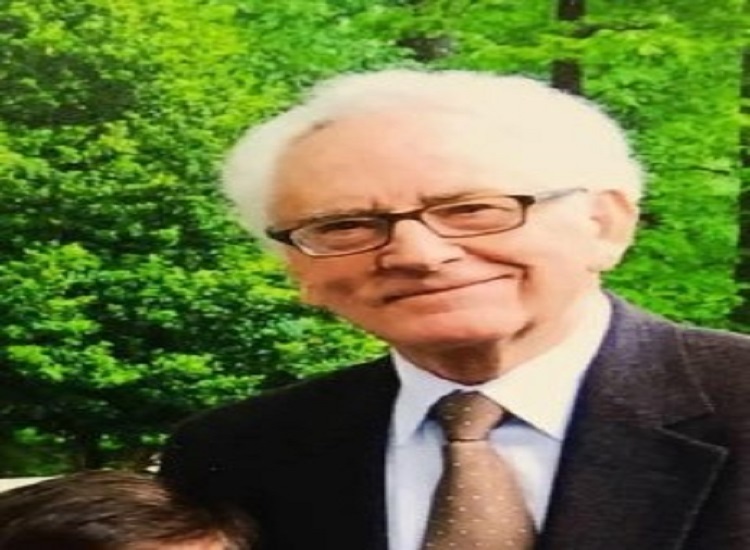
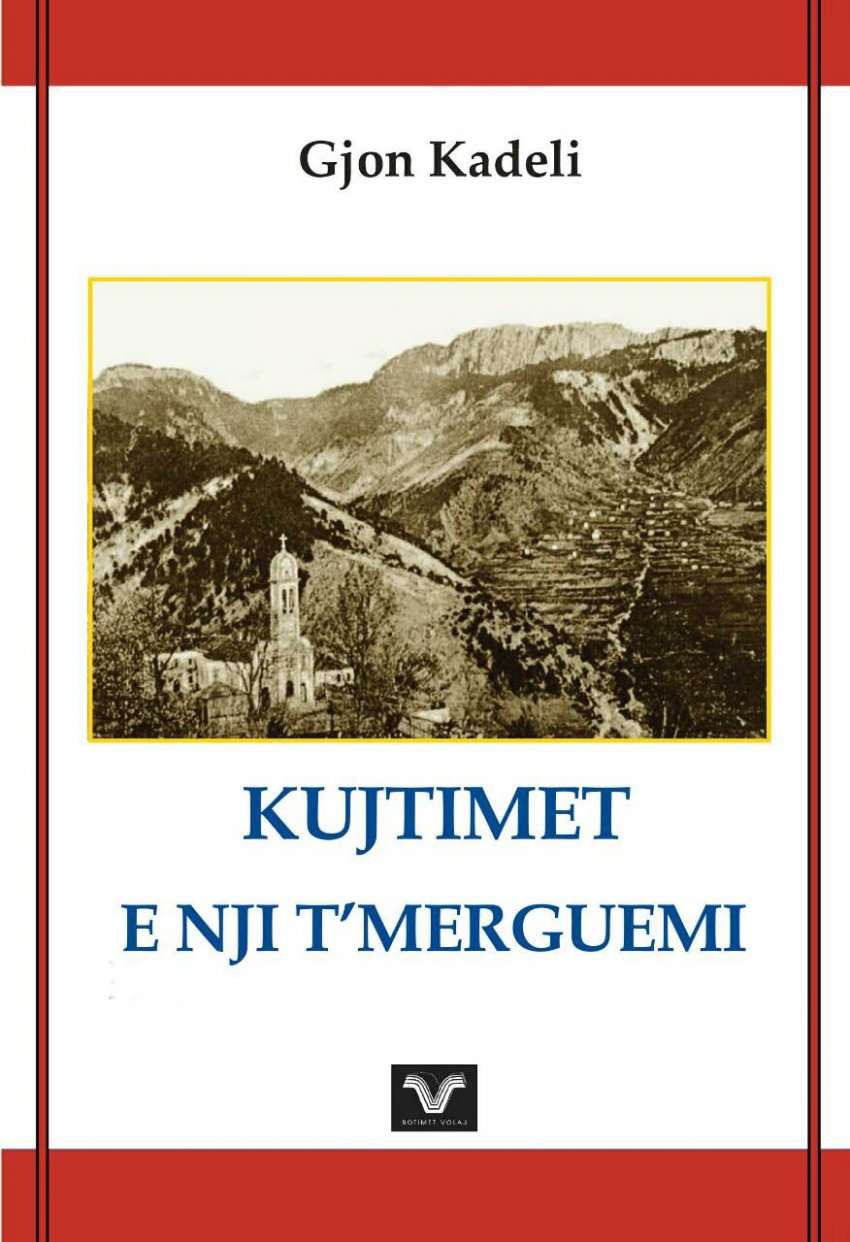
Memorie.al / Mr. Gjon Kadeli belong to the early Albanian diaspora in the USA and are not an unknown figure to the community there. His work as a speaker and translator in the Albanian Language Section of the Voice of America has made him known, not leaving aside his activity in the Albanian community. Recently, he brought to the Albanian-American reader his first book of memoirs, “Kujtimet e nji t’merguemi” (Memories of an Exile), published by “Volaj” Publishing House in Shkodra in 2018, where he presents the vicissitudes of his life and that of his family. Thus, we conducted a short interview to better understand his contribution in the United States of America and to have him speak about the untold aspects of his life.
Question: Hello Mr. Kadeli, I want to thank you for agreeing to do this interview. We will start first with your book, which has been received very well in Albania and in the Albanian community in the USA. How did the idea of writing your memoirs come about, what does it mean for you to return to the past?
Answer: I considered the idea of writing something about the sufferings of my family and others several times, and I myself don’t know why I didn’t write it earlier.
Question: Was it difficult to put parts of the past down on paper? Are there other things you would like to share with readers?
Answer: It was not easy to flesh out the material, and perhaps I am showing weakness, because during the process, my eyes often filled with tears; besides that, for various reasons I have not been involved in writing, and for this reason I call the book a “little book” (Libërth).
Question: You were an emigrant who fled Albania in the 1950s, first to Kosovo, then to Italy and Belgium. What was the condition of the Albanian diaspora in those years?
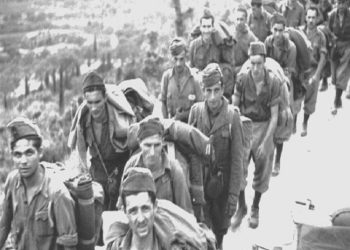
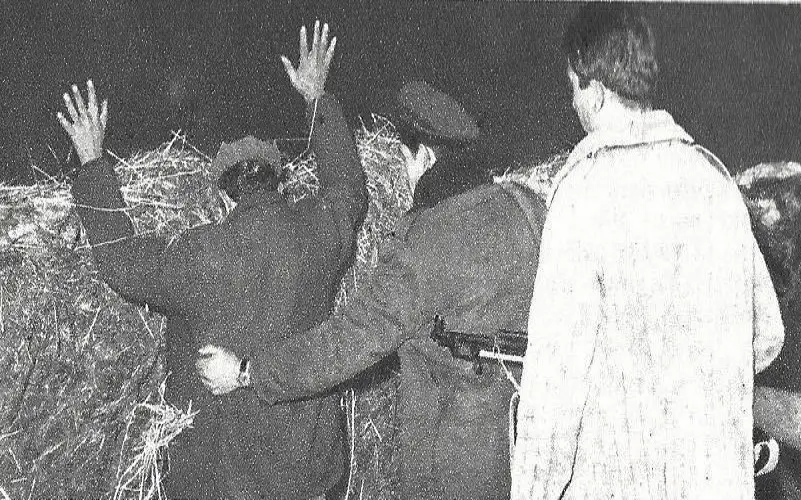
Answer: Regarding the condition of political emigrants who were in Yugoslavia, they gave us just enough aid to survive, and we were not charged for accommodation. The emigrants were transferred several times to different places. In my case, I was transferred three times from one place to another. There were cases, especially in the beginning, where individuals or groups of people were imprisoned when they crossed the border and entered Yugoslavia.
I add here that several groups that entered Yugoslavia in the beginning disappeared from the face of the earth and their burial place is unknown. The groups that I know of are those of Mark Tungu, the Bajraktar of Mertur, and Gjon Destanisha from Dukagjin. The group of Bilal Kola from Macukull in Mat, the group of Cen Elezi and Dan Kaloshi from Dibra, the group of Mark Bib Vokrri and Ndrec Lufi from Mirdita.
Question: What did it mean for you to capture the American dream? How welcoming was it for you?
Answer: Regarding the dream of going to America, as far as the emigrants were concerned, they waited impatiently for Albania to be liberated from the highly dictatorial communist regime and to return to their families in their beloved homeland, which they had been forced to abandon. Given that the hope of returning to the homeland was very small, the emigrants who were in refugee camps in Italy, Greece, or some other country began to emigrate to various places far from their homeland, such as America, Canada, and Australia.
It is true that many people dream of immigrating to America, because there is complete freedom in every respect; moreover, those who immigrate to America, if they have the ability, can be appointed to high positions in government administration. The only position that an emigrant cannot take is that of the President of the country. So the President of America can only be a person born in America.
Question: You worked at the Voice of America for many years. How did your journey begin there, who pushed you? Given that Albania at that time was under the iron fist of communism, did you receive information about events in Albania?
Answer: After finishing basic university studies, we wanted to start a more suitable job, so I applied and after taking the exams I was accepted and started work as a translator and speaker.
Question: In your opinion, what role has the Voice of America played in conveying information about Albania to Americans?
Answer: The Voice of America is the official government entity that directs the government’s radio programs broadcast in about 40 different languages, including Albanian. The Voice of America’s programs are directed to various countries. Regarding the world, mainly to countries with dictatorial systems, such as the communist countries, as well as other countries with dictatorial systems.
Regarding radio programs within the United States, they are provided by private organizations in different areas of the country. The peoples of countries enslaved by communist regimes have called the Voice of America: “The Voice of Hope.”
Question: You have a healthy family, integrated into the American state. Was it difficult for you to raise your children with Albanian culture and traditions? Do they speak Albanian? Your family has expanded with grandchildren; do they ask you about Albania? Can you tell us about them?
Answer: Regarding raising children with traditional culture and learning the Albanian language, unfortunately the circumstances are almost completely unsuitable for these things, for these reasons: Emigrants, due to work, live far from each other. Children, both during school hours and during the time they spend with their friends, speak English; moreover, electronic devices, television, telephone, etc., divert their attention from learning their parents’ language. Nevertheless, some of the children understand and speak a little Albanian.
Question: We are aware through the media that your children have reached the highest levels in the American government and various organizations. Mr. Lek Kadeli is currently the Deputy Administrator in the US Office of Research and Development, a position he has held since 2012. With extensive experience in leading organizational changes and improvements, policy development, resource management, information and technology management. What does this mean for you as a parent?
Answer: As far as my children are concerned, I feel very satisfied, because all three have completed university studies, and two of them have also completed postgraduate studies. Moreover, seven of my children’s children have completed basic university studies, and two of them are continuing postgraduate studies, one in music and the other in medicine.
Question: Do you keep in touch with the Albanian community in the area where you live? How organized are they? What are your relations with various Albanian organizations?
Answer: Until recently, there were very few Albanian emigrants in the Washington area. Recently, new emigrants have come whom I do not know. Being advanced in age, I have contact with only two or three people. Apart from the branch of “Vatra”, which opened a few years ago, there is no other emigrant organization in the Washington area.
Question: What was it like for you to come to Albania after many years? Can you describe your arrival and the emotions of those days?
Answer: The opportunity to see my relatives again as well as my homeland has been my dream, as well as that of all others who were forced to leave their homeland. As I noted in the book, when I came for the first time to Albania with a group of tourists, and we passed through the center of Tirana by bus, I could not refrain from shedding tears like a stream. The hope that Albania would be liberated, and that we emigrants would be able to return to our families in our homeland, was almost completely lost.
Question: We would like your opinion on the situation in Albania over these last 30 years. Do you think enough has been done for democracy?
Answer: Regarding the current situation in Albania, unfortunately from an economic point of view it is very difficult. Thousands and thousands of people have immigrated to various parts of the world. For this severe economic situation, the entire blame cannot be placed on the governments that led the country after the overthrow of the communist regime. The main blame lies with the former regime, which failed economically in a shameful way.
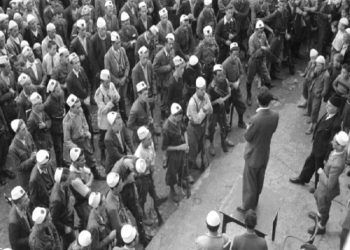
Regarding democracy in Albania, I can say this: The people are free, there are no more political imprisonments, the right to property and free trade exists, the right to free movement exists. So these are things that did not exist during communist rule. Therefore, progress has been made.
As for the quality of democracy itself: it has not reached what was expected by the people, nor by external opinion. Moreover, constant inter-party conflicts and violations of the constitution have created a very bad situation.
I quote the words of the British statesman Winston Churchill regarding democracy: “Democracy is something that takes a long time to develop properly; the countries of Europe took several hundred years to reach the kind of democracy they have today, which is the best we have, but it still needs improvement.” I add here that those who lead Albania today must do much, much more, both for the improvement of the economy and for democracy in Albania; otherwise the consequences will be very bad for Albania’s future.
I also add here a quote from the words of former American President John F. Kennedy, who, in the speech he delivered to the American people when he was elected president, said: “Ask not what America can do for you, but what you can do for America, because otherwise the situation worsens even more.” With this quote I mean that the people must also do their duty by respecting the rules and laws of the country. / Memorie.al