

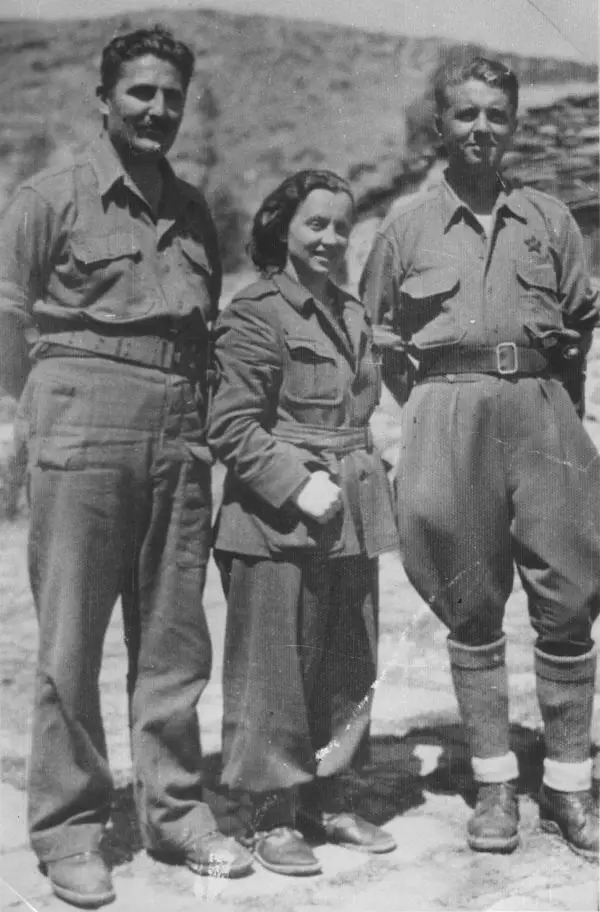
Dashnor Kaloçi
Part Two
Memorie.al /publishes the archival document, which was taken from the archives of Bulgaria, where the speech of the former first secretary of the Communist Party of the Union of Soviet Socialist Republics, Nikita Khrushchev, made during an official dinner in Yevksinograd, Bulgaria, where he was invited by the Bulgarian high leadership, headed by the Secretary General of the Communist Party, Teodor Zhivkov, and Prime Minister Anton Ygov, was transcribed (whitened). The former Kremlin head’s conversation with the Bulgarian top leadership, where he initially focused on the two main figures who had led the Soviet Union since the triumph of the October Revolution, Vladimir Ilyich Lenin and Joseph Visaranovich Stalin, comparing them to each other during the period they were at the helm of the Kremlin leadership, where according to him, Lenin not only did not take revenge against his political opponents, inside and outside the Bolshevik Party, but on the contrary, he showed patience and allowed them to leave their homeland, as happened with Maxim Gorky, etc., while Stalin showed himself to be a cruel dictator, who in addition to killing the flower created by the Revolution, he killed the flower of the Communist Party of the Soviet Union, by ‘planting’ it in graves! Khrushchev’s speech about the top leadership of the Party of Labor of Albania, headed by Enver Hoxha, whom he described not only as ungrateful for all the help that Moscow had given official Tirana until that time, but also as a cruel man and a butcher, who was acting much worse than Stalin, after having managed to physically eliminate all the founders of the Albanian Communist Party, even killing a member of the Politburo who was pregnant, as well as his accusations about Mehmet Shehu and Beqir Balluk!
Continued from the previous issue
It was at the dawn of the birth of the proletarian state, a still weak state. Well, they say that Lenin was a tolerant person! No, Lenin carried a sharp knife, a sword, and was not afraid to lower it on the heads of class enemies. But he did not consider them enemies; he thought that they were wrong. He organized public debates and the whole Party participated in these debates and Lenin won these debates.
If one were to speak in that way, it would seem that Lenin had more conditions, so to speak, to display a dictatorship, but he thought that a dictatorship should be displayed by the working class against an enemy class, not within the class. But Stalin began to do such things when classes were eliminated in the Soviet Union, when there was already a monolithic society. To justify himself, he invented the idea that: the more the revolution was winning, the more fiercely the class opponents were resisting. But this was simply an excuse for the murders committed by him.
At the last reception we had in the country, the musicians’ reception, a young girl came up to me and said: “I can’t leave Moscow without shaking your hand. I am the editor of a newspaper in Dagestan. I was born in 1937, the year my father was shot. I want to shake your hand and say that you have brought me back into public life, because until now I was the daughter of an ‘enemy of the people’, but now my father has been rehabilitated and I have received civil and political rights like all other citizens. I am the editor of a newspaper.” What I told you was at a reception in the Kremlin.
This is not understandable to people who say: it was necessary to inspire them. Not for Stalin. Stalin is no longer with us, he is dead. No, we are doing this for the living. We say for everyone: if you live and during your life you want to commemorate yourself, then remember when you leave, that people will judge you by what you did, and not by what you said about yourself.
Stalin wrote his own biography. We take this biography and see how this biography was corrected in Stalin’s hand. It is very shameful to correct it in this way. “So people say,” wrote Stalin. He wrote this about himself. This is a great confusion, because it leaves himself a bad reputation. This is Stalin. He is a Marxist, he is a Leninist, and he was a murderer, he was capable of the greatest meanness, and he did this meanness.
We want to clean this up, clean it up not for ourselves and not for me. I am already 68 years old. At such an age, you know, you don’t know when you will speak, but when they speak in front of you, if they still speak, and then they suddenly drive you away in a cart, so that the air is clean. Well, I say this because life is created this way.
We are realistic people, we live on the land and we were around Stalin. This is the situation with Albania. Mehmet Shehu with his own hand ordered that Major General Dali Ndreu, who was a minister and a member of the Central Committee of the Albanian People’s Party, after being shot, his body be burned and his ashes scattered so that no one would know where he was buried. Then they accused us of interfering in their internal affairs!
They arrested a former member of the Politburo, Liri Gegë, a woman who was pregnant. They sentenced her to death. We wrote a letter to them: Why are you judging her? Why are you going to execute this pregnant woman?! The tsarist satraps did not execute pregnant women.
Maybe we young communists should execute pregnant women?! They took our telegram and executed her, just like Stalin did. Then they said that the Russians were interfering in our affairs. Yes, we intervened. We now say that this was an unheard of atrocity, that a pregnant woman could be executed. We told them: You could have left a pregnant woman in prison and kept her there, but not executed her!
The example of Alexandr Bogomolets, President of the Ukrainian Academy who died, can be cited here. He was born in prison. His mother was in prison. She was a member of Narodnaya Volya and his father was in prison. He was also a member, but nevertheless even in tsarist times, they did not kill them. They did not kill a pregnant woman; they did not kill the father, although he himself was the President of the Academy. But we communists do not know the sense of proportion. On the contrary, not the communists, but the Albanians.
During the Civil War, when General Pyotr Nikolayevich Krasnov started an uprising and led troops against Petersburg, these troops were subsequently defeated, and Krasnov was taken prisoner, Lenin released this tsarist general, on his word of honor that he would not fight against Soviet power. Krasnov went to the Don, started an uprising, fought against us, but finally saw the situation as hopeless and shot himself. This clearly shows that this man had little conscience.
Lenin fought against the enemies of the working class, but he was not brutal. He was reasonable and, where necessary, showed patience. But Stalin displayed brutality within his Party. He even killed the brother of his first wife, a Georgian, Alesha Svanidze. We simply called him Alesha. He was not as old as Alesha, of course. This Alesha was the same age as Stalin, but Stalin called him Alesha, and so did we.
This was a cultured man. I don’t know what he had graduated in, but I know that he was a professor. He spent the night at Stalin’s; he talked to him about Georgia, etc. But suddenly it turned out that Alesha wanted to kill Stalin! Stalin himself spoke about this. Beria said that he was a British spy, and Stalin believed Beria and killed Alesha. It was true that Stalin hesitated for a long time and said what they told Alesha before his execution, that if he confessed and repented, he would remain alive.
They told Alesha about this before his execution, and he replied like this: “I am not guilty of anything, and then what should I demand from the Party and the government?! I am an honest person.” They executed him, and Stalin spoke about this, declaring: “Well, Alesha was a villain, he has now gone to the afterlife, but he did not confess and betrayed the enemies.” But in fact he had nothing to betray. We have already rehabilitated him.
I say this because not everyone understands our actions. In particular, for example, the Indians, honest people, say: “How did the Russians remove Stalin from the Mausoleum”?! But we said: how could we have put Stalin next to Lenin?! This issue worries us.
There is an anecdote in Moscow about this, which they told me:
– Have you been to the Mausoleum?
– Yes, I was.
– Have you seen the sign?
– Which one?
– This: ‘Stalin hid here from 1953 to 1961’!
He hid in the mausoleum. Then, when he was moved, they put him next to Mikhail Ivanovich Kalinin. Kalinin met him and said:
– Joseph (he called him by his name), what, have you come to me?!
– Yes, I came, they sent me here.
– But from me, where are you going?
– Wherever the Party sends me (laughter).
He spoke correctly. He understood in the grave that the Party can send him wherever it wants, but not in life.
This is the situation. We will have to return to this story, and perhaps more than once. The Indians say: how can you remove a dead person? But why can’t you remove a dead person if it is necessary to restore the truth, to restore the correct idea?! But all this was yesterday. Today our Party is united, our leadership is united and we are on the right track.
Before his death, Stalin spoke about what the situation in the Party would be like and who would lead the Party? ‘Voroshilov is a British spy’. ‘Molotov is an American spy’. Yes, yes, he was convinced of this. There was no way to prove whose spy Mikoyan was?! ‘But he is a spy, who just happens to be dealing with all countries and therefore is probably a spy for all capitalist countries’. This is how Stalin spoke. If Stalin had lived another month or two, of course neither Molotov nor Mikoyan would have been alive. This was the situation in the Party.
Stalin drew this conclusion: Khrushchev? No, this is a worker, we need an intellectual, and he called Bulganin an intellectual. We all know Bulganin. Bulganin is a good man. Comrades, I know Bulgan best, because I was the secretary of the City Committee and he was the Chairman of the Moscow City Soviet. We have worked together for more than a year. He is a good, honest person. But he is just an accountant and has never been a politician. Now he has left the political scene. He entered the Politburo by chance and also left by chance.
When he objected, I told him on the phone: You are a fool; the Devil has entered you, who are you in contact with, why are you in contact with these scoundrels? And he answered me: We will look at what you are saying (he spoke with a Nizhny Novgorod accent), we will discuss it.
I told him: Count to seven, and in arithmetic seven is more than four. Everyone knows this. But in politics, this arithmetic is completely useless, because today seven is more than four, but tomorrow one is more than 100, because these are matters of politics and they are decided by the Party.
They met and wanted to judge me. The Plenum of the Central Committee was assembled and they stood before the Plenum of the Communist Party of the Union of Soviet Socialist Republics (shows and imitates with gestures how they stood) and trembled. Then Bulganin said: The Devil made me do it. To which I replied: What Devil? I was telling you not to submit to the Devil, so that He would not make you like Himself.
He is an honest man. Now he sends me birthday greetings. I think they are sincere. Our families lived together with him, in a dacha; my son Sergei and his daughter grew up together and rode on my father (‘back) because they were small then. That was the situation. Bulganin was even running the country, at a time when he could not do this.
The first time I went abroad with him was to Britain. He was the head of the delegation; he was the Chairman of the Council of Ministers. The Presidium sent me as a member of the delegation, a ‘fifth wheel’, because my rank as Secretary of the Communist Party of the USSR was in no way suitable for the commission. Gromyko was there and I know this event that I am telling you about.
We sat down and Anthony Eden sat down. We were supposed to make a speech. Of course, I said: Nikolai, it is your turn, will you speak? He said: Yes, and was silent. I said to him again: Go ahead, speak, as we represent our country. And here, when all of us are writing and presenting a note to the members of the Politburo, they say to us: Why are you talking all the time?! Where is Bulganin? He was sitting and could not say anything.
I think he had good qualities and that he spoke about this sincerely. He could have made an ordinary speech, he could have wished me a happy birthday, he could have made a good speech on the occasion of some other event, but as a politician, he could have gotten confused. I want to say here that you in Bulgaria have an honorary birthday for your main leader. But until I became the Chairman of the Council of Ministers, I did not know when my birthday was. We, the workers of Donbass, did not have this.
VOICES: We have this honorary birthday.
KHRUSHOV: Therefore, I have no merit in being born on a certain day. (Laughter). But I will not speak against the celebration of this day; you have introduced this, and God bless it.
Now the situation in our Party is such that there is not one structure, but two or three structures that lead the Party and the country; the Party has been created. Our Party has matured and the cadre has matured.
For example, Stalin said: I will die and the capitalists will strangle you all like chickens. (Noise in the hall). What will you do without me? If a person who has lived for many years without doing anything for the Party, if he thinks like this about the Party and then asks himself why the hell you lived, if he has not even created people around himself since he died, then after you things will also not grow and flourish, as things were under his leadership? Things should progress better. If so, then what is such a leader worth then? This is not a boss, but a good-for-nothing!
So he died. Well then, what happened? We were taking into account what we had, but rumors reached me that: many workers and peasants were talking about how the situation in the country would have been if Stalin had died 10 years ago. Something completely different, but not what we have now. This is true. Because if he had died earlier, he would have untied the hands of the Party and the people. But we know the policies and the leadership better than he did. He didn’t know a damn thing, if we want to talk about it that way.
Some Stalinists criticize us now: How can you say that about Stalin?! He reached a certain position and the economy improved. But I will say about this, that I was there, I sat there when Stalin was still alive and I heard what idiotic decisions were made. If you said a word to him, he wouldn’t listen to you! More than once I said: ‘My God, here is Marxism-Leninism, here are Lenin’s ideas.’ Despite the fact that idiotic decisions were made then, now the country is developing and because of ideas. Yes, yes.
What did he do with agriculture? He destroyed it. He looked at the peasant as an enemy. Despite the fact that we had bread and our economy grew from year to year. One year our economy was below the previous year. It was 1937, when the engineering, the Party cadre and the administration were completely destroyed. Our economy suddenly collapsed. Then Stalin stopped publishing reports on the implementation of the plan, because they were below those of 1936.
But this was enough, in my opinion, to make us sad that we would never get there again in those situations.
Now our situation is good. We are moving forward with confidence. We have adopted a program for the construction of communism, a plan that we are fulfilling. We have difficulties, but we are certainly not afraid of mistakes. But we must recognize these mistakes and correct them.
At the 20th Congress, for example, I had already told the leaders of Bulgaria. We adopted a stupid five-year plan. It was drawn up completely incorrectly, because the proportions were not set correctly in this five-year plan. When we had worked on it for a year or two, we saw that we did not have everything in order. Then I said in the Presidium, when Molotov and Malenkov were there, that we must have our courage and tell the Central Committee and the Party that we had mistakenly adopted a five-year plan and correct it, or not say this and thus not fulfill it.
Then we will mess up the economy, so as not to solve it in five years. We talked about lagging behind and began to develop a new five-year plan, and then not a five-year plan, because there was little time, but a seven-year plan. And now we are implementing this seven-year plan. We will fulfill the plan by far. Why? Because we planned with a reserve margin. It is better to have a reserve in the economy than to live without it. We are adhering to this and now I think that no economy can live without reserves.
We think that our situation in the international arena is very good. There are good relations between the Communist Parties. There are splits, and not everyone understands them correctly. But experience will correct this.
I want to say a few words about Vulko Chervenkov. When Chervenkov went to China, he returned from there and began to publish article after article and distribute them; we, probably, were very upset, because we did not believe them. I am a skeptic and I do not believe in any ‘great leap forward’. There cannot be any ‘leap’. What does a ‘leap’ mean in our socialist economy?
It means an incorrect drawing up of plans; when you cannot draw up a plan, then you are going blindly. Then there is, either a ‘leap’, – or a ‘failure’. And here Comrade Chervenkov, in his report, spoke about them, but we Soviet people did not criticize him harshly publicly, but only at a meeting. He said this: “The economy of socialist countries should develop like a rider who saddles quickly”.
In response to this, we said that this is natural for a capitalist economy, ups and downs. Marx had noticed this, but they want to talk about it now. What is this? It means to saddle the camel with humps. But riders know how long you can stay in the saddle if the horse starts galloping. You will fall. But when you sit firmly in a saddle as if you are climbing on it, then you can move at great speed.
Therefore, an economy similar to the saddle where the rider sits and rides is incompetent planning in the form of ups and downs. Experience shows us this, because experience is a cruel teacher. It never forgives; it pulls you by the ears, no matter what public position you take, if you are not walking on the right path. We were glad that the Bulgarian comrades understood these themselves.
We were surprised! I don’t know why Chervenkov did this. What the devil pushed him into an economy similar to the ‘rider’s saddle’, God knows, but it was very dangerous! I can say that I talked to Mao Zedong, before he started introducing the communes. I went to Beijing in 1958. He was talking about communes then. It seems that Boris Ponomarev was there too.
PONOMAREV. Yes. /Memorie.al