By Ben Andoni
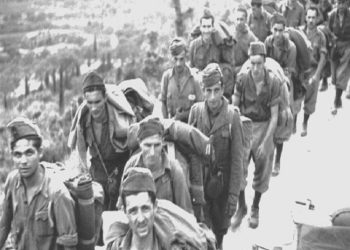
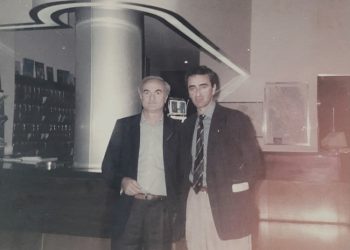
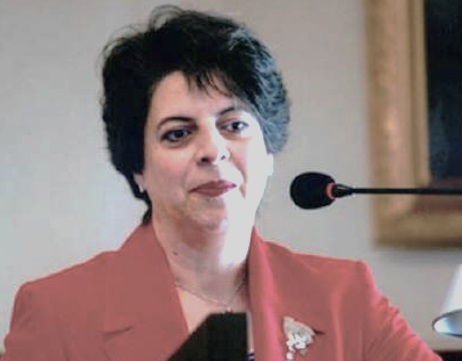
Memorie / The well-known Greek historian Eleftheria Manda has worked for years on the book “The Muslim Chams of Epirus,” about which she says there may be mistakes, but they are justified by this first step, which has helped others. Even though Albanians have helped her with documents, she herself has encountered problems in Albanian archives, while she has been freer in other foreign and Greek archives. She has a careful justification for everything, and in her treatments, one carefully notices the entire evolution of the Cham issue, where, according to her, the Greek state bears considerable blame. Moreover, the active actions of the state made this community distrustful. From this, she also explains the fact why a part of them joined the fascists, but more than that, why they did not trust the Greek war…!
She is calm and releases that great savagery with which we treat our common history…! Asked why Greece started dealing with it so late, she explains: “Before 1923, the Greek state had so many other problems to deal with that the Albanian population of Epirus did not constitute its first priority. The internal and diplomatic conditions were so uncertain at that time that there was very little room for any interest to appear regarding the native population (and the Albanians were not the only example of this kind).”
Why is there still a lack of some kind of cooperation between Albanian and Greek historians regarding the Cham issue? The reason for this question comes after the fact that in your publication “The Muslim Chams of Epirus, 1923-2000,” few Albanian sources are found, and the same happens conversely with Albanian publications that have Greek references when they address this issue?
“As you may already know, and as was written even in the prologue of the Albanian edition of the book ‘The Chams of Epirus,’ the Albanian text is a translation of the Greek original, written and edited in 2004. No other changes have been made to the text. The Albanian books I studied and which you can find in the bibliography at the end of this edition were the only existing books on this matter at that time.
Albanian (and Greek) historiography made great progress a little later regarding this issue. As I have emphasized in the book’s prologue: I hope that, over time, new archival collections, Greek and others, will see the light of publication and will illuminate with new data aspects of the issue that until now had remained obscured. I believe my book was a contribution to the dialogue that began to flourish afterwards.”
Doesn’t it seem like a kind of prejudice that you, in your study, categorize in the title: “The Muslim Chams”?
“The choice to express myself regarding the Muslim Chams was not a matter of prejudice, but simply a technical matter. This means that from the documents (Greek, English, American, Italian, German, and Albanian) that I had in my possession, I received more information regarding the Muslims of Albanian origin, while only a few of them hinted about the Christians of Albanian origin, so I could not form a clear picture of what happened to the second group in the long term. So, in order to protect my scientific approach and to avoid any misunderstanding, I have limited myself to the group for which I had much more data to develop.”
Let’s talk directly about history. If we refer to the year 1923, the Greek state had had the Cham population on its border for ten years. Why was it completely insensitive towards them at that time, and could there be another genesis of the Cham issue, different from the one related to population exchanges? Why did the Greek state become sensitive about the Chams only in 1923?
“As historians always say, there are no ‘ifs’ in history; things have happened the way they have happened, and all we can do today is try to understand the ‘whys’. Before 1923, the Greek state had so many other problems to deal with that the Albanian population of Epirus did not constitute its first priority. The internal and diplomatic conditions were so uncertain at that time that there was very little room for any interest to appear regarding the native population (and the Albanians were not the only example of this kind).”
You have a rich bibliography in your study, and I appreciate you for that. However, Albanian sources seem to be missing in depth, even though in Albania, as I repeat, there is a boom in publications regarding Chameria. Has it been difficult to research in our archives? What about yours? Which archives has been more kind to your work?
“I expressed myself a bit above regarding this, but besides that, I want to say: Yes, I have had problems accessing Albanian archives, which I could not study except for those documents edited by Kaliopi Naska (an excellent job, by the way, but ending this help with documents from 1939). I have had the opportunity several times to study at the National Library in Tirana. As for all other European archives, they were easy to access and were much more open-minded in their concepts.”
There were constant proposals from pre-war Albanian governments for population exchanges. Can this be considered a very harsh measure? Why, in your opinion, is there no parity of the Cham issue on the part of the Greek state, compared to the treatment Albania has given to the Greek minority?
“Population exchange is always a severe measure, and the Greek side has considered it as such, especially after 1923. As far as minority populations are concerned, there is no issue of equality (parity). Such approaches easily lead to quid pro quo policies. Minority rights must be protected in accordance with international law, and this is the binding principle.”
In your first chapter, you say that the Chams, after the findings of a commission in 1924, declared en masse that they were of Turkish origin and that they wanted to be included in the population exchange procedure, except for a few who said ‘we are Albanians’. Are there evidence from many sources for what you write, or have you been satisfied with a few sources? Can you explain it a bit more clearly?
“As you can see, the bibliographical notes regarding the subject you mention are numerous: ranging from publications brought years ago, in the form of official documents from the League of Nations, and also to documents edited by Albanian historians. Nevertheless, this was a common conclusion reached by both sides: Greek and European officials of that time believed that national consciousness was not yet cultivated among the Albanian populations of Epirus. Religious feelings were stronger: as I say in one line, they felt more Muslim than Albanian. Exclusion from the exchange and the developments of the next two decades played their role in changing their national consciousness.”
What did the Greek pressure on Cham properties consist of in the mid-1920s? What was wrong according to the Greek authorities with the Chams, and why had they left them in extreme poverty?
“The arrival in Greece of refugees from Asia Minor in 1922 made it necessary to undertake a radical land settlement, through which all properties, including Albanian ones, were expropriated. Under the government of Theodoros Pangalos (1925-26), during a period of relative normalization in Albanian-Greek relations, a treaty ‘On the Establishment of Consular Service’ was signed between Greece and Albania, Article 3 of which gave Albanian citizens the right to receive better compensation treatment than Greeks, analogous to what the Greek government would have done for the British, French, and Italians.
However, bearing in mind that the total extent of Albanian land that had been expropriated was particularly large, the economic cost for the Greek state would have been unmanageable. For this reason, the Greek parliament did not vote in favor of this particular treaty. In the meantime, Greece had overthrown Pangalos’s military regime, and the next legitimate government was not predisposed to be as lenient towards the Albanians.
This resulted in the issue of Albanian lands being frozen in a state of limbo for the entire interwar period. On the other hand, the economic situation in Greece was far from being able to satisfy the entire rural population during the interwar period. The problem of Albanian lands only worsened their condition. While the improvements of the 1930s, after Venizelos’s initiative, only provided a short-term solution to the problem, subsequent Greek governments simply overturned all previous positive decisions.”
Why did the Greek government abandon much of its harsh stance with the coming of Venizelos to power? Was it afraid of some unpleasant future, or simply out of goodwill?
“Venizelos’s policy aimed at a broad improvement of inter-Balkan relations, including Greco-Albanian ones. Therefore, solving some of these serious existing problems was a prerequisite for the success of this policy.”
How did the local administration function in the territory inhabited by the Chams? How responsible was it for the problem of properties, schools, etc.?
“There are indications that in many cases local authorities had their own views on how to handle Albanian issues in Epirus: where their negligence, arbitrary decisions against them, arbitrariness, constituted a very common phenomenon.”
Your book shows that the resistance of the Chams began even before the arrival of the fascists. Why the Greek government not react did appropriately by seeing their problem, and what, in your opinion, are the reasons that Cham personalities and groups joined the fascists?
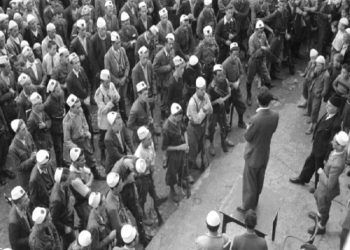
“The word ‘resistance’ has no meaning before the Italian and German occupation of Greece in 1941. The groups of Albanian Chams who collaborated with the Italians and Germans aimed: first, to take revenge for the past oppression suffered from the Greek authorities under the Metaxas dictatorship; second, it was the improvement of their economic and social status, by annexing Epirus to the new Albanian state, under fascist control. They believed in the Italian promises for the creation of a Greater Albania, which would include all Albanians in the Balkans.”
Are the names of the Cham collaborators with the fascists confirmed? Can it be considered normal for them to identify the entire population?
“As a researcher and scientist, I personally have not accepted the opinions that characterize all Albanians of Chameria without distinction as collaborators. I have always strongly supported the fact that the vast majority of the Albanian population did not participate in arbitrary acts; these were carried out by groups that were armed by the Italian and German authorities and were led by prominent and well-known Cham members (the names are mentioned in my book). However, the Albanians welcomed and supported the Italian and German occupation as a promising new situation, aspiring for a change in the Albanian-Greek borders.”
Zerva, it is stated in your book, called upon the Cham formations to join against the fascists. Why did the Chams, who were watching the course of the war, not join the Greeks in resistance?
This is not yet clear enough. It seems that, as officials of the Greek Communist Party and ELAS admit, the Chams were not convinced by the presentation of their vision that they would have the opportunity for self-determination after the war. Only in the area of Filat did they manage to gather support for the purpose of supporting the anti-fascist front.
On the other hand, I think the Chams also did not trust Zerva’s promises. On the contrary, as the final orders of the Cham leaders dating from July 1944 show, they were determined to fight to the death ‘for the liberation of Chameria’. One of the orders Zerva received to carry out the cleansing was given by the Allies.
You have a reference to Woodhouse who says, “They (read: the Chams) got what they deserved.” Does this statement condemn the British allies for their stance towards the Chams?
“History is not a court to condemn or ‘justify’ anyone. Our goal is to understand what happened and why. So, I can say that it was a decision of the Allies of strategic importance, aiming to facilitate operations against the Germans in Epirus. And this is the context in which we must view all the events of those days. And, as I have stated in my book, quoting C. Woodhouse’s assessments, this does not mean in any way that I agree with him.”
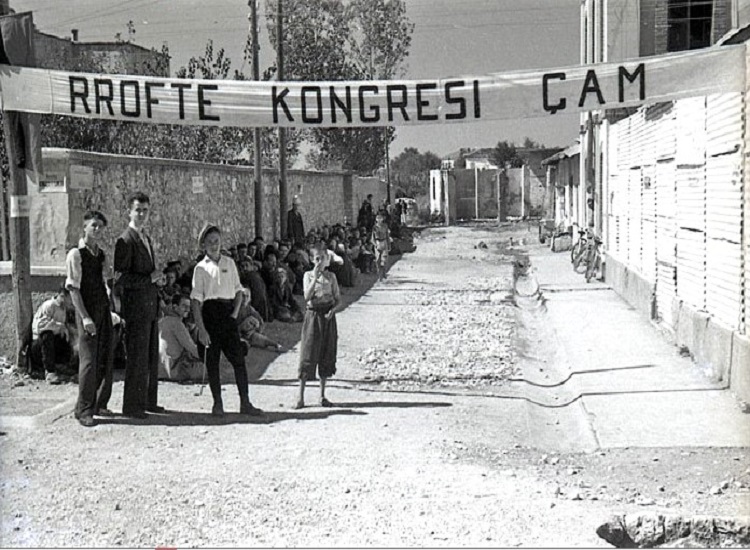
Who conceived the congress of the Chams in Albania, and how could they, in that chaos, organize such an activity?
“I am not sure enough about this, as I do not have any information that answers this. But it seems that the activity had the support of the Albanian communist leaders of that period, who tried to benefit from the developments for their strategic movements towards Greece. As far as I know, the participation was limited.”
Is it true that even Enver Hoxha requested a population exchange, returning the Greek minorities? Were there chances of this happening?
“There is no information regarding this, at least as far as I know. For Enver Hoxha and the Albanian communists, the Chams constituted a debatable, not to say suspect, community, but useful insofar as they could serve his political and propaganda purposes.”
How is it possible that, as stated in your book, there is hatred even among the Greek population towards the Chams?
“This is not true, and as I have said before, I do not like to use general and unfair characterizations, including discriminatory thoughts or feelings indiscriminately. Many Greeks in Epirus suffered from the violent acts that armed Cham groups carried out during the Italian and German occupation (a fact that is usually covered with silence by Albanian historiography, which limits itself to describing Albanian suffering from the acts of the Metaxas Greek government or Zerva), so they had their reasons for not wanting the Albanians to return after the war.
On the other hand, there have been many cases of friendly coexistence and mutual help between the two communities when necessary. Is it possible in our days for the issue of their properties to be handled technically and for them to return to their properties or be compensated for them? “This is not a question for me as a historian to answer. This is a matter of international law and practice.”
Why is there a lack of predisposition on the part of the Greek government to open the issue with them? “You can ask the Greek government.” Why did you undertake this heavy burden, and do you think you have truly shed light on this problem?
“Because, as I have said in the Prologue of the Greek edition, I believe that the history of the Cham population of Epirus was a forgotten issue, which for several decades was covered under a veil of silence and was practically ignored, willingly or unwillingly, by Greek historiography. So, this was an intriguing challenge for me to face. And whether I have managed to shed light on the problem, it is not for me to answer. You will be the judge.” / Memorie.al