


From Skifter Këlliçi, Boston
Part Two
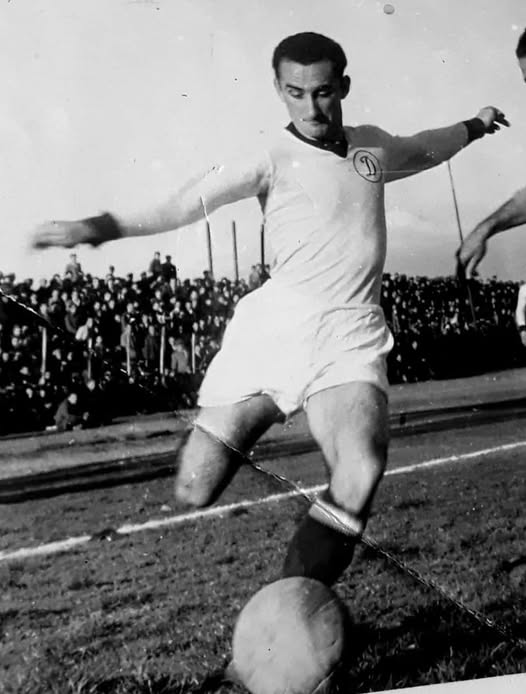
Memorie.al / One day in early March 1950, when together with Luan, my twin brother, we had turned 12 and other friends from our neighborhood in Tirana, we learned from the newspaper ‘Sporti Popullor’ that a new football team called ‘Dinamo’ had been created. With such a name we had read in this same newspaper that there were teams in the Soviet Union (‘Dinamo’ of Moscow, Kiev, Tbilisi), even in Yugoslavia, ‘Dinamo’ of Zagreb. And behold, apparently, following their example, a team with the same name, ‘Dinamo,’ was being created in Albania too; not only that, but it would play directly in the first category, alongside ‘Partizani,’ ‘Tirana,’ ‘Shkodra,’ ‘Durrësi,’ ‘Kavaja,’ and other teams.
Continued from the previous issue
So, we had become known among the Jareci brothers. But, I repeat, this acquaintance did not affect the stadium microphones when I commentated matches even of ‘Dinamo.’ There I was a fan of myself and during the commentaries I tried to be as impartial as possible, although there were cases when I was ‘accused’ of being a fan of this or that team. With Skënder Jareci I am also connected by an event that we can call both humorous and sensational. It was June 1951. Despite it being a time of exams, I and my twin, Luani, both 13 years old, decided to go to the stadium, where ‘Dinamo’ would play against ‘Puna’ of Tirana. The result even in the second half was blank, 0-0.
And behold, in a counterattack Skënder Jareci slipped like an eel between the Tirana defenders, dodged even the goalkeeper Bonati and with the goal empty scored the only goal up to those moments. Up to here there is nothing to be surprised about. But at that very moment, we saw how the linesman Izet Çani threw his flag aside, ran onto the field, embraced Skënder Jareci and then returned as if nothing had happened once again to his role as linesman. Years later, Izet Çani, who was a physical culture instructor in units of the Ministry of Internal Affairs, if he were to do this action, as assistant referee, blind fan, he should have received a severe punishment from the Disciplinary Commission of the Albanian Football Federation and the leaders of the ‘Dinamo’ Sports Club. But in fact nothing happened to Izet Çani…?!
One Sunday in June 1976, that is 25 years later, my twin, Luani, was getting married and invited for a visit Skënder Jareci together with Alfred Bonati. And surprisingly, both came at the same time. When I reminded them and the other guests of this event, one of the most sensational, I believe, even in foreign football, laughter burst out among the guests. You can imagine that the two protagonists, Skënder Jareci and Alfred Bonati, also dissolved in laughter.
As is known, ‘Dinamo’ won the championship of the 1966-’67 season. But this happened by decision of the FSHF (Albanian Football Federation), dictated by the ‘Red Dome,’ after ’17 Nëntori’ and ‘Partizani’ were expelled from the championship, after the fights on the field and in the locker room of the players of both teams.
An absurd and arrogant decision, which has never happened, not only in the history of our football, but not even in the history of world football. Some of the players who caused the fights should have been expelled, but by no means the teams. But the problem was that with this decision the bureaucrats, the majority of whom, excluding Kadri Hazbiu, member of the Politburo and Minister of Internal Affairs, (as I have explained above, was devoted to ‘Dinamo’), were ‘fans’ of ‘Partizani’ and had ‘a thorn in their eye’ for ’17 Nëntori’ with its fans, who not rarely gave heart to their team with the cries; ‘Strength, boys, attack the reds!’
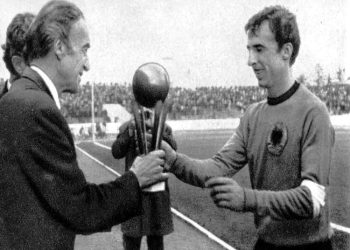
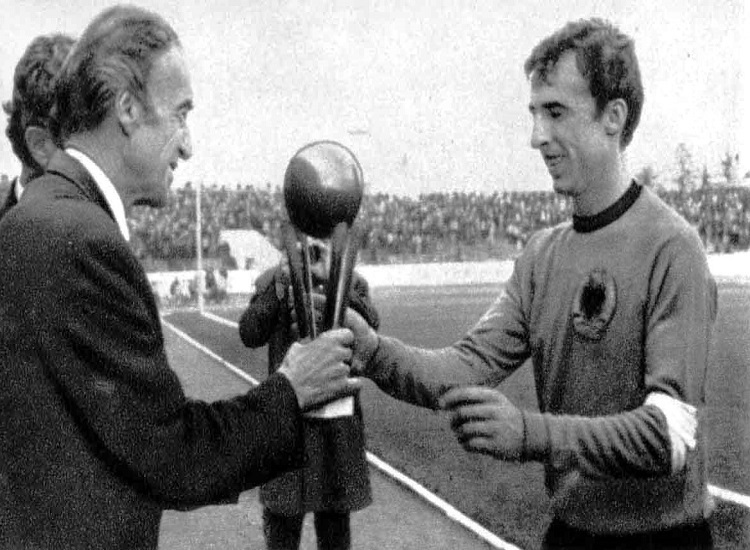
Thus, after these quarrels between the footballers of these teams, the ‘pretext’ was found, to take the above decision, by no means from the FSHF. In this way, the championship of the 1966-’67 season was won by ‘Dinamo,’ which in the standings until then was in third place, with no possibility of becoming champion. “We by no means deserved this title,” Skënder Jareci, coach of ‘Dinamo,’ had told me years later. “It was this reason that after the cup was handed to us at the ‘Qemal Stafa’ Stadium, I instructed the footballers not to do the traditional lap around the field track, to greet our sports fans. The champion was and remains ’17 Nëntori.'”
THE ESCAPE AND RETURN OF QEMAL VOGLI
In the summer of 1956, a very shocking event occurred: During a tour of ‘Dinamo’ of Tirana in the German Democratic Republic, he suddenly escaped from East Berlin to West Berlin, and easily, because at that time the terrible infamous wall that would tragically divide the two Berlins had not yet been built. But later we heard that Qemal Vogli had been caught by agents of the East German Security (STASI), who had returned him to Albania. It was not like that at all. After the fall of communism, he told me that he, repentant for this slip, had thought of returning to Albania. – “My mother appeared to me almost every night, begging me with tears to return to Albania, because she was dying of longing for me,” he told me one day.
In Munich, where he settled, he had begun training with the well-known team ‘Munich 1860.’ After several months of staying in this city, in a heavy spiritual state he decided to return to Albania.
With a good sum of money, he traveled secretly from Munich to Freiburg, a city in southern West Germany, then on foot, still secretly, crossed the border and reached the Austrian city of Salzburg. His aim was to always secretly reach the border between Austria and Italy and then Rome, where he would surrender at our embassy. Naive lost illusions! According to his testimonies of 9 October 1956 in the investigative process, held at the Directorate of Security of Tirana, Qemal Vogli, among other things, asserts that after many vicissitudes, he had been caught without documents in Salzburg by Austrian gendarmes and had slept one night in the gendarmerie building.
The next day, on 14 October 1956, he had seen in an Austrian newspaper that in Vienna the representative team of Hungary would face that of Austria. ‘Thus, after I managed to leave the gendarmerie building stealthily,’ recounts Qemal Vogli in the interrogation, ‘I reached Vienna by train. There I asked a taxi driver where the Hungarian footballers were staying. He answered me that I should go to the ‘Park’ hotel. There I met Bukovi, the coach of Hungary, and the great Pushkash, who recognized me, since I had been the goalkeeper in our national team’s match in Budapest in 1950. I also met an employee of the Hungarian embassy in Vienna, who made me a false document and thus I reached Budapest.
From there they sent me to our embassy, where I surrendered. The next day, as you know, they sent me by plane to Tirana, where employees of the Ministry of Internal Affairs were waiting for me, who arrested me. That is how it was; all the rest are fairy tales, which were spread then in Tirana,’ continues Qemal Vogli, ‘that supposedly Hungarian-East German agents were the ones who had put me into their network and had brought me from Hungary to Albania. If I had wanted, I would have stayed in Munich, I would have played with the team I mentioned above and everything would have been over, but I returned to Albania, with my own desire and will,’ he concludes in the interrogation.
For high treason against the fatherland, because he figured as a military man in the organic structure of the Ministry of Internal Affairs, in November 1956, Qemal Vogli was sentenced to 15 years of loss of liberty. ‘Around the end of 1959,’ he recalled to me a few weeks after he had served his sentence, ‘when I was working together with other convicts at a construction site, I was struck by the fact that from the loudspeaker from which the broadcast of a football match was coming, alongside the voice of Ismet Bellova from the newly rebuilt ‘Dinamo’ stadium, another voice was also heard. They told me that that voice was yours. I was moved and remembered you and your brother, Luan, with whom I had often played ping-pong in the ‘Rinia’ Sports Park.’
Despite his desire and that of the sports fans, the communist dictatorship did not allow him to take part in national sports activities, not even in the activities of the teams of the work centers of Tirana, in one of which he even worked. I have met Vogli often before and especially after the fall of the communist dictatorship, which he had always hated, although he played in the football team of the Ministry of Internal Affairs. In 1993, I participated together with him, the well-known sports commentator Ismet Bellova and other well-known sports figures, such as: Simon Deda, former well-known footballer of ‘Partizani,’ Skënder Dedja, football specialist, in a popular weekly sports program on Radio-Tirana, by the journalist Pirro Ruvina.
Once I mentioned to Vogli the match ‘Partizani’-‘Dinamo’ (1-1) in the spring of 1953, and the goal scored in his goal by Loro Boriçi. Here is how he recounted this dramatic-comic goal to me: “Haxhi Arbana, half-forward of ‘Partizani,’ intervened a couple of times, heavily in my opinion, when I snatched the ball from his head and the referee, to my surprise, until then had not punished him for these fouls! When he repeated it once more, which again seemed heavy to me, I snatched the ball, put it on the ground and addressed the referee with the words: ‘Why don’t you give a foul for us?’ None of my teammates and of ‘Partizani’ intervened; because they thought the referee would give a foul for us.
Only then did I see that Loro Boriçi made a zig-zag between the players and barely managed to hit the ball with the tip of his foot, which ended up in the net. ‘Well, what a beautiful goal you scored!?’ I said to Boriçi with irony. To my surprise, the referee signaled that the ball should be placed at the center of the field. – Goal?! – I turned to him with anger. But he again signaled with his hand from the center of the field. Thus ‘Partizani,’ which, truth is told, was playing better than us, equalized. The fault was mine. Since the referee had not whistled, the game continued and Boriçi had cleverly scored a regular goal. Perhaps one of the most astonishing goals in the world.”
In March 1999, together with my family I settled permanently in America, without forgetting even today Qemal Vogli, this great sports figure, who, for the reasons I recounted, before even turning 27, was separated from football and for whom Yashin, the Soviet goalkeeper of world fame, when he had seen him during the match ‘Dinamo’ of Moscow – Representative Team of Tirana, held in Moscow in the summer of 1954, where he himself was also playing, embracing him with admiration, had expressed himself about him with the words: “Ti – velikiy vratar,” in Albanian: “You are a great goalkeeper.”
Did the absence of Qemal Vogli affect the team and especially the defense of ‘Dinamo’? Certainly. The English in such cases use the sentence: “A player’s mistake is a mistake, but a goalkeeper’s mistake is a fault.” I by no means want to blame the young goalkeeper Beliu, who took Vogli’s place in the championships of 1957, 1958 and 1959. If Maliqati in the 1957 championship, in which 7 teams participated, conceded 7 goals (goal difference 28-7), Beliu conceded 8 goals with a goal difference of 33-8. But in the 1958 championship, ‘Dinamo,’ scoring 28 goals, conceded 18, and took 4th place – after ‘Partizani,’ ‘Besa,’ which was ranked second, and ’17 Nëntori’ in third place. Of course, in this the sin was not only Beliu’s, but also of ‘Dinamo’s defense.
Also in the 1959 championship, in which ‘Dinamo’ ‘improved its grade,’ being ranked after ’17 Nëntori’ in third place, it scored only 16 goals and conceded 14, a weaker goal difference than that of ’17 Nëntori,’ which took second place (goal difference 20-11), at a time when ‘Partizani,’ champion, had a goal difference of 27-6, always with the legendary Maliqati in goal. As a consequence, in 1960, on the horizon of ‘Dinamo’ two important changes appeared. Beliu’s place in goal was taken by Mile Qoshja and that of the coach Zihni Gjinali, after 10 years (during which this team was crowned champion 6 times), by Zyber Konçi. And it was this last one who returned it to the pedestal of champion. Even two weeks before the curtain of the championship fell, although in the last match with ‘Partizani,’ ‘Dinamo’ composed of Qoshja, Halluni, Verria, Duma, Jareci, Bushati, Tallushi, Lubonja, Duro, etc., ‘Dinamo’ lost 1-3.
SOME GREAT ACHIEVEMENTS OF ‘DINAMO’ AND ‘PARTIZANI’ IN THE INTERNATIONAL ARENA
After winning the 1956 championship with 6 points more than ‘Partizani,’ ‘Dinamo’ showed its impetuous progress in an international tour in Czechoslovakia and the German Democratic Republic. It first faced on 6 August in Prague the representative team of the Czechoslovak capital. A few minutes before the end of the match the result was tied, 2-2. Precisely at these moments Lubonja scored the winning goal. Four days later in Kladno, ‘Dinamo’ faced the well-known team ‘Banik’ of Ostrava. On a field that was…75 meters wide, ours did not manage to acclimatize, at a time when the locals knew how to exploit the spaces created in our defense. Until the 23rd minute of the second half, they were leading 3-1; so this match was considered lost.
But after the first goal by Resmja, followed the second goal by Merja. Five minutes before the end of the match, a penalty kicks for our team. A barricade of Czechs taller than 1.80 m. Only somewhere in a corner is the horizon of the goal visible. And there Resmja sets the ‘target.’ And equalizes 3-3, while the spectators remain amazed. The same phenomenon occurs also in Brieske of the German Democratic Republic, where ‘Dinamo’ faces the local team ‘Aktivist.’ Resmja again scores a magical goal. “We have fallen in love with the Albanian goal,” asserted the German weekly ‘Fussball Woche.’ Then in Berlin in the match with the local ‘Dinamo,’ Resmja scores again. The Germans equalize, but meanwhile Merja and Deda score. Ours win 3-1. Then comes the sudden escape of Qemal Vogli, which we described above.
While “Partizani” in 1958 achieved one of the peaks of Albanian football. This happened in the football tournament of the Armies of the Socialist Countries, which was held in Leipzig, where their strongest teams participated. ‘Partizani’ first beat the Vietnamese team ‘Pai’ 5-1, then defeated ‘CSCA’ of Bucharest 1-0, ‘Dukla’ of Prague, a team well-known in Europe, which included great footballers such as Novak, Pluskal, Masopust, Urban, Dvořák, who would also be part of the Czechoslovak national team, world runners-up in 1962. The only goal scored by Resmja in ‘Dukla’s goal left the German spectators speechless. Then ‘Partizani’ beat ‘Vorwärts’ of Berlin 2-1 and only in the final match was defeated by CDNA of Sofia (1-0). Goalkeeper Maliqati was nicknamed “the black cat.”
On 10 July 1959 at the ‘Dinamo’ stadium continued the series of ‘bilateral’ meetings between the Albanian team and the East German teams. ‘Partizani’ was waiting at the ‘Dinamo’ stadium for ‘Vorwärts’ of Berlin and parted in peace with it (1-1). This match was followed by other ‘head-to-head’ matches with the East German teams, because at the beginning of 1960, ‘Partizani’ made a triumphant visit to East Germany, where it won 4-1 against ‘Vorwärts’ of Cottbus, 4-2 against ‘Neue’ of Brandenburg and drew in Berlin 0-0 with ‘Vorwärts,’ a team where the majority of the footballers (Jaschke, Krampe, Unger, Riese, Meyer, Vogt) were part of the East German national team. “If the Albanians had not been caught several times in offside positions, the result would have been different,” asserted an East Berlin newspaper about that match. During the years 1957, ’58, ’59, ‘Partizani’ champion achieved 29 victories, 13 draws and only 3 losses, even in the 1959 championship, as in that of 1954, it suffered no loss, a truly extraordinary result!
AND THE TWO DRAMATIC MATCHES ‘PARTIZANI’-‘DINAMO’ OF 1961
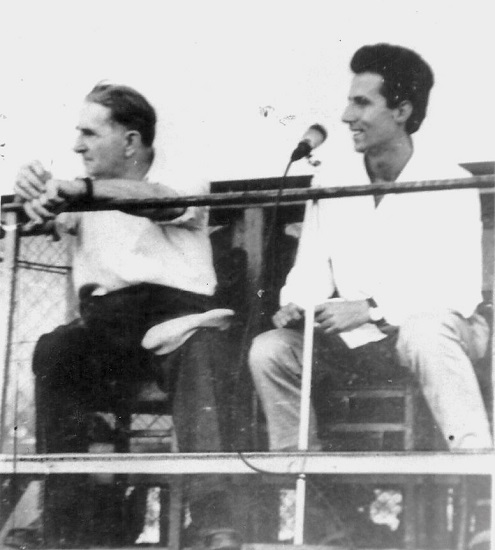
Since August 1959, 21 years old, I had begun working as a journalist at Radio Tirana. But in that same year I also became a sports commentator. This happened after a test approved not only by the leaders of this institution, but also by Anton Mazreku, the first radio sports commentator in Albania, who congratulated me, precisely the one I had adored since childhood and had dreamed of becoming like. But only in 1960 was I given the opportunity to commentate the matches of this championship between ‘Dinamo’ and ‘Partizani,’ about which I wrote a little above, where ‘Dinamo’ demonstrated that it was coming out of the “lethargic sleep” of two years before and after four years of “fasting,” became champion again.
Thus resumed the traditional rivalry between them, a rivalry that, as I will describe below, reached its “boiling point” in the 1961 championship. On the last day ‘Partizani’ was one point ahead of ‘Dinamo,’ but would face ’17 Nëntori.’ And it absolutely needed the victory. I commentated this match together with Ismet Bellova and together with him I experienced truly rare emotions. Jashari scores first, but Rada quickly equalizes. In the last minutes of the first half it is Pano who sends his team ahead.
(Two years earlier he had played with ’17 Nëntori,’ but when the day came to perform military service, the heads of the… People’s Army sent him to the ranks of the Naval-Military Navy, where this service lasted…3 years). But let us continue with the match: After Pano’s goal, Ishka, precisely when the fans of ‘Partizani,’ overcome by the delirium of grandeur, embrace each other, equalizes for ’17 Nëntori,’ 2-2. Both ‘Dinamo’ and ‘Partizani’ have 30 points each. So, as in 1950, ’55, ’57, when these teams finished the championship with equal points.
But again goal difference was not taken into account (46-13 for ‘Partizani’ and 41-12 for ‘Dinamo’). So thus we arrive at the final match, which we can call super supplementary. The last weeks of the 1961 championship had begun to be held at the ‘Dinamo’ stadium, because at ‘Qemal Stafa’ works began for the drainage of the field, which had been done for the first and only time in 1946, before the Balkan Games, a field that when it rained, not rarely turned into mud. Thus this match too would be held at the ‘Dinamo’ stadium (today ‘Selman Stërmasi’), very small for the demands of the sports fans of both teams. / Memorie.al
Continued in the next issue