
By Skifter Këlliçi, Boston
Part One
Memorie.al / One day in early March 1950, when together with Luan, my twin brother, we had turned 12 years old, and other friends from our neighborhood in Tirana, we learned from the newspaper ‘Sporti Popullor’ that a new football team had been created with the name ‘Dinamo’. With such a name we had read in this same newspaper that there were teams in the Soviet Union (‘Dinamo’ of Moscow, Kiev, Tbilisi), and even in Yugoslavia, ‘Dinamo’ of Zagreb. And behold, apparently, following their example, a team with the same name was being created in Albania too, ‘Dinamo’; not only that, but it would play directly in the first category, alongside ‘Partizani’, ‘Tirana’, ‘Shkodra’, ‘Durrësi’, ‘Kavaja’, and other teams.
We also learned that Albanian military officers who had studied in the Soviet Union and had seen matches of the above-mentioned teams with the name ‘Dinamo’, which belonged to the Ministries of Internal Affairs of the Soviet republics, had rightly raised the question: why shouldn’t the Ministry of Internal Affairs in Albania also have such a team. However, friends older than us told us that Mehmet Shehu, Minister of Internal Affairs of that period, just like Enver Hoxha and Hysni Kapo, the most ‘capo’ in Albania until then, were not ‘sports fans’…! But later they explained to us that Kadri Hazbiu, the head of the Security of the Ministry of Internal Affairs and then its deputy minister, had managed to convince Mehmet Shehu that the Ministry of Internal Affairs should also have its own football team.
(I wish that in these years passionate sports journalists have found in the State Archive the relevant document, if they haven’t found it, signed by one of the superiors of this ministry, which testifies to the date of the creation of the Sports Club ‘Dinamo’). It is strange how this team, on July 10, 1950, just a few months after its creation, just like ‘Partizani’, founded at the end of 1946, following the example of ‘Partizan’ of Belgrade in Yugoslavia, immediately became champion of Albania a year later, ‘Dinamo’ too, that is, managed to be declared champion of Albania, even within the year of its creation, leaving behind ‘Partizani’, three-time champion (1947-’48-’49), and ‘Vllaznia’ of Shkodra.
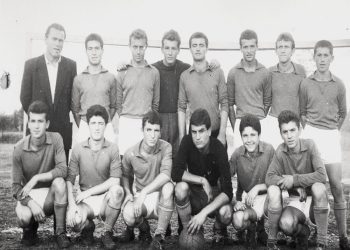
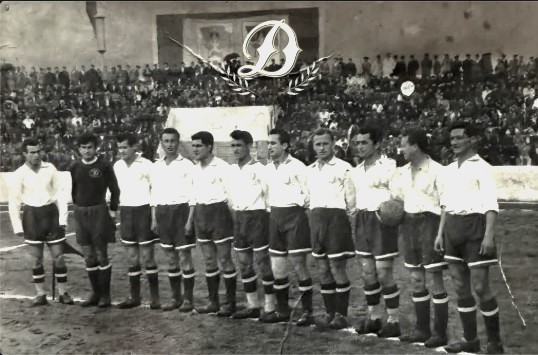
And here is how: Zihni Gjinali, former footballer of ‘Partizani’, who had finished the gymnasium of Tirana, spoke Italian very well and had also kept books on football technique and tactics in this language, was appointed coach of ‘Dinamo’. Right after him, the following lined up in the ‘Dinamo’ team: Qemal Vogli, goalkeeper of ‘Kavaja’, Taq Murati, right defender of ‘Durrësi’, Besim Boriçi, center-back of ‘Tirana’, Koçi Sherko, left defender of ‘Korça’, Bule Vathi, right half-back of ‘Tirana’, Bahri Kavaja, left half-back of ‘Partizani’, Qamil Teliti, right forward of ‘Kavaja’, Zihni Gjinali himself, right inside-forward of ‘Partizani’, Skënder Jareci, center-forward of ‘Durrësi’, Sabri Peqini, left inside-forward of ‘Shijaku’, Pal Mirashi, left forward of ‘Tirana’, and others.
What makes an impression is the fact that how the leaders of the Ministry of Defense, Beqir Balluku and Petrit Dume, showed themselves so ‘generous’ and donated to ‘Dinamo’ of Kadri Hazbiu, deputy minister (who a year later, in 1951, would become Minister of Internal Affairs), and Mehmet Shehu, prime minister, although he continued not to attend any football match, they donated, that is, to them the footballers who had been of ‘Partizani’, even if by their own wish, had joined ‘Dinamo’, perhaps without doing their calculations well that this ‘Dinamo’ would be its eternal rival. And, in order to dominate in Albanian football as well, as happened, these teams were placed against each other in the final match of the championship, held on July 10, 1950 at ‘Qemal Stafa’, on a scorching day.
These teams had accumulated equal points, each 28 of them, and goal average 58-4 for ‘Dinamo’ and 75-8 for ‘Partizani’, a result which in case of a tie favored ‘Dinamo’. Although small (12 years old), I remember that match very well. First Boriçi scored for ‘Partizani’. After a few minutes ‘Dinamo’ equalized through its player-coach, Zihni Gjinali. In the first minutes of the second half, Parapani of ‘Partizani’ scored the second goal. It seemed that no team would become champion for the fourth time. But a hasty exit by goalkeeper Bonati, who failed to punch the ball, gave Vathi of ‘Dinamo’ the opportunity to score the equalizing goal and the champion title, secured, according to the regulations, by the better ratio of goals scored two goals conceded.
THE ESCAPE OF BULE VATHI AND BAHRI KAVAJA
At the end of September and beginning of October 1950, our national team made an international tour in Romania, Czechoslovakia, and Hungary. It lost all three matches: 0-3 with the Czechoslovaks, 0-6 with the Romanians, and 0-12 with the Hungarians. These results were influenced to some extent by the escape of its footballers, Bule Vathi and Bahri Kavaja. While the ship they were traveling on was passing through the Dardanelles Strait in Turkey, they jumped into the sea and, swimming, reached the port of Istanbul, where they sought political asylum. The above results in no way reflected the level of our national team, which on May 1, 1950, had drawn in Tirana with Poland (0-0) and on June 4 of the same year, had defeated Bulgaria also in Tirana (2-1). And suddenly, within the end of September and beginning of October of the same year, it suffered such deep losses! Let us return to the escape of Vathi and Kavaja.
“I was on the deck together with other footballers and we were enjoying the beauties of Istanbul,” Sabri Peqini, former footballer, told me in a conversation after 1991, “when they, secretly, with astonishing courage, jumped in feet first and not headfirst from the ship and began to swim toward the port. However much we called out for them to return, it seems they did not listen to us, until they disappeared from our sight. We remained petrified and very shocked.”
In the spring of 1998, that is, after 48 years, Bule Vathi returned to Albania and I had the chance to meet him in the large house of the Vathis, somewhere near the Ministry of Foreign Affairs. He told me that the two of them had not been able to break through with the success he had expected in any football team in the West, and so he had settled in America, without forgetting Albania, where he was finally returning after the fall of communism.
As was learned then, Bahri Kavaja had ended up in New Zealand, but nothing more was learned about him…! The places of Vathi and Kavaja in the ranks of ‘Dinamo’ for the 1951 season (then the championship was held within one season, spring-summer) were taken by Xhevdet Shaqiri of ‘Partizani’ (after military service) and Muhamet Vila from ‘Kavaja’. In defense, the following substitutions were made: In place of Taq Murati, right defender, Leonidha Dashi of ‘Elbasani’ began to play; Besim Boriçi was moved to left defender, in place of Koçi Sherko, and the role of center-back was entrusted to Qemal Cungu of ‘Lezha’; while in attack, the place of Qamil Teliti was taken by Hamdi Bakalli of ‘Vllaznia’. Meanwhile, as left forward, in place of Pal Mirashi (removed for political reasons), Skënder Begeja began to play, graduated in law in Sofia, where he had been active with a team of the Bulgarian capital.
THE MASSACRE OF FEBRUARY 1951 AND THE PLAYERS OF ‘DINAMO’
The footballers of ‘Dinamo’ on the day of its creation were accommodated in Hotel ‘Vollga’ (after Hotel ‘Dajti’, the best hotel in Tirana of the 50s of the last century, which was located behind today’s Municipality). Sabri Peqini, with whom I have had the opportunity to talk several times after 1991, told me how the food treatment of the footballers, besides the comfortable sleep in the hotel, was extremely good. The footballers of ‘Partizani’ had the same treatment, with the difference that they lodged in a dormitory at the end of “Rruga e Elbasanit”.
“When every morning we ate two eggs fried in butter, jam, cheese, sweets, drank milk, not to mention the abundant lunches and dinners, where beef and unlimited bread were never missing, I remembered the poor citizens who barely filled themselves with the monthly ration foods which ran out in three weeks and in the last week were forced to buy food in the black market at very high prices. We children also felt this terrible shortage, considering that our rations and those of the elderly pensioners, called ‘ordinere’, contained 400 grams of corn bread, since we rarely saw wheat bread on our tables. ‘We felt so bad for our families,’ continued Sabri Peqini, ‘and we didn’t know how to help them…! Somewhat better, but far from our food treatment, was the situation of athletes in general, because they were equipped with rations called ‘heavy’. I won’t dwell then on the pressure of the dictatorship, which was increasing more and more.”
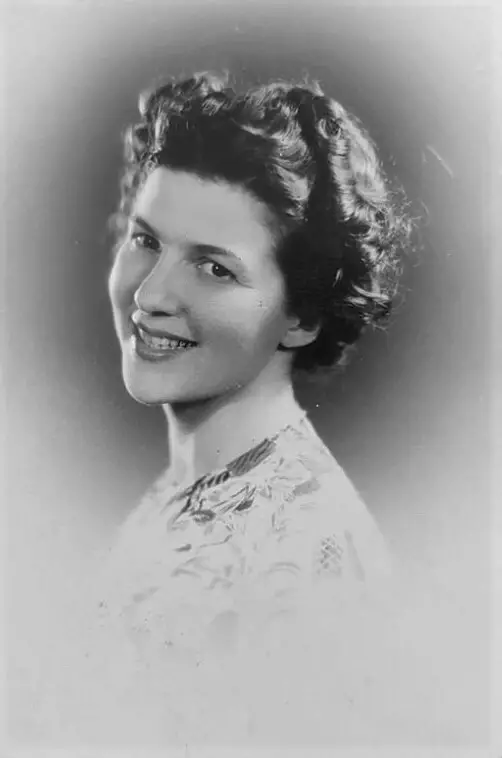
Another time Sabri Peqini asked me: “Did you know Sabiha Kasimati”? I remembered that I had met her by chance one afternoon in 1950, when I had gone to the National Library. There were no seats in the lower hall and I was standing in the corridor, not knowing what to do, when Haki Stërmilli, the director of the Library, who had written the famous novel ‘If I Were a Boy’, which I had also read, approached me. ‘Go upstairs, there are empty chairs,’ he told me. However, there was a large hall where learned people studied, and I was ashamed to sit among them. And behold, from the other side of the middle, where I later learned was the Institute of Sciences, I saw a woman with a pleasant face, who I later learned was named Sabiha Kasimati, who, seeing my hesitation, put her hand on my shoulder and smiling, said to me: “Don’t be ashamed, come inside.” And so I did.
“One morning at the end of February 1951,” continued Sabri Peqini, “we footballers were notified to gather in a hall of the Ministry of Internal Affairs, because Kadri Hazbiu, who was deputy minister and as a football fan covered us, would give us a notification of great importance. At that meeting, where there were also employees of other sectors of the Ministry of Internal Affairs, he informed us that: the vigilant Party had discovered a hostile group that had connections with the throwing of a bomb at the Soviet Embassy on ‘Rruga e Durrësit’. Many from this group had been sentenced to death and had been executed. Kadri Hazbiu, black in the face, took out a letter from the bag he was carrying and began to read the names of the executed.
We footballers knew none of those poor people. But when he read the name Sabiha Kasimati, we remained frozen. None of us had known her closely. But when we stayed in a field in front of Hotel ‘Vollga’, we had occasionally seen a woman full of light who passed on the sidewalk next to that field. We had heard that she was learned and worked at the Institute of Sciences, not far from our hotel. After the end of this meeting, although with fear, we spoke in a low voice with each other and expressed our astonishment at how such a refined woman could be part of a group that had thrown a bomb at the Soviet embassy. But we never mentioned it again. We were afraid even of ourselves.”
AN AMAZING ELEVEN OF ‘DINAMO’
‘Dinamo’ was undoubtedly the best team in Albania in the first half of the 50s of the last century, not only because it had almost the most distinguished players in Albania, but also because, thanks to its coach Zihni Gjinali, it implemented for the first time in Albanian football at a high level the ‘magic square’ in the WM system (three defenders, two half-backs, two inside-forwards, and three forwards), the beginnings of which were seen in our national team, winner of the football tournament in the Balkan Games of 1946, held in Tirana, composed of the two inside-forwards – Gjinali, Peqini, and the two half-backs – Shaqiri, Vila. ‘Dinamo’ was declared champion of Albania in the years 1950, ’51, ’52, ’53, ’55, and ’56, leaving in 1954 the first place to ‘Partizani’, led by coach Myslim Alla, who closed that championship with only one draw with ‘Dinamo’ 1-1.
This team consisted of the forwards Loro Boriçi, Refik Resmja, Simon Deda, the midfielders Roza Haxhiu, Gani Merja, the defenders Besim Fagu, Fatbardh Deliallisi, and the goalkeeper Sulejman Maliqati, etc., in March 1953, with the result 3-1. I remember that match, truly rare, and especially a rare goal by Boriçi scored in the goalmouth which Qemal Vogli himself described to me in this way: “Loro found himself on the line of the penalty area, facing me with the ball that came to him from the left. He stopped it with his chest, then lightly passed it to the right. Then I remembered that he would shoot with his right foot and I moved, bent, to that side. Suddenly he, avoiding Rreli, who was following him, passed the ball to his left and without letting it fall to the ground, shot furiously. I had time only to follow the ball with my eyes, which crashed into the net.”
As if to testify that it had left the ‘throne’ of football championships temporarily, ‘Dinamo’, always with coach Zihni Gjinali, climbed again to this enviable post, winning two championships in a row, that of 1955 and 1956; but in the ‘mark’ championship of ’55, as in the championship of 1950, fighting so fiercely until the last week, both teams, ‘Partizani’ and ‘Dinamo’, found themselves with equal points, each 55. Thus, this time too, goal average was taken into consideration…, which was again better for ‘Dinamo’, 74-9, that is, with a coefficient of 8.2, compared to the goal average of ‘Partizani’, 96-15, and coefficient 6.4. In this way, ‘Dinamo’, where Vogli, Dashi, Reli, Vila, Shaqiri, Bakalli, Gjinali, Jareci, Peqini, Begeja distinguished themselves, for the sixth time became champion of Albania.
In the championship of 1956, there was no need to use ‘mathematics’, because ‘Dinamo’ with a powerful sprint in the last weeks broke away in front and finished it with 29 points, against 23 points of ‘Partizani’. In this team, among others, there were in its ranks Vogli, Rreli, Vila, Shaqiri, Bakalli, Gjinali, Jareci, Peqini, Begeja, to who were added Beliu, Verria, Sheshi, Tallushi, Gjyli, Gjoci, and others.
WHICH TEAM WAS I A FAN OF?
Rightly, from the readers of these memories, the question may naturally be directed to me: “But you, journalist, publicist, writer, and sports commentator of RTSH for 40 years (1959-1999), who although you have emigrated for 27 years to America, which team were you and are you a fan of?” As is known, in the years 1945 and 1946, the football championships of the post-liberation period were won by ‘Vllaznia’ of Shkodra, in a duel with ‘Tirana’, which later would be called ’17 Nëntori’. Since Loro Boriçi shone with ‘Vllaznia’ and my mother was from Shkodra, although married to a pure Tirana man, as a 7-year-old boy, I became a fan of ‘Vllaznia’. I don’t forget the return match between these two teams in the summer of 1946, when they, found in the first group, played against each other.
At that time the stadium, which since the time of the war for the liberation of Tirana had remained unfinished, without a running and jumping track, a field still without greenery, works which would be carried out later before the start of the Balkan Games in early October of that year. In that match ‘Vllaznia’ of Loro Boriçi defeated ’17 Nëntori’ 5-1 in Tirana (the first match in Shkodra it had won 1-0) and won for the second time the champion title. I also saw this match with my twin brother, Luan, together with our Shkodra mother, and there we were amazed by the rare mastery of Boriçi. When in 1947, Boriçi was called to do his military service and began to play with ‘Partizani’, for his sake I became a fan of this team. Even when in 1950, with the creation of ‘Dinamo’, as is known, the long, fierce, and so interesting duel between these two teams began. But together with it and other friends, we began to admire the goalkeeper Vogli of ‘Dinamo’.
Not only that, but in 1954, now 15-year-olds with my brother who was becoming a distinguished player in tennis and table tennis, activities that were held in the ‘Rinia’ Sports Park (after the ‘Shallvare’ field), we had the chance to get closely acquainted with Qemal Vogli and Loro Boriçi, because both took part in the local and national table tennis championships, both in football and in this game against each other. And so my brother and I got to know them, but much more with Vogli, because he also followed tennis matches, where my brother, as in table tennis, occupied the first places.
Vogli, who on the field with his dark face, black, tousled hair, also black eyes, black jersey and shorts, had a somewhat heavy appearance, turned out to be a very simple man, who made us love and adore him as on the field. At the beginning of 1950, when ‘Dinamo’, newly created, with center-forward Skënder Jareci, started alongside ‘Partizani’ for the champion title, in the ‘Shallvare’ field in Tirana (which a year later would be demolished, to build apartment blocks), a boy less than ten years old with his dribbling of the ball amazed the fans, who came to see on Sunday mornings matches between teams of Tirana enterprises. It was Namiku, Skënder’s little brother. Years later he began to play as a midfielder with ‘Dinamo’.
I have happened to comment on Radio-Tirana matches of ‘Dinamo’, where Namik Jareci also played. He never once told me to speak well during my radio commentary, even when this did not happen. Nor did Skënderi, not only when he played, but also when he became coach of ‘Dinamo’ in the years 1966-’73…! Then Namiku did not separate from the fields of stadiums, but this time in the role of referee. And he became among the best ‘nightingales’ in the history of our football, even an international referee. His tradition was later continued by his son, Sokoli, and he too with as much success as his father. / Memorie.al
Continued in the next issue