By Besnik Dizdari
Part Two
Memorie.al / Sports euphoria will reach its peak a few weeks from now with the successful performance of the USSR at the Rome Olympics. The special Albanian lead article is entirely dedicated to the “ancient and eternal Albanian–Soviet friendship,” culminating in this original apotheosis of servility of an unprecedented absurdity: “A friendship that our people, even during the time of the Turkish occupier, found with the Russian people.” From the outside, the year 1960 seemed a “bright” year. Likewise for us young people, who had just finished high school, nicely caught between the three main entertainments: sports, cinema, and inevitably, books…!
Continued from the previous issue
1960: THE USSR – FIRST CHAMPION OF EUROPE
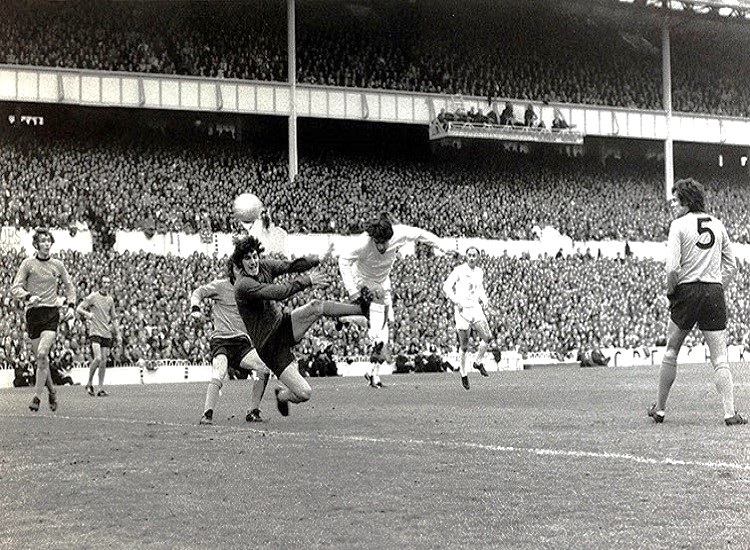
Let us return to the “Parc de Prens” in Paris, 1960. The Yugoslavs have a famous attacking duo! Šekularac – Kostić. The Soviets have experience on their side. Yet one man stood above all, the “black spider” – goalkeeper Yashin, of whom, as one observer writes, “he saves all expected shots, but also the unexpected ones.” The Yugoslavs, who also display a typical southern Mediterranean temperament and are all under 23 years of age, score first with Galić in the 41st minute.
It seemed that the Balkan youth would win like this… But as soon as the second half begins, Soviet experience takes over. In the 49th minute, after a storm lasting slightly less than 300 seconds, Metreveli turns the game around with the equalizer. It would be a 1-1 that would last far too long. The winner hangs somewhere in an immense expanse of time. 1-1 drags on beyond 90 minutes, beyond regular time. Extra time: 2×15 minutes. And again 1-1 even after 100 minutes.
The teams start thinking about penalty kicks, when the 113th minute arrives and Meskhi sends a high ball from the wing towards Višnjić’s goal, where the flight of centre-back Ponedelnik and his header in front of a petrified Yugoslav defense fix the score at 2-1 – a result worth the first European Cup! Almost like 2016 (the 109th minute: Éder and Portugal champions in 2016). That day, July 10, 1960, nothing would change until the end, until the final whistle of the English referee, Ellis. A final in which, strangely, of the few French who were in the stadium, more whistles than applause were heard.
For better or worse, the USSR becomes the first champion of Europe and the “Henri Delaunay” Cup – so heavy, tall, proud, but still unknown – ends up in the arms of the Russians… And above all, Lev Yashin, the 31-year-old “spider” of Dynamo Moscow, with tentacle-like arms, dressed entirely in black, the artist of the goal, with a completely original interpretation of an incomparable reflex in all eras of football. He concedes only one goal and deflects a whole series of others.
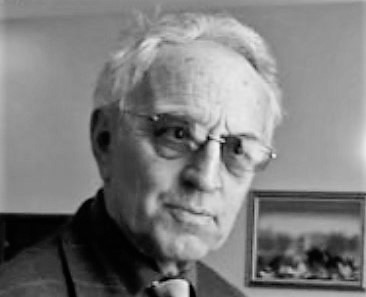
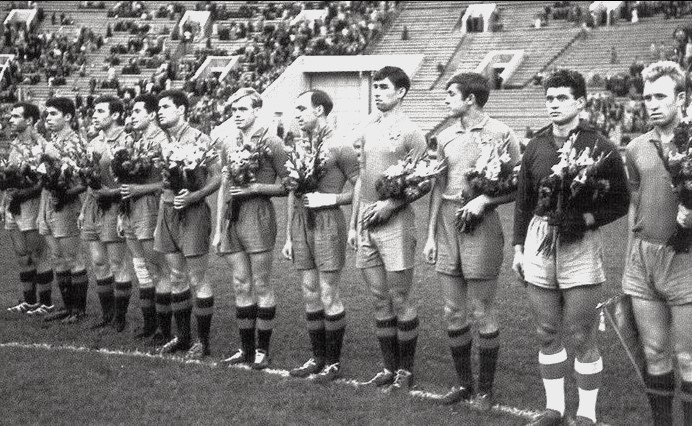
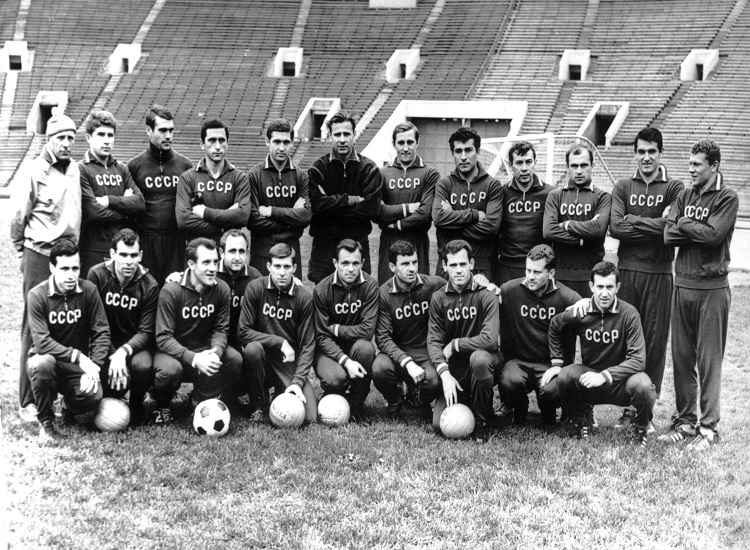
Nevertheless, it was a squad of “veterans,” as observers define them, and in every department of the eleven a star shone: Yashin in goal, Krutikov in defense, the great Igor Netto in midfield, Ivanov beside him, and Metreveli in attack. Besides them, the 23-year-old from Spartak Moscow, Viktor Ponedelnik, who is the decider of everything with his goal? He would later have an excellent career as a journalist and editor-in-chief of the weekly “Football-Hockey,” one of the most typical publications of Soviet sports journalism, which became so beloved even to us in Tirana of the “Soviet Book” shop.
The coach was known: Gavril Kachalin, the 49-year-old coach with a 16-year career as a forward until 1945 for Dynamo Moscow. He was the man who, 4 years earlier, had led the USSR to the Olympic title. When he left the national team in 1962, he went to Tbilisi and made Georgian Dynamo champion of the Soviet Union! Author of theoretical books on football, irreplaceable to this day as an authority of Russian football, a great tactician, for his time an avant-garde coach, authoritarian, founder of the Soviet school of football; he would also lead the Soviet Union in two World Cups.
In Albania, he was very present through translated writings, continuous stories about him and his work, as if he were the coach of the Albanian national team. We have not yet “studied” the Albanian Sovietization of those times, before which even the fascistization of the years 1939-1943 seems mild. Interviewed during the days of “EURO 2016” by the French newspaper “L’Equipe,” the author of the decisive goal of the distant 1960 final, Viktor Ponedelnik, said:
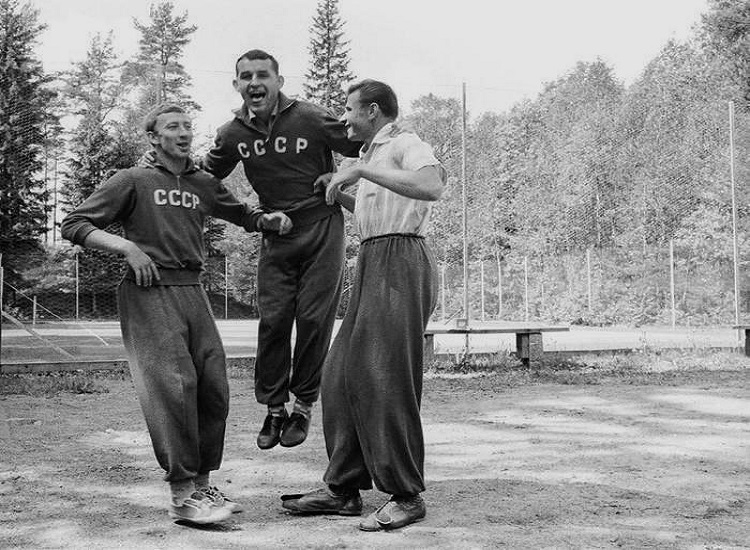
“For the preparation of the European Cup matches, we were isolated in a complex belonging to the Central Committee of the Communist Party, somewhere near Moscow…! It was near a lake. It was a time when, even if there was some freedom under Khrushchev after Stalin, it was still somewhat temporary and in the team one always felt a sense of uncertainty. We went to Marseille five days before. We visited the Château d’If, about which we had learned at school thanks to Alexandre Dumas’ novel. … Then the match against Czechoslovakia.
They were a great team, finalists of the World Cup in Chile in 1962. But we had Yashin. Our victory was his merit. … When the final against Yugoslavia came, we learned that the Yugoslav footballers had promised Tito. The first half was 1-0 for them, but Metreveli equalized in the 49th minute, and then thanks to Meskhi’s cross, I scored, making the first history of the European Championship, securing for the Soviet Union this trophy as well, four years after the Olympic title.
At the hotel, we gathered in complete euphoria and drank some champagne and then ‘freedom’ on the streets of Paris. A sleepless night, a night of revelry and relaxation after the explosion of the stadium. The next day, the official reception at a restaurant near the Eiffel Tower. Among the guests was Santiago Bernabéu, the owner of Real Madrid, who wanted to buy half of our team: Yashin, Metreveli, Netto, Meskhi and me.
Our officials were stunned. For the success we achieved, we received only 200 dollars each as a reward,” says Viktor Ponedelnik – undoubtedly the only current European football champion who managed to become one of the most distinguished sports journalists in the Soviet Union. Today, the Albanian national team alone received 8 million euros just for participating in the final matches of “France 2016.” That was socialism “with and without a human face,” dated 1960…
THE SOVIETIZED TIRANA OF 1960…!
As a Soviet vassal, Tirana too “celebrated” in its own way. “Popular Sport” headlines in block letters: “Soviet footballers won the European Cup.” The prominent headlines continue on page four, naturally also with inevitable writings against capitalist sport, most of which were translated from Moscow’s “Sovetsky Sport.” Model headlines of 1960 journalism, which were increasingly direct: “This is how the revanchists are educated,” “Footballers are bought and sold,” “Against the Changkaists”… All writings “signed” by Moscow.
And endless news about every competition and sports activity taking place in the Soviet Union. Down to the details. If you return to the newspaper “Fascism” of Tirana in 1940, during the fascist occupation, you will be convinced that Italianization is far from this vigorous Sovietization…! The truth is that we had reached the dividing year when Albania would begin its third decade of communism, a dramatic start when you remembered what would happen only a few months later in its relations with the powerful tutor called the Union of Soviet Socialist Republics.
Fortunately, much would happen that would greatly influence even the national sport of the small so-called People’s Republic of Albania, although the traces of the country’s Sovietization would not be erased so easily… From the outside, the year 1960 seemed a bright year, so to speak. If today we were to try to delve a little more than football into this interior of Albanian public life in 1960, for example, Bondarchuk’s film “The Fate of a Man” based on Sholokhov’s story, would be among the first of the de-Stalinization films allowed to be shown in Albania. The strange thing is that in this July 1960, it is shown for only two days at the “Partizani” cinema!
But immediately after it, Chukhrai’s “Ballad of a Soldier,” in those same hot July days, conquers the minds of Albanian youth. Pacifism seemed to be settling cross-legged even in Enver Hoxha’s Tirana. Not forgetting the classic, as suddenly the screening of the film “White Nights” based on Dostoevsky’s story also finds its place. Meanwhile, “Spring of Youth” was supposed to be the first wide-screen film shown in Albania, inevitably a Soviet film, although the Party took care to maintain a certain balance of the entire film library of the so-called People’s Democracies.
Thus there are also Chinese films (“Daughters of the Party”), Bulgarian (“The First Lesson”), Romanian (“Secret Cipher”), Hungarian (“Mischief”), North Korean (“Love the Future”), East German (“Women’s Fates”). Inevitably interrupted again and again by the next Soviet film, a patriotic one, externally somewhat of the American “western” style: “Kachubei.” And then, by another Soviet musical film, “The Sailor from the Comet,” for which it was so difficult to find tickets! And again the de-Stalinization films, culminating with the Franco-Soviet film “Normandie-Niemen” – about World War II, dedicated to the USSR-France cooperation.
Meanwhile, the surprising performance of the opera “The Barber of Seville” left another impression, a more liberal, more modern one, of Albanian life…! While suddenly, as if to prove this even more strongly, two French films arrive: “Don Juan” and “Les Misérables.” Thus, only cinema could rival the popularity of football in Albania in 1960. But meanwhile, on the stand of the central bookstore, the cover of Stendhal’s “The Red and the Black” appears, and Albania seemed to be reborn beautifully in culture and sport, while on the streets of Tirana, in kilometer-long boulevard fragments, groups of Soviet workers looked like full-fledged citizens of the Albanian capital.
When, about a month later, I finally came to Tirana, I would have many of them as “comrades” twice a week at the door of the Soviet Book shop, Mondays and Thursdays, around 3:00 PM, when the Soviet press arrived and I filled my “package” with “Sovetsky Sport,” “Football-Hockey,” “Nedelya,” “Sovetsky Ekran,” and others. There, waiting, were also three future figures of journalism, Skifter Këlliçi, Valter Shtylla, and Agim Papaproko, not infrequently also a film operator, still young at the time, named Viktor Gjika. Journalism would tie us together directly…!
We were still somewhat far from that, those days, when Tirana is covered by the visit to Albania of Maurice Thorez, General Secretary of the French Communist Party, together with his wife, Jeannette Vermeersch – member of the Political Bureau – and for a moment, besides Soviet, Tirana could also seem quite French… Should it be believed that we were dealing with a revisionist Tirana? By no means would it become such. Although Radio-Tirana dedicated two special programs a day to Radio-Moscow and the program “Music from the countries of people’s democracies” was permanent.
One way or another, the atmosphere of our life seemed joyful, because while the press, cinemas, stadiums were exercised by the liveliness of a socialist life – still in poverty, of course – and this communist-revisionist cultural fraternization (variant), at least from the outside, seemed to fill the life of us 18-year-olds “free” not badly, because prisons and concentration camps, although somewhat reduced, still functioned beautifully also in this equally collectivist 1960.
And after this brief cultural-urban-social description of Tirana of the time, returning to football, I remember it was said that even the fact of playing matches at the “Dinamo” stadium, which was considered the property of the “Dinamo” Sports Club of the Ministry of Internal Affairs, had not a little influence on its winning the title. I say it could not be so, nevertheless…!
The truth was that within a decade, Albania had been enriched with a sports club that would not remain only with football but would explode as a great sporting power for Albania in many other sports. And this, without a doubt, served the development of national sport…! It had taken the name of Moscow’s “Dinamo” for the club and its stadium.
It won the title in 1960, but then halting for nearly 15 years, as if to make the Sovietization of Albania more distant. The truth was that the year 1960 of the Soviet Union’s title as the first champion of Europe would also mark Albania’s sporting separation from the land of the Soviets. (This will be the third and final part of this Dossier).
THE “POETIC” JOY OF 1960 FOR THE SOVIET UNION
Communist historians always, even today, want to fill our minds that the break with the Soviet Union has nothing spontaneous about it and had been simmering for years. Of course, since the PPSH (Albanian Party of Labor) accepted the 20th Congress with great reluctance. Read the eulogies that “Zëri i Popullit” gave it at that time and you will be convinced. Then, step by step, it is known, as this Congress endangered the positions of the Enverist leadership, the opposition began. However, that is another story, which no one has yet gotten to the bottom of.
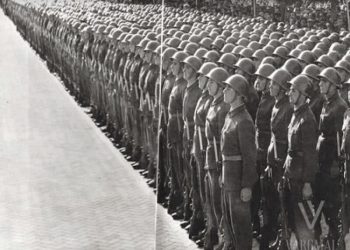
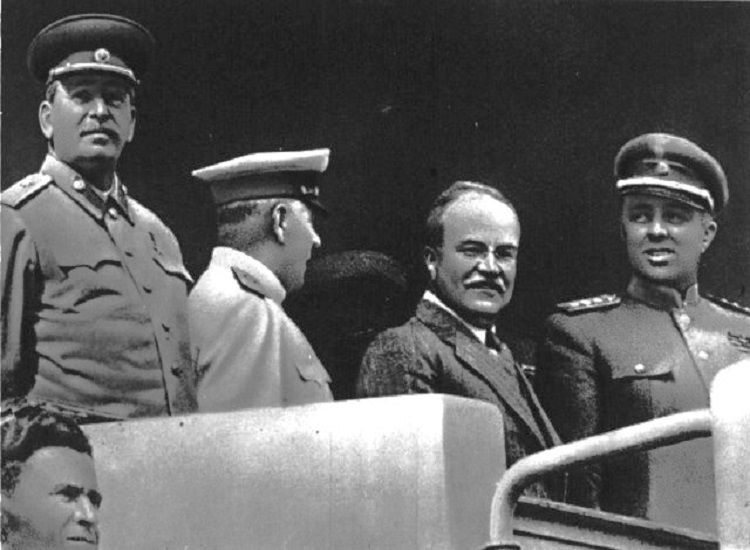
This is because today’s Albania has still not destroyed the monopoly of the party or leftist historians, as Indro Montanelli explained very nicely in one of his editorials. So, if behind the scenes the break had been simmering for years, how is it possible that the year 1960 had such extraordinary pro-Soviet euphoria in Albania? We accompany this chapter with a rare photo from Moscow in 1960, showing Enver Hoxha and Mehmet Shehu signing the declaration of the Warsaw Treaty. It is worthwhile for an anthropologist or psychologist to study the faces of the leaders of all communist countries, with Khrushchev at the forefront, to understand everything: the conviction, the joy, the submission, or the “friendship” that reigns.
There is no doubt. The year 1960, which also includes the Albanian euphoria for the Soviet Union’s success in the European Football Championship, reaching its peak with the euphoria of the Soviet success at the Rome Olympics a few weeks later, is the culminating year of Soviet occupation in Albania. I often remember what my unforgettable brother, Petrit Dizdari, told me, when suddenly at a meeting at the Ministry (of Agriculture), due to an acute problem, the minister, somewhat worried, suddenly interrupted the meeting, rushed to lock himself in the office with the Soviet adviser, and then, completely calm, returned and gave the directive…!
At that time in Albania, besides all the press, a weekly magazine named “Friendship” – organ of the Albania – Soviet Union friendship society – strongly maintained every month the foundations of this type of invasion that later Leonid Brezhnev would call “limited sovereignty.” It was a time when even the verses of Albanian poets wove dithyrambs like this: “But it’s nothing: let Ilić be / In the midst of landscapes I love dearly. / Among the roads, among the quiet fields, / Where an oak rustles where a river flows, / Because He walked through the Shqotë [a region], / On the roads full of October winds, / He loved the beauties of this world / … That beautiful morning reminded him / Of the future over the infinite Russia… / Victories never, we will never abandon them.”
And another: “… And the flags of labor, I see them blazing, waving, / As they announce to the world: that Lenin’s light, even to the farthest ends, / One day, will shine.” And another: “You, my generation, must have heard / Of the land that has so much happiness / Of the magnificent land of Lenin / Of the land that stays awake for peace / Of the land of legendary heroes / Of the land that made the revolution!” Try to find a poem for Duce in the 1940 newspaper “Fascism.” I didn’t find it.
On the contrary, I found lyrical verses like this: “Those two teardrops haven’t dried on your cheeks yet, / That crossed your face one youthful morning, / And though time has passed, though much time has gone by, / Your eyes never dry, I see them wet hourly!” Because, strangely, the pressure of the 1960s inevitably reached even poetry in a completely different way. We who would become journalists, fortunately, age did not involve us in these services. At least we would show servility to “our own,” not to the foreigner. That is not a merit, however. It was simply a matter of the analog…!
The truth is that 1960 for us 18-year-olds was sports and joy. Even though we felt and understood very well the unrestrained Sovietization. It is equally true that our newspapers were much weaker than the Soviet ones; our books likewise, and the films were only Soviet…!
“The brilliant triumph of Soviet sport at the Rome Olympiad,” as the Albanian press headlined, for us meant the names of Soviet athletes of world level such as Krepkina, Bogdan, Siskin, Ozolina, Kapitonov, Tamara and Irina Press, Kuznetsov, Ponomaryova, Shakhlin, Shevtsova, Bolotnikov, Shavlakadze, Rudenkov, Latynina, Azaryan, Astakhova, Vorobyov, Vlasov. They had become like family to us. We admired them. Our information was narrowed down only to the “glorious” Soviet Union. There was no television broadcast for us, but we discovered Italian radio, which broadcast the Olympiad live. / Memorie.al