From Dashnor Kaloçi
Part Five
Memorie.al / The Special Operative Group that was created immediately after the arrest of the former Minister of Internal Affairs, Kadri Hazbiu, and his deputy, Feçor Shehu, in mid-October 1982, headed by the Deputy Minister of Internal Affairs, Zylyftar Ramizi (who also held the function of Director of State Security) and with Enver Zeneli and Hasan Ulqinaku as his subordinates, among other measures, such as the study and analysis of a large number of archival files belonging to a long period (1945-1982), also called upon and requested some of the former high officials of the leadership of the PPSH (Albanian Party of Labour) and former senior leading cadres of the Ministry of Internal Affairs, State Security officers, etc., to submit in writing what they knew or suspected regarding the “hostile activity” of Kadri Hazbiu, Feçor Shehu, or other persons with whom they had been connected by work or not, during the period they had served in that ministry, or in the Internal Affairs Branches in districts, in the Political Detection sector, near our diplomatic representations accredited in various countries of the world, etc.
Among the former high officials of the PPSH and leading cadres and State Security officers, etc., who responded to this call, providing their written testimonies to the Special Operative Group, were: Liri Belishova (former member of the Political Bureau and secretary of the Central Committee of the PPSH for propaganda, art, and culture), Nesti Kerenxhi (former Major-General, Director of State Security and Minister of Internal Affairs), Xhule Çiraku (former Lieutenant-General, Director of the Second Directorate of State Security and Deputy Minister of Internal Affairs), Rexhep Kolli (former Lieutenant-General, Director of State Security and Deputy Minister of Internal Affairs), Zija Kambo (former Major-General and Commander of the Republic Guard), Zoi Themeli (former Lieutenant-General, Director of State Security and Deputy Minister of Internal Affairs), Myftar Tare (former Colonel and Deputy Minister for Political Detection, arrested in 1949 and released), Nevzat Haznedari (former Major-General and Head of the Investigation Department at the Ministry of Internal Affairs), Hekuran Pobrati (former Colonel and senior State Security officer), Feti Smokthina (former Colonel and Commander of the Republic Guard), Zylfi Saliu (former Colonel, senior State Security officer, head of Internal Affairs Branches in several districts, and deputy of the People’s Assembly), Lelo Sinaj (former senior officer and Director of State Security), Halil Zeneli (former Colonel of State Security and head of Internal Affairs Branches in several districts), Ilo Manushi (senior officer and Director of the Cadre Directorate of the Ministry of Internal Affairs), Mark Dodani (former Lieutenant-Colonel, senior State Security officer and deputy head of the Sarandë Internal Affairs Branch), Xhemal Bejto Fasllia (former judge and senior State Security officer in the Ministry of Internal Affairs), Ibrahim Kubati (former agronomist graduated in Bulgaria, director of hunting reserves in several districts of the country where the high leadership of the PPSH went hunting, sentenced to five years of political imprisonment), Ali Kubati (former officer of Political Detection in several countries of the world and deputy chairman of the Executive Committee of Tirana), etc.
Continued from the previous issue
From the aforementioned letters sent to the address of the Special Operative Group at the Ministry of Internal Affairs, or personally to Minister Hekuran Isai, in the years 1982-1983, in previous issues we have published the letters of Liri Belishova, Hekuran Pobrati, Xhule Çiraku, and Mark Dodani, whereas in this article, we have selected for publication the letter of Ibrahim Kubati, addressed to the Directorate of Internal Affairs of Tirana (the Security branch), dated November 19, 1982, a few days after he was released from Spaç prison (under the amnesty granted at that time by the People’s Assembly of Albania), where he had been serving a sentence since 1980 as a political prisoner.
How were the six closest comrades of Myslym Keta condemned as “enemies of the people”?
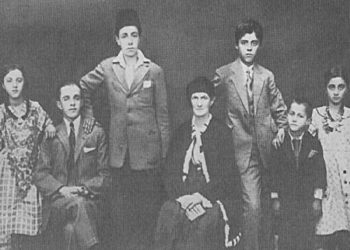
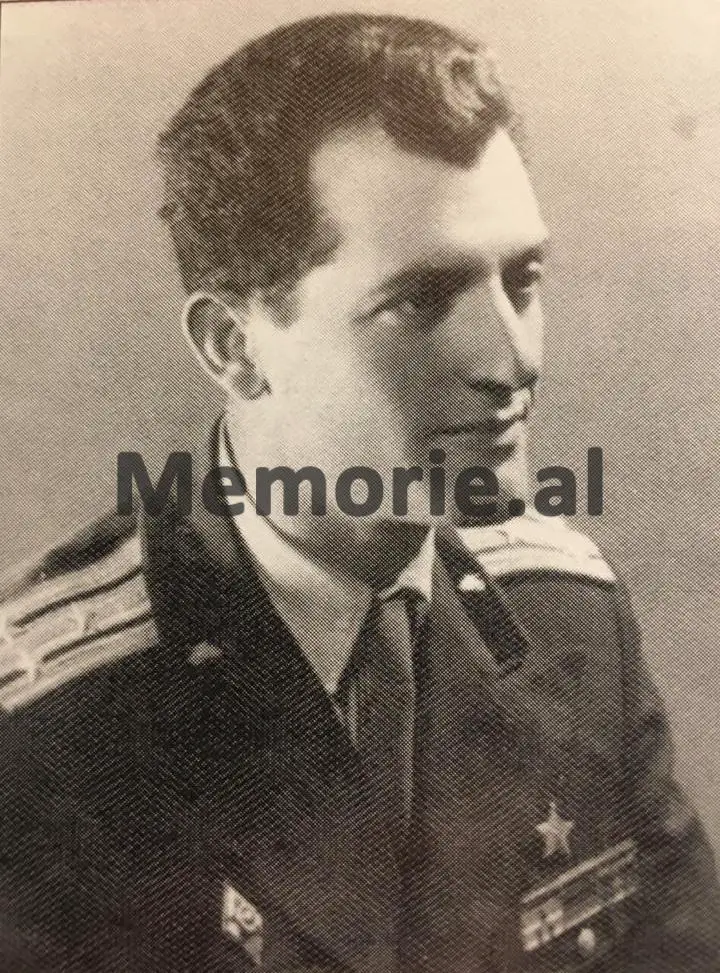
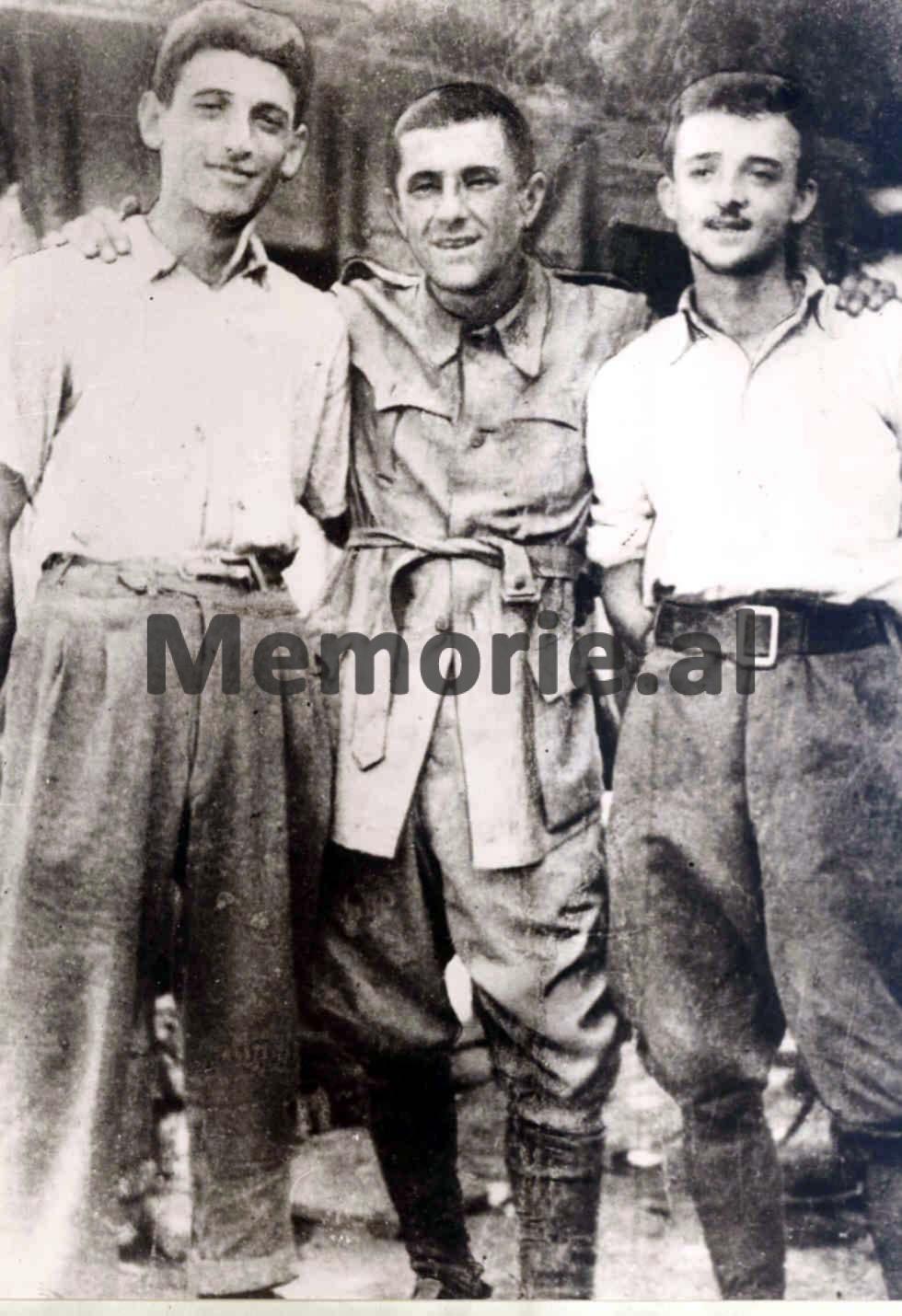
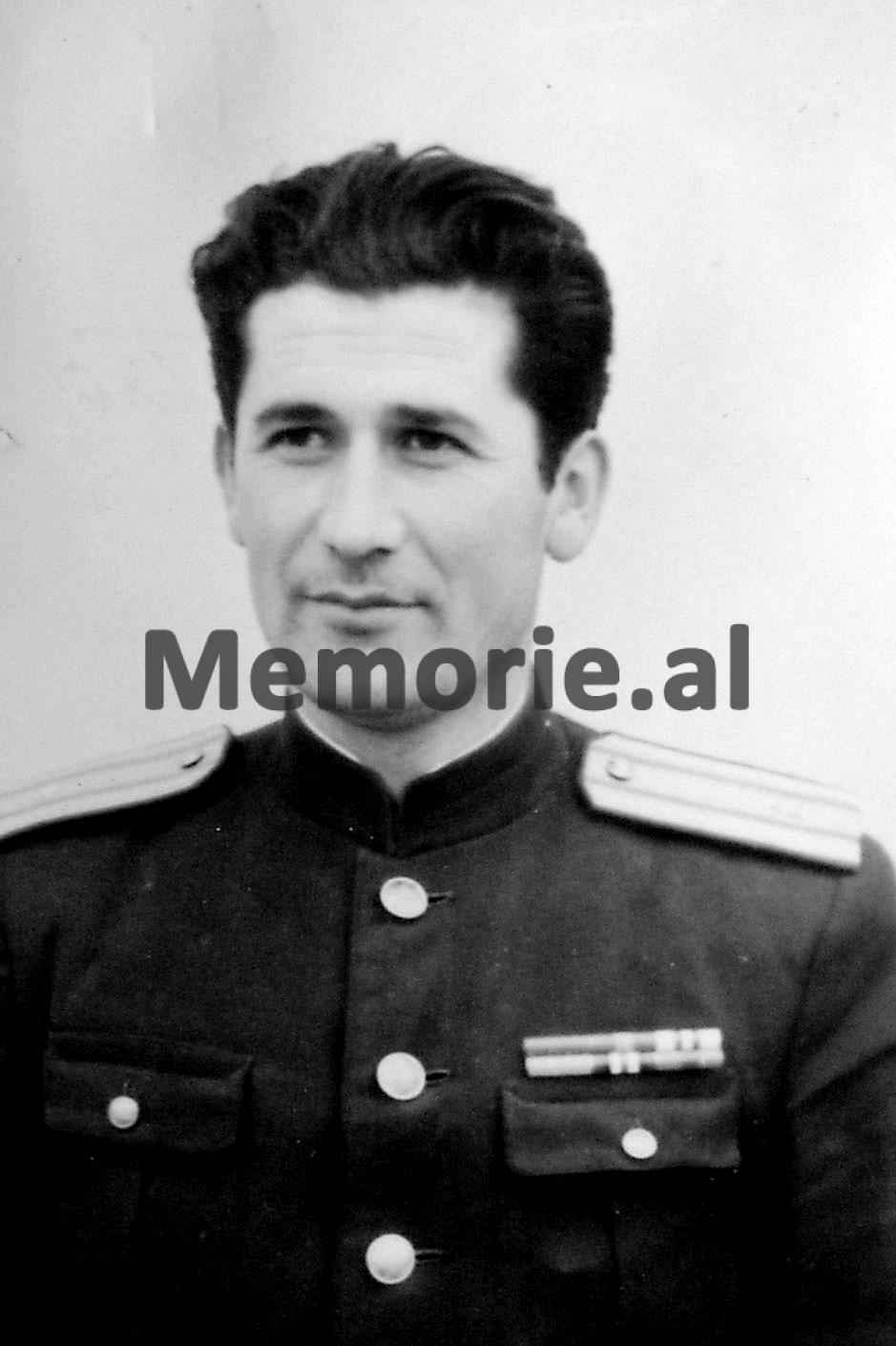
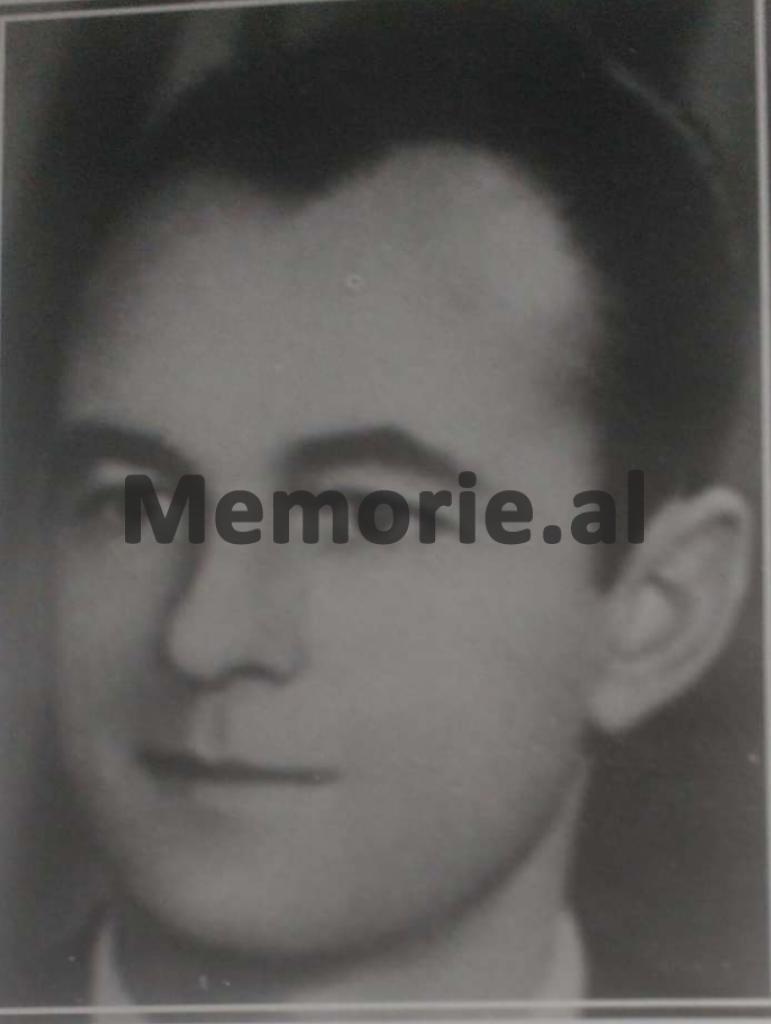
Ibrahim Kubati had for several years served as director of hunting reserves in several districts of the country where the high leadership of the PPSH went hunting (Dajt, Kune-Vain, Velipojë, Divjakë, Elbasan, Librazhd, Karaburun, Korçë, etc.) and was also known as a close associate of Kadri Hazbiu, who often took him along when he went hunting. Arrested in 1980 as part of a “hostile group”, which also included his brother, Ali Kubati (former Political Detection officer in several countries of the world and deputy chairman of the Executive Committee of Tirana district), Bardhyl Mano, or otherwise known as Lola Mano (former high official with several state duties), Edip Ohri (former Colonel, commander of the Albanian Air Force and deputy in the People’s Assembly), Sabri Pilkati (former prosecutor and deputy chairman of the Executive Committee of Tirana), Shyqëri Këllezi (the nephew of Abdyl Këllezi, former personal escort of Enver Hoxha during the War and later General Director of Railways), who were sentenced to long years of political imprisonment.
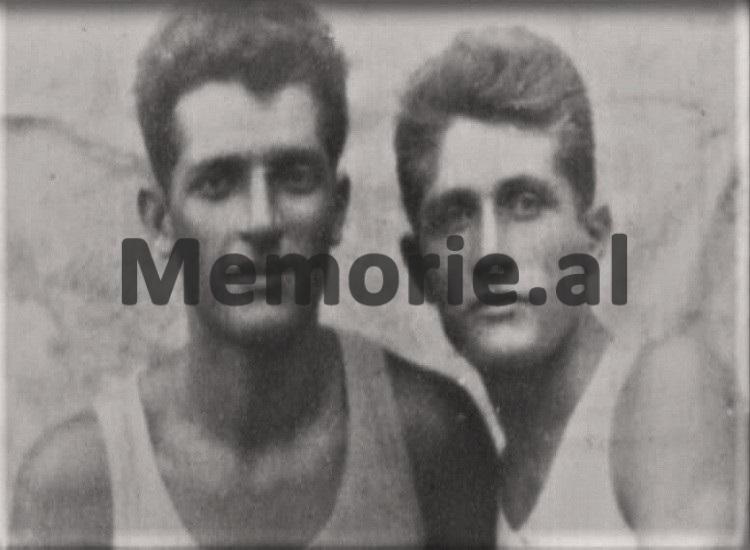
All members of this “hostile group”, besides their close friendship with each other, also had in-law ties, as Sabri Pilkati was married to the sister of Myslym Keta, Edip Ohri was married to the sister of Ali and Ibrahim Kubati, while Myslym Keta was married to the sister of Bardhyl Mano. Likewise, all of them had been the closest comrades and friends of Myslym Keta (“Hero of the People”) since the War period, as members of the guerrilla units of Tirana and partisan formations, a friendship they had maintained even after his “accidental” death (in 1966), continuing it until the day they were arrested. This group of comrades also included Colonel Adnan Qatipi and Safet Kurti (former members of guerrilla units with Myslym Keta) who were not arrested like the others (which, also due to Security intrigues, cast shadows of suspicion upon them), but they too had problems, being dismissed from their duties or forced into retirement (Safet Kurti) before even turning 50!
As we will see from the letter of Ibrahim Kubati, during the investigative process, the investigators insisted that he admit the accusation that they, the members of that group, in conversations among themselves and with others, expressed that Myslym Keta had not died accidentally, but that State Security had eliminated him, because the high leadership was very afraid of him. This matter, which was also whispered about during the communist regime, is also made known by the former senior State Security officer, Lieutenant-Colonel Mark Dodani, in the letter he sent to Minister Hekuran Isai in 1982, where he states that in 1965, he had been called by the Deputy Minister of Internal Affairs, Major-General Rexhep Kolli (who was also the Director of State Security), who had assigned him the task of killing Myslym Keta, since according to him, “Lymi had turned to treason and wanted to escape from Albania”.
For that matter, Lieutenant-General Rexhep Kolli had also shown Marku the written order, signed by the Minister of Defence, Lieutenant-General Beqir Balluku, and the Minister of Internal Affairs, Lieutenant-General Kadri Hazbiu. While we became acquainted with these matters in the three previous articles from the letter of Mark Dodani, regarding the conversations of the closest comrades and friends of Myslym Keta (Edip Ohri, Bardhyl Mano, Sabri Pilkati, Shyqëri Këllezi, and Ibrahim and Ali Kubati), as well as what the investigation demanded of them, etc., the letter of Ibrahim Kubati (published by Memorie.al) informs us, and also makes known the reports and relationships that the members of that group had with each other, their arrest and punishment!
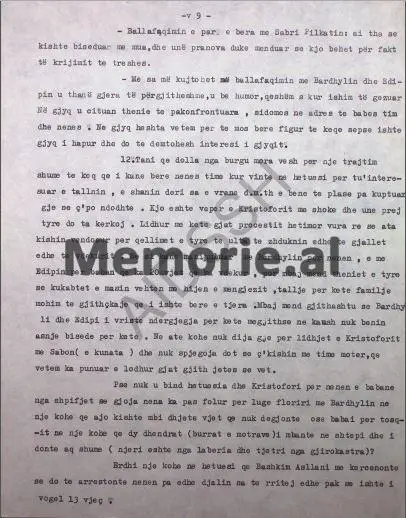
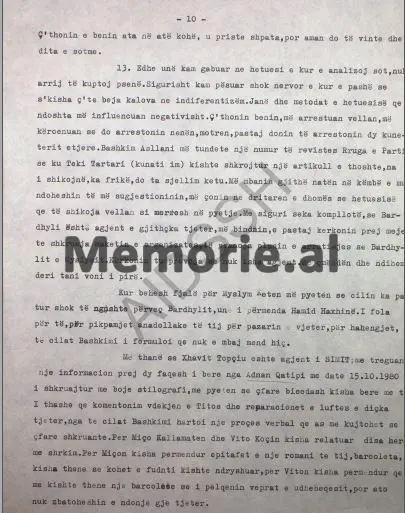
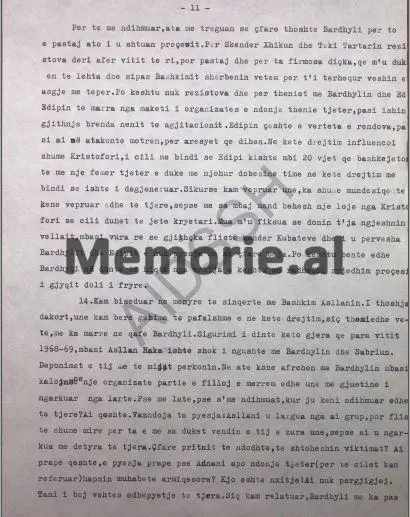
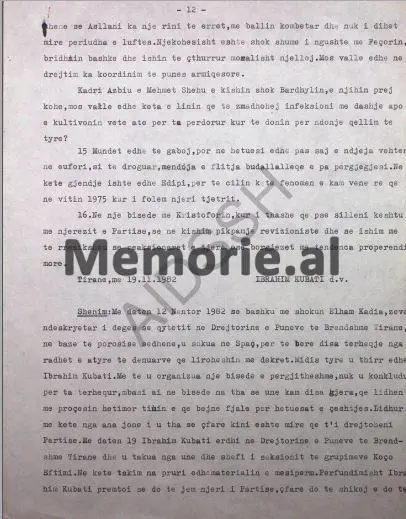
ARCHIVAL DOCUMENT WITH THE LETTER OF IBRAHIM KUBATI, NEWLY RELEASED FROM SPAÇ PRISON UNDER THE AMNESTY OF 1982, SENT TO THE MINISTER OF INTERNAL AFFAIRS, HEKURAN ISAI
ON SOME MATTERS RELATED TO THE INVESTIGATIVE PROCESS AGAINST ME AND OTHER PERSONS CONNECTED WITH ME
- The essence of my mistakes was the statement that in the leadership, there are divergences. For this, among other things, I mentioned a saying of Spiro Moisiu, when he was talking with Bardhyl Mano. Bardhyli used to tell him: Mehmet Shehu has got your back, while comrade Spiro would say: I have Enver Hoxha, who has got his back. The investigator Bashkim Asllani used to tell me that Spiro Moisiu is an enemy of the Party that he even sympathized with the Germans. Likewise, he told me that Myslym Keta is also an enemy of the Party.
- During the investigation, I testified to a statement of Bardhyl Mano about Muhamet Prodani. According to Bardhyli, Mehmet Shehu wanted to defend Muhamet, but did not succeed because comrade Enver decided. Mehmet Shehu sent this news to Muhamet through others (likely Sabriu (Pilkati)).
- In the first days of the investigation, a file began to circulate which they named “Kasus Kleit”. They read it in turn and teased me with it. I remembered that my brother has recorded in his civil status the name not Jo Ali, but Muhamet Ali, so it was very close to the name Muhamet Ali (the name of the boxer, Cassius Clay).
I don’t remember what I did, but I argued with them and Kristofori promised me that he would arrest even that brother of mine. And he did. I, both during the trial and now, do not know what he did, and that matter is not within my competence, but I want to mention some other things that may be needed by the Party.
Both in the investigation and in the trial, what was concocted with Sabri Pilkati, an alleged statement of mine, about a study for purifying the Party ranks, at a time when my brother had just suffered a heart attack and was unconscious? In the cell, I asked my brother what he had done, since I didn’t understand anything, because even in my trial, Sabriu said that he was afraid of Ali, whereas I seemed different to him.
My brother was upset and gave me courage, advised me to stand firm, told me that even in a bad position, we should set a good example, and finally told me: he had made self-criticism because Kristofori had advised him to do so, in the name of Mehmet Shehu and Kadri Hazbiu, even though the issues did not hold.
- Certainly, in the investigation, I was obliged to account for my errors and faults. Among other things, I defended myself and talked about my work as a cadre, communist, etc., I spoke about my biography, my and my family’s sufferings, and so on.
During conversations with Bashkim Asllani, when I told him that Region 4 wanted to make me a member of the Party Committee, he would say: we won’t let that happen; when I told them about the commemorative plaque of the house that was planned to be reinstalled, he would say: we didn’t let it be installed, and so on. In a word, he placed himself and the Security organs above the Party.
- Our investigation was closed quickly and unexpectedly, and I (I believe the others as well) was glad about this, especially since the other statements were dropped. Indeed, Bashkimi used to tell me: sign quickly, because we have forgiven you the organizational article, as if that depended on them and not on the facts. So the confrontations were done quickly and signatures were given without responsibility. Regarding this period, I have these observations: –
The first confrontation I did with Sabri Pilkati: he said he had talked with me, and I accepted, thinking this was done for the fact of creating the trio. As far as I remember, in the confrontation with Bardhyli and Edip, general things were said, there was humor, and we laughed as if we were happy. In the trial, unconfirmed statements were cited, especially regarding my father and mother. In the trial I remained silent, only not to make a bad impression, because it was an open trial and the interests of the trial would be harmed.
- Now that I have come out of prison, I learned of a very bad treatment that my mother received when she came to the investigation to inquire, they mocked her, insulted her until they killed her, i.e., made her burst, without understanding what was happening. This is the work of Kristofori and his friends, and I will demand it from them.
Having become acquainted with this during the investigative process, I noticed that they had decided, for their low purposes, to eliminate both the living and the dead. How they manipulated with Bardhyli regarding the mother, and with Edip regarding the father, who has been dead for 20 years, but I remember their statements that: the Kubatis measure themselves by the morning shadow, mocking this family, denial of everything that had been done to it, etc.
I also remember that Bardhyli and Edip were conscience-stricken about this, although in the cell they did not discuss it at all. At that time, I knew nothing about Kristofori’s connections with S… (My sister-in-law) and I could not explain what they had against my sister, who only worked and toiled her entire life!
Why did the investigation and Kristofori not refrain from slandering my mother and father, claiming that my mother had talked about a golden spoon with Bardhyli, at a time when she had been deaf for over ten years, or my father about the in-laws, at a time when he kept the two brothers-in-law (husbands of my sisters) in his house and loved them so much (one is from Labëria and the other from Gjirokastra)?
There came a time in the investigation when Bashkim Asllani threatened me that he would arrest my mother, but also my son when he grew a bit older, because he was small, 13 years old. Whatever they said, they did at that time, the sword hung over them, but today would also come.
- I also made mistakes in the investigation, and when I analyze it today, I cannot understand why! Certainly I suffered a nervous shock and when I saw I had no choice, I lapsed into indifference. There are also the investigation methods that perhaps influenced me negatively. Whatever they said, they did, they arrested my brother, threatened to arrest my mother, my sister, then they wanted to arrest my two other brothers-in-law.
Bashkim Asllani would wave a copy of the magazine “Rruga e Partisë” in which Teki Tartari (my brother-in-law) had written an article and said: we are watching him, he is afraid, we will bring him here. They kept me standing all night, tried to suggest things to me, took me to the window of the investigation room to watch my brother being interrogated.
They would convince me that surely there are conspiracies that Bardhyli is an agent and everything else, and then they would demand that I write the draft of the organization, that I admit the escape plan of Bardhyli and Myslym. They demanded that I prove to them that I was not an agent. They drove me crazy, and I still feel drunk even now. When it came to Myslym Keta, they asked me whom he had as a close friend besides Bardhyli, and I mentioned Hamid Haxhia.
I spoke about him, about his Anatolian views, about the old bazaar, about the parties, which Bashkimi formulated, I don’t remember at all. They told me that Xhavit Topçiu is an agent of SIMIT, they showed me a two-page piece of information, made by aga Adnan Qatipi, dated October 15, 1980, written in fountain pen ink, and asked me what conversations I had had with him.
I told them that we commented on Tito’s death and war reparations and something else, from which Bashkimi drew up a record that I don’t even remember what it said. About Miço Kallamata and Vito Koçi, I had reported several times in writing. About Miço, I had mentioned the epitaphs of one of his novels, jokes; I had said that lately he had changed; about Vito, I had mentioned that he had told me a joke, that he liked the works of the leader, but they were not implemented, or something else.
To help me, they told me what Bardhyli said about them, and then they added that to the case file. About Skënder Xhiku and Teki Tartari, I resisted until near the New Year, but then I signed something about them too, which seemed light to me and, according to Bashkimi, served only to draw attention, nothing more.
Likewise, I did not resist regarding the statements with Bardhyli and Edip, taken from the draft of the organization, or some other statement, as they were always within the agitation article. Edip, to tell the truth, I incriminated more, because he attacked my sister, for reasons that are known. In this direction, Kristofori influenced me a lot, who convinced me that Edip had been cohabiting with another woman for over 20 years and, knowing my weakness in this regard, convinced me that he was degenerate.
Just as I acted, it is very possible that others also acted, because as far as I remember, a game was played by Kristofori as to who should be the chairman. It became fixed in my mind that they wanted to pin it on my brother, since I noticed that everything he spoke was against the Kubatis, and I attacked Bardhyli and Edip, no longer caring what I did. Bardhyli was doing the same, wanting to deflect it from himself, and so on. As a result, the trial process came out inflated.
- I have spoken sincerely with Bashkim Asllani. I would tell him, I agree, I have made unforgivable mistakes, and in this regard, as I myself say, Bardhyli has got me by the throat. The Security knew these things before 1968-‘69, because Asllan Haka was a close friend of Bardhyli and Sabriu. His testimonies coincided with mine.
At that time, I get close to Bardhyli after we move to a party organization, and I also start dealing with hunting, assigned from above. Why did you leave me, why didn’t you help me, when you have helped others?! He laughed! I kept asking him: Asllani left that group, but spoke very well of them, and apparently I took his place, because he was charged with other duties. What did you expect to happen, that the victims would increase?!
He laughed again, I asked again: why did Adnani or someone else (about whom I have reported) open hostile conversations? This is incitement. He did not answer. Now I also ask myself other questions. As I have reported, Bardhyli once told me that Asllani has a dark youth, with the ‘Balli Kombëtar’, and his war period is not well known. At the same time, he is a very close friend of Feçor, they roamed together and were morally debauched, likewise.
Could it be that even in the leadership, there is coordination of hostile work?! Kadri Hazbiu and Mehmet Shehu considered Bardhyli a comrade, knew him for a long time, could it be that they also let the infection grow deliberately, or cultivated it themselves, to use it whenever they wanted, for some purpose of theirs?!
- I may be wrong, but during the investigation and after it, I felt myself in euphoria, as if drugged, I thought and spoke nonsense and without responsibility. In this state was also Edipi, a phenomenon I noticed as early as 1975, when we spoke to each other.
- In a conversation with Kristofori, when I said to him: why do you treat Party people like this, he told me that we had revisionist views and that we were more dangerous than other reactionaries, or bourgeois with pro-Western tendencies.
Tirana, November 19, 1982
IBRAHIM KUBATI
(signature)
Note:
On November 12, 1982, together with comrade Elham Kadia, deputy chairman of the City Branch, at the Tirana Directorate of Internal Affairs, based on the order given, we went to Spaç, to make some withdrawals from among the convicts who were being released by decree.
Among them, Ibrahim Kubati was also called. A general conversation was organized with him; it was not concluded to withdraw him, because he told us in the conversation: I have some things related to my investigative process, which concern the investigators of the case.
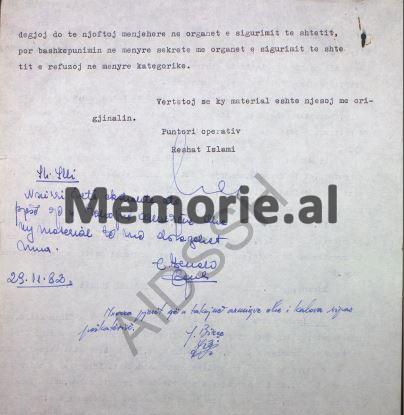
Regarding this, we told him: whatever you have, it would be good to address it to the Party. On the 19th, Ibrahim Kubati came to the Tirana Directorate of Internal Affairs and was met by me and the head of the groupings section, Koço Eftimi. In this meeting, he also brought the above material. In conclusion, Ibrahim Kubati promised: I will be a man of the Party, whatever I see and hear, I will immediately notify the State Security organs, but I categorically refuse to cooperate in a secret manner with the State Security organs. /Memorie.al
Operative Worker
Reshat Islami