




By DASHNOR KALOÇI
Part Two
Memorie.al / The end of the 1960s would mark the beginning of the improvement of official relations between the communist regime of Tirana and Marshal Tito’s Yugoslavia, which came as a surprise after the military aggression carried out by the Soviet Union against Czechoslovakia in August 1968, when official Belgrade (together with Nicolae Ceaușescu’s Romania) not only did not approve the entry of Soviet tanks into Prague but publicly denounced it as an invasion, being de facto in the same “trench” as official Tirana. As a consequence of this policy that Belgrade was following at the time, which in a way also ensured the inviolability of Albania’s borders from a possible Russian aggression through Yugoslav territory, made official Tirana take advantage of the opportunity to mend the broken relations with Tito that had existed since the mid-1960s.
Continued from the previous issue
R E P O R T
On the visit to Kosovo of a delegation of the League of Writers and Artists of Albania.
The main issues have been reported orally to comrade Ramiz by Dh. Shuteriqi himself.
Certain determinations and remarks regarding the state of intellectuals, youth, and………… must be taken into account. Youth and the countryside are presented as two important elements.
The delegation consisted of: Dhimitër Shuteriqi (chairman), Professor Zija Xholi, composer Tish Daija. The delegation was invited by the Association of Writers of Kosovo, established last October as a separate association, which is directly linked to the joint Association of Writers of Yugoslavia, no longer being, as before, a branch of the Association of Writers of Serbia.
There followed an artistic program: the choir of the 8-year school of Skopje sang, the “a capella” choir of Pristina performed, poems of Naim were recited, especially the entire “Bagëti e Bujqësi” (Cattle and Agriculture), a poem by Dritëro Agolli, and one by the young Kosovar poet Rrahman Dedaj, about Naim. The reaction to the jubilee evening was very positive from every point of view. Our speech was very well received. Television broadcast more than half of it. Unknown people stopped us in the streets and congratulated us on it. Krasniqi’s speech was short and good; Qosja’s speech was not quite up to his abilities, but not bad.
The artistic program was a bit lengthy but well received. From “Bagëti e Bujqësi,” those verses that speak of “Ulqin” (Ulcinj), which our enemy has taken, had not been removed.
Various meetings and visits:
Meetings with the teaching staff and with students were organized almost entirely in this way: they asked questions and we answered. There were questions on issues of Albanian literary history (the criteria we are using for the new textbooks, the issue of certain authors – such as Fishta – and how we will handle literature created in Kosovo).
There were questions about the “status” of students (rights and duties), about school organization and especially university organization, about textbooks and academic titles. There were questions about the status of writers and artists; especially about the facilities the state gives them to create (these questions were posed mainly by writers and artists, but also by others). There were questions also about social issues (women’s emancipation, religion).
We took the opportunity not only to answer the questions asked but also to expand on as many issues as possible related to cultural, literary-artistic, scientific, university and school, social and economic life (dealing especially with the spread and deepening of education and its ongoing revolutionization, women’s emancipation, the fight against patriarchal and petty-bourgeois remnants, the fight against religion, and even economic problems such as our policy on wages, non-lucrative rewards but moral incentives, connection with the masses, etc.). The attention was very great; they listened with great pleasure.
Often in private conversations, various individuals – educators, literary and artistic people – expressed approval of what we had told them and thanked us, while also asking us about something else, and we expanded again and again, without holding back. Thus an unceasing agitation work was done, which, as far as we could see, had a considerable and very favourable audience. But the fact is that the national question strongly predominates over any other issue, and on the other hand, the youth and intellectuals with whom we had most contact have cooled toward the church and the mosque. There were cases where some expressed the opinion that “everything must be tried,” but in general they approved.
The writers were very interested in the question of whether we translate or not into other languages of Yugoslavia, for the Kosovar people, who are just receiving culture in their mother tongue. The interest was complete in everything that is done in Albania, and great faith that we are acting correctly. People were informed about many things, yet they wanted to know more and more. Albanian literature is widely read there, especially contemporary works; young people do not spend the day in bookshops; our music has great success and is followed by everyone on the radio; the Albanian radio is listened to openly by all (Tirana is heard very well; Kukës has been heard poorly for several weeks).
The country’s television and press showed special attention to Naim’s jubilee and our presence. Television featured us 4 times. Zija Xholi gave a talk there on “Naim as ideologue of the national movement and thinker.” The talk was much appreciated. The press was not always correct in reporting on our work, sometimes distorting what we said to highlight what particularly interested them, even writing something we had not said. We pointed this out immediately and then repeatedly, but to no effect.
A meeting organized without our knowledge:
The day after or the day after that following the “academy” on Naim, the secretary of the Association of Writers of Kosovo, Vehap Shita, told Dh. Shuteriqi: “Comrade Fadil Hoxha called me and said: tell comrade Dhimitër Shuteriqi that comrade Fadil Hoxha, member of the Presidium of the LCY, wishes to have a meal together or drink coffee, either in Pristina or in Germi.” Shuteriqi refused, saying that he and his comrades had come with a specific mission.
The next day the request was repeated by Fadil Hoxha through Vehap Shita, saying that the meeting was simple and that he wanted to drink coffee with the delegation members and with comrade Shuteriqi, wherever they wished, because he desired to know about cultural life in Albania. Shuteriqi refused again in the same manner. Vehap Shita said that Fadil might come to their meetings himself, since he is a writer. They were told that that would be perfectly normal.
So we waited for him at one of the meetings, but he did not come. We thought that was the end of it. At the large lunch given by the Association for us, Drita Dobruzhë did not come, only a secretary of the “Community” of Culture. We thought that was the end of it, especially since, on our way out of the academy for Naim, the writer Esad Mekuli introduced to Dh. S. Shuteriqi the chairman of the Front of Kosovo, Faslli Haxhia, and Drita Dobruzhë.
It was a one-minute meeting, with an exchange of two or three words. But after the large lunch with writers and some artists, we were told that in the evening we would have a private dinner with the “Presidency of the Association.” We did not fall for the trick. At the last minute, Chairman Krasniqi and Secretary Shita came to our hotel room. Shuteriqi had not got up from bed and was reading something.
Shita said that Fadil Hoxha had come to the dinner; they had thus set it up so that a meeting with Fadil was inevitable. This lasted more than an hour. Fadil Hoxha and his companions were waiting in the dining hall, on the second floor below us. He was accompanied by Drita Dobruzhë and Faslli Haxhia. Also invited to the dinner were two members of the association’s presidency, the writers Azem Shkreli (about whom we learned that night that he was a member of the Central Committee of the Serbian LCY) and Enver Gjergjeku.
Fadil Hoxha said: “Albania, as far as I know, is the only socialist country in which religion is forbidden.” He did not say it in a way that indicated approval or disapproval. We answered that this was a great popular action from below and that it is explained by the great development of the materialist worldview among our people, by the early abandonment of religion by the vast majority of our people, by the great discrediting of the clergy in the past and after the war, within the framework of the ideological and cultural revolution that has swept the country, and the fight against remnants of the past, against mentality and idealistic and mystical ideology.
There was no reaction. Then Azem Shkreli and Fadil Hoxha asked permission to leave, as they had to go to Belgrade and for that reason they stood up. We shook hands with appropriate good words and they left. Fazlli Hoxha asked Shuteriqi what were his impressions from their visit to Kosovo. He replied: “We noted various successes in the field of literature, art, culture, the mother tongue, etc.” Then Shuteriqi made some tactful remarks.
He said that our music suffers from an excessive oriental emphasis, that they rely mainly on urban folklore heavily influenced by the Orient, whereas we did not have the opportunity to see rural folklore. The Serbian vice-president of the Association exchanged two or three words with Shuteriqi outside these topics (what do you write, what do I write). We parted with the best words for the occasion, before 11:00. The whole dinner lasted no more than an hour and a half or two hours minus a quarter.
The day after next, when we were returning to Albania, Shuteriqi asked Vehap Shita what was behind that great insistence of Fadil Hoxha to meet us despite our refusals. According to Shita’s opinion, in the Yugoslav Communist Party there is a current in favour of good relations with Albania. And that Fadil sought to present himself as a promoter of this current.
On some people we met or did not meet:
The main figure of contemporary Kosovar literature is without doubt Esad Mekuli. For about 20 years, he has directed the magazine “Jeta e re” (New Life). He seemed to us a man who tries to maintain a realistic position. He has had to know how to act in all conjunctures and has remained more or less their man, somewhat timid that the youth might be getting ahead. He sees and appreciates the great influence Albania has on the youth there. He said he was ill when he was called to go to Albania for the 500th anniversary of Skanderbeg.
He openly expressed that the years are weighing on him and that for a long time he has not written anything anymore, so he thinks of withdrawing from his activity and leaving the leadership of the magazine to others. We did not propose that he come to Albania, but when Shuteriqi told Vehap Shita that he “personally” wished that Esad come to Albania, Vehapi fell silent.
Mark Krasniqi has the reputation of one of the best men. He did not seem sharp to us. He was fatherly, kind. He does not enjoy the favour of the authorities, quite the contrary. He is a very clever man, a good critic, and we would like him and his family to come to Albania. (The invitation is necessary, it says, so that they will give him a passport).
Enver Gjergjeku seemed to us a man of “big trips.” He had travelled a lot, talked a lot about his travels, about the receptions he had. A poet with talent, though somewhat obscure.
We knew Azem Shkreli little; he listened more to us than we did to him. We explained his reserve at the end. A talented poet, though somewhat obscure, he also writes prose and drama. Both Shkreli and Gjergjeku were presented by Krasniqi and Shita as “good Albanians” and “positive” people. The second “could do more,” Shita told us, alluding to his position in the Serbian party.
Rexhep Qosja – this is one of the most cultured people they have, special talent for criticism and literary history, a great worker. Everyone presents him as a very honest man, and he appeared so to us. Erudite, but especially also eclectic, he tries to be Marxist, but makes concessions to the idealist so that he can be read. Open to currents, although by nature he does not lean toward modernism.
Maksut Shehu seemed to us more or less exalted, with little culture and ability.
Ali Aliu seemed to us a very good boy. He took refuge in Kosovo, fleeing Skopje where he could be persecuted. He does a lot for the presentation of our literature there. He was among those who openly told us that we should not approach their discredited people, because we harm ourselves. Among them he mentioned writers like Murat Isaku and Adem Gajtani (the latter slanders the Elbasanian Myrteza Peza a lot, and Lutfi Rusi, an editor of “Flaka e Vëllazërimit” – when he wanted to approach us, we did not approach him – and some others), scholars like historian Ali Hadri, who now directs the Institute for the History of Kosovo and has done a doctorate on the National Liberation Movement in Kosovo.
Hasan Kaleshi – more Turkolog but also more Turkophile, very discredited; the folklorist Shefqet Pllana, whom they have isolated and whoever approaches him; the sociologist Mahmut Bakalli, party secretary at the University and member of the Central Committee of the Serbian League of Communists, future candidate for rector.
Ramiz Kelmendi – is among the best people we met. Courageous, he proved himself with the book “Letters from Ulcinj,” a strong satire against the regime. They removed him as director of the “Rilindja” Publishing House because they do not like him, and he works as a lecturer. His place was taken by a talented young poet, Farehdin Gunga, who listened a lot and expressed little.
Among the painters, it is worth mentioning Mulliqi, who had the reputation of a good man, not without courage. He behaved very well and often accompanied us.
Finally, we note the name of the writer Hivzi Sulejmani, destroyed by health, who no longer writes, about 60 years old. He enjoys everyone’s admiration and compassion. We went and visited him and he was very pleased.
These would be some of our main impressions. / Memorie.al
24.12.1970
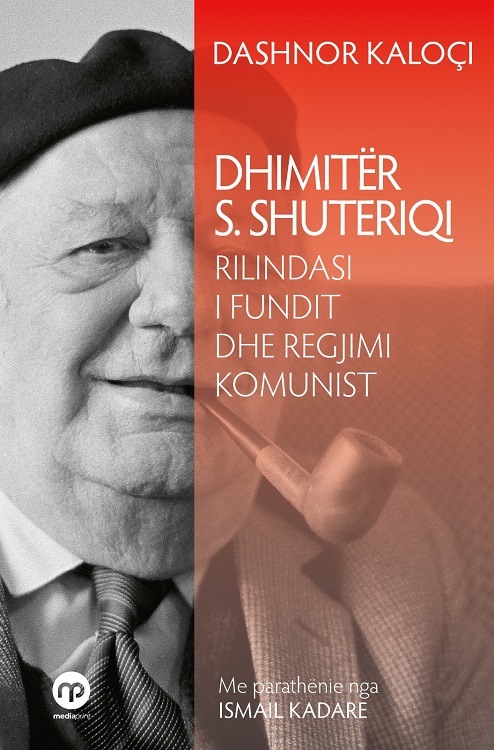
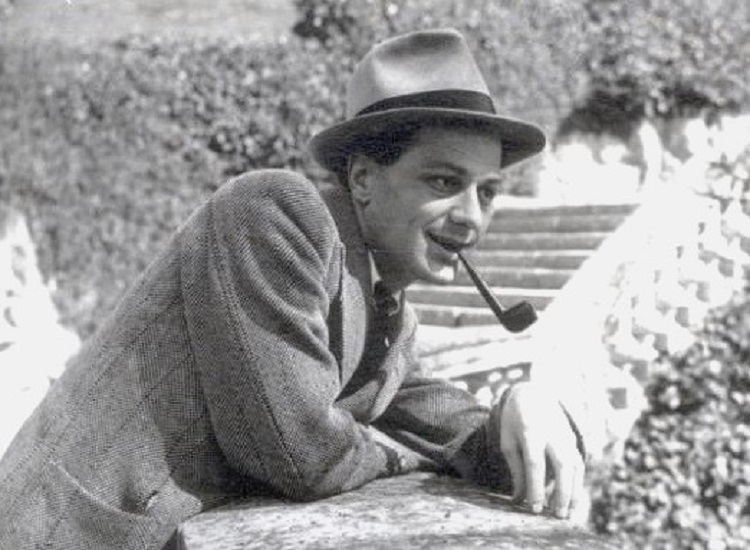
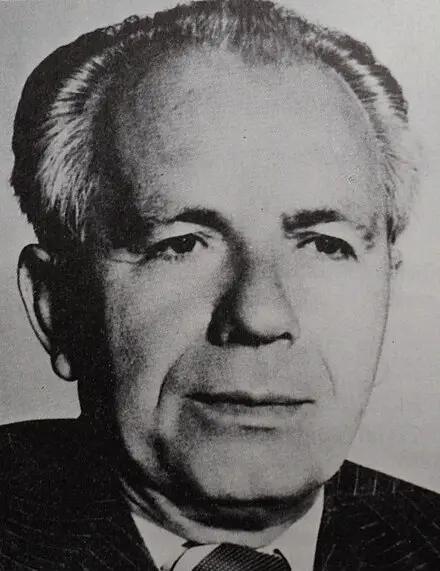
Dhimitër Shuteriqi
Central State Archive, Tirana. Fund 14. Ap. Central Committee of the PPSH, (Structure) File 430. Year 1970