By Arif Ejupi
Part Three
– Reflections on the work of the author Ymer Adem Llugaliu, who refused to sell his conscience –
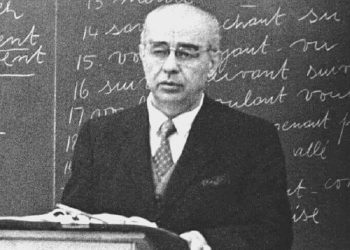
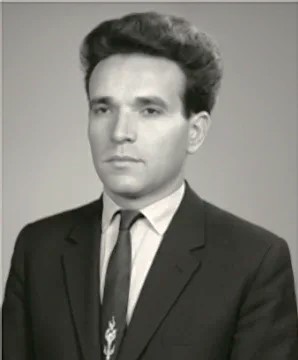
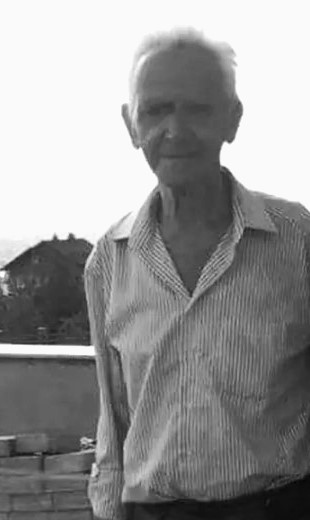
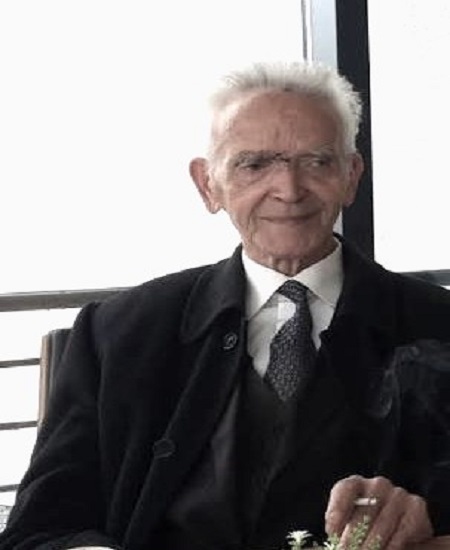
Memorie.al / In the history of Albanian literature of the twentieth century, there exists a category of creators whose works cannot be fully understood without knowing the tragedy of their lives. They were not simply poets, writers, or persecuted intellectuals. They were people who found themselves faced with an existential choice: to accept subjugation in order to secure a quieter life or to preserve freedom of thought by accepting the severe consequences of opposition. This category of creators includes Ymer Adem Llugaliu (1936–2022), teacher, poet, scholar of the Albanian language, polyglot, and intellectual with broad cultural formation. He was born in Surkish of Podujeva, to parents Adem and Arzija.
Continued from the previous issue
Mirdita and the testimony of a love that survived beyond prison
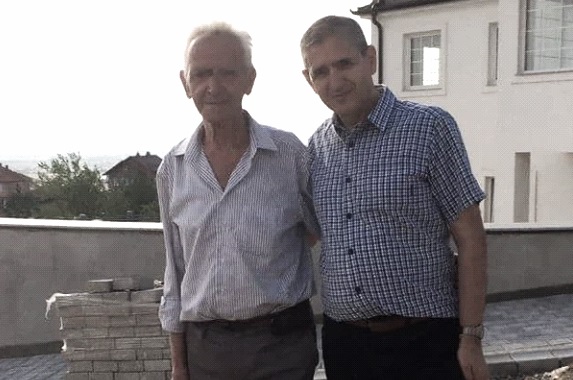
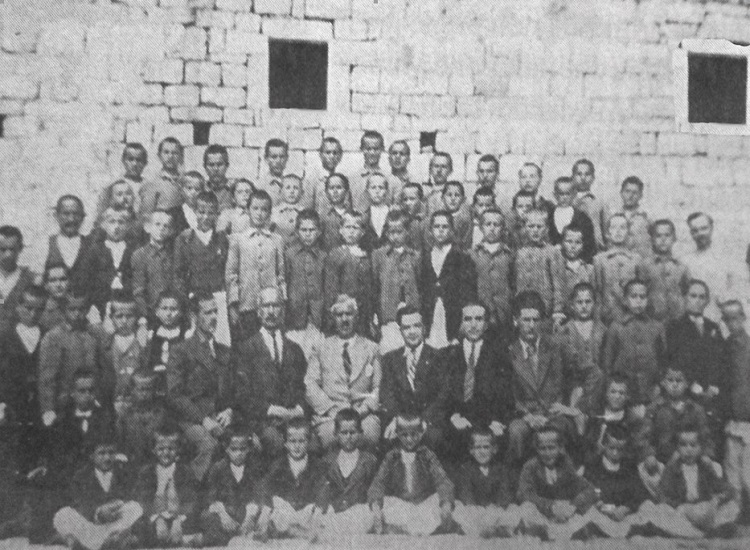
One of the most touching facts of Ymer Llugaliu’s life is the bond he maintained with his former students from Mirdita. On November 24, 2019, a group of former students from this region visited him in his birthplace, in Surkish of Podujeva, after nearly half a century of separation. This meeting has a special meaning in light of the poem “FROZEN CONSCIENCE.”
At its beginning, Llugaliu wrote:
“I have loved
my students dearly
once upon a time,”
Decades later, the former students testified that this love had not been one-sided. They had preserved the memory of their teacher beyond geographic distance, political divisions, and the passage of years. This event constitutes a human testimony that enriches the interpretation of the poem.
If the dictatorship could temporarily interrupt his work and restrict his freedom, it could not erase from his students the memory of the teacher. Here another form of resistance emerges: not the resistance expressed through political revolt, but the resistance of memory, gratitude, and human love.
In a symbolic sense, the meeting of 2019 gives a belated answer to the question the poet had raised in 1974. His students had not disappeared into the darkness of time. They had remained bearers of a living memory. And this memory testifies that teaching grounded in love and respect can leave traces that survive far longer than political authorities.
Artistic features of the poem
From the perspective of poetic construction, “FROZEN CONSCIENCE” is characterized by several important features.
First, structural contrast
The poem moves from the warm memories of the teacher to the description of a world filled with hypocrisy, violence, and fear. This contrast creates the main emotional tension.
Second, lyricism interwoven with satire
The first part is intimate, sensitive, and full of gentle imagery. The second part is harsh, ironic, and accusatory. The interweaving of these two registers makes the poem multidimensional.
Third, rich symbolism
The rose, the sun, Hecate, Diogenes, shackles, Antarctica, and the eagle create a system of figures that connects nature, philosophy, mythology, and history.
Fourth, intertextuality
The mention of Migjeni, Balzac, Molière, Shakespeare, biblical figures, and the ancient tradition testifies to the author’s broad literary culture.
Fifth, tragic irony
The poet often uses statements that superficially sound like orders or permissions, but which in reality contain their moral opposite.
Sixth, free verse
The poem does not rely on a regular metric or rhyme scheme. The rhythm is created through repetitions, syntactic breaks, enumerations, and sudden emotional shifts.
Seventh, direct language
Llugaliu does not hide his revolt behind overly hermetic figuration. He interweaves complex metaphors with ordinary words, creating powerful communication with the reader. These features show that the poem is not an uncontrolled emotional outburst. It has a considered organization, a clear thematic movement, and a symbolic ending that summarizes its entire message.
Ymer Adem Llugaliu – the man who preserved inner freedom
“FROZEN CONSCIENCE” is a poem that is born from the clash of an honest man with a historical reality based on political control and the restriction of freedoms. But it does not remain closed within that reality. At its center stand universal questions.
What happens to a person when society forces them to be silent?
What happens to the intellectual when free thought is treated as guilt?
What value does knowledge have if it is not accompanied by conscience?
Can a person remain morally free even when physically imprisoned?
Ymer Llugaliu’s answer is not given through a philosophical declaration. It is given through his life and his poetry. He was the teacher who loved his students. He was the intellectual who refused to use his creativity to praise a power with which he did not agree. He was the prisoner who experienced the weight of shackles and the coldness of cells. He was the scholar who did not lose his love for the Albanian language.
He was the creator who, even after years of forced silence, returned to publishing and intellectual life. And above all, he was the man who preserved the belief that human dignity cannot be measured by the power of authority. Precisely here lies the deepest meaning of the poem. The title speaks of a frozen conscience. But the life and work of the author testify to a conscience that continued to live, to think, and to resist.
Therefore “FROZEN CONSCIENCE” can be read simultaneously as an elegy for damaged ideals, as a satire against social hypocrisy, as a testimony of political persecution, and as a hymn to inner freedom.
In the final verses:
“The falcon’s talons
cannot reach the heights
of the eagle’s flight.”
The poet succeeds in summarizing his entire philosophy of resistance. Violence has its limits. Shackles have their limits. Even the harshest power has its limits. But free thought, memory, and human dignity can transcend these limits.
Ymer Adem Llugaliu passed away on June 13, 2022, but his poetry continues to testify to a truth that transcends the circumstances of the author’s life:
A person can be deprived of physical freedom, can be excluded from institutions, and can be denied public speech, but their conscience remains free for as long as they refuse to surrender it. And perhaps here lies the most beautiful paradox of this poem: Ymer Llugaliu wrote about a frozen conscience, because his conscience had never frozen.
Dear readers, as an appendix to this analysis, we are also attaching the original text of the poem “Frozen Conscience” by Ymer Llugaliu, written in Rrëshen of Mirdita in 1974 and published after the author’s death on the VOAL portal, on May 13, 2023./Memorie.al
FROZEN CONSCIENCE
Poem by YMER LLUGALIU
May 13, 2023
(Published posthumously)
I have loved
my students dearly
once upon a time,
like the poet Luli.
In their games
I took part as a child.
With their smiles
I adorned my gloom.
With their troubles I loaded myself
upon my shoulders like a porter
into the future, to our inns
I bring them their suitcases.
Love of the children
with unbroken hopes
for a better day,
like the conviction of the transplant
that the warmth of the sun
opens the buds,
I have placed upon my forehead
baldness, distrust
of the future to kill us.
I had one joy,
one hope in life:
exhausted nerves,
consumed feelings
through words of the heart,
through mimetic colors
through the bodies of seedlings
slowly will fade away.
This was when I believed
without any devil
that the listeners in the desks
are my students.
Half-half pale Hecate!
The brave ones’ hands stained with blood
so that they cannot empty themselves
against its current.
To the cunning give Glaucus as a model,
to the misers Gopseku,
to the hypocrites Tartuffe,
to the intriguers Iago,
to the fratricides Cain
with the fists of the season.
Let the men be locked
in medieval towers,
no, let them take the pickaxe
to extract stumps,
to put a stitch on the mouth
the melancholic minds can
go to madness,
the intelligent are permitted
to kill themselves.
To the loyal Jaguars
the screws they unscrew.
Where to find the man,
where oh Diogenes!
Let the courageous
measure themselves
with the weight of shackles,
with the coldness of cells,
with the dampness of galleries.
From our hearts
free conscience is as far
as the August sun
in the frozen Antarctica.
Let the fools clap
for the “liberators” of the moment
slaps in the streets,
echo of broken hearts.
Let the monkeys grin,
let the servile bow,
let the hounds bark,
let the hunters enjoy
the blood of reptiles.
The falcon’s talons
cannot reach the heights
of the eagle’s flight.
Rrëshen-Mirdita, 1974