By Arif Ejupi
Part One
-Reflections on the work of author Ymer Adem Llugaliu, who refused to sell his conscience –
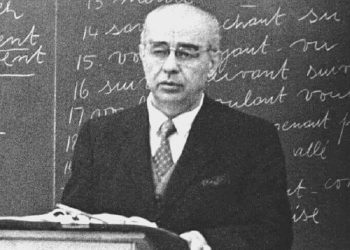
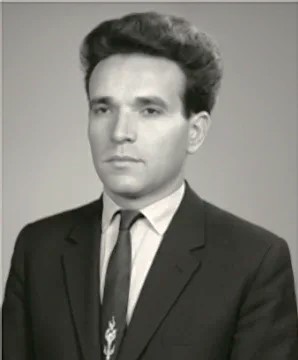
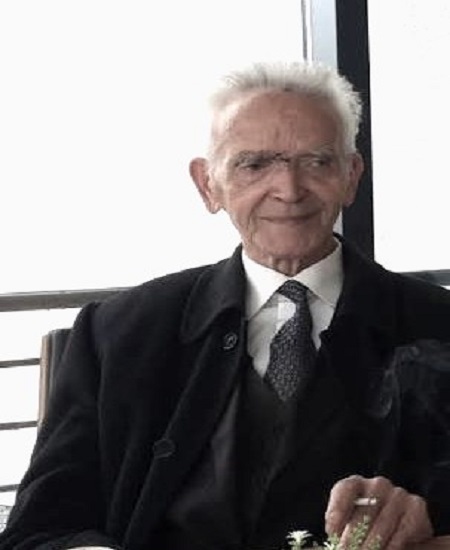
Memorie.al/ In the history of twentieth-century Albanian literature, there exists a category of creators whose works cannot be fully understood without knowing the tragedy of their lives. They were not simply persecuted poets, writers, or intellectuals. They were people who found themselves facing an existential choice: to accept subjugation in order to secure a quieter life or to preserve freedom of thought by accepting the severe consequences of opposition. This category of creators also includes Ymer Adem Llugaliu (1936–2022), a teacher, poet, scholar of the Albanian language, polyglot, and intellectual with broad cultural formation. He was born in Surkish, Podujevo, to parents Adem and Arzija.
From childhood, Ymer stood out for his extraordinary intellectual abilities and his love for knowledge, language, and Albanian literature. Even as a student at the Podujevo Pro-gymnasium, he began writing and publishing literary creations, demonstrating an early inclination for the art of the word. His intellectual formation deepened further at the University of Tirana, where he completed his studies in Albanian Language and Literature with excellent results.
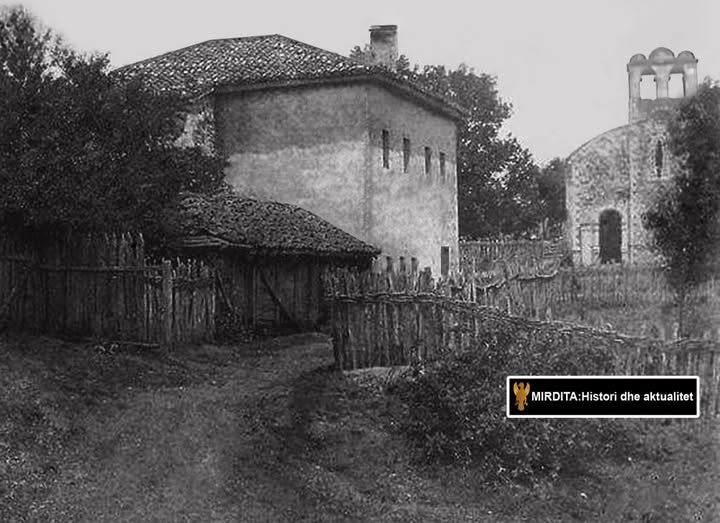
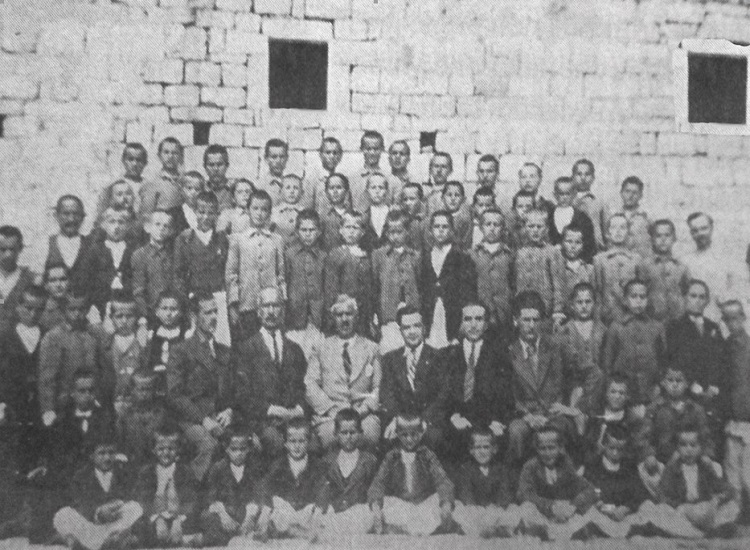
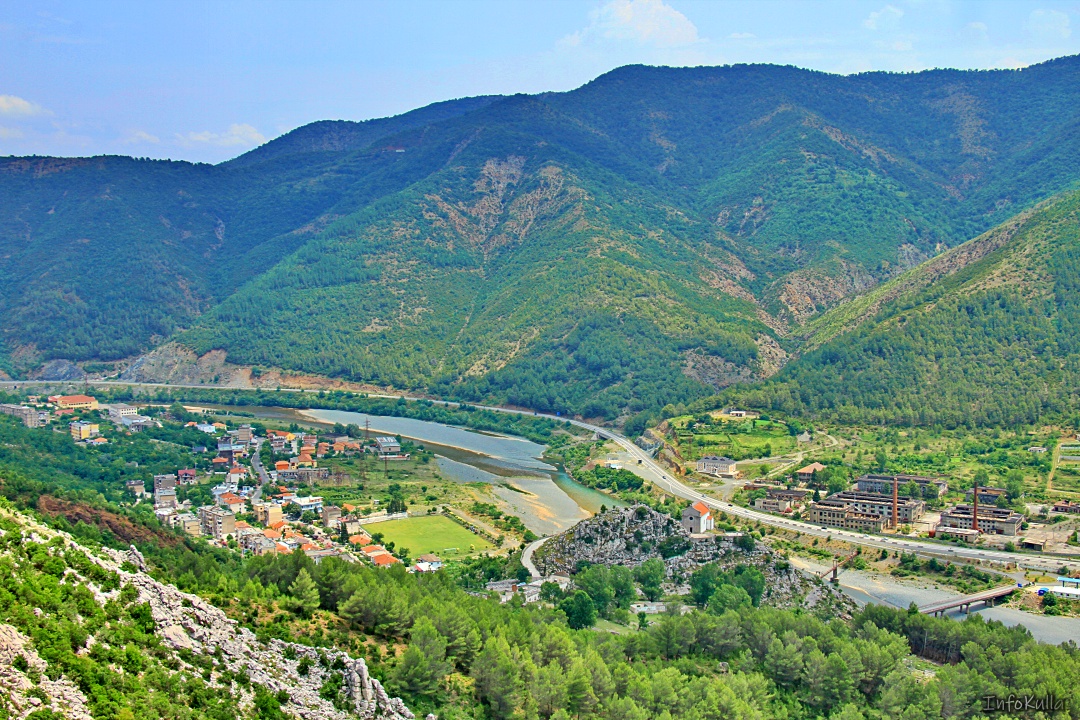
After completing his studies, Ymer expected to be appointed as an assistant in phonetics and syntax, but was forcibly sent to work as a teacher in Mirdita, one of the economically most underdeveloped regions of Albania at that time. This turning point in his life constitutes a moment of particular importance for understanding the poet’s personality and subsequent creativity.
Instead of being given the opportunity to continue the academic activity to which he was devoted in spirit, Llugaliu found himself facing a difficult economic and social reality. However, Mirdita never became a hostile place for him. On the contrary, the inhabitants of this mountainous region, although living in extreme poverty, received him with generosity, respect, and brotherly warmth.
In the life of the highlanders of Mirdita, the young teacher came to know the dignity, the besa (honor code), the hospitality, and the solidarity of people who, despite material deprivation, preserved spiritual wealth. This mutual human relationship left indelible marks on his conscience. Ymer did not see the students of Mirdita merely as children who needed to learn the Albanian language and literature.
He considered them bearers of hope for a more educated, more just, and more humane society. Therefore, in the poem “NDERGJEGJE E NGRIME” (UPRIGHT CONSCIENCE), written in 1974, the figure of the teacher does not appear by chance. It is the emotional and moral foundation upon which the entire poem is built.
From love for students to disillusionment with society
The poem opens with a simple but extraordinarily touching narrative:
“I loved them so much
once, my students,
like the poet loved Luli.”
These three verses reveal the true nature of Ymer Llugaliu. He does not begin the poem with political accusation, with hatred toward the persecutors, or with the description of personal sufferings. He begins with love. This choice is very significant. For the poet, love for students is one of the purest experiences of human existence.
The comparison with the poet who loved Luli brings to mind Migjeni and the world of poor children, who become representatives of a society deprived of equal opportunities for life and development. In Migjeni, the child often appears as a victim of social misery. In Llugaliu, the student is simultaneously a victim of circumstances and hope for overcoming them. This spiritual connection deepens in the verses:
“In their games
I took part as a child.”
The teacher does not stand above the students as a cold institutional authority. He descends into their world. He takes part in games, rejoices with their joy, and tries to understand life from the child’s perspective. This is a profoundly humanist concept of education. Instead of a relationship based on fear and blind discipline, Llugaliu establishes a relationship based on understanding and love.
The verses: “With their smiles / I adorned my gloom,” contain a wonderful poetic contrast. On one side is the smile of children, a symbol of innocence and life. On the other side is the teacher’s gloom, which can be read as a sign of his difficult experiences, worries, and disappointments.
The students’ smile thus becomes a source of light in the poet’s inner world. The verb ‘adorned’ has particular artistic significance. It suggests that the love of children does not necessarily eliminate pain, but changes its appearance, giving life a higher meaning.
The teacher as bearer of the future
One of the most original figures of this poem appears in the verses:
“With their troubles I am loaded
on my shoulders like a porter
the future into our homes
I bring it in suitcases.”
Here the poet creates an extraordinary metaphor of the teaching profession. He compares himself to a porter who carries on his back the weight of troubles and the future. But this is not merely the weight of books, lessons, or professional responsibilities. It is the weight of a generation’s fate. The teacher feels responsible for the future of his students and, through them, for the future of society.
The figure of the suitcases of the future is particularly significant. The future is presented as something that must be carried, brought, and placed in people’s homes. In this way, knowledge is not an intellectual ornament, but a wealth that must be distributed to all. In the context of poor Mirdita, where Llugaliu worked and lived among the inhabitants of the region, this metaphor takes on powerful social dimensions.
He does not wish merely to teach children reading and writing. He wishes to open the doors to a better life. Therefore his love for students transforms into a civic responsibility. The teacher is not only a transmitter of knowledge. He is a bearer of hope.
The rose and the sun – the philosophy of hope
Further on the poet writes:
“Love I opened
with unbroken hopes
in a better day,
like the conviction of the rose
that the warmth of the sun
opens its buds,”
Here the poem reaches one of its most beautiful lyrical moments. The rose, the bud, and the sun create a system of symbols based on the relationship between nature and human hope. The rose does not doubt that the sun will open its buds. This natural belief transforms into a metaphor for the teacher’s belief that education, love, and dedication will enable the development of students. On the philosophical plane, we are dealing with a humanist optimism. Man, according to this worldview, is not born condemned to remain in darkness.
He can develop and progress if society creates the necessary conditions for him. But the tragedy of the poem lies precisely in the fact that this conviction will face an opposing historical reality. Instead of the sun that opens buds, a society governed by fear and political control produces distrust, silence, and submission. Thus, the symbolism of free nature is set against a social order that limits human freedom.
The tragedy of broken faith
The first part of the poem ends with a shocking statement:
“This was when I believed
without any doubt,
that the listeners in the desks
are my students.”
These verses constitute the first major point of dramatic turning. The poet distinguishes between those who are physically seated in school desks and those who, in the spiritual sense, can be called his students. The expression “without any doubt” underscores the sincerity of former times. He had believed without doubts, without second thoughts, and without hypocrisy. But now, from the position of a disillusioned man, he revisits that belief. This does not necessarily mean that the poet accuses his own students of betrayal.
On the contrary, the verses can be read as a deeper question about the ability of an educational system to create free people. Is it enough for a child to sit at a school desk to become a true student of a humanist teacher? Can moral education survive in a society where independent thought is punished? Can a person preserve his personality when he is required to submit to an absolute authority? These are the questions that transform the poem from a personal memory into a broad philosophical meditation.
From beloved teacher to political prisoner
To understand the harsh transition from the lyricism of the first part to the revolt of the second part, it is essential to consider the author’s life. According to the biographical account of Llugaliu, after years of dedication to education, he was charged with the political accusation of “agitation and propaganda.” This accusation also included claims that his stances influenced the cooling and deterioration of relations with the Yugoslavs. For an Albanian intellectual of Kosovar origin, who had chosen to live in Albania, nourishing national and cultural ideals, such an accusation had heavy political weight.
It placed the man in a position where his thought, his origin, and his personal relationships could be interpreted as matters of state security. As a result of the political sentence, Llugaliu spent hard years of imprisonment, among other places in Spaç and Ballsh. These institutions were part of the system of prisons and forced labor camps of communist Albania. But what matters for literary interpretation is the fact that the experience of imprisonment did not erase the poet’s creative consciousness.
On the contrary, this experience gave his poetry a new dimension. The teacher who had dreamed of the future of children now faced a system where individual freedom was conditioned by ideological loyalty. In these circumstances, poetry was no longer merely art. It became a way of preserving personality, memory, and conscience.
Hecate, mythology, and the darkness of power
The second part opens with the call: “Meshо, mesho, pale Hecate!” This call has a dramatic and mythological character. Hecate, a deity known from Greek mythology, is associated with night, crossroads, magic, and the underworld. The use of her figure gives the poem a dark, almost tragic atmosphere. In this context, Hecate can be interpreted as a symbolic embodiment of a power that rules through fear and darkness. The repetition “Mesho, mesho” creates the impression of a ritual command, of an action repeated incessantly.
This repetition brings to mind the mechanism of institutional violence, where the oppression of the individual is not a coincidence but part of a continuous functioning. The poet does not directly identify Hecate with a specific person. He uses mythology to expand the meaning of the poem beyond a single historical event. The dictatorship is not presented only as political power. It appears as a dark state of human relations.
The gallery of characters – the moral anatomy of a deformed society
One of the most important features of the poem is the use of figures known from mythology, literature, and cultural tradition:
“A model for the cunning – even Glaucus,
for misers – Gobseck,
for hypocrites – Tartuffe,
for intriguers – Iago,
for fratricides – Cain
with the claws of the season.”
Here Llugaliu creates a gallery of characters who embody various human vices. Balzac’s Gobseck represents miserliness and the power of money. Molière’s Tartuffe is the classic symbol of hypocrisy, especially of false moralizing. Shakespeare’s Iago embodies intrigue, manipulation, and the destruction of the other through deception.
Cain, the biblical character, represents fratricide and the violation of the most fundamental human bond. The mention of Glaucus may be connected to the author’s classical horizon, although the exact identification of the figure requires a more detailed philological examination.
The importance of this gallery lies in the fact that the poet does not merely describe evil individuals. He presents a society where vices can become models of behavior. In such an order, hypocrisy is rewarded, intrigue profits, while honesty and independent thought become sources of danger for the individual.
The verse “with the claws of the season” can be understood as a figure of the continuous adaptation of evil to circumstances. Vices change appearance, use the language of the times, and take new forms, but their nature remains unchanged. In this sense, Llugaliu moves from the critique of a concrete political system to the critique of the general mechanisms of moral degradation.
When silence becomes a condition for survival
Further on we read:
“Let men be locked
in medieval towers,
no, let them take the gag
to extract molars,
to sew the mouth shut.”
These verses contain a sharp irony. The figure of the man, which in Albanian tradition is associated with honor, courage, and the given word, faces the order to be closed off, to withdraw from public life, and to be silent. The expression “to sew the mouth shut” is a powerful metaphor of censorship. A stitch is used to join fabrics, but in Llugaliu’s poem it becomes a symbolic means of closing the mouth. Thus an almost physical figure of violence against the word is created. It is not only about prohibiting publication.
It is about denying the right to express thought. In a system where free speech could bring punishment, silence became a survival mechanism. But Llugaliu experienced this silence as a mutilation of human being. For a teacher of language and literature, the closing of the mouth has an even more tragic meaning. He was denied precisely the fundamental instrument of his profession and identity: the word.
The intellectual facing spiritual destruction
Particularly heavy are the verses:
“Melancholics may
go to madness,
intellectuals are permitted
to kill themselves.”
These verses should not be interpreted as approval of self-destruction. They are an expression of black irony and moral protest. The poet presents an inverted reality, where society does not create possibilities for a person to live with dignity, but pushes him toward isolation, despair, and destruction. Particularly significant is the word “permitted.” It creates the impression that even the most intimate fate of a person must be subject to an authority that decides what the individual can and cannot do.
Thus the poet exposes the absurdity of a power that claims to regulate everything. For Llugaliu, the intellectual is not only the person who possesses knowledge. He is the person who thinks, doubts, judges, and bears responsibility for his word. Therefore the destruction of intellectual freedom is simultaneously a destruction of human dignity. / Memorie.al
Continued in the next issue