
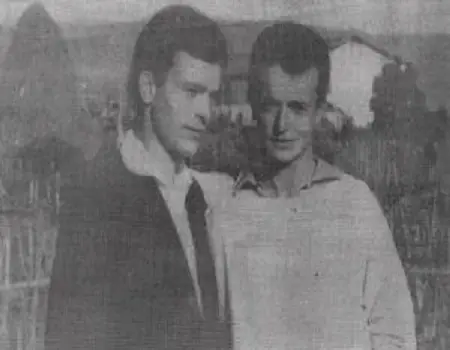
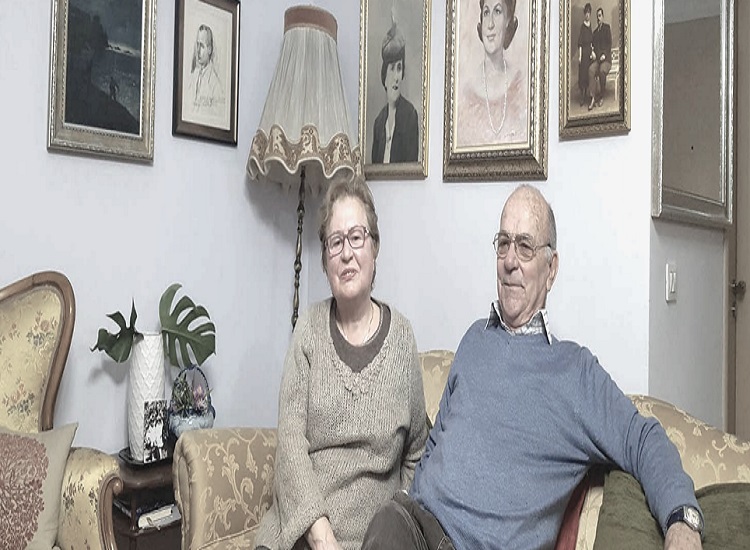

Memorie.al / Sokol Mirakaj was very young when his family – his brother, sister, mother, and grandmother – was transferred to the Tepelenë camp. He does not remember, there is no way he could, the terror of the first moment when they are thrown into the barracks, but he lived there long enough to create memories later. Because even if a child can forget the desolate sights of the country, he cannot forget the cold and hunger, the violence and contempt. Nor the struggle of his mother, who did everything she could for her children to feel as little as possible the misery in which they were living, immediately after giving birth. All this happened after his father, Pal Bibë Mirakaj, had escaped together with his brother, Kola. With the change of systems and the establishment of the communist regime, they knew the consequences. To avoid falling into the hands of the communists, they decided to escape.
“Moreover, my father could not reconcile himself with the dogmas and the perverse communist system, and I believe that for him escape was a choice, but not a solution. A whole life on the run, with a family that was condemned for years, was not at all easy” – says Sokoli.
Enver Hoxha’s harsh genocide targeted wealthy families in those years, and one of them was that of the Mirakajs. A wealth inherited from their grandparents – properties and two shops in Prizren, Kosovo – was administered by Pali and his brother, and for this reason, during the time they were interned as a family, all their property was confiscated. The family was taken to an internment camp in Turan, Tepelenë, where there were also many other northern families, such as the Markagjonës, Maria and Suzana Topalli, etc. Once, this camp had been a cemetery; meanwhile they had surrounded it with high wires and turned it into a camp.
After the dark time of Tepelenë, the family was moved to Lushnjë, from where Sokoli did not leave again until 1989. There he married, there he raised children…! However, the life he led in the villages of Lushnjë could never be compared with the terror they had lived in the first years of life. “I remember that everyone used to say, whenever they ate bread, that they found flies in the food, that broth of groshë that we ate. But not us! This used to amaze me, until one day we learned that our mother, from the place where she took the dish until she brought it to us, cleaned the flies with a wooden splinter, so that we would not eat them” – says Sokoli.
THE LIFE OF THE MIRAKAJS IN THE TEPELENË CAMP
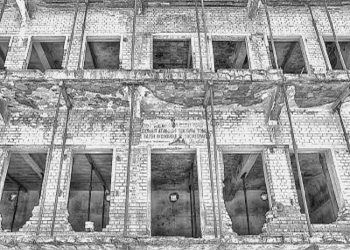
This internment camp was surrounded by barbed wire and was located by the Bënça River, which in winter was quite turbulent; the camp was built by the Italians during the war with Greece. The camp had five long barracks of approximately 50 m; three were with internees, one barrack held 600 – 700 internees. Inside, the barracks had bunk beds without partitions where families slept. There was also a barrack that had only side walls – it had been hit by shells during the war – but for the internees of this extermination camp it served as a laundry where women boiled clothes or washed children. While the other barrack served as a depot.
In such situations where there was overcrowding throughout the barracks, hygiene was zero, disease ran rampant among children and adults, so mothers washed us summer and winter, in that open barrack. Winter in Tepelenë was very cold; when our mothers took us by the hand in winter to send us there to wash us, we went crying. Inside the camp was the police command, the bread oven, the infirmary; to the side of the command was a raised place where the cauldrons of the dish that was given twice a day, at lunch and dinner, were placed.
The police command consisted of commander Lieutenant Haki, aspirant Syrjaj, marshal Tomi and the infamous corporal Selfo, a born thug who conducted the roll call at 12 at night, when people and might have been overcome by sleep – I say might, since at night you would see mothers or sisters, older brothers with a piece of pine in hand, burning the nests of bedbugs that had invaded the beds and were trying to drink even that drop of blood we had left.
Corporal Selfo would roar as he entered the barrack to conduct the roll call, then would begin again with roars, uncovering the quilts to check the family members; there were cases when he made all the people get down from the beds, and if any woman had not taken her child in her arms, he forced her to go wake the child and take it in her arms, to present it before Corporal Selfo. Late at night you could also hear the voices of hungry children asking their mothers for bread, and the mothers, the older sisters, with tears in their eyes, tried to calm them with some fairy tale, to distract them and let sleep overtake them.
The camp consisted of women, children and the elderly, because the men were some in the mountains fighting against the communist regime and dictatorship, some had been killed in the struggle, some were in prison, some had escaped. You were not allowed to go outside the wires, with the exception of those who went to work and the children who went to school. The treatment was inhuman: 500 grams of bread a day, like unbaked mud, while the dish was distributed at lunch and dinner. The dish was pasta broth; in the cauldron of water floated some strand of pasta or sometimes some grain of groshë; they also cooked bollgur that was full of worms, and they swam calmly in the cauldron and then ended up in the stomachs of the hungry; people ate the bollgur with their eyes closed.
In the evening, people in the barracks usually lined up to take their turn at the stove, to bake the lendet to quell their hunger a little and to dry their clothes from the rain that had caught them at work in the mountain. Hunger had seized the whole camp; two children who were more daring secretly crossed the wires and began to eat blackberries; after eating well, they turned back to get into the camp, meanwhile the corporal saw them, stopped both, took them while slapping them and tied them to a post near the fountain.
The two children tied to the post were Zef Mirakaj and Liman Koleci, aged 9. When night fell on them tied up, they began to cry from fear, while their mothers, sisters and relatives stayed inside the camp wires, giving them courage: “Don’t be afraid, we are right here!” The two children were released in the morning; both had fainted when their family members took them. The deaths of children and the elderly continued as a result of the lack of hygiene and food; every day you heard mothers wailing for their children.
Approximately 300 children and 400 elderly people died. Our grandmother, Nënë Dedja, also died there. The graves were moved three times; the third times they were placed by the Bënça River, which in winter swelled and swallowed them in its bed, and their bones today are without graves. Every day the camp gate opened, as trucks came with internees from various districts of the country; within a few days 300 families came from Mirdita alone.
On spring days, when the cold had fallen, you would see children playing with dice by the ruined kitchen; others who were little older shot slingshots in the horse or pig stalls. People were very solidary with one another, ready to help each other in those terrible conditions; their nobility stood out. The elderly, on sunny days, went out into the yards and conversed with one another, telling various stories.
SIMON MIRAKAJ’S FIRST DAY OF SCHOOL
The first day of school for me did not go well, because when we were going out to return to the camp, the teacher stopped me, saying: “Do you love your father…? Where is your father?” I told him that I loved my father, even though I had never seen him nor had he ever seen me, and the teacher struck me with the edge of the ruler; he kept me close for an hour after class; my brother and sister stayed behind the door. When the teacher released me, I walked a little and then they took me in their arms, sometimes my sister and sometimes my brother, because I had fainted.
They gave us the books for free; going to school was difficult for us, because the road was somewhat mountainous and our knees would not hold us; we were weak from the lack of food. It was difficult for us to learn, to do homework; we placed the abetare on our thin knees that barely held it, while we did the homework on our stomachs; we made writing ink from poppies that we gathered in the camp yard, or we made it from mëllaga. Sometimes I used my cradle as a table to do homework; this did not last long. A highland woman’s small child dies; there was no board to make a coffin; my mother gave my cradle, and they fashioned a coffin from it.
ADELAIDE, THE ONLY SISTER WHO RAISED HER BROTHERS IN THE CAMP
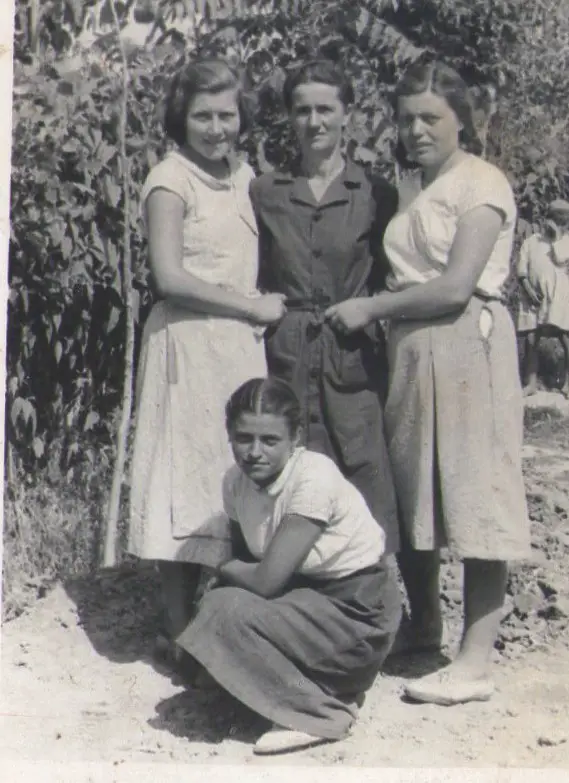
Lajdia, as we called Adelaide, is a name that is linked to the name of a woman-queen, with which Kunia and Pal Biba Mirakaj baptized their daughter. She was the only daughter of Pal Bib Miraka and Kune, one of their three children, who also had Simonin and Sokolin – a daughter of the internment camps, whom fate took to the door of another noble family in Sarandë. Lajdia is also the niece of Kolë Bibë Mirakaj, the former Albanian minister who saved 2000 Jews and whom the murderous regime and its descendants today, the deformed historians of Enver Hoxha, who have changed nothing from their time, [condemn].
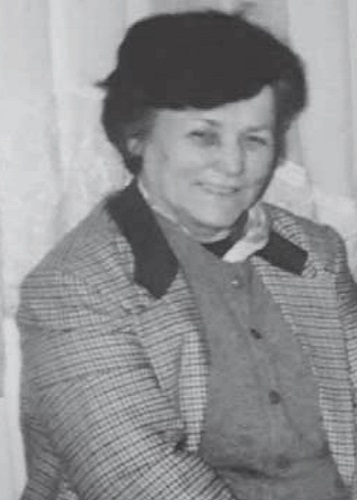
From the internment camp of Berat to the last one in Savër of Lushnjë, 45 years of her life rolled painfully by. In those iron doors and places surrounded by wires, she would touch all the cycles of life, from childhood to meeting her husband, the modest wedding ceremony, the birth of two children and the death of her mother in the internment camp. Whereas she never knew her father; for Lajde this continues to remain the hostage of life, which still torments her…! After her father’s escape, she herself recounted some of the memories of the hell where she lived, before she passed away.
“For me it is one of the most difficult moments of life, which became the cause of our family’s sufferings. I will never forget the day when they interned us, together with mother Kune and my two brothers, Simonin and Sokolin. Mainly in Tepelenë I was engaged in heavy physical work. I remember, whenever we were loaded with wood on our arms, I and my friends, and in the moments when we could no longer walk because our backs hurt from fatigue, we would find a place with gravel or sand, place the wood there and give it a push so that it would fall into the Bënça River. From there we would then load it on our arms and take it to the camp.
How many chilling stories the Tepelenë camp has carried over the years; I spent four years of my life in it. When I remember how we were fed, I am amazed at myself and say how I am alive. The daily bread ration was by grammage, only 400 grams, while the food they gave us was almost inedible: wormy beans, rice with flies. How many times I approached the cauldrons where these kinds of dishes were boiling and saw how worms had come to the surface of the cauldrons.
It was so disgusting…! While one day, which I will never forget, the dinner meal struck me: a completely blackened pilaf that had been served to us on the plate. It was almost inedible, and when I asked the cooks there in the camp, they told me that the cauldrons used to boil the pilaf or other dishes had once served as gasoline barrels for the Italians, and the Albanians had cut them, turning them into cauldrons to cook various foods. That day, my stomach almost tore out of its place” – *Lajdia recounted. / Memorie.al