From Adela Kolea
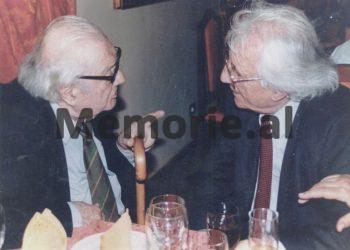
Memorie.al/ “Yes, you read clearly: with pleasure I bring you some new ‘old things’. ‘Why and how?’ you will ask me. I’ll tell you right away that everything related to the past – with past generations, those of our ancestors, our parents and grandparents, with the past of public figures as well, why not, of those whom I have not personally known for the simple reason of ‘time’, age, era – attracts me and I value it especially. A friend of mine told me: ‘The new trend of this year for coat fashion is the ‘vintage’ style; let’s open our grandmothers’ trunks and we will find something in line with the winter fashion of 2016′!”
It is understood that we have become superficial, materialistic. We think about appearance, bypassing the essence of things. For example, I would not remember that grandmother only for her wardrobe, which surprisingly has come back to us in time and fashion, but also for other aspects. Likewise, I think the same line of reasoning applies to remembering and appreciating our old artists. Albanian art has produced from its bosom characters that the whole world would envy us. And I say this with conviction and objectivity, not with pathos or a spirit of national boasting, which would be out of place.
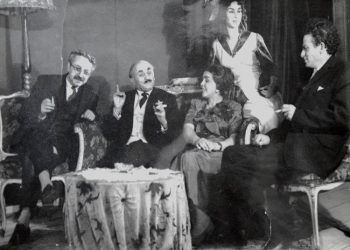
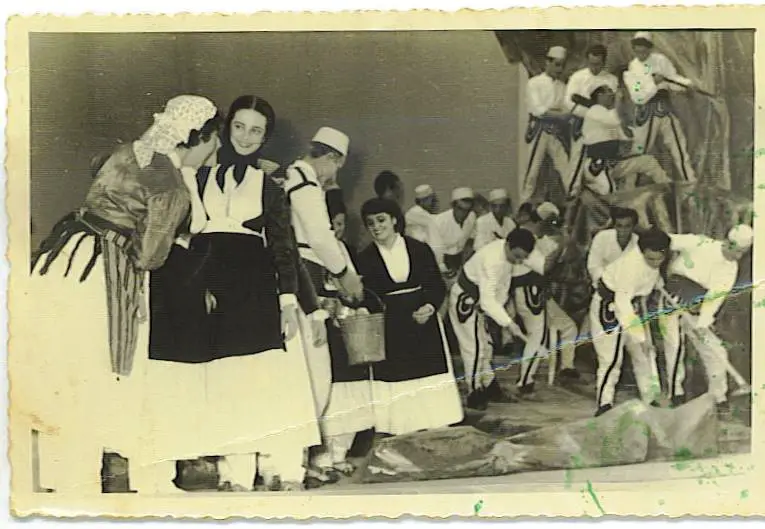
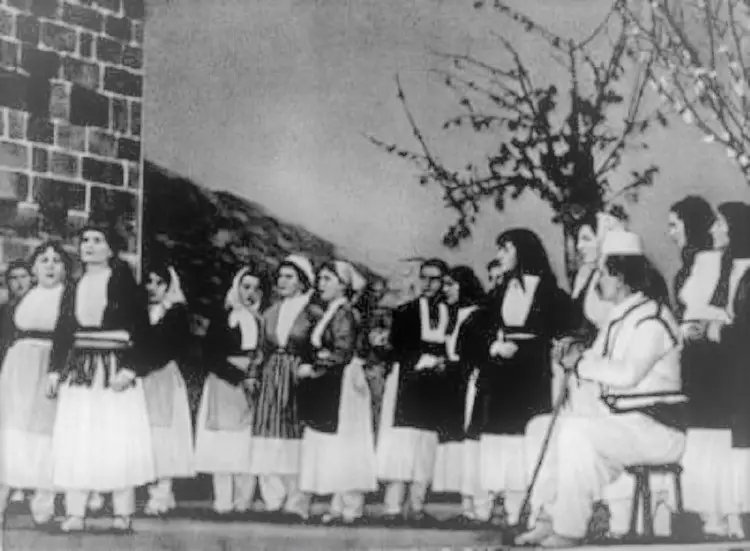
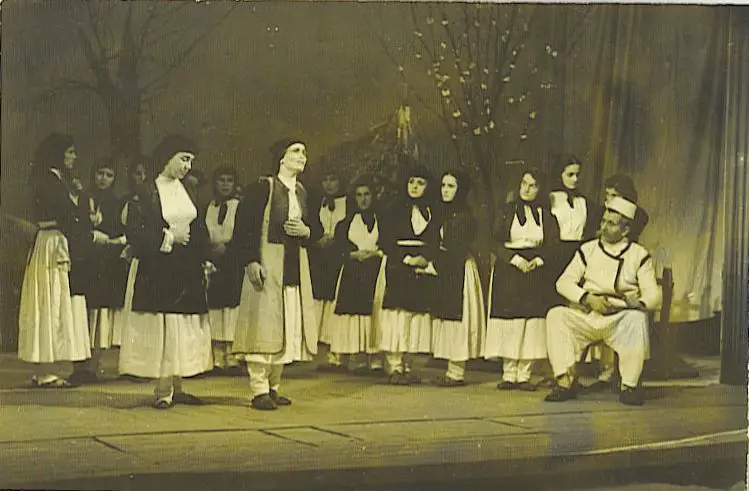
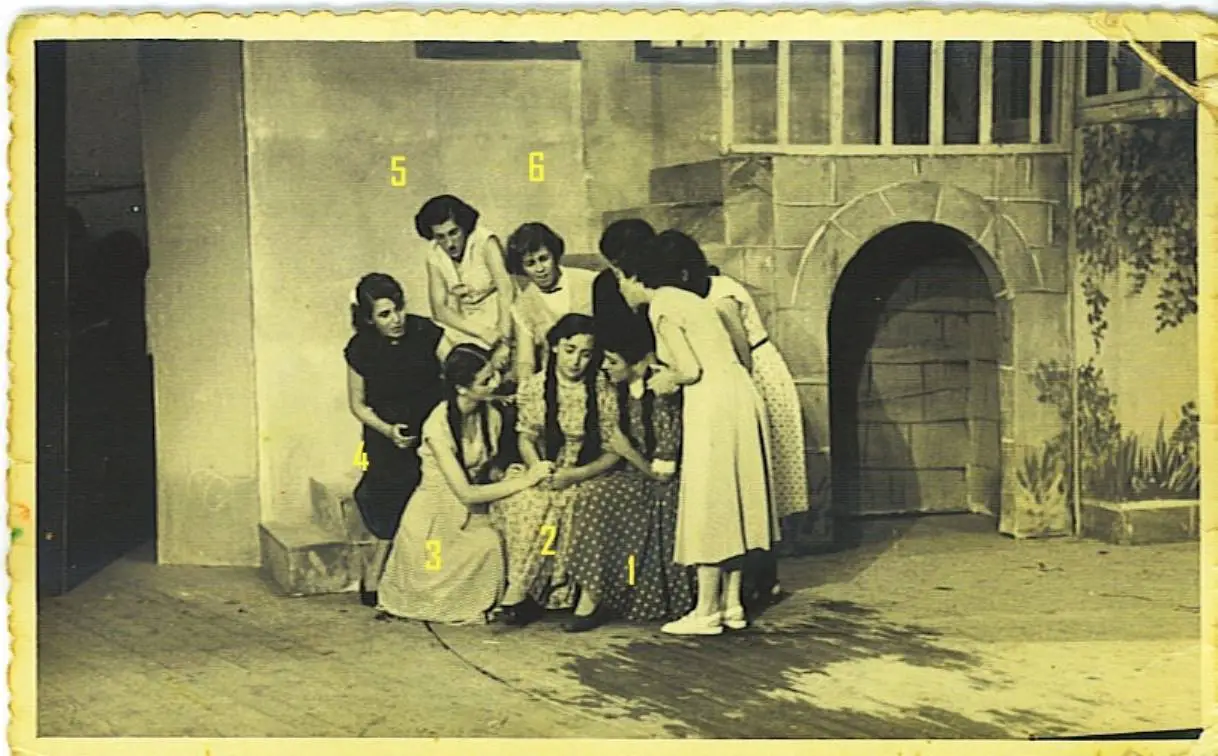
I happened to come across an old photograph: I was amazed by the beauty of its characters, their clothing, the originality, the quality of the photograph itself, and the scenography. It was not a simple photograph; it carried something special: it presented a fragment from the operetta “Lejlaja” in 1957 – Composer: Tish Daija – Libretto: Lec Shllaku – Musical genre: Opera – Subgenre: Operetta – Premiere: 1957 – City: Shkodër. Then, in another photograph, I saw the same character taking part in another operatic scene: the First Albanian Opera, “Mrika”.
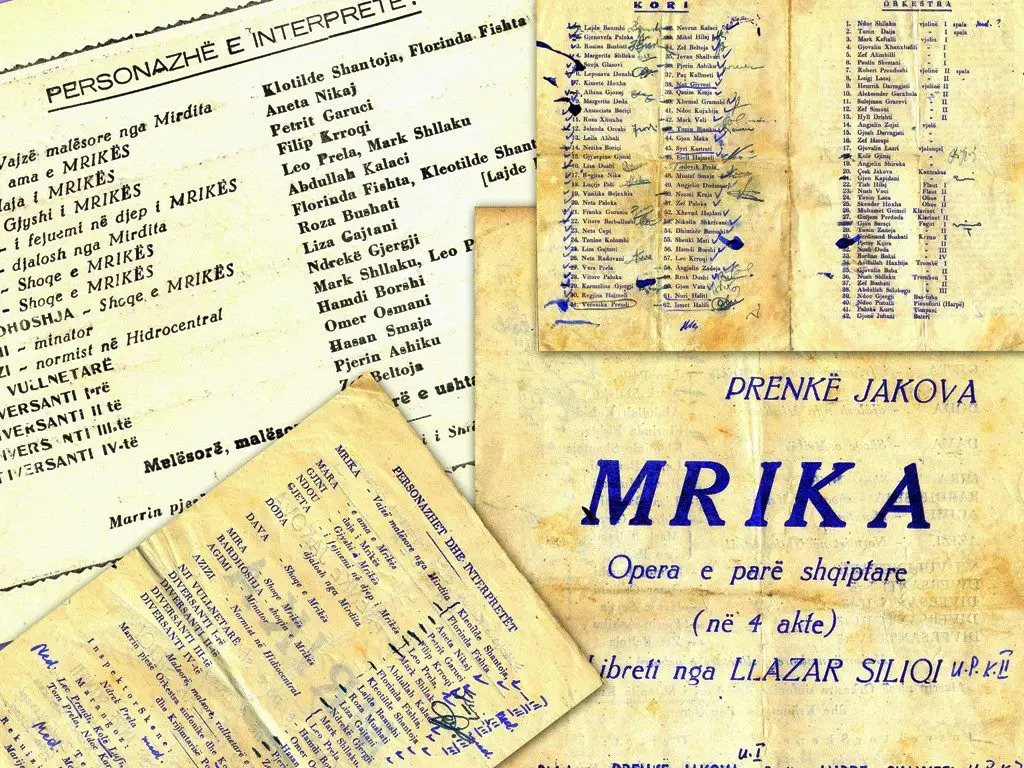
Produced in 1958 in Shkodër, with music by composer Prenkë Jakova, libretto by Llazar Siliqi, directed by Andrea Skanjeti. Based on the musical work “Light over Albania”. Performed by a semi-professional troupe with a full orchestral formation, the opera “Mrika” was destined to become a masterpiece – through it, the acquisition of a genuine lyrical character for Albanian opera – due to its highly quality and professional realization, thanks to the dedication of all participants, regardless of the role each of them covered in that work.
Now, the conditions to realize and combine all these elements were not easy at all, given the temporal context that Albania was going through.
A single black-and-white photograph depicting the group of the work’s female protagonists, with braided hair, the costumes, and the entirety of the work’s fame, was enough to push me to seek some seemingly new but old-in-itself information about this Albanian lyrical masterpiece. But could I, in 2016, at such a great temporal distance from the realization of this opera, and also geographical distance from Albania (since I have lived in emigration for many years), find what I was looking for about this work? Written information on paper or the internet, I had already consulted and had overcome that obstacle.
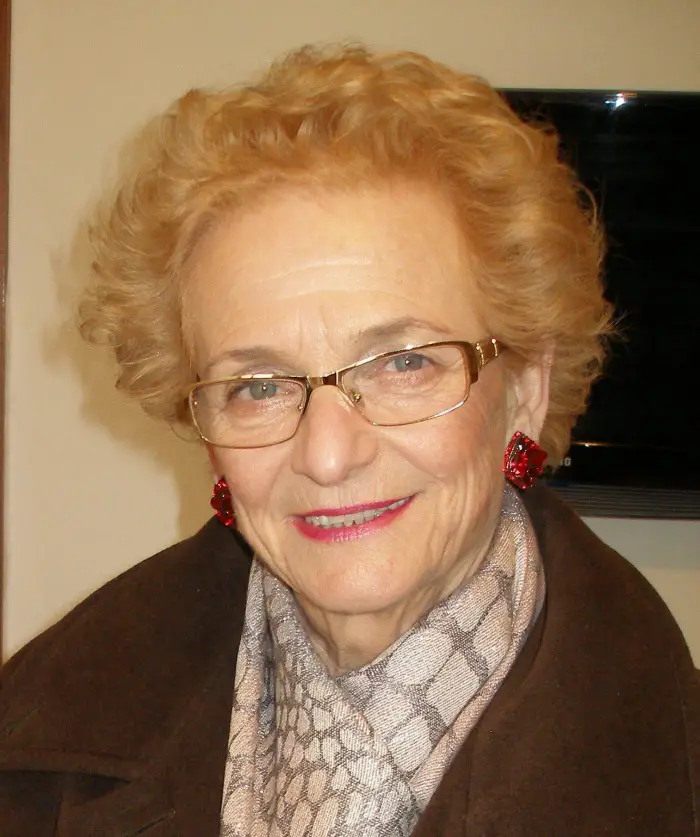
I was driven by curiosity for some real, concrete testimony from a performer of the work! Was this excessive ambition of mine? Unattainable? Most of those protagonists and collaborators are unfortunately no longer alive. We usually deem it proper to write posthumously about such people, to remember them after death, which is praiseworthy, but in my opinion, their remembrance and appreciation should be done while they are still alive. That is fairer; indeed, we owe them that. My curiosity was rewarded when I managed to find one of the opera’s performers: in the role of Bardhosha, Mrika’s friend, the lady from Shkodër, Liza Gajtani (Luka).
This distinguished lady is now 79 years old and lives in Florence, Italy. I had the honor and particular pleasure to exchange a few words with her:
Mrs. Liza, hello and thank you in advance on behalf of the ALBANIA NEWS editorial staff. – You, as mentioned above, are one of the performers in the operatic works: “Lejlaja” (Operetta) and “Mrika” (The First Albanian Opera). The time span: 1957-1958. What effect does it have on you today to go back in time to those very important events, not only musical, but which left a permanent mark regarding the role of music and art in Albanian society of that period and beyond?
It is not a negative effect…! It has left its traces in mind and heart. It was a period where we had no other interests besides our passion for music and art. We sang to please ourselves and the people who came to see us. They were moments when people still inherited spiritual values and still lived a life where spiritual values were dominant.
– Shkodër. You, at a young age. 18 years old if I’m not mistaken?
Yes, around 20 years old.
– Before your engagement in this new artistic experience began, what had been your connection to music? In what context did Prenkë Jakova, or someone else entrusted by him, come across you for this purpose?
It was passion. All of us, as a family, had a passion for music. Initially, I participated in the church choir and then at the Pioneer’s House. Prenka knew my sisters, Angjelina and Vitore Gajtani, at the House of Culture, where they sang as choristers in the well-known performance of that time, “The Shkodër Wedding”. Another sister, Albina Gajtani (wife of composer Leonard Deda), was also a soloist and debuted in various performances, mainly of light music.
My uncle Lec Bardheci was a musician; he used his whistle as a musical instrument and recorded several music records at Radio-Shkodër. I was a chorister and soloist; I sang in various performances of the City Ensemble. Later, at the House of Culture, Prenka chose me for the role of Bardhosha, as a mezzo-soprano, in the opera “Mrika”.
– So you were a group of friends who frequented the House of Culture in Shkodër? You weren’t proper lyrical singers or performers. How much work, sacrifice, and how much preparation time did the rehearsals require? What was the level of your motivation to achieve the realization of this work you had undertaken?
I worked; I was an office employee. We all worked in various professions: technicians, workers, clerks, teachers, etc. We went to rehearse at the House of Culture every day, from Monday to Friday, from about 19:00-20:00 until 21:00-22:00, even until 23:00. We got tired, but we did it with pleasure because it was our passion. But we also benefited something. At that time, we received our bread with ‘triska’ (old Albanian currency/measure): we had a ration of 500g per person per day. They gave us a ‘triskë’ for 900g of bread per day.
– Did you imagine that success, especially the fame that the First Albanian Opera, “Mrika”, gained in Albania and abroad?
I felt this because Prenka, Tonin Harapi, Tish Daija, and many other musicians were truly rare masters. For Prenka, I can say that he was a genius. Prenka, for example, could play all musical instruments without exception.
– After this artistic experience, did you continue your studies in singing? And your friends?
No, neither I nor my friends. As far as I know, we all continued working. But initially, there was no possibility to study at the Conservatory (the Academy of Arts was founded in 1966). Before 1945, there were religious schools where music was studied. We continued for some time to sing and participate in various performances. Initially, there was no Academy; when the Academy was founded, it was impossible for us to continue a career because we were also limited by age…!
– In the photographs I saw, I liked two details: your original costumes and the braided hair. Did you have proper costume designers back then, or did you have to think about the costumes yourselves? Did you wear your hair in braids in your daily life as well?
Yes, in the operetta “Lejlaja”, only I had natural braids, while we prepared the costumes ourselves: we bought the fabric and then had it sewn by a tailor, as we normally did. At that time, there were no ready-made clothes. In the operetta “Lejlaja”, we used our own clothes; there was no costumier; whereas for the opera “Mrika”, the clothes were prepared under the care of the costumier (it was a woman, Marije Curani).
Prenkë Jakova: His professional merits are indisputable. What about his temperament? How was he? How did he communicate with all you girls of the group and with colleagues in general?
Besides other qualities, Prenka was a sanguine person; he expressed this mainly during work. For example, if the rehearsal schedule started at 20:00 and you arrived with a 5-minute delay, Prenka would exclude you from the rehearsal that day. If you missed several times, he would permanently exclude you. He had great leadership skills and was a tireless worker…!
Prenka was a very rigorous person regarding work, but in his free time, he was sociable and had a great sense of humor. Often, on Saturdays or Sundays, we would gather to spend time together; he knew our modest economic means, so he would treat us at his own expense: beer, sweets, etc.
Do you still remember any fragments from these operas today? Do you ever happen to sing them, even under your breath at home?
Of course, I like them very much. I like “Grandfather’s Rhapsody”, “Mrika’s Aria”… and the choir songs. I cannot say that I dislike any of them; I like them all.
You live in Italy, in Florence. Do you miss Shkodër? Have you found any small similarity between Florence and Shkodër, to somewhat fulfill the nostalgia for your birthplace?
Yes, sometimes I miss Shkodër. I have found similarities between the humor and jokes of the people of Shkodër and those of Florentines. Also, we have the same flowers that once grew in the yards of Shkodër houses, e.g., lilacs, carnations, roses, etc.
I thank you on behalf of the ALBANIA NEWS editorial staff for your presence in this interview and for the positive example you have left in the originality and seriousness of Albanian art, even at a considerable distance in time! /Memorie.al
Thank you, for everything.