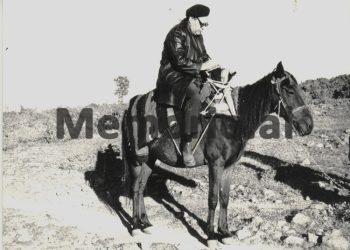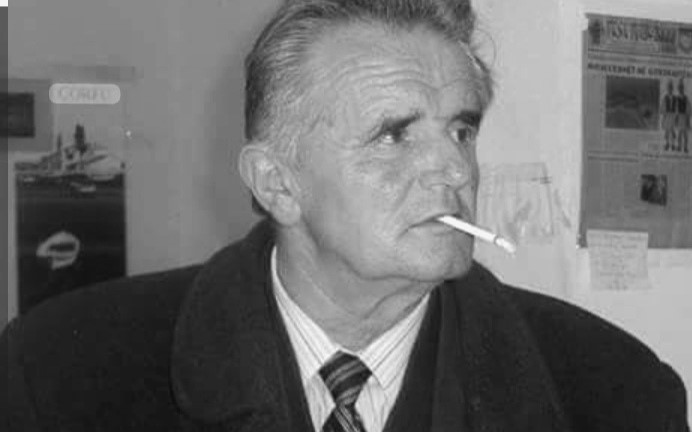
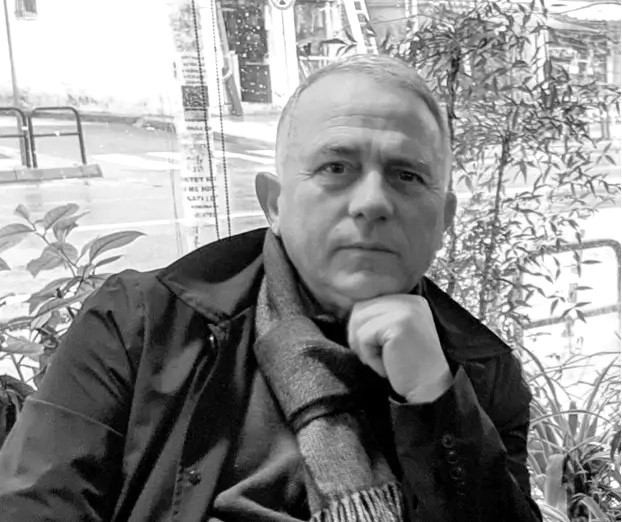
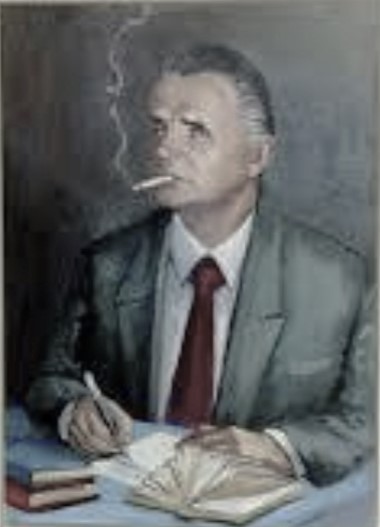
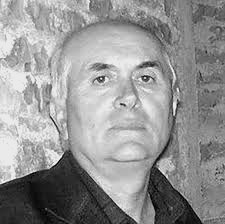
Memorie.al / “Its leaves are my hands, / Its roots are my heart, / Its trunk is my years, / Its milk, dripping drop by drop, is life, / Its strange architecture is my language. / I am the sea fig”! This poem, full of strong emotions, with a symbolic and metaphorical inner character, titled “I am the sea fig”, was published for the first time in issue no. 10 of the magazine “Nëntori” (November) in 1972, by the poet from Gjirokastër, Thanas Dino. But that poet, at the time 23 years old, just emerged from displacement, no longer exists. He was swallowed by the communist censorship of the revolutionary apocalypse of the 4th Plenum, when they brutally threw him out, from the newspaper “Drita”, into the villages of Kurvelesh, excluding him from literature. Something unbelievable happened. The poem was considered a demystifying anathema, an artistic counterposition to the method of socialist realism.
The accusers shivered as if with fever. Even the Party’s “Number One” would pronounce his name from one meeting to the next, from one gathering to the next: “What is this deluded fellow who wants to become a sea fig?”! Now there exists the writer Thanas Dino, who rises against the monotony of morality, demystifying myths, air for strong hearts and a free spirit, who says: There is no heroic time, only heroic people! Although a minority and bilingual, the humanism in his works knows no borders.
He had told me about this poem, sometime around the year ’78 of the last century, the poet and my friend Agim Mato, when we met in his studio in Saranda. I met Thanas for the first time in 1983, in the office of Professor Dalan Shapllo, the supervisor of my diploma thesis.
Thanasi had just started working as a correspondent for the newspaper “Zëri i popullit” (The People’s Voice). By giving him the task of a reporter, the high authorities hoped that they had removed his literary talent from its context, that they had stripped him of his creative power.
By destroying his spirit, they thought that his spiritual furnace would burn and turn to ash. But Dino kept his art, goodness, truth, and beauty as eternal categories in the sky of his memory and fantasy, to reveal them sublimated years later, like pearls that had descended from heaven. The journalist Dino was not one of those who could be “corralled” within his fate, turned into a mere mannequin chronicler.
He had only two sacred friends: Ismail Kadare and Arshi Xhezo (the editor-in-chief of “Zëri”). He followed the course of events one after the other, entered into the meaning of time and of man; he began to be interested in history and armed himself with universal norms, which explain the gradual triumph of reason over customs and prejudices, the separation of reason from history. He sketched the rational picture of the future in his mind; cast his eyes on Socrates and his people, but also on Spinoza and Kant.
From his experience as a journalist, he understood the golden key to true literature: that all people have their own way of being exemplary and unrepeatable, and there is nothing higher than the multitude of collective souls, where all supra-national values, whether juridical, aesthetic, or moral, are stripped of their sovereignty.
From his nearly 25-year experience in journalism, until 2005, Thanas Dino understood that instead of subordinating facts to ideal norms, one must first understand that such norms have their own context and genesis; in short, they are nothing other than facts.
Whereas the wealth of humanity lies solely in the diversity of ways of life, when the aesthetic and cultural values that give meaning to life come to the fore, by means of the veins of affective memory.
When he felt that he could not give an account to anyone but himself, when he became convinced that the divine, wavering word should have its superior power returned, the journalist Thanas Dino, as a man of messianic hopes, armed with the imperatives of social anthropology and confident in the meaning of time, with the concentrated fire of inspiration, repaid his old debt to literature, with over 30 books in circulation such as:
‘The Night with Two Moons’, ‘The Sacred Sign’, ‘The Middle’, ‘Suicide on a Rose’ or ‘The Last Decade’, ‘Demolition or Replacement’ and ‘The Prohibition’, ‘The Low Sun’, ‘The Cut Village’, ‘On the Narrow Ground’, 2021; ‘War Winters’ – ‘Hotel Balzac ’73’, ‘The Cyclops of Glina’, etc.
It was the first settling of accounts with himself, the return to his personal world, the complete spiritual change, where the true artist emerged, both within and outside his time.
Thanas Dino discovered the South, in all its dimensions, of cultural diversity, doctrines, history, vitality, sterility, bewilderments, superstitions, moral numbness, unbridled outbursts, artlessness, and joy. His entire philosophy of creation smells of the South and speaks the language of the southern wind, with infallible certainty, sniffing out the proximity, the essence, the soul of every human being.
Sometimes it resounds with delight and rustles stronger than the excess of light, other times it becomes rigid, arrogant, and explosive, threatened violently by ugliness, in the highest allegory, and has an emotional force similar to the sounds of an ancient bell. The writer’s fantasy is elegant, alluring, lustful, and harmonious.
In all these books, Thanasi narrates human stories, as a common destiny, linked to a personal world. The entire anthropological and aesthetic essence of his works represents living entities, such that each one invests its own material, its society, with its own form, its own passions, its own life, will, and sensitivity.
Like a simple and practical philosopher, Dino, even though he honored abstract and sometimes non-literary aesthetic principles, was not afraid to trample with his feet prejudice, tradition, antiquity, myths, authority, in a word, everything that keeps the multitude of souls under the yoke.
Following the example of Plato, he raises the good above everything that exists, starting by setting aside facts and opposing readings, beyond metaphysical-moral nebulae, as a privileged bearer of popular memory, keeping alive the flesh of life, the blood and the spirit.
Dino’s innovation is much greater on the symbolic level than on the level of psychology. He presents the great aesthetic problems of his works and solves them simply and with human sensitivity, reaching, in a surprising way, towards the universal essence.
Using a predicative-narrative typology with dynamic and static motives, with a demonic imagination to present a universe of ghosts, his narratives are perfect, with a constant, dense, burning concern at all points of the soul. The most prominent feature of his discourse is the ability to freely mix linguistics with meta-linguistics.
In Thanas Dino you can find incredible material to compose dozens of essays. He, in truth, has no need for Socratic apology. My public invitation is: Read his works as soon as possible!
(This essay was written on April 21, 2026, after the promotion of Thanas Dino’s creativity, by the renowned Publishing House “Neraida”, at the “Sotir Kolea” center of the National Library)
BIOGRAPHY
Thanas Dino was born on December 12, 1949, in Gjirokastër. He completed his secondary education in his hometown. He then continued his studies at the Faculty of History and Philology, Department of Language and Literature, and immediately after completing them, he was appointed editor at the newspaper “Drita” (Light), where he remained until 1973.
Thanas Dino was considered one of the most talented pens of his generation, but his non-conformist attitudes and the labeling of his creativity as modernist and inappropriate for the spirit of the time, after the 4th Plenum of the Central Committee of the Party of Labor of Albania, caused his departure from Tirana to work as a teacher in Picar, Gjirokastër. From 1983 until 2005, Thanas Dino worked as a correspondent for the newspaper “Zëri i popullit” (The People’s Voice) for the districts of Southern Albania.
Thanas Dino’s literary creativity is extensive and diverse. Among his books, we mention: ‘Burrat e lirisë’ (Men of Freedom), drama, 1979; ‘Vëllezër me malet’ (Brothers with the Mountains), stories, 1980; ‘Biblioteka e Jugut’ (Library of the South), literary journalism: ‘Opozita popull’ (People’s Opposition), 1997; ‘Historia vllahe në tregime njerëzore’ (Aromanian History in Human Stories), 2003; ‘20 ditë në ishullin e Homerit’ (20 Days on Homer’s Island), 2003; ‘Xhevat Avdalli dhe Laver Bariu’, 2004; ‘Raport nga Jugu’ (Report from the South), 2005; ‘Malet e Shqipërisë rreth gjëmuan’ (The Mountains of Albania Moaned Around), 2007; ‘Nga Blloku dhe nga Magnetofoni’ (From the Block and from the Tape Recorder), 2007; ‘Brumi prej guri’ (Stone Dough), 2009; ‘Themele dhe rrënoja’ (Foundations and Ruins), 2010; ‘Fjala ka këmbë’ (The Word Has Feet), 2013; ‘Prej kohe’ (From Time), 2015; ‘Thënësit’ (The Sayers), 2017; ‘Nga Fjala’ (From the Word), 2018; ‘Dy – Me Ismail Kadarenë’ (Two – With Ismail Kadare), ‘Njolla në biografinë time’ (Stains in My Biography), 2019; ‘Banojmë në fjalë’ (We Dwell in Words), 2020.
Novels: ‘Nata me dy hëna’ (The Night with Two Moons), 2012; ‘Shenja e Shenjtë’ (The Sacred Sign), 2015; ‘Mesi’ (The Middle), 2016; ‘Vetëvrasja mbi trëndafil ose Dhjetëvjetëshi i fundit’ (Suicide on a Rose or The Last Decade), 2017; ‘Prishja ose Ndërrimi dhe Ndalimi’ (Demolition or Replacement and The Prohibition), 2018; ‘Dielli i ulët’ (The Low Sun), 2019; ‘Fshati i prerë’ (The Cut Village), 2020; ‘Mbi tokën e ngushtë’ (On the Narrow Ground), 2021; ‘Dimra lufte – Hotel Balzaku’ ’73 (War Winters – Hotel Balzac ’73), 2021. ‘Lëndë për ëndrra’ (Material for Dreams) (2025). / Memorie.al