From DOMENICO QUIRICO
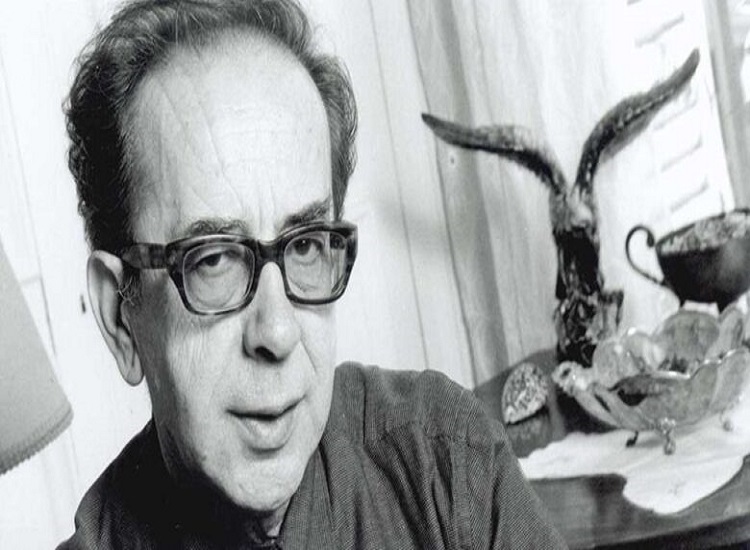
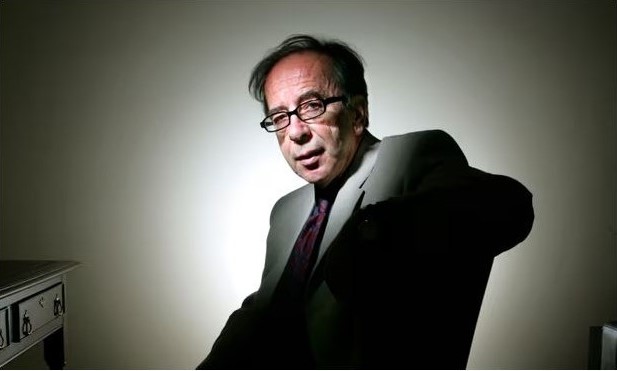
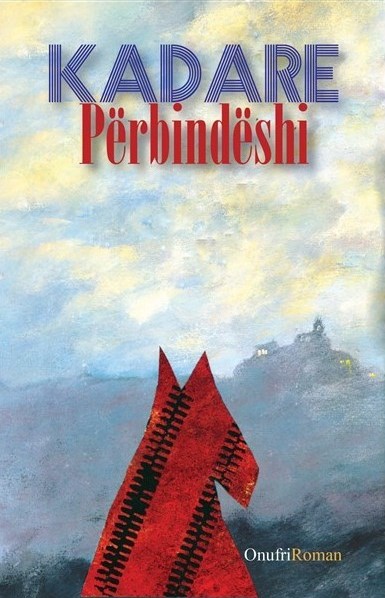
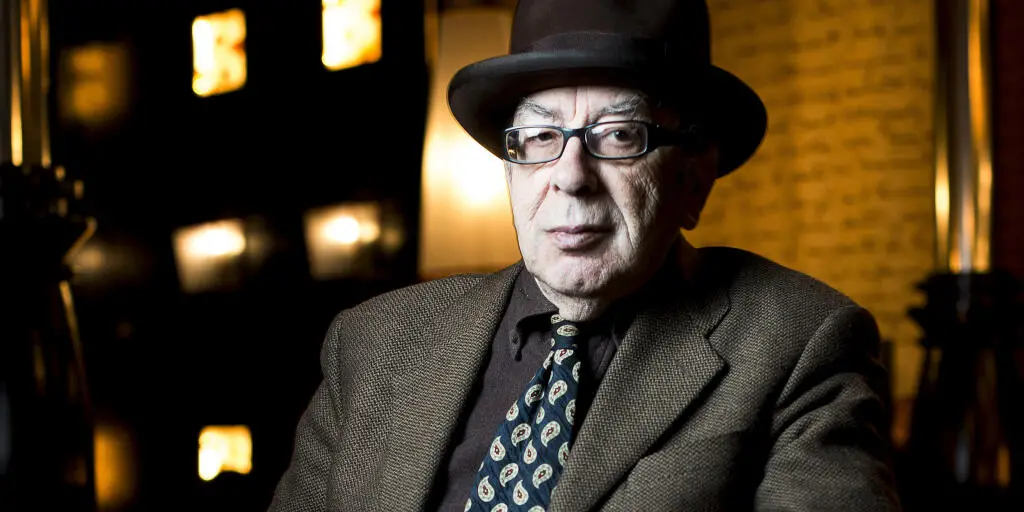
Memorie.al / “To truly free themselves from the past, the authorities in Albania need the truth, the courage – which they have not had so far – to open the archives, without being threatened by the alibi of possible revenge,” said writer Ismail Kadare, for whom the publishing house “Fandango” in Italy published in May 2010 his novel “Il Mostro” (“The Monster”), written during the communist dictatorship, in which, from Paris, he describes the difficult steps of his country to join Europe.
“The Monster” – is it a key book on the identity of a country that was twice separated from Europe: first by the Turks and then by communism…?
Kadare: – It is the number one problem, which, unfortunately, has still not been solved. But this interruption with Europe, this connection with the Turkish Empire, applies to the whole Balkans. But the history is even more ancient: earlier it was the Iberian Peninsula that was separated from Europe, then the Balkans. The Turks also tried with Italy – their real objective, after taking Rome, Constantinople – but they did not succeed. Then they changed their minds: they decided to go to the Balkans, towards the heart of Europe.
Then fascism, a short period…?
– Yes, but because of fascism, communism came. The Yugoslavs, Albanians, and Greeks united under a supra-national ideology. In Albania, there were no signs, no conditions for communism to be our fate.
Then the time of great religious totalitarianism, Stalinist, Chinese, authoritarian – you have known all forms of totalitarianism…?
– Above all, it was saddening. The first sign is repression, then boredom. One never speaks of this sadness; it was an everyday thing that tormented people along with violence, pallor, and poverty. Under the regime, an artificial life is created, a cartoon scenario, because a normal life cannot exist in a dictatorship. The primary goal of tyrants is the deformation of life, its total disorganisation.
You were a famous writer back then. How can one survive under tyranny?
– The only way to resist is to try to write, to make yourself believe that you live in a dictatorial country, but that at the same time you can do something that escapes this model. Above all, to do literature. Whether you succeed or not – there is no formula – you have to try.
“The Monster” was published, and then banned. Even during the Stalinist period, extraordinary writers existed. Bulgakov created everything under Stalinism. Likewise Mandelstam, Anna Akhmatova – so even under Stalinism, great literature exists.
Sometimes it seems harder to write under democracy…?
– That is a concept that should put writers in difficulty so that they write well. One cannot draw conclusions from one extreme to the other. It is not freedom that makes literature, nor tyranny that kills it; it is not freedom that produces genius writing, nor dictatorship that produces mediocrity. Its miracle is that it is not classifiable.
Then came the “Albanian spring”, as you call the current period in your country?
– A situation that is not to be envied. Certainly the dictatorship has fallen, but behaviours remain – not the concrete ones, but those of a general mentality. Albania has still not achieved this break. It has been discussed for a long time, but, unfortunately, agreement has still not been reached on a transparency law to open the secret archives.
This non-recognition of the truth has had a negative impact; it allows speculation and favours a part of the corruption that gnaws at the country, because some people know the secrets of others and use them. Former informers, spies have become a kind of treasure for the two political camps; they are used as weapons of threat.
Albanians do not have the courage to face their past. There are those who say: “open the archives”; others oppose: “No, because that would create problems; we are a country of revenge!” But the truth cannot be concealed for any pretext. This revenge is a pretext, an alibi. In Albania there are thousands of former prisoners who meet their torturers in their cafes and nothing happens.
Former informers are a complicated problem; they must live, but they cannot hold leadership positions; they should not give moral lessons. Their life is also a dramatic chapter; they were recruited by leftist methods; they were deceived, but they do not have the right to become leaders of the country.
Was Europe your hope? Has it disappointed you with its mediocre quarrels and its communist nightmare?
– No, becoming European is still aspiration number 1; there are no other alternatives. Certainly it is not paradise; it has its great and small problems, strategic and every day, but there is no alternative. They imagined it with its masterpieces; they are a little disappointed, but they have also understood the logic of these defects. A liberal-democratic system cannot be created without these defects existing.
Are there writers and books that encouraged you to become a writer?
– In adolescence, one likes very dramatic, dark, fantastic literature. In the Balkans, there exists a folkloric and popular heritage that was close to Shakespearean epic. A writer can be harmed by this, but I, fortunately, also liked the grotesque, joy, fantasy. Don Quixote, who is very well known in Albania, played a role in balancing this dark, epic side.
Everything is called into question by Don Quixote. There was a great thirst for world literature: Dante, Cervantes, Shakespeare were almost like Albanian authors, like Albanian classics, even more so. Dante was very well known before we were invaded by Italy, and many believed that with the expulsion of the Italians, he – who had become the first Albanian writer – would become famous.
But under communism, Dante became even more popular; the best translations of “The Divine Comedy” were made during the communist period – fantastic translations; some of the translators worked in prison.
Why?
– After the break with the socialist camp, Russian and Soviet literature left a great void, and it was necessary to increase publications of classical literature from around the world, to fill the shelves of bookstores. At first it seemed a positive development; then we aligned ourselves with China…!
Have you been to China?
– Yes, once during the Cultural Revolution. The objectives of our cultural delegation were China, Korea, and Vietnam. The impression was strong, even though our delegation was isolated from reality. It cannot be said that one did not understand and see.
I published a novel on the friendship between Albania and China, a grotesque book. After we broke relations with Beijing, we were politically correct in criticising the Chinese, and, since we were similar, it was a way to criticise Albania. / Memorie.al
Taken from “La Stampa”