

From Edmond Kaceli, Italy
The Paradox of Gheg Albanian: Between the Literary Elite and “Village Gheg”
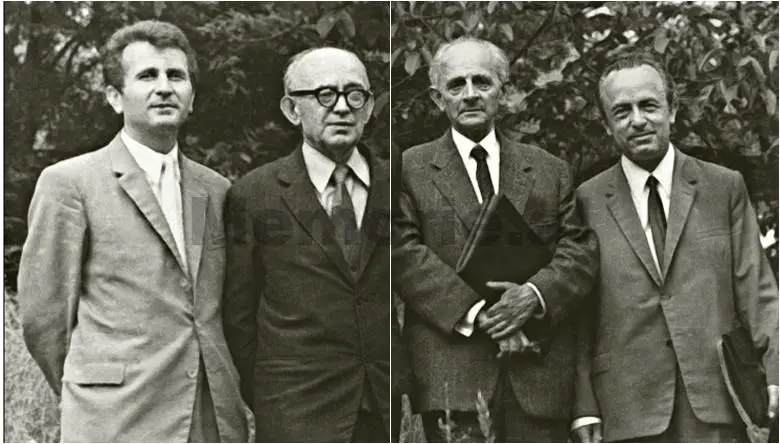
Memorie.al / Gheg Albanian today is experiencing a kind of duality that is as captivating as it is melancholic. On one hand stands literary Gheg, the inimitable Gheg of Fishta, Mjeda, Gurakuqi, Migjeni, Camaj, Koliqi, etc. – a monumental and precise linguistic architecture. On the other hand, there is the daily reality: a mosaic of a thousand colors, where “village Gheg” dominates over the cultivated norm.
The Myth of 100 Writers
Few people speak literary, official Gheg, and only about 100 people write it correctly (still seem too many to me!); the rest speak and write the Gheg of their own village!
Perhaps even this number seems generous! This 100 who know how to write literary Gheg correctly is not merely a provocation.
It is a cold diagnosis of our cultural reality. After 1972, cultivated Gheg remained outside institutions, gradually turning into a kind of “Albanian Latin”, with the difference that Latin is called a “dead language”, while Gheg turned into: “a killed, imprisoned, arrested language”!
Whoever used it got the label: “Reactionary of the Albanian Language”?
Precision vs. Improvisation: Literary Gheg requires a grammatical discipline (infinitive, short forms, specific declensions) that is no longer taught in schools! Language has syntactic, morphological, grammatical, phonetic, phonological, lexicological, semantic, pragmatic rules (language in everyday action) – terms that sound foreign to village Gheg speakers!
Without these foundations, writing turns into improvisation. Fragmentation: Without a central regulator, the Gheg language is being automatized! (it is being crumpled, turning to dust)! He who does not master the literary norm ends up writing just as he speaks in his narrow circle, transferring the features of his neighborhood or village language directly onto paper.
When the “Village” Takes the Place of the Book!
The strength of Gheg has always been its liveliness, its poetics, its infinite word formation, its musicality, but its weakness today lies in the lack of unity! When everyone uses the phonetics and lexicon of their own area, the language loses its power to be universal.
Many writers from the North write exactly as they speak at their own family table! This means that they unintentionally limit the window of communication only to those around them! Thus an invisible but
Harmful barrier is created: Literary Gheg was once a bridge that connected the whole North and Albanian lands, while “village Gheg” risks remaining a closed circle.
A Cultural Resistance
The danger is not that Gheg will disappear as a spoken language! It resounds powerfully in the streets, in music, folklore, and homes. The real danger is the loss of its academic nobility! For 35 years now, there has been no serious effort to create at least a minimal grammar of literary Gheg!
Without this, all discussions are completely futile! The few connoisseurs of literary Gheg (the official language until 1972) should have organized at least a meeting for this!
To write correctly in Gheg today is not merely a matter of desire; it is an act of intellectual resistance. Those “100 people” who keep the correct norm alive are the last guardians of a linguistic cathedral that, for the rest, is slowly turning into a beautiful but unusable ruin.
The absence of Gheg from the Altar of the Albanian Language is completely unjustifiable and extremely harmful! Wasting time only prolongs the agony of an extraordinary national treasure, which we are all slowly suffocating, bit by bit! / Memorie.al