
– Detailed analysis by Selami Zalli on Martin Camaj’s file and the manipulation of State Security documentation –
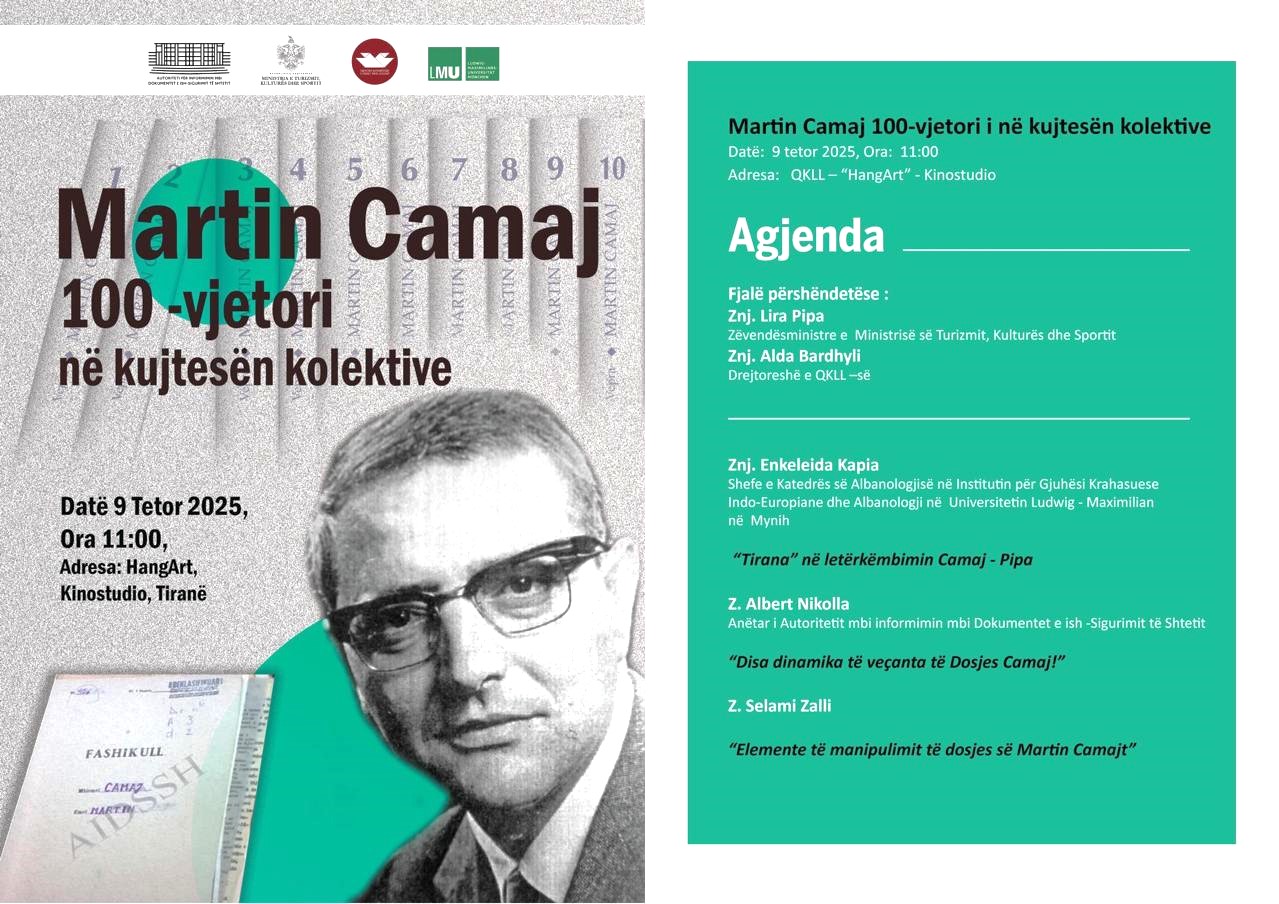
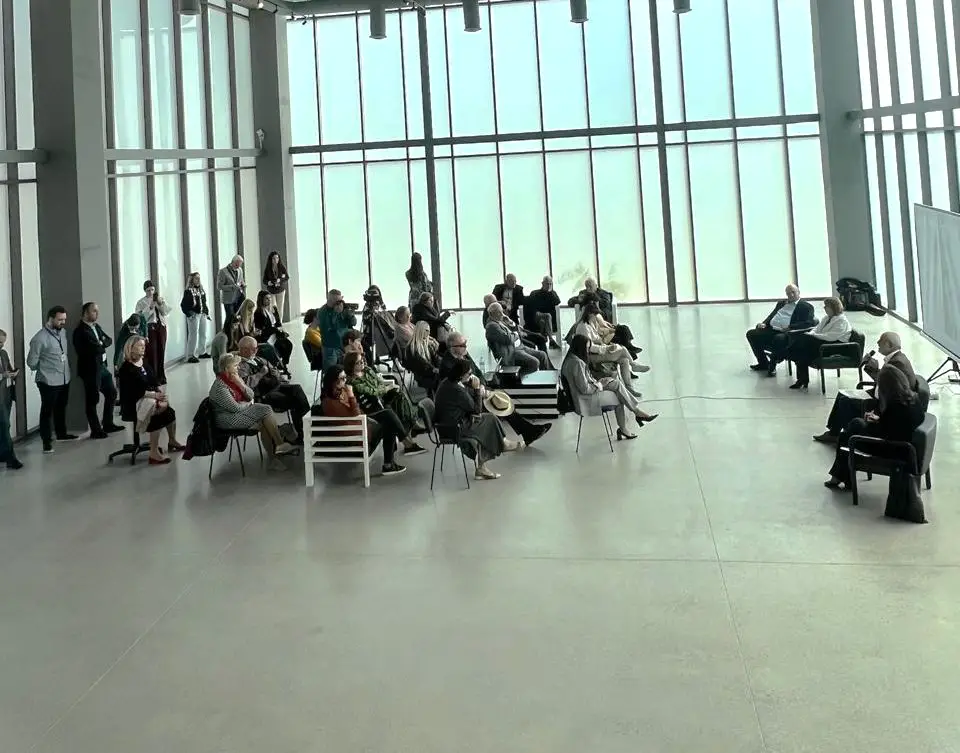
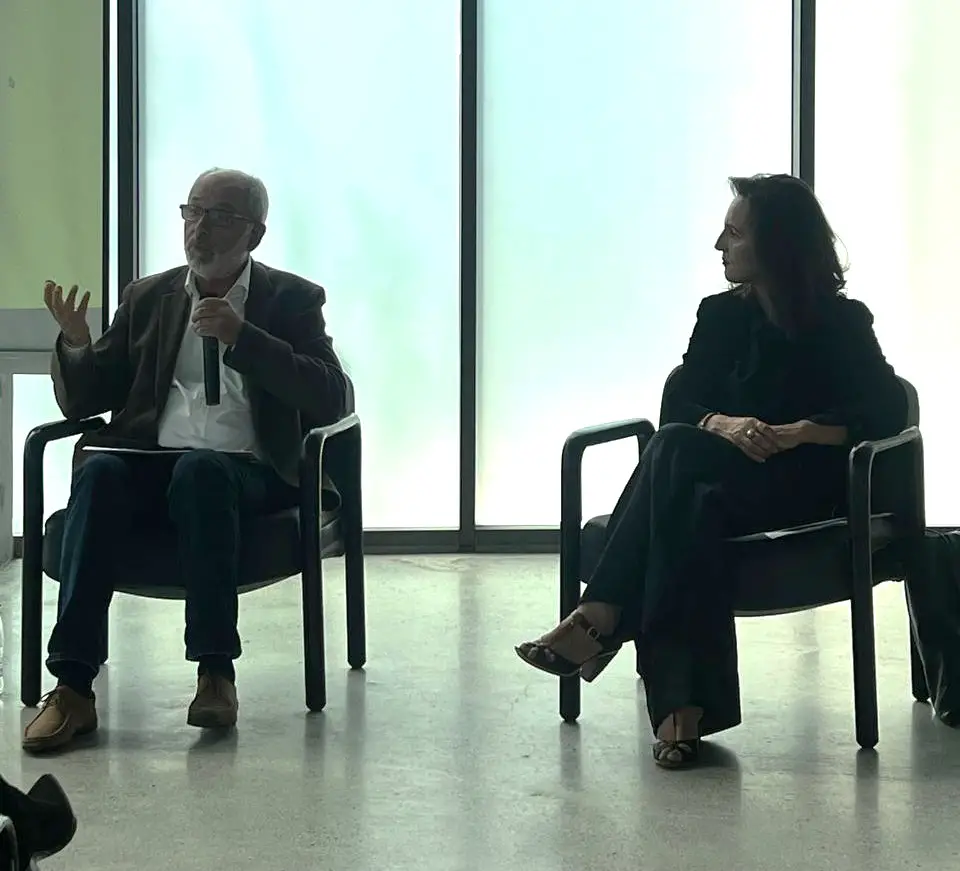
Memorie.al / During a symposium titled “Martin Camaj, 100th Anniversary in Collective Memory,” held a few days ago (October 9, 2025) at Hang-Art (former “New Albania” Film Studio), organized by the National Center for Books and Reading, directed by Mrs. Alda Bardhyli, among the five lecturers who presented their papers (Lira Pipa, Enkeleida Kapia and Altin Hoxha), there was also Mr. Selami Zalli, Director of the Information Directorate within the Authority for Information on Documents of the former State Security. In his capacity as an independent researcher, he presented an in-depth analysis on several aspects of the manipulation of Martin Camaj’s file, placing this case within a broader framework of the functioning of the State Security mechanisms during the period 1944–1990.
At the beginning of his paper, Mr. Selami Zalli (jurist and historian, Master of Political-Juridical Sciences, University of Pristina) emphasized the existence of three lines of thought regarding the question of whether Martin Camaj was or was not a collaborator of the former State Security, presenting the existence of three lines of thought:
– Martin Camaj was a collaborator (C.).
– He was and he was not – an unclear stance, camouflaged through the expression: “He would leave and not respond to the Security?” This line is assessed by Mr. Zalli as the most harmful and dangerous, as it attempts to place and keep the activity of the former State Security within the boundaries of legitimacy.
– Martin Camaj was not a collaborator and his file was manipulated. For this line, he developed an expanded presentation supported by arguments, with the aim of shedding light on this position, relying on analyses of a documentary, procedural, and historical nature.
The peculiarity of this presentation was the clarification of secondary accusations that have been overlooked in the discussion so far, but which are important and more serious, appearing in the former State Security file, where Martin Camaj is also presented as a poly-agent. More specifically, as: “Yugoslav agent,” “German agent,” and “American agent.” He also addressed a fact that had not been analyzed before and had not been made public: the existence of two contradictory pseudonyms attributed to Martin Camaj, which are “Bregu i Kuq” (Red Coast) and “Miloti.”
Mr. Zalli’s approach was distinguished by an in-depth and structured analysis of the institutional and regulatory framework, not limiting him to a simple reading of the documents, but examining them in light of the political and ideological context of the time. According to him, to correctly understand the nature of the accusations against Martin Camaj and the character of his file, it is essential to take into account several fundamental factors:
– The legal and institutional deficiencies that characterized the period 1944–1948;
– The direct influences of the Yugoslav services OZNA-UDB in the construction and functioning of the State Security apparatus;
– The formalization process of this apparatus after 1948, through the Political and Organizational Platforms approved by the Party of Labor of Albania (PPA), which placed it under the strict control of the highest Party bodies.
After a brief description of the political situation and legislation of the time, he moved on to the analysis of the Platforms and Regulations of the State Security Directorate (SSD), with a special focus on the procedures for taking individuals into processing (including changing status from “inside” to “outside”) as collaborators (C.), the manner of arrests, the quality of the defendant, and other operational actions.
According to Mr. Zalli, the conclusions of the 11th Plenum of the Central Committee of the Communist Party of Albania and the 1st Congress of the CPA in November 1948, highlighted not only the state and errors within this sector, but also the fact that many of the acts, mainly due to the use of inappropriate forms and methods of work following the Yugoslav model.
These factors contributed to the transformation of the state into a police state, which reflects that the files and accusations, including the case of Martin Camaj, cannot be understood and evaluated correctly without taking into account the broader context of manipulations and systematic violations that characterized that period and beyond.
Based on this analysis of gaps and deficiencies in the period 1944-1948, Mr. Zalli then proceeds to present the Political and Organizational Platforms of the State Security, approved in 1948 and 1958. These platforms emphasize the role of the PPA as the sole leading force, as well as the obligation to document the actions of the State Security Organs, through reports and the administration of collaborators.
A key element of these platforms was also the strict control and centralization of Security activity, only within the highest Party bodies: the Central Committee, the Secretariat of the Central Committee, and the Political Bureau. This centralization reflects efforts to formalize and control a system which, as previously noted, had been influenced by Yugoslav practices and had shown numerous violations and abuses during the first post-war period.
All these elements came to light through a careful and structured analysis by Mr. Selami Zalli, who, especially in the concluding part of his paper, focused not only on the formal mechanisms of the former State Security’s functioning, but also on the political and ideological context that determined them.
What distinguishes his treatment is the critical and comparative approach to sources, emphasizing that the institutional framework and concrete actions of the Security structures cannot be separated from the political line of the time and foreign influences, especially Yugoslav ones in the initial phase.
Through this methodology, Mr. Zalli does not limit himself to a dry description of documents, but helps build a deeper understanding of how ideological and institutional control was installed, as well as the long-term consequences this system had on individual rights and the democratic functioning of the state.
In this context, he further focuses on the internal structure of the collaborator recruitment mechanism, analyzing in detail the procedures, steps, and relevant documentation. One of the emphasized elements is the compulsory signing of the Special Declaration of Cooperation and Non-Disclosure, as an act that formalized the connection with the Security structures.
Likewise, the processes of selection or destruction of documentation, by decision of a Special Commission, were accompanied by minutes and separation lists, passing through a well-defined chain of protocols. Special emphasis is also given to the obligation of the Operational Officer to maintain regular contacts with the agent, to compile the relevant report and include it in the collaborator’s file, and then report it to his superior.
Meanwhile, in terms of investigations and detentions, Mr. Zalli highlights the introduction of new elements such as “3-day detention” or “secret arrest” and the competence to carry them out. In this way, Zalli builds a clear analytical framework to understand not only the nature of Martin Camaj’s file, but also how the Security apparatus functioned in the conditions of a state that had just emerged from war and was passing into a deep phase of ideologization and political centralization.
In order to clarify the case and evaluate the authenticity of the file in question, it was emphasized that Martin Camaj’s file presents significant deficiencies in its documentary content. The standard documentation that, according to the practice and operational regulations of the time, should have been found in the respective folder is unjustifiably missing.
These deficiencies relate to:
– Mandatory files such as: Search File, Fugitive File, Folder File (forms), Personal File, Work File, etc., accompanied by the respective type card registered in the card index. In the absence of these, justifying documents should have existed such as: Separation Decision, Destruction Minutes (bibliographic treatment). But these are also missing. These structural and documentary gaps are the first indicators of the file’s lack of authenticity and raise serious suspicions of subsequent manipulation.
Examination of only a few concrete acts and inconsistencies in the file
After analyzing the expected documentary framework, attention was focused on some concrete elements in Martin Camaj’s existing file, which testify to procedural and legal irregularities.
Interrogation record as a defendant
– No criminal case registered;
– No “lining letter” (arrest warrant) exists;
– The person is labeled “defendant,” without any decision, proposal, or documented execution;
– The release order is missing.
Formal irregularities:
– Unclear classification of subjects;
– Missing or irregularly placed signatures;
– The record that should be considered mandatory material is not found in the respective personal file;
– The content of the documents does not match the constructed narrative in the file and the mentioned figures, such as Gjon Destanishta, after the escape.
Attempt to create an artificial continuity of documentation
In terms of time, documents only acquire some order after 1958, where the following can be identified:
– Request for card index verification: November 10, 1958 (result negative)
– Certification and re-verification in card index: November 11 and 19, 1958 (again negative)
– Decision to open the file: November 10, 1958
– Various approvals from heads of relevant departments (1959)
– Decision to take into processing 2A: January 15, 1972
– Decision to archive: January 14, 1992
This continuity, although formal, cannot cover the gaps of the preceding period nor justify the absence of basic documents, with special emphasis on those documents that are missing in 1958 and now appear to have been created in 1948…?!
Through the illustration of documents presented as “essential”: signatures and a comparison with private correspondence under normal life conditions. A special place in the analysis is given to the examination and comparison of documents that allegedly prove connections with the Security:
Supposed declarations
– Declaration of C., Form (with card value), Interrogation record as a defendant, Correspondence with Rexhep Krasniqi (1971–1986), Correspondence with Mustafa Kruja (1954), Article that considers Camaj’s writing as “melodic line – in fact jazz (thepa, thepa)”. Even these elements are fragmented, incompatible in time and content with the rest. Continuing with the breakdown of the poly-agent accusations;
Analysis of the accusation as a Yugoslav agent
– Leaving and divorcing from Yugoslavia at the first opportunity,
– Not allowing visits to Kosovo,
– Obstruction of the work “Shenjzat” (The Signs) in Yugoslavia (censorship),
– Content of his creative work on the national level,
– Connections with intelligence and investment for the education of Albanian elements,
– Education and vacations for emigrant students throughout the socialist camp.
Analysis of the accusation as a German agent
– The response of the German Authority for Files,
Analysis of the accusation as an American agent
– The informant’s report from England (unsubstantiated…?!)
– Only a few pages later this information is taken, treated, and served as true.
The existence of two pseudonyms
– “Bregu i Kuq” & “Miloti” on page (55) without title.
Treatment of collaborators, especially “traitors”
– Burning,
– Keeping in formal connection,
– Punishment,
– Unmasking (public disclosure as C.) – in no case, a matter of trust in the Regulation.
The double photo in the file…?!
– Photo of the subject taken from a newspaper in 1973, which does not match the alleged time of the file’s establishment?!
Irregularities in the inventories
– The inventory and list of operational officers, without date and without respecting the rules for maintaining Records,
– A long time gap of information is noted…, 2 operational officers appear…, we have more than two types of handwriting?!,
– Simultaneous writings, whereas the writings (notes) in inventories and records should regularly have been done immediately, etc.
Although the file has an inventory and the pages bear two numbers (20-23…), there is no separation decision, selection decision, or destruction minutes in the file.
Inaccuracies in place and person names (of the subject himself)
Concluding with an exposé and finding that this is not the only manipulated file, bringing and presenting several ways of file manipulation beyond this case:
– With a note writing the name in the agent register,
– With the construction of a card,
– With a file cover, labeling it as a “work” or “personal” file, culminating with the reflection on the cover of the label “work and personal” file together (case “N…”), as well as through a note on the cover for a surveillance file, the surveillance pseudonym accompanied by the name of the person being surveilled, which, without reading and understanding its essence, create the impression that we are dealing with a collaborator – case “C…”, etc.
Analytical summary and Conclusion on Martin Camaj’s file
The analysis of Martin Camaj’s file reveals significant documentary gaps and serious procedural irregularities that call its authenticity into question. Basic files such as the personal and work file, card, register, search and fugitive file, as well as justifying documents for their absence, are missing.
Likewise, the existing documents present incoherence, suspicious signatures, and acts that do not comply with the legal rules of the time in continuity. The accusations of collaboration with foreign services are unsupported and often from dubious documentary sources. Subsequent interventions in the file are observed in the form of changes in handwriting, the use of unclear pseudonyms, and the inclusion of materials out of temporal context.
Conclusion:
Martin Camaj’s file cannot be considered authentic and reliable. It presents clear signs of documentary manipulation and fabrication, with the aim of constructing a false narrative to label him as a collaborator. This case testifies to the practices of defamation, censorship, and ideological fear that the regime of the time exercised against important figures of Albanian culture, which, by virtue of their capacity and what they represented, it considered a danger to the power.
“Censorship and defamation are expressions of fear.” This finding best synthesizes the essence of the Camaj case and many others like him. As above, we reflected in this article, according to Mr. Selami Zalli, his paper at this symposium was only a shortened treatment (as much as the timing determined by the organizing staff allowed), since in the following days he will make public a long and very extensive study on the so-called “Security file of Martin Camaj,” with a deep and complete analysis, with all the cases, in a monograph, on which he has worked for years. / Memorie.al