
By Fritz Radovani
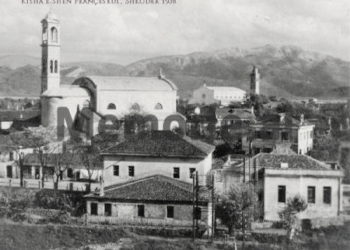
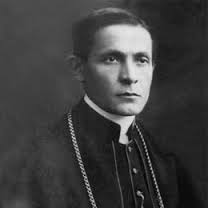
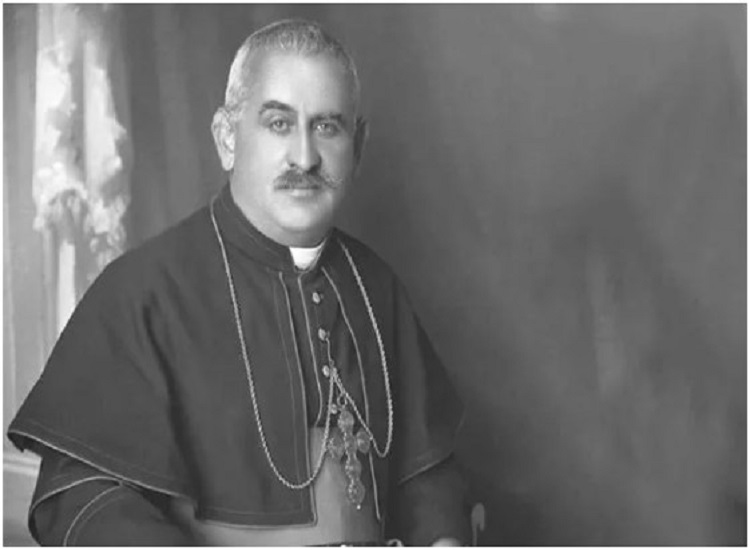
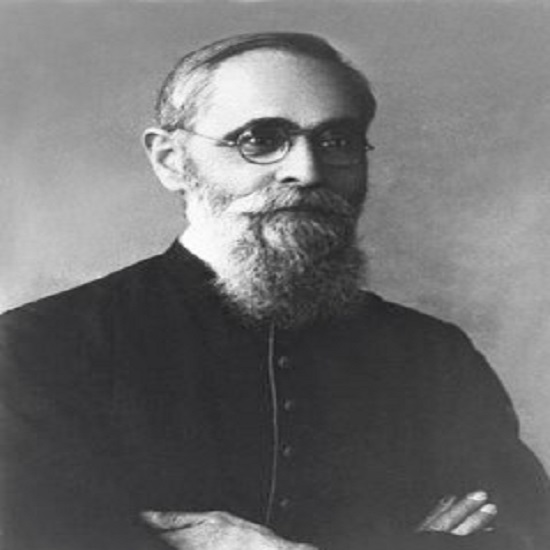
Memorie.al/ Monsignor Frano Gjini. He was born in Shkodër in 1886, to parents Pjetër (Tuke) and Drande Gjini. He came from an old civic family. He completed his primary school and high school at the Jesuit institutions of his hometown, while he completed his higher theological studies at Propaganda Fide in Rome, where he was ordained a priest in 1908. He returns to his homeland and is appointed secretary to the Archbishop of Durrës, also carrying out religious services in the village of Delbnisht in Kurbin. He goes to the city of Durrës for 18 months and returns again to Delbnisht until 1914. He is appointed parish priest of Derven in Fushë-Krujë for two years, and on November 14, 1919, he is appointed again in Durrës until 1924. From Durrës he goes to Kurbin, until 1928. From Kurbin he goes to Perlat in Kthellë of Mirdita. In 1930, he is consecrated Bishop of Durrës, a time during which he also administered Vlorë. In 1932, he is Abbot of Mirdita, with his seat in Orosh.
In 1944, he is also the administrator of Lezhë. On May 25, 1945, after the expulsion from Albania of the Apostolic Delegate, Monsignor Leone G. B. Nigris, by the communist government of Tirana, the Holy See appoints him: MONSIGNOR FRANO GJINI, REGENT OF THE APOSTOLIC DELEGATION IN ALBANIA. He is the first Albanian Catholic Cleric to be appointed to this high office in the Albanian state since its establishment. On November 20, 1945, Monsignor Gjini officially receives the appointment from the Vatican.
The document, which arrived via the Italian Embassy, is delivered to him by Father Giovani Fausti S.J., who was then serving in Tirana. The communist government of Tirana never recognizes this office, or the newly appointed Regent. From his youth, Monsignor Gjini stands out for his humility and prudence, which makes him very friendly with Bishops Bumçi, Vinçenc Prennushi, Jul Bonatti, and Father Meshkalla, Father Giadrin, Dom Shtjefën Kurti, etc.
Monsignor Frano Gjini truly consulted with them, but he was also a loyal collaborator for all religious problems in the regions he administered. After his appointment as Regent, he requests his replacement from the Vatican, seeing the great difficulties arising from the communist government of Tirana, a loyal vassal of Tito’s government. It was November 1945 when he requested this from the Vatican, but the Vatican did not approve Monsignor Gjini’s request. In January 1946, he repeats the request verbally through Father Filipe Kjeja, an Italian who was leaving for Italy; simultaneously, he informs the Vatican about the communist reforms being implemented here, such as the closure of religious schools, the nationalization of Church property, reprisals and arrests, the executions of innocent clerics, etc.
In February 1946, he mails a letter to the Apostolic Nuncio of the Vatican in France (since Albania had no postal connections with Italy at that time), where he requests clarifications on interrupted religious matters. In May 1946, Vatican Radio announced that an American delegate of the Vatican would come to Albania to assist here, but this did not happen, which gave the impression that the Albanian communists were being allowed a “free hand” to act against religion, just as in all other matters. Monsignor Gjini was among the first to clearly understand the stance of America, England, and Italy.
As soon as he was appointed to the actual office of Delegate of the Vatican, he requested to be presented to Enver Hoxha, then head of the Tirana government, but his request was not accepted. One might say that Monsignor Gjini did not miss seeing Enver Hoxha’s face, but apparently, he wanted to measure his pulse for the future. Through this request, he aimed to discuss the closure of schools, the freedom of speech and the press, as well as some of the economic measures that the government had undertaken against the Catholic Church. In the communist system, economic measures always foreshadow political measures.
Primarily, the meeting was requested by Monsignor Gjini, because he could not remain indifferent to the official actions that the communist government was carrying out against the Clergy, the intelligentsia, and Catholics in particular. In this meeting, Monsignor Gjini also requested the presence of Monsignor Vinçenc Prennushi, as Archbishop of Durrës and Tirana, Monsignor Gjergj Volaj, and Father Mati Prennushi, as Provincial of the Franciscans of Albania. It was December 1945 when the formal request for a meeting was made, but it was not realized, supposedly because the December elections had just ended. In March 1946, in the Tirana cell that Dom Shtjefën Kurti administered, all the above-mentioned persons gathered again, and in addition to them, Father Pjeter Meshkalla was also present.
There it was decided to write a letter to the government and have it delivered by Dom Shtjefen Kurti. The letter was drafted by Father Meshkalla with the suggestions and approval of all those present, as they represented the will of the Clergy in general. A copy was decided to be given to the English or American Mission in Tirana, keeping the Vatican informed, since ultimately connections and correspondence from Albania had been interrupted. Sending this letter to the Vatican was intended to inform the Holy See that the Albanian Catholic Clergy was not breaking ties with it, and that this matter was only a persistent demand of the communist government of Tirana, led by Enver Hoxha.
The letter was not sent by hand because an Italian Jesuit who was going there those days was afraid to take it, lest they inspect it and suspend his departure for Italy. He undertook to explain verbally to the Vatican the contents of the letter, as well as Monsignor Frano Gjini’s request for his replacement, since He was not recognized by the dictatorial government of Tirana. It is said that until later, the letters were kept by Don Lec Sahatçija, who also performed the duties of secretary to Monsignor Gjini, but the truth is unknown about where those letters ended up. There is also another thought that they may have disappeared with the death of Don Mark Xhani during interrogation, making it impossible to know where they might have been hidden by Him.
The letter was written, as Father Meshkalla also admits, but even he does not know its fate. Monsignor Vinçenc Prennushi took upon himself the meeting with the Foreign Missions, and he met with Mr. Hudgson at the English Mission and presented orally all the contents of the letter in the presence of Dom Shtjefën Kurti, who spoke french very well. He was very pessimistic, as it seemed to be the time when the relations of the Tirana government with the English were cooling, at least in appearance. I have the impression that the clerics communicated with foreigners only verbally, because they must not have trusted them either to give or receive letters, always a risky business. In 1946, Monsignor Gjini still made some trips to Mirdita, since there was no possibility of replacing him with another Bishop for that area. Certainly, he had spent a long time among those mountains there and was highly respected. The times were difficult on all sides.
The highlands were filled with fugitives who did not cease their efforts for freedom from the communists under the leadership of Mark Gjomarku. Mark’s brother, Lleshi (also an academic officer, was in the mountains), was called Lleshi i zi (Black Lleshi). Lleshi made a request to Monsignor Gjini, offering him the opportunity to leave Albania via an English plane that brought aid to the mountain bands, as word had spread that Monsignor Gjini might be arrested soon.
Monsignor Frano Gjini replied: “Even if I leave, to whom shall I leave the faithful of Saint Lleshdri? – This will never be done by me!” Certainly, this topic was not brought up again by them. The short, quick, and precise answer shows the spirit of the true cleric who is ready to sacrifice him, but not to leave his people without a religious leader in such a terrible time. So did many other priests who also did not flee but accepted the endless Calvary. Many of them today are martyrs of Faith and Homeland.
Monsignor Gjini not only stayed in the Homeland but worked with dedication and determination in the high and heavy duty that was entrusted to him. His great responsibility is seen in the measured and infallible actions he carried out until the end. As soon as he takes office, he is aware that he is facing a bloody war declared by the communists.
The demands of Enver Hoxha, Mehmet Shehu, and Koçi Xoxe towards the clerics of Shkodër and Tirana, in the very first days of January 1945, for cooperation and severance from the Vatican; the game of Sejfulla Maleshova, allegedly for forming a Christian Democratic party for the December 1945 elections; the expulsion of Apostolic Delegate Nigris on May 5, 1945; the non-recognition of the new Regent by Hoxha’s government, refusing the meeting requested by Monsignor Gjini; the elimination of the December deputies with non-communist views; the formation of the government with pro-Yugoslav and pro-Russian elements; the great friendship with “druzhe” Tito; the formations of groups and organizations with innocent people; the successive executions ordered by Tito and Stalin, etc., force Monsignor Gjini to take the most important step that takes away from the government the opportunity to accuse the Catholic Clergy, with his own order:
“The non-involvement of any cleric, whoever he may be, in any political matter, thus, the complete prohibition of clergy involvement in politics. The order is indisputable and unchallengeable.” The Promemoria issued for this purpose, dated November 25, 1944, by Monsignor Frano Gjini, after Delegate Nigris was in Italy, is the most accurate document that shows his subtle mind and far-sightedness for the times to come. These qualities of Monsignor Gjini, strengthened by his manly and brave character, were perhaps the reasons why the Vatican chose him as Regent, among that group of Bishops that Albania, a small country with truly great people, had at that time. Fortunately, their letters are preserved in the Archives of Albania.
The open and manly stance of Monsignor Gjini now did not belong only to Mirdita, but it was the stance of all Albanian Catholics, starting from Shkodër, to Vlorë and Korçë, and wherever there was even a single Catholic believer. He was now also the bravest man in the ranks of the Clergy, because he knew well what kind of backward communists he was dealing with, but he also knew well their soulless and barbaric manner of behavior towards the Albanian Clergy.
He was aware of the dangerous but also irreversible path on which, fortunately, history had placed him. He avoided giving any pretext, but he was not afraid of threats. He knew well the communist ways of deceit and treachery; therefore, he worked with a fresh and sharp mind to preserve the purity of the Faith, in the most difficult conditions in the entire East, where communism was merely a group of ignorant and criminal people. He stood before those terrible, fanatical communist beasts, instruments of Slavic and Asian chauvinists, whom history will historically classify as the wildest animals of international communism around the globe… one day not so far away!
He knew and recognized first-hand the practice being followed regarding the fundamental liberties of citizens, including the right to live and freely express individual or general opinions, and even the primary rights: Life and its inviolability… which were being trampled every moment, torturing and killing every believer called an “opponent,” simply because HE BELIEVED IN GOD, precisely those who came to power by deceiving the people “without distinction of religion, region, or idea,” and who will remain in history as the most rapist, bloodthirsty, immoral, and tyrannical regime of the century.
Monsignor Frano Gjini is, without any doubt, one of the Catholic clerics who, until the very last moments, only carried out his duty. I have written in my book “The Martyrdom of the Albanian Catholic Church,” how, when he was tied among the olive branches of the interrogation house (at Çurçia’s house), he found the opportunity and made a sign to another bound man who was giving up his spirit, and, just as he was hanged, he moved his head in the sign of the Cross, to absolve that Martyr from the sins of this life, who minutes later would find himself before the Eternal Judgment… but who certainly also saw the face of God.
Monsignor Frano Gjini is that cleric who, with handcuffs on his wrists, calls out to the defendants’ bench while the “death” sentence was being read: “You are resolved, brothers, all of you who are condemned here to death, stand like men, for it is glorious to die for the Faith of Jesus Christ!…”, and the beasts dragged him away from the table of the Friars where the trial was taking place…! It is true that no one saw Monsignor Frano Gjini except for his comrades, who went bound hand and foot to Zall i Kirit, on March 11, 1948, but today, the documents continue and speak about this man. / Memorie.al