

From Uvil Zajmi
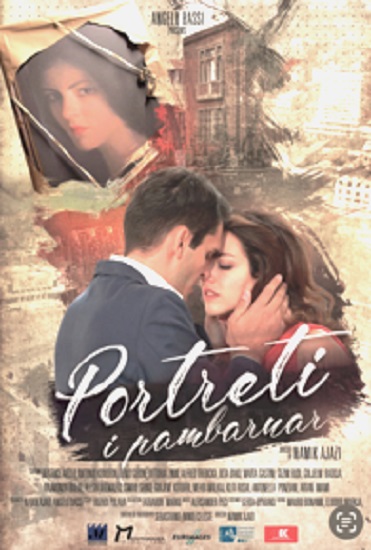
Memorie.al / I had done this interview some time ago. But time and commitments often leave something behind that remains unpublished, as happens in not a few cases. The impetus to return to it and publish it came after an invitation a few days ago, when I saw again “The Unfinished Portrait” – a film with a story we will come to know, referring to a love story from the 1980s, and how it was experienced by the protagonists, the times, and the people around them. With the actors, the director, the crew, the success that accompanied it and the awards it received. It was “Jehonat e Kujtesës – Echoes of Memory,” with producers, the Konrad Adenauer Stiftung, the Ministry of Tourism, Culture and Sports, and the National Museum of Surveillance – “The House with Leaves,” which had organized this event. The film was to be re-screened not in a cinema, but on an evening in late July, in an improvised setting, like a modest summer cinema, reminding me of those from that era, which connects to the event in the film. Once again, a “live” experience of those years, that reality, when everything was restricted, censored, and forbidden, with severe consequences that struck and pursued that passionate love. Silence, no comments until the film’s end, emotion, and departure – a wordless parting.
The Event
Ernest Tushe, a young man from Tirana in the 1980s, a basketball player, meets Karla Sferlazzo, the daughter of the Italian ambassador to Albania, by chance. While playing tennis, in the area once beside the University gymnasium at the end of the boulevard. Then came the outings, the meetings – an extremely unusual event for the time. How it continued and how it ended. Slightly different in the film: Artur Erzeni, a student at the Higher Institute of Arts, who showed promise as a painter. After painting a landscape, while cycling with friends, they accidentally collide with a girl who turns out to be the Italian ambassador’s daughter.
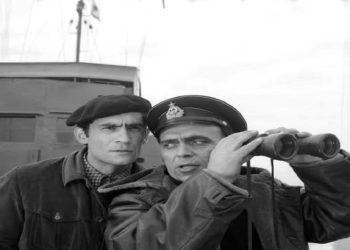
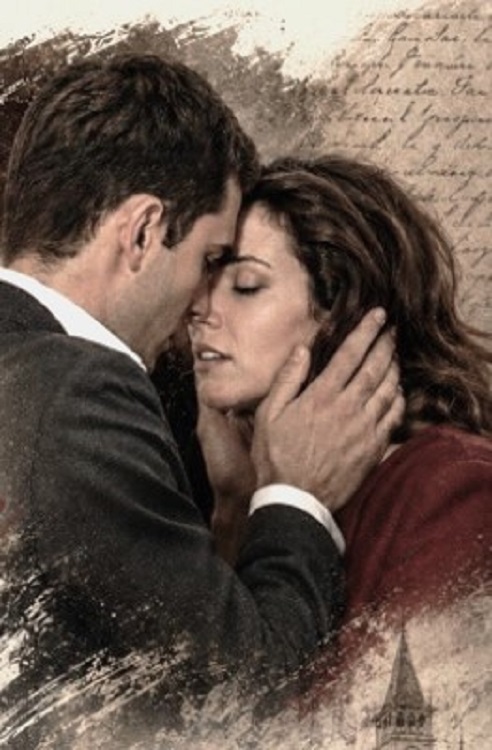
A colpo di fulmine – a lightning bolt of love – is born, continuing with several meetings. This affair of the heart develops between the two young people, but nothing escapes the State Security (Sigurimi). They summon Artur to tell him the most unexpected thing: “We will allow this acquaintance to continue, to go forward. Don’t be afraid – go out with her normally, because even the Party allows this relationship, since it’s not a political problem.” He was astonished; he hadn’t expected it. And this corresponds to the real event, because at that time Ernest would walk the streets of Tirana with the ambassador’s daughter, take strolls together, wearing shirts, jeans, riding a small-wheeled bicycle – things that drew attention at the time. A strategy the Sigurimi had devised, also referenced in the film: deliberately allowing this love affair, in order to recruit Artur and make him an informant, asking him to place some listening devices in the ambassador’s studio so they could monitor his communications.
Artur refuses, and ultimately, he is sentenced to prison. Just as the real event occurred. In 2010, thirty years after his release from prison, Artur opens an exhibition in Rome, which includes a portrait of Clara that he had begun to paint but left unfinished as a result of their broken, interrupted love. Clara is invited, comes to the exhibition, and sees her portrait. Here the film begins, recounting their entire love story. It ends back in Rome, when she, now married to an architect, invites Artur to her home for a dinner party to show his paintings to her friends.
He doesn’t promise to come, though he still admires her, even though the years have passed and she has built her own family. He decides not to go to the dinner but sends her a package via courier. She opens it and sees her portrait, now finished, with the dedication: “In memory of beautiful times.” And the film ends with Artur flying back home, accompanied by the song they used to listen to together.
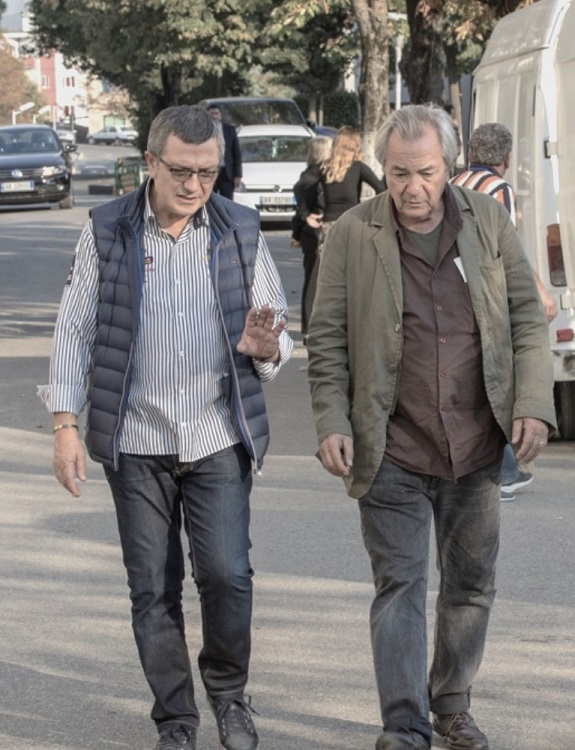
Namik Ajazi: “A Film Connected to a True Story”
“It was important that all the characters, both Albanian and Italian, be played by well-known actors,” says the renowned director.
Mr. Ajazi, how did the idea for making such a film come about?
In preliminary research conducted at the System Archive (formerly the archive of the Ministry of Internal Affairs), it turned out that there were seven files on such events – relationships, love affairs between Albanian boys and girls and foreigners. But we referred to what we had in our project. I spoke with my friend, the well-known Ruzhdi Pulaha, offering him all the material I had. A story he had also heard – that of the Albanian boy and the Italian ambassador’s daughter. And on that basis, we began to build the screenplay.
It was required that the screenplay be as close as possible to the real event. To realize it as best as possible, together with the casting director Alfred Trebicka, we met Ernest Tushe. Jokingly, revealing my idea, I said: “Nesti, we’re going to bring your story to a film. But we’ll make a deal: without identifying that it’s your story. Because the film will be a reference for those generations, with whom I want to make known sufferings similar to yours.” We agreed.
The preparatory phase for the film began with the actors.
With Trebicka, we first sought to determine which actors would be suitable. What I wanted, even though the budget remained a problem, was that the real Italian characters be played by well-known Italian actors. The first on our project was Remo Girone – “Tano Carridi” from La Piovra – a potential actor.
Was there a promise that would serve you later?
I had met Remo Girone in 1994, and again in 1997, when I interviewed him. In 2012, when he was the special guest in Tirana at the film festival awards ceremony, during the press conference, a journalist asked him: “Mr. Girone, if you were invited for an Albanian film, would you accept?” “Yes,” he replied, “a film with Namik, with pleasure.” I was bewildered; I laughed, although we had no project, and had never discussed anything like that. But I appreciated his approval, his public statement.
Returning to the film, how did the work proceed?
After the screenplay was finished, it was translated into Italian, and I went to Rome to meet Girone. “You made a promise to be part of a cast in one of my films,” I told him. “I have the screenplay with me; read it – you’ll have the role of the Italian ambassador.” He laughed, didn’t promise, but said: “I’ll read it; if I like it, I’ll tell you.” And so we parted.
Did the long-awaited approval come? Did you expect it?
Two months later, a friend of mine, Nino Celeste, with whom I had made my first film Amaneti, called me from Rome and said: “Niko, I’m with Remo; he’s read the screenplay, liked it, and will gladly be part of the film.” I was amazed. I spoke with him and thanked him. Our attempt – one of the most important – had succeeded.
But… was there a surprising disappointment?
In 2015, we submitted the finished screenplay to the Project Evaluation Commission at the National Center of Cinematography, on its board. But, surprisingly and unfortunately, the screenplay did not pass; they did not approve it – they “burned” it. Although it was a great disappointment, I decided to continue the battle. I communicated with the Italian group, and together we submitted the project to the Italian Ministry of Culture (MIBACT). After evaluating the film and its investment, two months later they invited me and informed me that they had approved it.
And then came completing the cast?
Things were constantly problematic in their resolution. While working in parallel, what worried me along with Fredi was that the Italian characters – there were four – had to be Italian, because not infrequently, my colleagues, due to limited budgets and other factors, were forced to use Albanian actors to play foreigners. That, for me, would have made no sense -especially for such an event.
Were three other Italian actors needed?
I reconnected with the late Remo Girone, and Fredi and I went to Rome for four days. The Italian casting director, Giusi Marrone, had selected well-known actresses, mainly for the role of Clara. There were some who were in “pole position” because of what they had played in Italian films. About 50 girls, when suddenly Beatrice Aiello entered. With curls, sunny, beautiful – I caught Fredi’s eye. A reaction that hadn’t happened with any of the previous ones.
“She’s not bad,” he said. “Yes,” I replied, “there’s something, a distant shadow, like Silva Turdiu.” We watched her very carefully, holding the moment a little longer. At the end, I told the director: “Will you bring Beatrice back once more, because our eyes had remained on her?” Marrone hesitated a bit: “Niko, we have actresses with much better CVs than Beatrice.” “I’m not interested; for me, she’s the one,” I replied. Then we had a second meeting, and it was decided she would play Clara.
Was a close friend for Clara also needed?
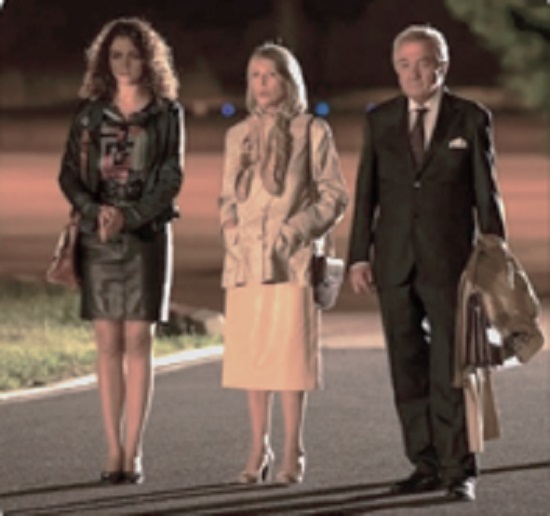
On the suggestion of a producer friend of mine, he proposed for the other role Marta Gastini – an actress well-known in Italian cinema, with several shoots and productions in Hollywood as well. Acceptable. With that, we closed the Italian casting: Remo Girone and Vittoria Zinny as his wife – the ambassador and his wife in the film – Beatrice Aiello as Clara, the protagonist, Marta Gastini as her close friend, and Antonella Ponziani.
Let’s talk a bit about the Albanian actors?
Once we settled that part, the next problem was solving the main Albanian character and the young friends around him – there were four. Ismail Shino was one of Berti’s proposals, and I think it was well-aimed, because in the first two meetings and before the cameras, he was among the best. So we decided on Ismail.
In search of “Artur” – a classic type of that era?
I needed a boy from the 1980s, well-read, with a kind of passion and talent, because in the film he was also a painter. Finding him was a long, difficult ordeal. We had contacted about 60 students and former students; I was convinced by some but not others. In the director’s perception, there were two elements: a handsome boy and a beautiful girl. There had to be a certain spark, and the first thing was appearance. Beatrice fulfilled that.
Did finding the character prove difficult?
We were having coffee, desperate; I asked Fredi, “What are we going to do?” Suddenly he said: “In a short film, I had a guy – Anton Koldrinaj from Shkodra. Educated in Florence.” He showed me some photos. He wasn’t bad. “Shall we call him?” They communicated; his Shkodran dialect made me hesitate a bit. Still, we invited him to come. “I’m in Canada,” he informed us. But he came, and after two or three tests, we decided to entrust the role of “Artur Erzeni” to Anton.
Was there a director’s “condition” for Anton?
It was late April 2018. “Anton,” I told him, “you’re going to meet your partner-actors, your colleagues, who are from Tirana. I leave them the task of taking you out, hanging out every day at cafés, bars, etc.” And so it was done. From May to October, when we started shooting, Anton stayed in Tirana to break down the language, the dialect. With his choice, the group of friends was completed.
But there were still characters, actors needed for the film?
For the mother, we decided on the well-known Rajmonda Bulku, and for the father, we took the late Gulielm Radoja – a good, caring father, a warm portrait, a perfect actor as Gulielm was. Olta Dako was “Dolorezi,” the camera operator, and Fred Trebicka played Sokol, the Deputy Minister of Internal Affairs. Mehdi Malkaj was also engaged as the follower. Actors Kliti Roshi, Alesja Xhemalaj, and for “Gjergji,” we took Ismail Shino. I also invited the renowned set designer Fatbardh Marku, who continued his work at the “Skampa” Theater in Elbasan. Gerta Oparaku, Mauro Bonanini, Elidor Markja – and producer Anxhelo Basi.
Another Italian, but for the photography?
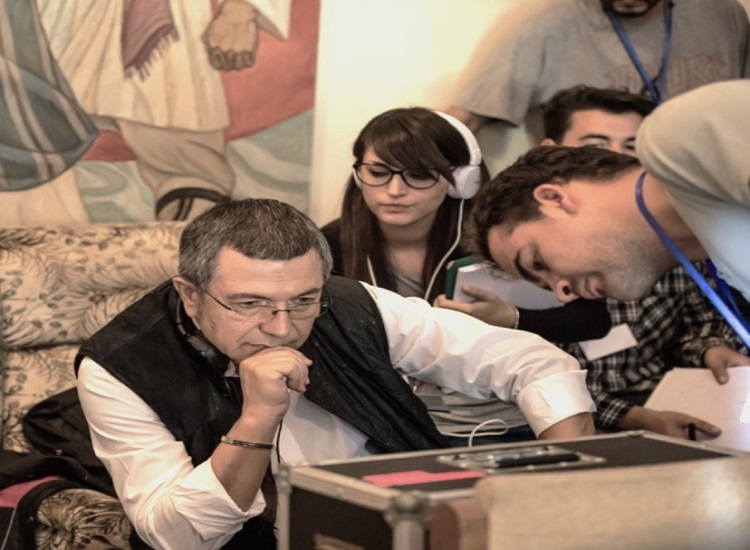
I entrusted the director of photography to the well-known Nino Celeste, who had worked on 200 Italian films. It was a pleasure when Nino and Remo met again, this time in Tirana, since they hadn’t filmed together since La Piovra by director Damiano Damiani, with Nino as director of photography and Remo in the role of “Tano Carridi.” Nino came from Italy with his three assistants, as well as the makeup artist and lighting gaffer. On camera was Adi Grishaj, who studied in London and was the first operator on the machine. Costumes by Valentina Ciaralli and set design by Paolo Innocenzi. So, an Italian-Albanian crew.
A Tirana of 40 years ago was needed?
That, too, was far from easy. Finding the right shooting locations that would bring us back to Tirana of those years was a problem. With a city so transformed, bearing no connection to that time, it became a concern. With Marku and my first assistant Mateo Cungu and Edi Gjoni, we would go into alleys, laughing with each other because, not infrequently, at the old and well-known houses of Tirana, we would climb over walls to see the courtyards, some facades – since the doors were locked, families had moved away, and no one lived there anymore.
Is there a moment with the train as part of the film?
We went to the old train station in Elbasan and found two or three carriages from those years, but with broken windows. We communicated with the General Directorate of Railways, brought in painters to remove the graffiti people had sprayed. We fitted glass in two carriages – as many as we needed – and the train would come from Elbasan to Durrës, where we would shoot there, because Tirana’s station no longer existed. With special effects (VFX), which we brought for the first time from Italy, wherever it wasn’t possible for visual effects, we set up a green screen and, based on photographs, followed the route’s continuity, transforming the Tirana train station back into the film.
Filming begins – was there a special moment?
They started the day after my birthday. The Italian Embassy was chosen as the house where the Bardha family now lives, who gladly offered it to us. In Enver Hoxha’s villa, we shot the interior atmosphere of the embassy, and in the same place where the cinema once stood – where they watched and reviewed films – we improvised the famous basement where the boys used to meet. The rest was shot on the streets of Tirana, Krujë, Lezhë, and a fragment in Durrës, at the train station.
Continuing with the final scenes?
Those were in Italy – returning to where the film begins with Artur Erzeni’s exhibition. For the older Artur, after Anton Koldrinaj, we chose Artan Imami. It was an intense period; filming lasted six weeks between Italy and Albania. We had a great time. What I want to say is that the work of the Italian actors and the Albanian ones blended very naturally with each other. And that is why this whole cast performed perfectly, based on the characters and my requirements. The film was completed in 2019, then Covid hit – it was shown in 2022.
The film’s music—two renowned masters came into play?
I had entrusted it to someone, but I didn’t like it. I told Aleksandër Peçi: “We don’t have time,” he replied. “You’ll do it,” I insisted. And after a colossal amount of work over two weeks, Peçi created the film’s music, which is wonderful. As for the two or three songs that would be sung in the film, I had thought of an Albanos artist. It was Peçi who suggested not taking a well-known song, but creating an original one for Clara. And there are two songs he composed, with lyrics by the master Zhuljana Jorganxhi.
An intriguing title, “The Unfinished Portrait”—why?
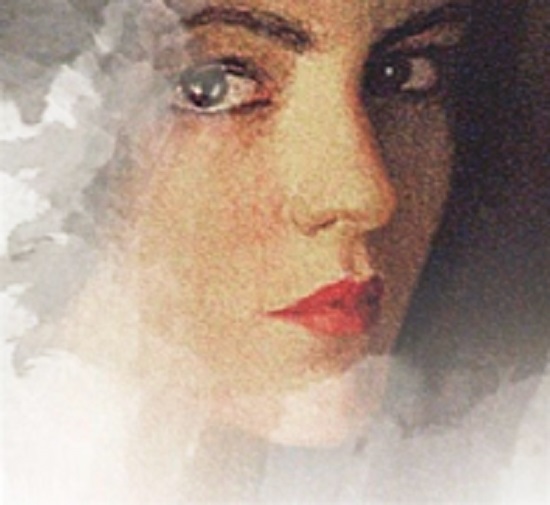
Because that portrait was unfinished. The portrait of Clara that appears in the film was created from a photograph of Beatrice, painted by artist Ilir Pojani. Beatrice, the actress, took the painting with her – she was in that portrait. The film won several awards, three of them at two different international festivals. And at the ceremonies held, I have said that with that event, I pay homage to all the Albanian boys and girls who dared to fall in love with foreigners, to create some kind of relationship with them.
The presentation in Italy – did you have “special” guests?
We did that in Rome, at Casa Villa Borghese. Beyond the staff, due to health issues, Ernest Tushe couldn’t come, but his brother, Dr. Eduard Tushe – who passed away not long ago – did, along with his wife Adriana. Also the ambassador’s real daughter with her husband. After the film, we had dinner – it was one of the most beautiful dinners.
Remo Girone—did you have the chance to know him closely?
I was coming from Munich; it was October last year, when I was notified that Girone had passed away. I was shocked; I felt very sad. I remember that in all his outings during the first days when he came to Tirana, he was with his wife, Vittoria. Everywhere we went into bars, waiters, and customers would see him – the image of “Tano Carridi” still remained. He didn’t hesitate; he would stop, stand up, take photos with everyone, and give autographs. I had known him since 1994 and Xhifoni [probably a nickname for a colleague?] since 1997, as I told you.
There was also Michele Placido – the “good” and the “bad” from La Piovra. Although “Tano Carridi” was the face of the mafioso, sharp-minded, Remo was on the contrary the most positive person – extraordinarily kind, loving, approachable; he knew something about Albania, which also made us friends. The opposite of “Commissioner Cattani,” who was Michele Placido. Placido also came to Tirana, invited by Pirro Milkani, when they shot the film L’America with Amelio./Memorie.al