From Prof. Dr. Luan Malltezi
Part Two
Memorie.al / The Academy of Sciences was established on October 10, 1972, by decree of the Presidium of the People’s Assembly. Its establishment came after the work achieved over several decades in the development of education and science in Albania. In 1972, there were 25 research-scientific institutions operating in Albania. The Academy was envisioned to be established as an institution for the further development of the sciences in general and of Albanological sciences in particular. The announcement of the establishment of the Academy came suddenly to the Institute. It sparked natural joy and numerous discussions among scientific staff. One of the issues we began to discuss was who could be its president.
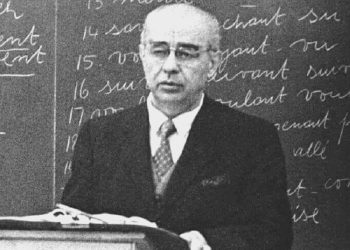
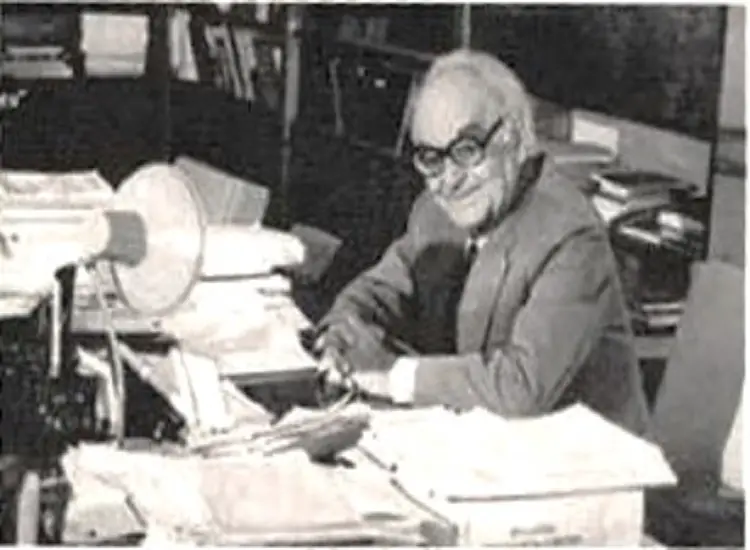
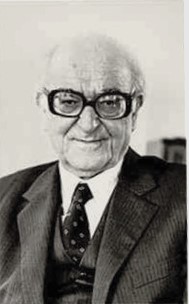
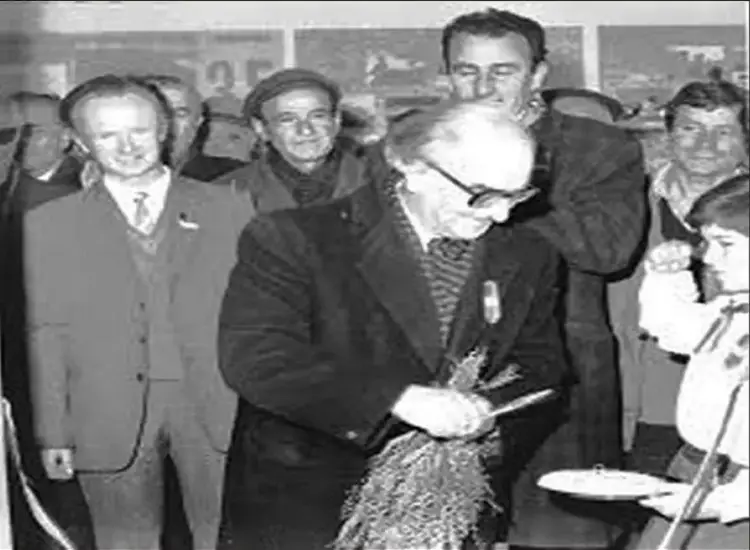
The Life of Prof. Aleks Buda
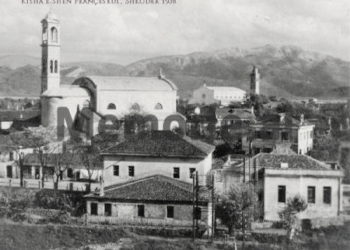
Aleks Buda was born in Elbasan on September 7, 1910. Aleks Buda began his first lessons at the age of 7, in the primary school of his hometown. Without completing the second grade, he continued his studies in Lecce, Italy. In 1920, together with his two brothers, he went to study in Austria. There he completed primary school and in 1929 he finished high school in Salzburg.
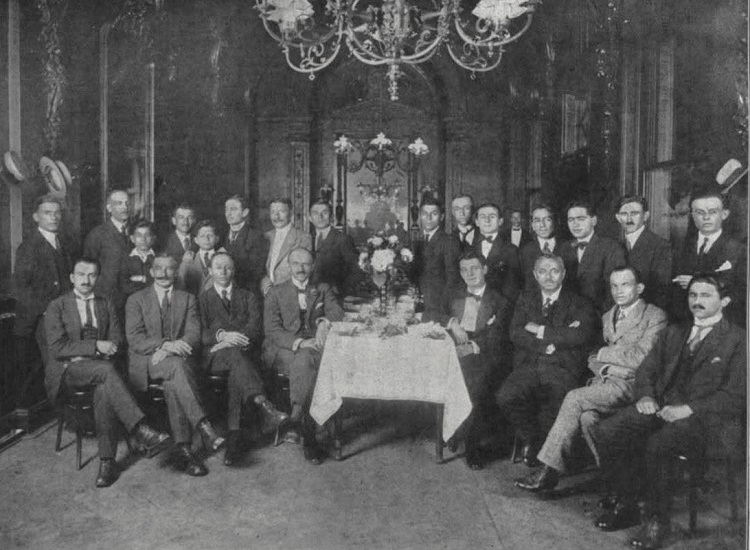
He then pursued his studies at the University of Vienna, at the Balkanological Institute (1930–1935), where he took lessons from renowned professors such as Karl Patsch, Reiniger, and Norbert Jokl. During this period, he was active in the Albanian Students’ Society “Albania” of Vienna, together with Lasgush Poradeci, Skënder Luarasi, Eqrem Çabej, Krist Maloki, Qemal Butka, etc., also being a contributor to the society’s magazine “Dialëria”.
In 1938, he returned to Albania. He first worked as a teacher at the Tirana High School (from September 1939), while in 1940 he transferred to the Korçë Lyceum. At the end of 1941, he went to Italy, to the University of Padua, under the renowned professor Carlo Tagliavini, to qualify in the field of general Balkan linguistics and Albanian, but after a year he returned to his homeland due to the war.
He became involved with the National Liberation Movement and in 1944 was elected Vice-Chairman of the Anti-Fascist National Liberation Council of the Elbasan district. Buda lived through a difficult time in Albania; he experienced the liberation of the country with great satisfaction and worked willingly for the difficult tasks he undertook. “I would leave home in the morning and come back after midnight,” writes Buda in his memoirs when he was working as the Director of the National Library.
But it must be said that the time in which he lived and worked was difficult; he worked in a system that persecuted many of his good friends; he was a social democrat in his convictions; he loved his country, his people, and worked devotedly for it. In his memoirs, Buda remembers with respect figures such as Sejfulla Malëshova, Naxhije Duma, Theofan Popa, and many others fatally struck by the regime as his friends.
The family of his wife, Stratobërdha, former owners of the Mborje mine, which was confiscated by the state, had also suffered a blow from the regime. Buda went with this problem to the Minister of the Interior, Koçi Xoxe, whom he had known since the time of the war. “How is it possible,” he said, “that a property built with so much effort is taken from a hard-working man?”! – but the minister replied: “Aleks, where do you live? This is the result of the victory and power of the proletariat, for which we fought”!
In his memoirs, we learn that he undertook to write letters “upstairs” on behalf of his wife’s family for the problems they had with the regime, because such letters had to be written with great care; Buda speaks with pain about his talented brother-in-law, Viktor, who was expelled from Tirana after his discussion at the Tirana Conference of 1956. The regime had also struck within Buda’s own family.
“At the beginning of 1948,” writes Buda, “they arrested my brother Stas, because he, together with Mihal, as heirs of our father’s pharmacy, had failed to pay the extraordinary tax. They were demanding a sum beyond their means based on the income they had generated.” “Stas,” Buda writes further, “was sent to forced labor to drain the Maliq swamp,” and after about a year he was released.
Although he knew the regime well and was cautious with it, Prof. Buda did not withdraw, but honored with complete courage his friends who had been unjustly struck by the regime. I have in mind here Buda’s participation in the funeral of the distinguished linguist Prof. Selman Riza, expelled from the Institute of History-Linguistics in 1967, at the time of the “lightning sheets” (fletë-rrufe – derogatory term for radical ideological campaigns) that hindered “our march forward,” as it was said at that time. Prof. Riza fell victim to that time; he was transferred to the Berat museum, where he spent his life in complete solitude. Prof. Buda honored his friend with complete courage at the funeral ceremony.
Buda’s participation in the funeral and his words in honor of Prof. Riza’s work caused a great stir at the Institute. But not only with us. With this stance, he had also shaken his family members, his brothers. I say this because, during a visit we made to Buda’s house, his older brother, Mihal, recalled this stance of his brother, which had kept him sleepless at the time: “Then, Aleks, I said that you put us all in danger with that honor to Riza, but thank God it passed without harm.”
I recall Prof. Buda after these words; he said nothing, but looked very thoughtfully at his brother. Was he against the regime? Absolutely not; he was a deputy in the People’s Assembly; his stance in honoring the distinguished linguist was not done as a challenge to the regime, but as a tribute to his colossal work dedicated to his own people; he was the President of the Academy of Sciences and this was his duty.
At a time when Albania lived politically isolated, Prof. Buda shone in the West as a talented scholar, elevating the history of his country. Although he was in contrast with the regime by nature and character, he did much to help his country, his people, and his government, which was paralyzed by absurd leftist concepts and slogans.
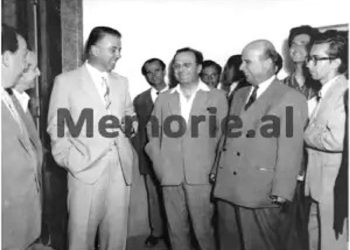
The opportunity arose during the visit of the Chancellor of the State of Bavaria, Mr. Strauss, to Albania in 1985. Buda was appointed as his companion by Enver Hoxha. Strauss was surprised by Buda’s extraordinary personality as soon as he crossed the border; Buda, with his classical German, knowledge, and broad culture, “forced” the great German leader to reflect seriously on Albanians and their history.
On the occasion of his departure from Albania, the Albanian government expressed its desire to gift the esteemed German friend something in memory of his historic visit. The response of the great German leader, which pays personal tribute to Buda’s personality, is remembered: “Give me Buda if you can, gentlemen, because I need him for my party.” Comment is unnecessary: Buda had known how to elevate before him the history and culture of his poor country, Albania.
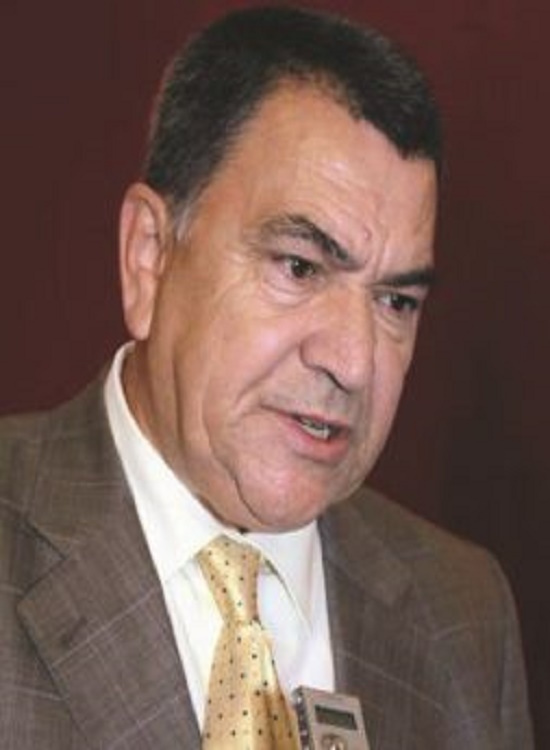
Prof. Emil Lafe, who had the opportunity to be with Prof. Buda in Vienna in 1975, told his friends upon his return that he had been amazed by Professor Buda’s longing for Vienna, the city for which he cherished unforgettable memories of his youth. Buda told Lafe about the evenings he spent in Vienna with Prof. Çabej. “Çabej,” Buda told him, “didn’t know how to dance anything but the tango, and when the music started, he would ask me, ‘Aleks, is this a tango?’, and when I said ‘Yes’, he would get up vigorously and invite the lady to dance.”
Prof. Buda, gentlemen, was truly Albanian, but we do not err if we say that he was also an Austrian at the same time, an inimitable Austrian in his knowledge, culture, and formation. This great man, together with his distinguished colleagues, established and successfully led the Academy of Sciences in Albania. The Academy today is certainly no longer the Academy of their time. The Academy declined gradually after Buda’s death. All those who came to lead the Academy after him were intellectuals and good specialists in their fields, but not experts in Albanological sciences as the duty of the President of the Academy of Sciences requires.
The Academy also declined after the 1990s due to politics, due to its absurd interference to capture the Academy with ordinary people; these absurdly and senselessly detached the Institutes of Albanological Sciences from the Academy (the Institute of History, the Institute of Linguistics-Literature, the Archaeological Institute, and the Institute of Popular Culture), forming with these the “Center for Albanological Studies,” today the “Academy of Albanological Studies.”
The separation of the Academy of Sciences from these institutes does not justify its existence; it needs to be renewed, as Prof. Fuga and other scholars rightly demand. In my opinion, the renewal can be done with an ‘ad hoc’ commission established by the government. The commission should return to the experience of the Academy of Sciences in the time of Prof. Buda, and reunite the Academy of Sciences with the institutes that are currently in the “Center for Albanological Studies.”
This, in my view, is the first step to solve the “crisis” in which the Academy of Sciences finds itself. So let us return the Academy of Sciences to being the Center for Albanological Studies in Albania. Albania needs to have its own Academy; it needs government funding to conduct scientific research in the fields of history, language, culture, and its national identity.
The place of the Academy of Sciences as the Center for Albanological Studies cannot be filled by the country’s universities. “For every person involved in science,” writes Prof. Buda, “the term ‘Academy’ has a great significance. For us, the Academy was a dream. It materialized the desire of our Renaissance figures for more knowledge, of Sami Frashëri with his program for Albania’s future research institutions.”
DIRECTOR OF THE NATIONAL LIBRARY IN 1945
Immediately after the liberation of the country, he worked as Director of the National Library, which had only 15,000 volumes. He was given the books of Mit’hat Frashëri for custody. The library would be enriched, but mainly through the confiscation of private libraries of personalities of the time, so by 1947 the collection numbered 100,000 volumes (1945-1946). In 1946, Buda became one of the organizers of the Institute of Sciences, where he worked as head of the history, sociology, and economics section.
There he helped in the creation of the sectors of archaeology and ancient history, medieval history and medieval art, modern history, ethnography, etc. Together with his sector colleagues, they made possible the publication of studies and achievements in the fields of archaeology and ethnography, which were exhibited at the archaeological-ethnographic museum inaugurated in 1947. He gained experience as a lecturer in history from the beginnings of the two-year Pedagogical Institute (1946); in 1955 he became one of the organizers and most experienced researchers of the newly created Institute of History and Linguistics.
With the creation of the University of Tirana in 1957, A. Buda would be one of the founders of the history department and the course of the History of Albania at this university. The year 1972 was a special year for scientific life in Albania, and also for Aleks Buda: The Academy of Sciences of Albania was established. At the first assembly meeting (1973), opened by academician Eqrem Çabej, Aleks Buda was elected President of the Academy, a position he held until the end of his life, as he was re-elected twice.
He would be one of the founders of the history department and the course of the History of Albania at the University of Tirana. The year 1972 was a special year for scientific life in Albania, and also for A. Buda: The Academy of Sciences of Albania was established. At the first assembly meeting (1973), opened by academician Eqrem Çabej, Aleks Buda was elected President of the Academy, a position he held until the end of his life, until July 7, 1993. / Memorie.al