By ALBERT HITOALIAJ
Part Two
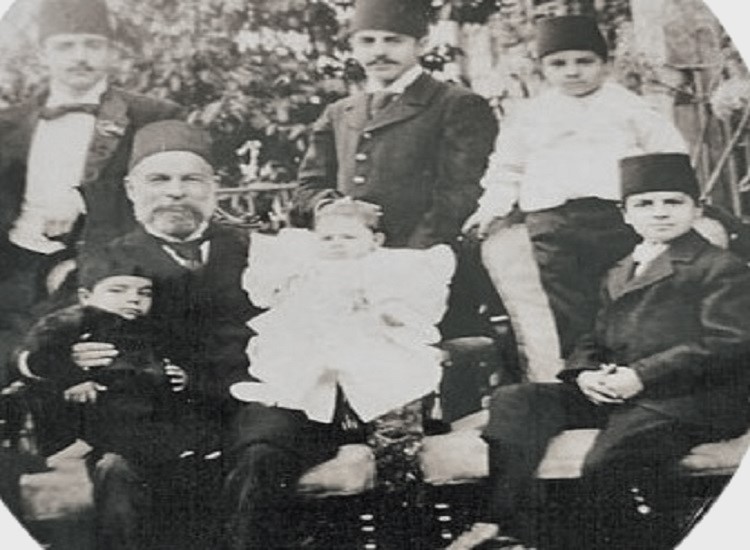
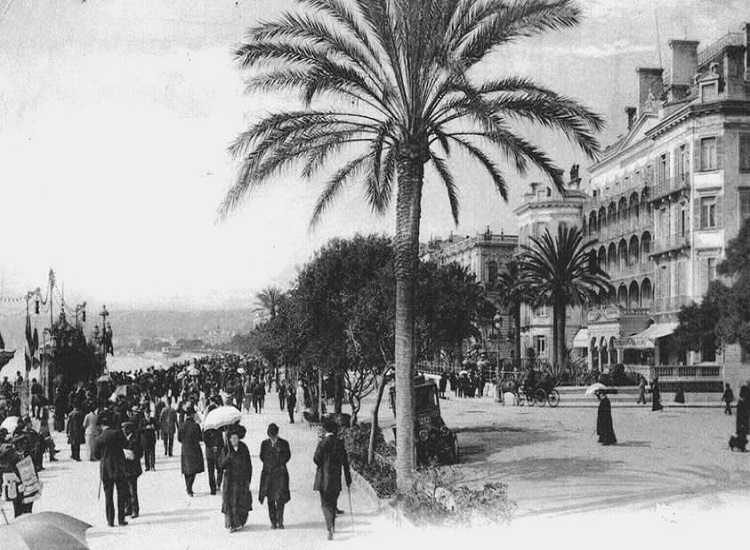
Memorie.al / The descendants of the architect of Albania’s Independence, Ismail Qemal bey Vlora, have had an all-around dispersion and a not-so-easy history. Historical studies on this important historical figure and on his descendants or the genealogy of the Vloraj family are not lacking. In this article, based on archival documents, we bring unpublished data on the life of Blanche Paulette Vlora (1917-2002), who was Ismail Qemal’s first granddaughter, the daughter of Mahmud Kemal Vlora and the beautiful Frenchwoman Alice Escoffier. Her parents married in Nice in 1913 and had three children: Ismail Kemal Galib Aleksandër, Blanche Paulette and Suzanne. After Mahmud’s death in Vlora in 1921, Alice settled with the children in Bari, Italy, where the family experienced economic difficulties.
Continues from the previous issue
The form also contains data on the Italian residence permit, the passport issued by the authorities and the identity card issued by the municipal authorities of Sanremo. On November 9, 1949, Blanche appeared before the refugee organization to seek help and protection. The notes on the form state that she had not applied before August 31, 1949, because she had not been aware of the procedure.
In the registration documentation it is noted that she wished to benefit from legal protection, identity documents and support for travel expenses toward Canada or the United States of America.
In the same section it is mentioned that she had not yet taken concrete steps for emigration. At the end of the questionnaire, the interviewer, Ms. Trine Vassilchikoff, who was recording and listening to her life and her reasons for emigration, recorded the assessment: “The account seems true.”
The document also contains notes by supervising officials and administrative stamps of the emigration organization, including a stamp dated November 9, 1949 related to legal and political protection.
Difficulties that push her to emigrate
The letter of March 30, 1950, which Blanche addressed to the emigration authorities, described her efforts to obtain help from them. She declared that the family’s living conditions were becoming increasingly difficult and that, for this reason, she had submitted a request for assistance.
According to her, she had been informed that she had to appear in person to register. Due to lack of financial means, she had not been able to travel earlier and only in November 1949 had she managed to go to Rome.
After the usual interview, she had been informed that she did not qualify for assistance because she had applied after the established deadline.
Blanche declared that she had filed an appeal in Geneva and that, as suggested by an employee of the organization, she had submitted the appeal to the emigration directorate in Rome, which was supposed to forward it to the headquarters.
She had returned several times to ask about the progress of her case, but was repeatedly told to wait. On one of the later appearances she had found that the appeal was still at the Rome office.
For this reason, on March 30, 1950, from the address “Via di Sant’Agnese,” no. 12, Rome, Blanche addressed a letter to Mr. Tonglet, at the headquarters of the Emigration Organization in Geneva.
In it she requested the review of her case and recognition of admissibility for protection by the organization. At the end of the letter she wrote: “For this reason I am addressing you so that my case may be reviewed and I may manage to obtain only the protection of your organization, so that I may be able to emigrate.”
The letter was originally drafted in Italian, in handwriting. In the file its translation into French is preserved, with the note “Translation from the original: Italian.” The document bears the date March 30, 1950 and the name of Blanche Vlora as signatory.
On April 19, 1950, the headquarters at Palais Wilson, Geneva, prepared an official letter. The document was addressed to Admiral G. Ments, director of the emigration offices in Rome, at the address “Via S. Nicolo da Tolentino,” no. 78, and the letter was addressed for the attention also of the official responsible for assessing admissibility. The subject of the letter was “Blanche Paulette Vlora” and in its text the office was notified that: “Attached we are forwarding to you a copy/translation of a letter that the above-mentioned person has addressed to this headquarters.”
Further, the letter explains that, since the author of the letter resided in the area of responsibility of the Rome emigration office, the document was forwarded to it for opinion and for the necessary actions. The letter bears the name of Marie D. Lane, director of a division of the organization’s headquarters.
A “lost” homeland: Blanche Vlora’s full letter to the Geneva office
From: Blanche Paulette Vlora, “Via di S. Agnese,” no. 12, Rome.
Addressed to: Mr. Tonglet, International Organization for Migration, Geneva, March 30, 1950.
I, the undersigned Blanche Paulette Vlora, daughter of Mahmud and of Alice Escoffier, born in Nice on February 11, 1917, of Albanian nationality, currently stateless, request that my case be reviewed and that I be recognized the right to be accepted as a beneficiary of the organization’s protection. In 1940, I arrived in Italy together with my family, as a consequence of the war.
Initially I stayed in Bari, then in Turin and, finally, in Sanremo, waiting continuously to be able to return to our country, as soon as the end of hostilities reopened the road of return to us. But the opposite happened entirely. After the end of the war, we found ourselves faced with an unbearable regime in my homeland and, since some of our relatives had been killed or imprisoned there, we were forced to stay in Italy.
In Sanremo I gave private lessons and performed various jobs to secure the livelihood of my mother, a brother and a sister. I have never received any assistance, neither material nor moral. However, while the living conditions of my family were becoming increasingly difficult, I applied to the international emigration organization with a request for assistance. I was answered that I had to be present in person to register.
Since, due to lack of financial means, I had no possibility of undertaking the journey, only in November 1949 did I manage to go to Rome, where I appeared before the emigration offices. After the usual interview, I was notified that I did not qualify for assistance because I had applied too late.
Then I filed an appeal in Geneva and, as the employee had suggested to me, I submitted this appeal to the emigration directorate in Rome, which was supposed to forward it to Geneva.
I returned several times to ask at what stage my case was, but each time I was told that I still had to wait. Until, a few days later, when I appeared again at the office, I had the unpleasant surprise of finding that my request was still there.
For this reason I am addressing you, with the aim that my case be reviewed and I manage to obtain, at least, the protection of the organization, so that I may be able to emigrate.
Respectfully
Blanche Vlora
Toward a new homeland, America
On May 5, 1950, the Admissibility Division for emigrant applications sent Blanche Vlora a reply regarding her request that she had sent to Geneva. The letter was addressed to the address “Via di Sant’Agnese,” no. 12, Rome. The reply stated that her letter, addressed to Geneva, had been forwarded to the relevant division.
They notified her that, because she had applied after the established deadline, the organization could give her only legal protection. For further information, Blanche was instructed to appear at the registration center for emigration applications in Rome, at “Via San Basilio,” no. 9. The document bears the name of R. C. Geisner, director of the Admissibility Division.
On July 5, 1950, Blanche submitted a request for legal protection to the refugee organization. The form, drafted in Italian and English, contained the name Vlora, Blanche Paule, the names of her parents Mahmud Kemal and Alice Escoffier, the date of birth February 11, 1917, the place of birth Nice and Albanian nationality.
In the profession section “employed” was noted, while as residence Rome appeared, “Via di Sant’Agnese,” no. 12. The form also registered the data of the Italian residence permit and the corresponding registration number. In the part where she was to express her request, Blanche had written: “To be protected legally.”
The document is signed by her and contains the note for the issuance of the emigration identification card, number 0023867. On February 9, 1951, in another questionnaire, prepared in Rome, Blanche Paule Vlora submitted a request for the extension of her emigration status. In this document she again identified herself as Albanian, born on February 11, 1917 in Nice, France, etc. Also in this document, in the family members section her mother was mentioned, Alice Escoffier, 56 years old.
In the description of the case it was said that the Albanian refugee had appeared before the emigration office to request the extension of the admissibility status. The document recorded that she had been registered at the emigration office in November 1949 and had been recognized only for legal and political protection, as a case submitted after the deadline.
In the same questionnaire it was noted that on July 5, 1950 she had been issued the emigration identification document, no. 0023867. Regarding her intention for emigration, this application document writes: “She wishes to settle in the USA, where she has friends ready to help her, that is, to provide guarantees for her and for her mother.”
At the end of this description it was noted: “She has no means of livelihood in Italy.” The questionnaire bears notes and administrative stamps dated February 16, 1951. On the cover of Blanche Paulette Vlora’s personal file, there are stamps and other notes related to the administration of her case.
The documentation also includes a form in Italian, by means of which Blanche requested assistance from the emigration offices. In this document she is identified as born on February 11, 1917 in Nice, of Albanian nationality and with address “Via Matteotti,” no. 25, Sanremo. The form bore her signature.
The documents of the years 1949-1951, of her emigration file, thus record the personal and family data of Blanche Paulette Vlora, her education and language knowledge, her residence in Vlora before 1940, her departure with her family toward Italy, her stay in Bari, Turin and Sanremo, her activity as a private teacher, her responsibility for securing the livelihood of her mother, brother and sister, as well as her declarations on the impossibility of returning to Albania.
In these documents are recorded her requests for assistance, the appeals addressed to the emigration offices, the correspondence between the offices of Rome and Geneva, the recognition of legal and political protection, the provision of an identification document for emigration and the subsequent request for the extension of status, with the aim of settling in the United States of America.
Documents that shed light on a piece of the mosaic of the Vlora family
The above account is constructed based on the documents of Blanche Paulette Vlora’s personal emigration file, presented in a narrative form for a moment of her life.
The data on political persecution, imprisonment and killing of family members, nationalization of property and the connection with Ismail Qemal, etc., are presented with accuracy, as declarations recorded in the archival documentation of the emigration offices, without being treated as independently verified facts, neither by them nor by this article, since they were not the intended object.
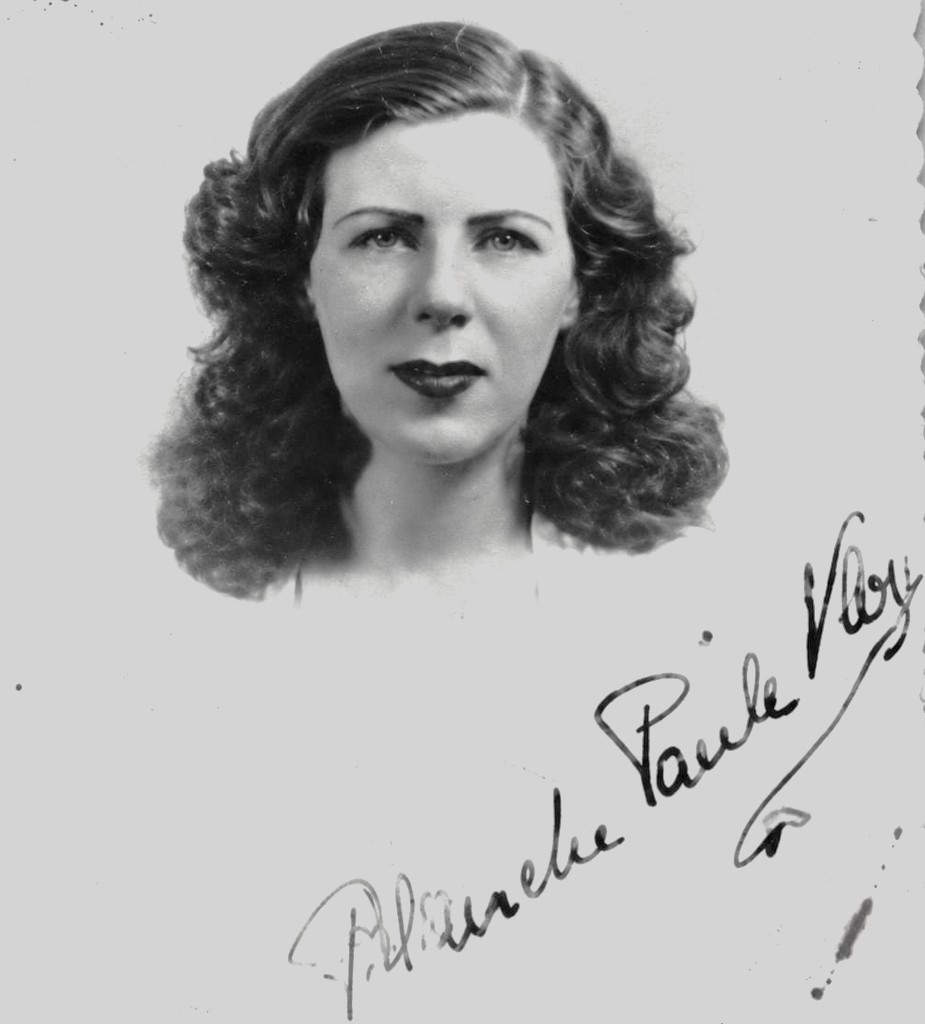
These archival documents, for further scientific references, would need to be brought in their full documentary form, with full photographic identification, matched with the archival institution, fund, file and pages, etc., but with this article we aimed only to shed light on a piece of the history of the life of Ismail Qemal bey Vlora’s first granddaughter, which we accompany with the personal photo found in these archival materials, with her signature: Vlora…! Memorie.al