

By Herion Mustafaraj
– A true story –
Memorie.al / In a completely sudden way, while I found myself in the midst of my bustling everyday life, as life imposes, a friend of mine, a peer (certainly a name familiar to you as well, Luan Rama, the journalist who earlier was also engaged politically for many years), told me a story with which he “snatched” me from New York, where I have lived and worked for years, to take me somewhere far away, there among the mountains of Mirdita, in Kurbnesh, with which, just like Luan’s childhood, my childhood too has remained connected. It is a story that, at first glance, seemed to belong only to him, but which, as he was telling it to me, I understood was also my story.
It is the story of two childhoods that, even though they never met, without knowing it, lived within each other’s heartbeats.
And, as often happens in life, each in his own way dreamed of having what the other had.
– Kurbnesh,
The town among the mountains…!
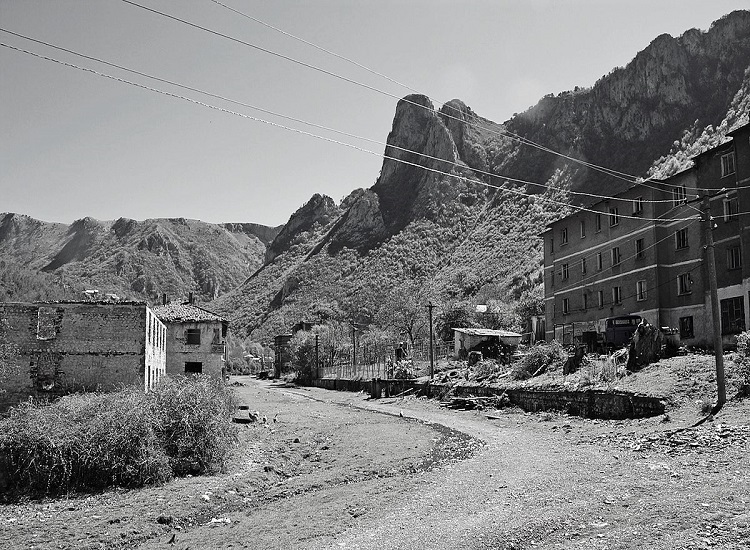
My friend grew up in Kurbnesh, a small town in the North of Albania, there where the mountains rise steeply above deep valleys and where nature reveals all four seasons with all its majesty, wildness and beauty.
The winters there were long, cold and bitter. The summers warm, while spring and autumn transformed that little place into a peaceful beauty, among forests, springs, the river of Uraka that likes a blessing flows through that area, and the songs of birds that filled the air.
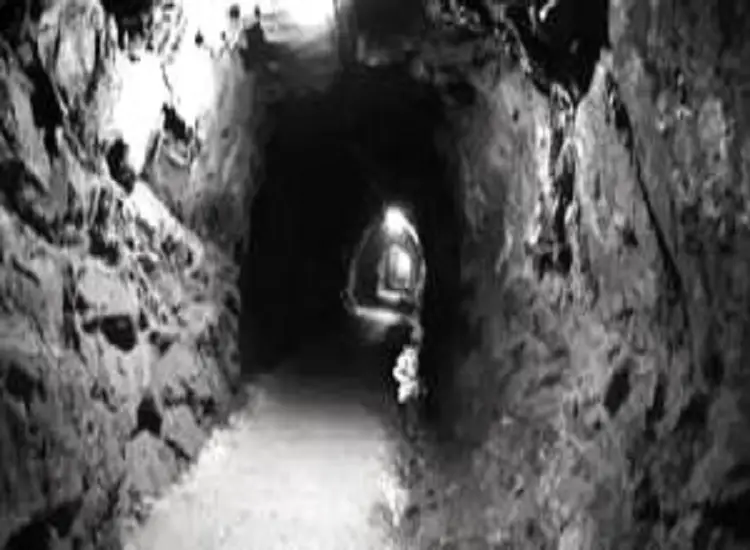
In those mountains, from the fifties of the last century until its turn, a copper mine operated, one of the most well-known in the country. From it and around it the miners’ town had also been built. There lived workers, engineers, teachers, builders, bakers, military personnel and families who had come from various regions of Albania.
But Kurbnesh was not only the town of work. It was also an internment center for those whom the power declared its opponents. They were declared declassed people. They were convicts or people removed from their cities, who often were not even allowed to practice the profession for which they had studied.
Thus, among those mountains, a strange society had been created. Learned people and simple people. Privileged people and persecuted people. People who had gone there willingly and others who had not had the right to choose. However, the children of that town did not know nor understand these divisions. They knew each other.
They knew and loved the snow, the river, the forest, the games, the warm bread, the fire in the stove and the aroma of the dish that spread from the small kitchens of the houses. They knew the smell of burnt wood and the hands of mothers who knitted woolen sweaters for them to face the winter. And, above all, they knew what childhood holds most dear: the feeling of being together.
My friend is the son of a military man
His father had been assigned the duty to serve in Kurbnesh.
At that time, such a transfer could be a state duty, an opportunity for career, but sometimes also a silent way to remove someone from the center. Which of these had been the real reason, he did not tell me.
And perhaps there was no need to tell me. For him, father was simply father. He grew up in that small town, among wild winters and people who, despite difficulties, knew how to love one another. Families shared bread, joys and troubles. Children grew up together. And life, however difficult, had a wealth that could not be measured with money.
– Beni, the child they dreamed of being…
In 1975, the film “Beni Walks by Himself” was made. I had the fortune to be the child who played Beni. A city boy who goes to the village and, through adventures, nature and friendship with the children there, learns to become more agile, more independent and braver. The film became one with the childhood of many generations. Even with the childhood of the children of Kurbnesh.
My friend told me that in Kurbnesh, in the town’s cinema, he saw Beni for the first time. He also told me how much he and the other children loved Beni. For them, Beni was not simply a film character. Beni was one of them. He was the boy who had come from the city, to discover their world. They watched him on the screen and found themselves in him.
Perhaps, in a certain way, Beni had become their little hero. But what they did not know was that, behind that character, hid a child with a completely different story. A child who, although he seemed to have everything, in fact dreamed of having exactly their life.
– The man with the motorcycle…
In my friend’s memory another character had also remained fixed. The man with the motorcycle. He came and went along that road to Kurbnesh in a strange and atypical way for the time, as in fact he himself was. He came and went by motorcycle from Vlora to Kurbnesh, and because of the motorcycle they also identified him, distinguished him.
At that time, to have your own motorcycle was something rare on the roads of Albania. His arrival was an event in itself. And his arrival with it was then a wonder. He set out from Vlora, traversing long and difficult roads, up to those deep mountains. He was a tall man, strong-bodied, likable, energetic and brave.
A mining engineer, a capable professional, who worked in those areas and left traces in people, so much so that my friend also heard and learned about him. He too, the man with the motorcycle, had his story with the system. He was one of those people who, although he was learned and capable, experienced on his back persecution, punishment and political injustice.
While for the inhabitants of Kurbnesh, he was not a political file. He was a man they knew and loved. A man who feared neither the mountains, nor the winter, nor the icy water. My friend told me a scene that had remained alive in the children’s memory.
In the middle of winter, when the river almost froze from the frost, this man went to its edge, walked through the snow and over the ice and entered the water. The children watched him amazed. For them, it was unimaginable that a man would enter that frozen water. But he entered. And after a while he came out, with a big fish in his hand.
Dressed in the woolen sweaters that the women of the area knitted, with his strong body and his smile, he looked like a character come out of some legend of the mountains. People admired him. And when Beni appeared on the cinema screen, they learned something that amazed them even more. That man was Beni’s father.
Two children, two dreams
When my friend told me this story, something inside me stirred.
Because, while he was telling me about Beni, the hero of his childhood, I was thinking about the hero of my childhood. My father…!
For the children of Kurbnesh, I was Beni. A boy they knew from the screen, whom they admired and whom they dreamed of resembling. While for me, they were the children who had something that I desired more than anything else in the world.
They lived with their fathers and among them my Father also lived. I did not. My parents had separated. I grew up in Tirana, far from my father, far from Vlora and far from the life I would have wanted to live with him. And, however beautiful Tirana was, however many opportunities a child had in the capital, I had an absence that nothing could fill for me. The absence of my father.
I would have given anything to be in Kurbnesh with him. It did not matter what work he would do. He could be an engineer, a miner, a worker, a baker or a man condemned and forgotten by the system. We could live in a small house, among the mountains, as my friend lived for some years, in the cold, in the snow, with little food and a wood stove. It did not matter. It was enough for us to be together.
To wake up in the morning and see him there, together with my mother. To wait for him to return from work. To sit by the fire.
To listen to him speak. To take me with him to the mountain, up in Valmor or to the river. To go together even to the lakes of Lura, as my little friend did then. To teach me the things that a father teaches his son. To hold my hand.
To tell me that everything would be fine. Those children, who lived among the harsh mountains, in an isolated town, in a difficult time, watched the cinema screen and dreamed of being Beni. While I, the Beni of the screen, would have given anything to be one of them. They dreamed of my adventure.
I dreamed of their everyday life. They saw in me a hero. I saw in them a happiness that their Hero could never have. And here lies the great paradox of this story. In the film Beni Walks by Himself, a city child goes to the village, discovers a new world, learns from life and, in the end, returns to the city more grown, stronger, more independent.
But in real life, I, Herion who played Beni, had another dream. I did not want to return to the city, after my father took me one day with him to Kurbnesh, by motorcycle. I wanted to stay there. Among those mountains. Among those children. Near my father.
Because the beautiful city where I had to return could have everything a child could desire, but it did not have what I missed most. My father. And without him, Tirana seemed empty to me.
– The true hero…
Today, after so many years, when my friend told me this story, I understood something that perhaps I had always felt, but had not managed to express in words. Children do not choose their heroes according to greatness. They choose them according to the dreams they hold in their hearts. For those children, the hero was Beni, the boy who came from another world and whom they watched at the cinema.
For me, the hero was that man with the motorcycle, who traversed the roads of Albania, who entered the icy river and came out with a fish in his hand. That man whom they watched every day, while I dreamed of him every night.
And perhaps this is the most beautiful and most painful irony of life. Perhaps, for the first time after so many years, I understood that the true story of Beni who walked by himself had not ended that day when filming finished.
It had nested in my heart with a beat of its own, and taught me to walk by myself. To become the hero of the children of generations, and which today still remains like a heartbeat even in Kurbnesh, clinging to the hand I wanted to hold, my father’s hand./ Memorie.al