By Prof. Dr. Luan Malltezi
Part One
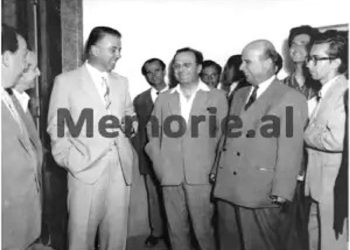
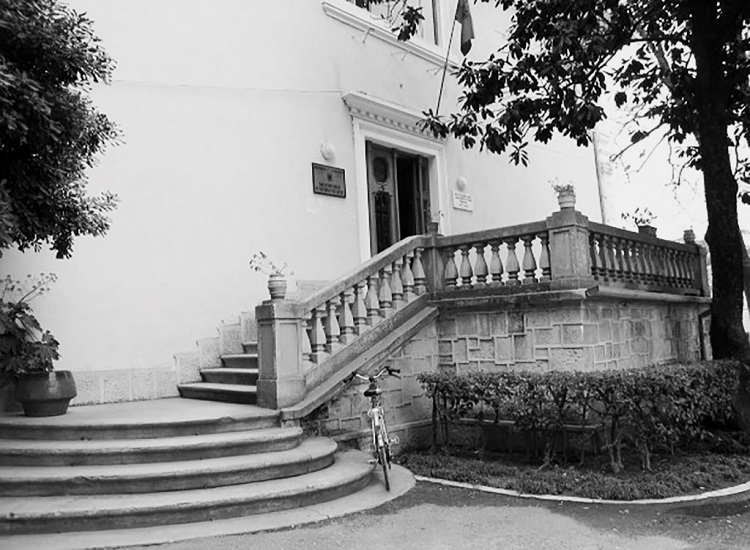
Memorie.al / The Academy of Sciences was established on October 10, 1972, by decree of the Presidium of the People’s Assembly. Its creation came after the work achieved over several decades in the development of education and science in Albania. In 1972, there were 25 research-scientific institutions operating in Albania. The Academy was intended to be established as an institution for the further development of the sciences in general, and of Albanological studies in particular. The announcement regarding the establishment of the Academy came suddenly to the Institute. It sparked natural joy and numerous discussions among the scientific staff. One of the issues we began to discuss was who could be its chairman.
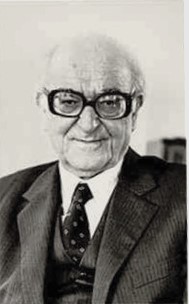
Some were of the opinion that it could be the director of the Institute of History-Linguistics, Prof. Androkli Kostallari. Others thought it could be Prof. Aleks Buda. That day we learned that the professor had been summoned about this matter to the Central Committee of the PPSH (Party of Labour of Albania). After appearing before the Central Committee, Prof. Buda left for Austria. Meanwhile, the news spread that Prof. Aleks Buda had been appointed Chairman of the Academy of Sciences.
At that time, Buda was the Head of the Medieval History Sector, a member of the Supreme Scientific Council at the Institute of History-Linguistics; he stood beside Kostallari as a consultant for the historical issues dealt with by the Institute. Upon his return from Austria, Prof. Buda came to the sector to meet with his colleagues. The sector was located on the third floor; other staff members of the Institute also came along with him; everyone felt joyful about the formation of the Academy of Sciences and the election of Prof. Buda as its chairman.
Buda enjoyed full authority at the Institute; he was a well-known figure for his scientific capacity as a historian; the professor played a leading role in preparing for publication, at a high scientific level, the journal *”Studime historike” (Historical Studies)*; he represented Albania in scientific institutions of a Balkan character; he was the historian who had connections and correspondence with the most renowned personalities of the international scientific world abroad.
Prof. Buda was one of the few researchers who were well-versed in the Albanological studies of the time; at the University of Vienna and the Balkanistik Institute (1930-1935) in Austria, he had taken lessons from renowned professors such as Karl Patch, Reiniger, and Norbert Jokl.
At the end of the meeting in the sector, the historian Stavri Naçi, who had secured a car for the professor to leave for Austria, said: “Yes, yes professor, but poor me, I barely managed to find a car to take you to Rinas when you left for Austria, whereas yesterday, when you returned to Rinas, dozens of cars had come out to greet you; people are clever, professor, they found out that you had become Chairman of the Academy and rushed to welcome you.” Professor Naçi’s words sparked laughter among the researchers.
Aleks Buda returned to Albania in February 1939; his return surprised all Albanians, for he returned from Austria with 10,000 scientific books organized in numerous boxes; many of these were books by old European authors, who wrote about Albania and Albanians. Buda had been requesting these for years from the many booksellers of Vienna; he had checked these booksellers “once every two weeks” for years on end, during his stay in Vienna.
In Albania, Buda worked in 1940 as a professor at the Korça Lyceum and in 1943, as a professor at the Tirana high school. He then became engaged and took an active part in the Antifascist National Liberation Movement, where he was elected vice-chairman of the Antifascist National Liberation Council for the Elbasan area.
After the liberation, he worked as the director of the National Library, founded in 1922. Through his work, he gave this library the character of a deeply scientific institution. In May 1946, Buda moved to the Institute of Sciences as the head of a sector. “Before moving from the National Library to the Institute of Sciences,” writes Buda, “I had also consulted with Kostaq Cipo. He was of the opinion that I should respond positively to the appointment at the institute, to cover a field where our new national science had a need.”
Buda’s engagement as the head of the medieval sector was, as he writes, “the task of writing the History of Albania.” Regarding this issue, Buda declared at the beginning of 1947 at the Institute that: “We, perhaps, will not reach this ultimate goal, but we will have the satisfaction that at least we laid the foundations for the drafting of our history.”
Under the direction of Prof. Buda, today Albanians have their national history in four volumes. Buda did colossal work as the head of the sector for the cataloguing of materials for the period of the years 1878–1939. “We began cataloguing the works of all foreign Albanologists that mentioned Albania, as well as the journals and every other publication within and outside the country (especially foreign encyclopedias) that had material on Albania,” etc., he wrote.
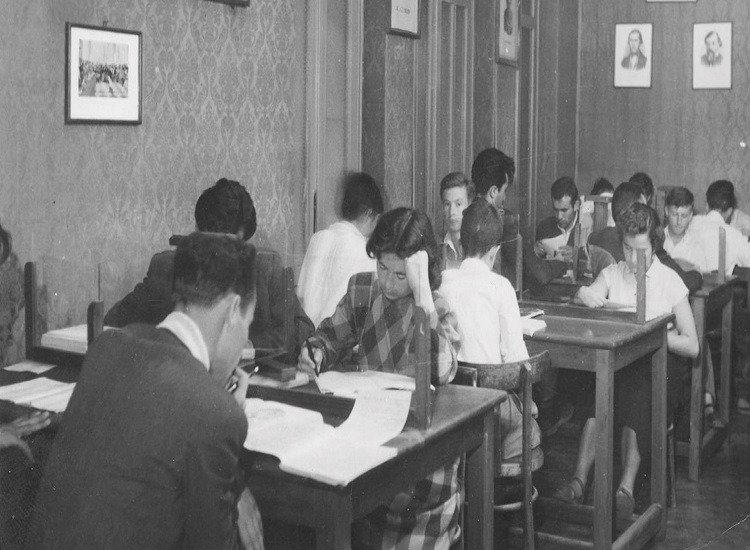
This work was extended over time to the collection of contemporary documents from publications of European academies and important scientific institutes, and their publication in Albanian in separate volumes. The work of directing the Academy of Sciences was a challenge for Prof. Buda. To accomplish this task, he worked in the afternoons at the National Library; here the professor would sit in the last row of tables, reading for hours on end various articles of a historical, linguistic, and ethnographic character in foreign scientific journals and publications.
He would walk back home late, when the National Library closed. As we found out, he was summoned “upstairs” where he was “counseled” that he should travel by car, because it was inconceivable for his dignity and personality as Chairman of the Academy of Sciences to walk on foot?! After this, the professor’s luxurious car would sit for hours near the flower garden of the Library, waiting for him.
Under the direction of Prof. Buda, the Academy of Sciences achieved significant results in the field of Albanological studies. Buda led the work for the successful publication of the Bibliography of our national hero, Gjergj Kastrioti-Skanderbeg; he organized the National Conference on the occasion of the 500th anniversary of Skanderbeg’s death, as well as the National Conference on the occasion of the 100th anniversary of the Albanian League of Prizren.
The Academy, under the direction of Prof. Buda, carried out archaeological research throughout the country; he organized numerous scientific conferences and symposia in the historical, ethnographic, and archaeological fields; these activities were attended by high-ranking scientific authorities from various countries of the Balkans and Europe.
As Chairman of the Academy of Sciences
As Chairman of the Academy of Sciences, Buda closely followed the publications that Albanian researchers were producing in Kosovo and Macedonia. He found time to hold working meetings with researchers from the Albanological Institute of Pristina and the University of Skopje, who were invited by the Academy of Sciences for scientific research in Albania. Buda was not a simple historian; he had completed his higher studies in Austria in Philosophy and Literature.
This is the reason that explains why he was able to deliver scientific papers at major national conferences and symposia organized in Tirana, such as “Albanian Ethnography and Some of its Issues” (Tirana, 1976); “The League of Prizren and its Historical Roots” (Tirana, 1978); “The Ethnogenesis of the Albanian People in the Light of History” (Tirana, 1982); “The Epic and our History” (Tirana, 1983); “The Ethnogenesis of the Albanian People in the Light of History” (Tirana, 1982), etc.
Prof. Buda was the one who organized the 1st Conference of Illyrian Studies (Tirana, September 15–20, 1972); he was also the editor-in-chief of the publication of the Albanian Encyclopedic Dictionary (Tirana, 1985). In the sector, I had never had the opportunity to hear Buda speak about Albanian-Serbian relations. I knew that Buda knew Serbian, and old Serbian documents, such as Serbian charters (diplomas); he had published them translated into Albanian in separate historical volumes; Buda was also the author of the text drafting for the period of Serbian rule in Albania, in the academic publication “The History of Albania”.
But an opportunity arose for me to hear Prof. Buda when he came to the sector with a researcher who had prepared for publication “Albanian-Serbian Relations in the Middle Ages during the 16th–17th centuries,” based on data from Ottoman registers. Buda had evaluated this study in the Scientific Council but had requested that the author address in the introduction the Albanian-Serbian relations in the 14th century to demonstrate that Albanians were on their ancestral lands in Kosovo before the Ottoman conquest.
That day I heard Prof. Buda speak for more than an hour about the aforementioned relations; the researcher beside him was trying to take notes of the professor’s words; he included it as a separate chapter in his book, as a scientific communication from Buda. Later he published it, but without mentioning Professor Buda!?! In fact, this happened with all the publications produced at the institute:Prof. Buda would make the fundamental remarks for every work in the Scientific Council; the researchers would make the required corrections and in the publication would thank their colleagues for the help provided in publishing the work.
For Buda, this posed no problem; for him, only the successful publication of scientific works mattered. Prof. Buda held a similar meeting in 1991 with two foreign researchers, Prof. A. Ducellier and Prof. P. Schreiner, invited to Albania on the occasion of the 800th anniversary of the formation of the State of Arbër. The professor was ill at that time and was staying at home.
The Director of the Institute assigned me to accompany them to his home. The guests were warmly received by Prof. Buda. After we finished the visit and went outside, Prof. Ducellier told me, visibly moved: “Luan, Professor Buda must be poor!” I was somewhat taken aback, because at that time we did not perceive poverty among ourselves.
The remark of the distinguished French researcher prompts me to say something important to the reader; Prof. Buda, as a high official, certainly had a good salary relative to others, but he had his esteemed wife, Vasilika, who was unemployed; she had finished the Korça Lyceum but did not work much, as she was occupied with her husband, the children, and the household chores.
Buda wrote many articles in the press of the time, but he never accepted honorariums for them; “let them be returned to the gardens and nurseries” — this is the note that this distinguished researcher would write on the invoices that came for these articles; Buda did not accept such honorariums because he was sensitive to the country’s poor economic condition, the poverty that was observed everywhere.
I say this because it impressed me that, when leaving the library, the professor would stop at its exit and look with great attention at the poor people who stood gathered there in the winter. In this context, I cannot forget his remarks in the sector about writing letters on both sides of the paper! Why, of all things, was this strong sense of frugality in this giant of a man? Here I also recall an interesting event when the professor was going on vacation to Durrës.
I don’t remember why I was with him in the car that day. Prof. Buda was sitting in the front with the driver. As we entered Ndroq, the car stopped and the professor got out of it. I didn’t understand why he had gotten out; shortly after, I saw in the car’s rearview mirror that he was returning carrying with both hands a small wooden crate of summer fruit. I was surprised when I saw it because I had been spending my summers in Ndroq for 15 years, but I had never seen fruit on sale there.
I immediately got out of the car to take the crate from him, but the professor replied: “No, my boy, no – this today is a miracle for me.” Perhaps I am wrong, but at that moment I was convinced that the professor’s joy did not come so much from the fruit, but rather from the fact that he had seen the village as he wished it to be: a village with produce to sell.
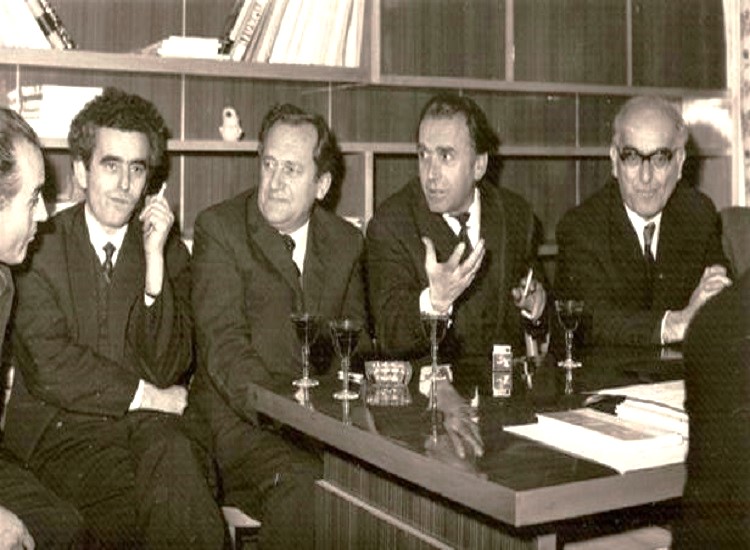
What was striking about this great personality of the time was his extraordinary simplicity. We, the young people of the sector, were amazed by our contacts with him in his office at the Academy; as soon as you entered, somewhat shy, the professor would stand up from his work desk and sit with you at the large table to talk about work-related issues!! Equally impressive was the respect he felt for his old friends.
Even today, the description Buda gives of the former director of the National Library, Sotir Kolea, when he went for a consultation, still impresses me; Buda found him alone, working…! “Oh, dear memory,” writes Buda! “An old man sits hunched over a desk and covers the faded paper with his fine handwriting…! The wind blows from all four sides into the bare and cold room. The burdened old man writes and forgets that his feet are swollen from lack of movement; he forgets that perhaps he has no bread to neither eat nor fire to warm himself…”!
Buda had special respect for Prof. Çabej; he kept his photograph on his work desk. Likewise, during his summer vacations in Pogradec, Buda would always go to visit his friend from his youth, the poet Lasgush Poradeci. Friends of mine in Pogradec have told me that they could not understand how they spent time together; for hours on end, with the lights off, these old friends would sit together in silence; were they perhaps reminiscing about their youth and their second homeland, Austria, and its magnificent capital, Vienna? Who could possibly know? / Memorie.al