


From DASHNOR KALOÇI
Part Four
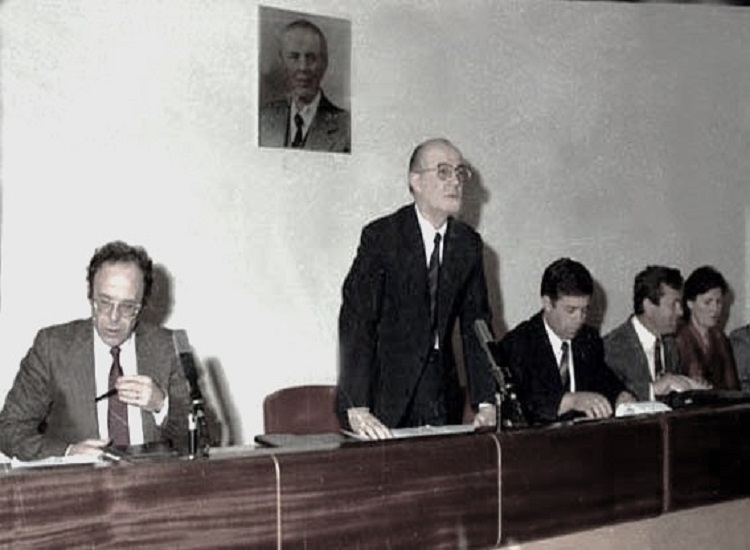
Memorie.al / When not even a week had passed since July 2, 1990, when thousands of Albanian citizens climbed over the railings and walls of foreign embassies in Tirana and entered their premises with the aim of leaving Albania, the high leadership of the Party of Labor of Albania (PPSH), headed by General Secretary Ramiz Alia, held the 11th Plenum of the Central Committee, which held its proceedings on July 6 and 7. Although the agenda was predetermined in three main points, where the one on the development of education in Albania predominated, almost throughout the proceedings of that plenum (especially in point 4, “Miscellaneous”), the event of those days, otherwise known as “July 2 of the Embassies,” was discussed and debated. In that plenum, in which all members and candidates of the Central Committee of the PPSH, the first secretaries of the party committees of the districts, ministers, main cadres of the education, culture, science, and economy sectors, leaders of the organization of the Union of Working Youth of Albania, from the apparatus of the Central Committee of the PPSH, Radio-Television, ATSH, etc., were absent: Nimet Cani, Ali Vukatana, Reiz Malile, Shpëtim Çaushi, Zylyftar Ramizi, Qemal Lame, Zef Loka, Pirro Kondi, and Hekuran Isai, who for several days had been “in the field,” “managing” the embassy event.
After the opening of the meeting by Ramiz Alia, the floor was given to the Minister of Education, Skënder Gjinushi, who also delivered the relevant report, (“On the perfection of the educational system and the further qualitative strengthening of the school”). The main topic of that plenum was the “embassy event,” discussing and analyzing in detail how and why it happened, (“the role of foreign agencies”), and up to the tasks that emerged for managing that situation in those hot July days, when over five thousand Albanian citizens from all the districts of the country were in the interior premises of some of the main embassies in Tirana, awaiting departure from Albania.
In addition, throughout that meeting, but mainly in point no. 4 of the agenda, (which was discussed in the final session), several of the main events that had occurred in various districts of the country during that year were also taken into analysis, such as: the protests in Shkodër in January for the removal of Stalin’s bust; the events in the city of Kavajë where the people of that city clashed with police forces; mass escapes from the state borders with Yugoslavia and Greece; mass gatherings in holy religious sites, such as the Church of Shën-Ndou in Laç of Kurbin; the legal permission of religious beliefs and the opening of places of worship; or other problems that were raised for solution, such as: the talks of the international factor for the restoration of diplomatic relations with the USA, the Soviet Union, (the talks held with the Soviet Deputy Foreign Minister in Sofia by Sofokli Lazri); the Kosovo problem; international pressure for the opening of Albania to the world and its accession to several international conventions; the privileges of the high leadership of the PPSH and their families who lived mainly in the “Block”; the words circulating among the people about Enver Hoxha’s family and Ramiz’s relations with Nexhmije; the change of legislation and the penal code; the release of political prisoners; the passport mess of citizens who sought to leave as visitors to their relatives abroad; the new economic mechanism; the housing and employment of many additions in all districts of the country; the giving of land and livestock to the cooperative peasantry; and even the supply of the urban population with basic food products and various industrial goods.
As we will see also from archival documents belonging to the 11th Plenum of the Central Committee of the PPSH, which we emphasize are published for the first time, in addition to the leadership and some of the high officials of that time, several other high figures who continued their political careers even after the 1990s also discussed or were mentioned at that meeting, such as: Skënder Gjinushi, Fatos Nano, Sali Berisha, Rexhep Mejdani, Gramoz Pashko, Spiro Dede, Dritëro Agolli, Ismail Kadare, Moikom Zeqo, Mehmet Elezi, Lisen Bashkurti, Koço Kokëdhima, Ylli Popa, Aleks Luarasi, etc.
Likewise, in the voluminous file of this plenum, of great interest are also those documents that belong to the secretaries of the Party Committees of the districts or the “Information Group” who went to all the districts of the country and documented all the main problems that emerged in the meetings of the base organizations of the party, where “On the letter of the Central Committee” was discussed, documents that constitute the largest and also the most important part of the file in question. It can even be said to be among the most important of the entire period of the communist regime of Enver Hoxha and his successor Ramiz Alia, since that period of time with the events that unfolded marked the prologue of the fall of that regime.
Likewise, of great interest are also the documents that belong to the final session of that meeting with point no. 4 of the agenda “Miscellaneous,” which constitutes the hottest point of the entire plenum, where it was discussed, even with harsh debates, the release from duties and retirement of three members of the Politburo (Rita Marko, Manush Myftiu, and Prokop Murra), or the release from ministerial duties or other high functions that several other “leaders” had held for years, such as Simon Stefani, Pali Miska, Muho Asllani, Lenka Çuko, Vito Kapo, Pirro Kondi, Jovan Bardhi, etc., and the appointment of “young comrades” in the leadership of the high forums of the Party and State, such as: Xhelil Gjoni, Abdyl Backa, Niko Gjyzari, Kiço Mustaqi, etc. Regarding these etc., we are acquainted with the documents in question extracted from the Central State Archive (Fund of the former Central Committee of the PPSH), which are published for the first time and with the relevant facsimiles by Memorie.al
Continues from the previous issue
REPORT-INFORMATION OF THE FIRST SECRETARY OF THE PARTY COMMITTEE OF THE DURRËS DISTRICT, NAZIM SKUQI, SENT TO THE SECRETARY OF THE CENTRAL COMMITTEE OF THE PPSH, XHELIL GJONI
To Comrade Ramiz
To Comrade Foto Çami
To Comrade Abdyl Backa
PARTY OF LABOR OF ALBANIA S E C R E T
PARTY COMMITTEE OF THE DISTRICT Copy no. 1
No. 1704 Prot. Durrës, 4.12.1990
D.1
CENTRAL COMMITTEE OF THE PPSH
To Comrade Xhelil Gjoni
T I R A N A
The tasks that the materials of the recent plenums of the CC of the PPSH set before us have further intensified the work of the Party in the Durrës district for the concrete understanding and clarification of the processes of further democratization of the entire life of the country.
The base organizations of the Party, communists, cadres, and workers have supported and propagated these decisions. In some cases, some action has been observed that speaks of lack of clarity and manifestations of incorrect understandings of these decisions, especially from ill-intentioned environments and with a low ideo-cultural level.
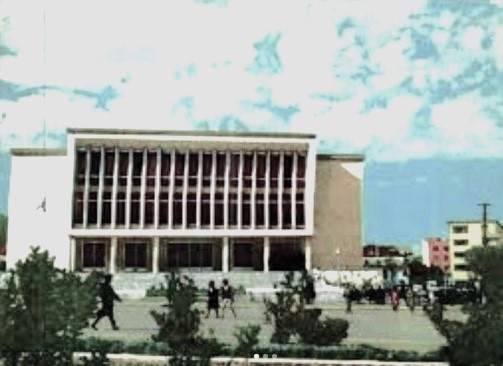
Thus, on 28.11.1990, at the Palace of Culture of the city of Kavajë, a concert recital was given by the high school student Alketa Çobo. The majority of the spectators were of the age 14-18, quite a few of them students of the general high school.
During the concert, and especially when some foreign songs were sung, there were calls and even dances by some young people in the hall.
After the end of the concert, they left in groups. While a group of about 50 people, at a distance of approximately 200 meters from the Palace of Culture, threw slogans with hostile content such as: “Down with Enver Hoxha’s government,” “Freedom-democracy,” “Long live Ismail Kadare,” “Free our comrades.”
Immediately the necessary interventions were made. The Party Committee of the region is further intensifying its work in the base organizations of the Party, the youth workers to raise healthy opinion against these actions.
On 23.11.1990, in a shop window in Shijak, a list of about 300 persons was posted, a good part of whom had signed it, where among other things, and they sought permission for the organization of a religious ceremony. This request was not approved because it was not in conformity with the law on gatherings.
The organizers, on 26.11.1990, made a written notification at the police post in Shijak, with which they sought the ceremony on 30.11.1990. The second request was also not made in conformity with the law, for which they were summoned and the law on gatherings was read to them.
Simultaneously with the approval of the request, we suggested that we respond to propaganda with propaganda and not create confrontations. We note that even in these cases there is a position of waiting to see what orders they will receive from the Party Committee of the district. We met communist comrades and cadres whose word is heard in Shijak.
We instructed them to respond to propaganda with propaganda, with conversations and clarifications. Let us not allow opinion to be processed by people with ill-intentioned judgments and aims.
At the same time, we drew attention that communists, and when necessary the base organizations of the Party, must act or gather on their own initiative, without seeking and waiting for orders. Thus they must be trained in democratic debates and conversations.
At the same time, we drew attention to increase vigilance against ill-intentioned and hostile actions, but not to withdraw, become confused, frightened, or lose confidence, as we have noticed in some communist or cadre in such cases.
Let us be aware that during the development of democratic processes, until they form the normal bed, cases of “twists” are not excluded.
It is important that we be vigilant and intensifies our propagandistic and convincing work, accompanied also by other necessary measures that the law foresees.
We are trying that all our work has a preventive character and in opinion and even in the newspaper “Adriatiku” we have openly criticized these cases as actions of ignorant environments and with political ill-will that are not supported by the masses and that seek to hinder the democratic processes that the Party has undertaken.
Especially, these exposures have had an effect when they have taken place in the pages of “Adriatiku.” At the same time this has cut the way to misinterpretations and amplifications.
Despite the clarifying work done by the base organizations of the Party and those of the masses, the leading cadres and veterans charged by us and who enjoy respect in Shijak, the religious ritual was held around 16:00 on 30.11.1990 at the house of the citizen Sheref Deliallisi.
About 500 people participated in this religious ritual, but believers were fewer than curious onlookers. The ritual lasted about 30 minutes.
The organizers of this activity are:
Fadil Shehi, former hodja, has completed the madrasa. In the years 1948-1949 he worked as a teacher in the Ishëm area, until 1967 he was the mufti of Shijak.
Selami Kasa, with secondary education, warehouseman at NTSH Shijak. His father was a hodja and later practiced this profession secretly, securing material benefits.
Hysni Hasani, continues by correspondence the fourth year of the zootechnics faculty, worker in Xhafzotaj.
Sheref Deliallisi, has lent his house to become a mosque.
Flamur Perati, worker, with a not good attitude.
These organizers have gone and seen the organization of religious activities in Shkodër.
We emphasize that the organizers are generally people without personality and do not enjoy respect among the people.
The base organizations of the Party and those of the masses are working intensively to deepen atheist propaganda in enterprises, schools, and neighborhoods.
Special attention is being paid to wavering people and those curious who have participated in these activities. / Memorie.al
FIRST SECRETARY OF THE PARTY COMMITTEE OF THE DISTRICT
Nazim Skuqi
Continues in the next issue