





By DASHNOR KALOÇI
Part Three
Memorie.al / When not even a week had passed since July 2, 1990, when thousands of Albanian citizens climbed over the railings and walls of foreign embassies in Tirana and entered their premises with the aim of leaving Albania, the high leadership of the Party of Labor of Albania (PPSH), headed by General Secretary Ramiz Alia, held the 11th Plenum of the Central Committee, which held its proceedings on July 6 and 7. Although the agenda was predetermined with three main points, dominated by that on the development of education in Albania, almost throughout the proceedings of that plenum (especially at point 4, “Miscellaneous”), the event of those days, otherwise known as “July 2 of the embassies,” was discussed and debated. At that plenum, in which all members and candidates of the Central Committee of the PPSH participated, along with the first secretaries of the party committees of the districts, ministers, main cadres of the sector of education, culture, science, economy, leaders of the organization of the Union of Working Youth of Albania, from the apparatus of the Central Committee of the PPSH, Radio-Television, ATSH, etc., absent were Nimet Cani, Ali Vukatana, Reiz Malile, Shpëtim Çaushi, Zylyftar Ramizi, Qemal Lame, Zef Loka, Pirro Kondi and Hekuran Isai, who for several days had been “in the field,” “managing” the embassy event.
After the opening of the meeting by Ramiz Alia, the floor was given to the Minister of Education, Skënder Gjinushi, who also held the relevant report (“On the perfection of the educational system and the further qualitative strengthening of the school”). The main topic of that plenum was the “embassy event,” discussing and analyzing in detail how and why it happened (“the role of foreign agencies”), up to the tasks that emerged for managing that situation in those hot July days, when over five thousand Albanian citizens from all the districts of the country were inside the premises of some of the main embassies in Tirana, waiting to leave Albania.
In addition, throughout that meeting, but mainly at point no. 4 of the agenda (which was discussed in the final session), several of the main events that had occurred in various districts of the country during that year were also taken into analysis, such as: the protests in Shkodra in January for the removal of Stalin’s bust; the events in the city of Kavaja where the people of that city clashed with police forces; mass escapes across the state borders with Yugoslavia and Greece; mass gatherings at holy religious sites, such as the Church of Shën-Ndout in Laç of Kurbin; the legal permission of religious beliefs and the opening of places of worship; or other problems raised for solution, such as: the talks with the international factor for the re-establishment of diplomatic relations with the USA and the Soviet Union (the talks held with the Soviet Deputy Foreign Minister in Sofia by Sofokli Lazri); the Kosovo problem; international pressure for Albania’s opening to the world and its accession to several international conventions; the privileges of the high leadership of the PPSH and their families who lived mainly in the “Block”; the words circulating among the people about Enver Hoxha’s family and Ramiz’s relations with Nexhmije; the change of legislation and the penal code; the release of political prisoners; the tainting through passports of citizens who sought to go out as visitors to their relatives abroad; the new economic mechanism; housing and employment of many additions in all districts of the country; the giving of land and livestock to the cooperative peasantry; up to the supply of the urban population with basic food products and various industrial goods.
As we will also see from archival documents belonging to the 11th Plenum of the Central Committee of the PPSH, which we emphasize are being published for the first time, in addition to the leadership and some of the high officials of that time, several other high figures who continued their political careers even after the 1990s also discussed or were mentioned at that meeting, such as: Skënder Gjinushi, Fatos Nano, Sali Berisha, Rexhep Mejdani, Gramoz Pashko, Spiro Dede, Dritëro Agolli, Ismail Kadare, Moikom Zeqo, Mehmet Elezi, Lisen Bashkurti, Koço Kokëdhima, Ylli Popa, Aleks Luarasi, etc.
Likewise, in the voluminous file of this plenum, of great interest are also those documents belonging to the secretaries of the Party Committees of the districts or the “Information Group” who went to all the districts of the country and documented all the main issues that emerged in the meetings of the basic party organizations, where “On the letter of the Central Committee” was discussed – documents that constitute the largest and also the most important part of the file in question. Indeed, it can be said to be among the most important of the entire period of the communist regime of Enver Hoxha and his successor Ramiz Alia, since that period of time with the events that unfolded marked the prologue of the fall of that regime.
Also of great interest are the documents belonging to the final session of that meeting with point no. 4 of the agenda “Miscellaneous,” which constitutes the hottest point of the entire plenum, where the release from duties and retirement of three members of the Political Bureau (Rita Marko, Manush Myftiu and Prokop Murra) was discussed, even with harsh debates, as well as the release from ministerial duties or other high functions that several other “leaders” had held for years, such as Simon Stefani, Pali Miska, Muho Asllani, Lenka Çuko, Vito Kapo, Pirro Kondi, Jovan Bardhi, etc., and the appointment of “new comrades” in the leadership of the high forums of the Party and State, such as: Xhelil Gjoni, Abdyl Backa, Niko Gjyzari, Kiço Mustaqi, etc. Regarding these etc., we are made known by the documents in question extracted from the Central State Archive (Fund of the former Central Committee of the PPSH), which are being published for the first time and with the relevant facsimiles by Memorie.al
Continued from the previous issue
COMRADE RAMIZ ALIA: Comrade Gramoz Ruçi has the floor; comrade Nexhmije Hoxha, get ready.
COMRADE GRAMOZ RUÇI: As everywhere, also in the district of Tepelena, the achievements in the field of education testify to the justice of the Party’s educational policy. If 20 years ago we reported to the Party that we had expanded 7-year education or had liquidated illiteracy, today we rightly measure ourselves with advanced levels of the country, when, as a district, we take fourth place in the Republic for the enrollment of students in secondary education.
While the enrollment of children in preschool education is 10-11 percent higher than the country’s average. But the school, as an inseparable part of the entire life of the country, indeed even as the base from which the future starts and is outlined, requires special care, faster actions not only in the structural aspect, but also in its content, to respond to the dynamism of the time, indeed to become even its forerunner.
For the school to fulfill this function, it is necessary to further increase and strengthens the leading role of the Party in the school. Certainly this role is achieved through the implementation of the educational policy, which is seen in form and content, in structure and legislation, in programs and textbooks and in the entire activity of the great army of teachers and pedagogues, of pupils and students. Nevertheless, the school, in its practical activity, needs more concrete leadership. We say this because especially in the countryside and where there are no party organizations at the school base, the shortcomings are more visible.
It is a known practice that they deal mainly with production problems and leave in second place, to the point of oblivion, the work of the school, which for them is difficult. This happens because their educational and cultural level, especially in the countryside, is still low. In these organizations, school problems occupy little place in their life and activity.
This also happens in our method of work, of the Party forums in the district, where there are also shortcomings and defects. It is rightly required that there be greater harmonization between the intellectual and moral development of school youth. However, this requires that the Party’s work also engage better with the problems of the further democratization of internal life in the school and deal more concretely as a whole with the problems that lead to the ethical-moral formation of the new generation.
We are all interested that the ethical-moral formation of the new generation and their patriotic education be done as well as possible. But, in fact, we are still not working with the level and quality required. It strikes all of us that not a few young men and women speak and behave differently at school and differently in the family and society. At school, they do not miss or steal, while when they go out to work, in the cooperative or enterprise, they manifest foreign appearances and not infrequently even serious appearances, such as religious rites and beliefs and even escape from the Fatherland, on crooked and illegal paths. For these, the school and the youth have responsibility, but society also has responsibility, which does not engage as it should, and above all, the basic organization of the Party, the communists, who wait for someone else to solve these problems for them.
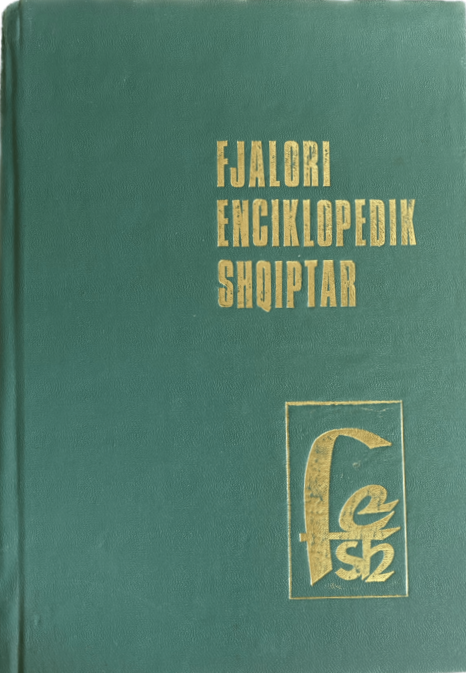
However, in practice the leading role of the Party is understood to be ensured by formally mentioning the expressions “under the leadership of the Party,” “according to the teachings of the Party,” etc. This is so true that even in the Albanian encyclopedic dictionary, although it is a scientific work, the expression “under the leadership of the Party or of the basic organizations of the Party” is mentioned hundreds of times!! Our school is the foundation of knowledge, it is the hearth where scientific knowledge is given, which prepares both today’s cadres and those of the future. Appreciating it thus, I want to express also some thought, which in fact is not only mine, but of many teachers and pedagogues and of not a few parents and cadres.
Our school, first of all, must improve as quickly as possible the content of its work and concretely the programs, textbooks, lectures, etc., in which there is an excessive politicization and ideologization. This politicization and ideologization of every topic and every chapter, even in the exact sciences, often distances pupils and students from the accurate acquisition of scientific knowledge and their all-round formation.
This comes because the textbooks and programs are burdened with concepts of philosophy and political economy. Thus in primary and eight-year schools, as early as the fourth grade, children are given notions such as: “what is the class struggle,” “what is revolution,” etc. Also the textbooks are overloaded, so much so that they produce an effect contrary to the one we want, with ideological phrases and periphrases, something that, in fact, does not find place even with the secondary school pupil, let alone with the student youth.
In this regard, the relationship between pre-liberation and today’s culture, of post-liberation and the international one, which is given in our schools, should also be seen. The problem of improving the content, I think, should be seen especially in the political-social sciences up to the university. The time has come for our school to review the program and textbooks of the components of productive work and physical and military education.
Military education has turned into a mechanical obligation for pupils. These two angles of the triangle teaching-productive work-physical and military education have also weakened the first components. With incorrect practical implementation, they have caused these two great problems themselves to be undervalued. We all know and feel that many teaching hours of these subjects are conducted even formally. This has made pupils and students have no or little interest in them, etc.
I would say that, more or less, just as the attitude of cadres toward the one-month physical work has been reduced, this attitude is held especially by students toward physical-military education and productive work. Therefore I think that the programs of these two components need to be reviewed well, both in terms of time extension and content. A big problem is also the way our school prepares our pupils and students, as people with free and independent thought, creative and progressive, or as automatons, who tell us in the lesson hour what has been told to them by the teacher and just as he tells them. But, to achieve working and thinking independently, I think that dialogue and debate should be introduced in our schools, especially in higher schools, in the lesson hour and in activities outside it.
In our school, with the way lectures and seminars are conducted, distancing from the real life of youth is cultivated, preparation for an office job, a clerkship. With the lectures that are conducted, the idea is created as if life is a field of flowers, easy, comfortable, etc. Even some phenomena of laziness and lack of the sense of sacrifice have their basis in the fact that we prepare youth in school as if life is not sustained by work and struggle, when, in fact, all of life is work and great struggle, since material goods also do not come by themselves, but through work and only with work.
I will illustrate this with a small article from the newspaper “Bashkimi,” which impressed me about how the school program begins in Japan: “From the first grade they tell them: Our country is poor, it has no underground wealth. To live, we must learn and work. Our greatest wealth is discipline.”
While in our school, from the first grade until we finish the University, we tell them: that our country is rich with this and that, indeed the richest in the world, that we live happily and like no other country, etc., etc. Slogans that have now lost their value. Certainly this euphoric feeling is also nourished by parental paternalism, which does everything possible so that their children, even when they are at the University, pass exams through intervention; do not go to work campaigns or military training and, when they finish the University, not even to work in the Northeastern zone. For this, each of us communists and cadres must also look at himself.
Let us take another aspect of the content. In our textbooks, of all levels, the experience of building socialism in our country and the economic policy of the Party is treated extensively. This is right, but one-sided. In these textbooks, everything, every form of organization and management, is presented as the most perfect, as the best model. By treating the problem thus, we have made it so that in the pupil or student the image is created that on our path everything has gone smoothly, everything has moved forward by itself, without any obstacle and without any difficulty. This happens because in these textbooks the reality has not been presented as it should be which, as we know, is both with achievements, but also with difficulties, problems, obstacles, defects and shortcomings.
I cannot say that we have been afraid to say these defects and shortcomings in textbooks, but for the sake of politicizing things, for the sake of formal confrontation with the pure justice of our principles and norms, we have left out of treatment in educational work the negative phenomena. According to my opinion, here one of the causes should be sought for the fact that today, the new economic directions that the Party is implementing, or the contemporary stance on the problems of foreign relations, of legislation, etc., by not a few people, educated only through achievements, are considered as “changes” in line or even up to “going back.”
I also want to emphasize something else. Our educational system, except for the higher one, is subject to a multiple and intensive state and social control, starting from the Ministry that tramples every year all the districts, up to the section, cabinet, directorate, subject commission, people’s council, etc.
I think that the qualitative aspect of state control should be looked at more than the quantitative and formal one. Expressing the opinion of the base, I would say that there is room for strengthening state control, especially in higher schools, where teaching and especially the passing rate of students in June does not reach even 50 percent, while in August it goes to 88-90 percent. It should also be said that the teaching corps, compared to the rest of the intelligentsia, is more organized in qualifying formats, but, at the same time, I think it is also burdened.
The teacher qualifies in the basic school or inter-school subject commission, develops topics in the pedagogical council, undergoes one-year qualification with a unique program from the center, is also subject to 5- and 10-year exams, in addition to those who also take postgraduate exams. I think there is room to review all these qualifying forms to remain with what is most rational and effective, such as, for example, year-long qualification.
Also a problem for the cadre who finishes higher studies, especially for those who work in the productive spheres of agriculture, industry, etc. We notice that there are shortcomings in the formation of their practical skills. An economist, for example, needs time to gain experience with the older one in order to work, even with various records. Even more, weaknesses are noticed in their culture to direct, organize and control various production operations, let alone to direct the sector or enterprise, when the very management of the economy requires more economic thought and more economists to be placed in management.
This requires that the structure of contingents sent to higher schools also be looked at better. While we have many engineers or agronomists, so much so that they have descended to shifts or brigades and some are even without work, we have very few economists, even directors and chairmen, when the economy today and especially the new mechanism being implemented has so much need for them. I express the conviction that the proceedings of this plenum and the decisions that will be taken will carry forward the revolutionizing process of our new school, to respond to the current stage and the perspective development of the country./ Memorie.al
Continued from the previous issue