
By Zylyftar Hoxha
Memorie.al – In the years 1975–1980, while writing a monograph on the patriot and National Renaissance figure Meleq Staravecka, a friend and collaborator of Kristo Luarasi, I had come across many documents that spoke of Kristo’s distinguished activity, but only that – I had not found a complete and systematic work about him. During that time, I had managed to see a part of the machinery of his printing press “Mbrothtësia” (“Development”), which had been nationalized in Tirana in 1946 and brought to Skrapar in 1971 as a reserve, so that in case of war “Zëri i Popullit” (“The People’s Voice”) would be printed there; but I had also found a friend of Kristo’s, an old polygraphy specialist named Jak Banda, who had come to assemble the machinery in Skrapar.
This wise and prudent man from Shkodra, who had grown up and grown old among those machines, never missed an opportunity to speak of Kristo as “the unrivaled Albanian Gutenberg,” but also of the abilities and skills of his wife, Polikseni, and his son, Theodhor, who after Kristo’s death kept that entire industry running at an even higher pace than in Kristo’s time.
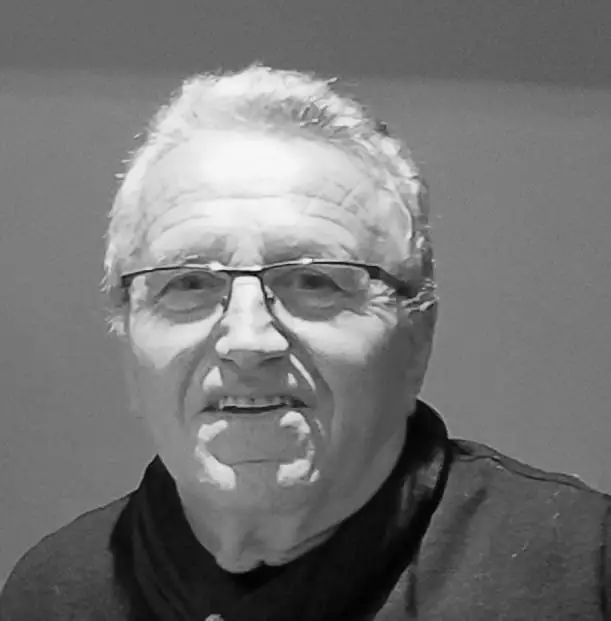
Later, chance had it that while going to work, I asked the man sitting next to me on the bus – since I knew he was a Luarasi, but from which Luarasi family? “From Kristo’s; I am his nephew,” he told me. I was stunned. “You, Kristo’s nephew”?! And we began a long conversation…! Genci has an interesting story; he worked on several so-called “five-year plan” projects during the communist period. For years, Genci was a technologist and chief chemical engineer at the Superphosphate Factory in Laç, as well as on other projects.
Later, in retirement, Professor Genci “could not stay still,” trying to put in order, as much as he could, some of the great material and moral losses suffered by the famous Luarasi family. His day is intensive: from one court to another; from one archive to another; from the mortgage office to the property restitution and compensation offices – all for a great injustice done to the Luarasi family’s property. Although he often comes out empty-handed and disappointed from these offices, he does not withdraw from his moral commitment to the sweat, effort, and blood of his ancestors.
Although measured, reserved, and modest, Genci also has another concern: His grandfather, with all these merits, as a colossus of Albanianism, unfortunately, apart from the book “Kristo Luarasi, Life and Work” – a nicely written monograph by Professor Uran Asllani, but which leaves many things out – and some decorations and titles of a second-class order, has nothing else. His figure in the national historical memory, where no one remembers him, seems to have faded. And this is a true trauma for the dead, of course, but even more so for the living.
Naturally, as a descendant with patriotic blood, Genci suffers from this. Starting from the principle that if you forget yourself, others will forget you too, he tries to do something. He rummages through archives for Kristo’s life, because in that mountain of his work, he always finds something new, previously unknown. A few years ago, Genci went to Luaras in Kolonja, the birthplace of his ancestors. He turned a small museum corner in that half-ruined schoolhouse. He took a computer, 70–80 books from his library, some office supplies, chalk, pens, and notebooks to give to the students.
Then he went to Thessaloniki to find traces of Kristo’s printing press there. He had approached the location, but nothing remained of the former half-Albanian Thessaloniki. Not because of time, but because of the anti-Albanian strategy of the Greek extremists of the Megali Idea. And as I was talking with Genci, this authentic branch of the distinguished Luarasi family, whom I had met quite by chance on a short journey, I thought that this is how all the scions of this race must be – hardworking, quiet, unassuming, never boasting about their origin.
We still cannot know and cannot imagine what would have been the fate of the works of our great Renaissance figures, especially the Frashëri brothers, and all that work for national awakening through the Albanian language and schools, without the zealous patriotic devotion of one of the most distinguished apostles of Albanianism during our National Renaissance – Kristo Luarasi. Perhaps many of their works would never have seen the light of publication and we would find them today as manuscripts in archives, or they would have been published late, and not with that momentum, that number, and that speed with which Kristo Luarasi published them.
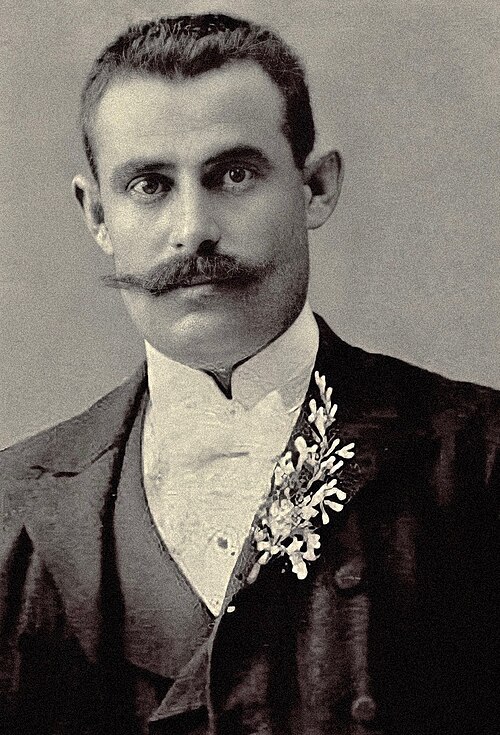
Documents show that Kristo Luarasi was the only publisher of that time who had obtained the exclusive right to publish the works of the Frashëri brothers, especially those of Naim, while the latter was still alive. His entire over-40-year activity, as a patriotic and political mission, was embodied in the printing press “Mbrothtësia,” first in Sofia, when he was a 20-year-old youth, then in Thessaloniki, and later in Tirana, with the publishing houses “Kristo Luarasi,” “Luarasi,” etc., with a wide range of publications – over 600 titles of political, legal, artistic, religious, and school books, some reprinted dozens of times.
All in various print runs, meeting ever better the needs of a people thirsty for education, culture, and knowledge, bringing not only the Frashëri brothers but also other authors such as De Rada, Sterjo Spasse, Mit’hat Frashëri, Haki Stërmilli, Nexhat Hakiu, Thoma Floqi, Xhevat Belegu, Milto Sotir Gurra; foreign authors such as Victor Hugo, Honoré de Balzac, Alexandre Dumas, Defoe, Alphonse Daudet, Leo Tolstoy, etc., etc.
After Kristo’s death, his son Theodhor continued the publishing activity until 1946, when the publishing house and printing press “Luarasi,” regardless of its historical background, were nationalized simply as private property that conflicted with the interests of the new communist regime being installed in Albania. Moreover, the communist regime’s “allergy” to private property was also reflected in the politically indifferent attitude toward all the scions of the Luarasi family, who had grown up amidst books and a patriotic environment, who had been educated in the best schools of the time; Kristo’s two eldest sons, Thomai and Theodhor, had stood by their father, as members of the “Dëshira” (“Desire”) society in Sofia and later in patriotic circles in Thessaloniki and Tirana; Skënder Luarasi (not the one of Petro Nini Luarasi), Kristo’s third son, became a skilled architect.
Likewise his daughter, Margarita, a talented teacher. One member of this family, a grandson of Kristo, Stefan Luarasi, deputy commissar of the Sllova Band in Dibër, fell as a martyr for the homeland on July 8, 1943. In the field of printing, Kristo Luarasi can without fear be called the “Albanian Gutenberg,” but he also shines as a publicist, editorialist, publisher of several important newspapers of the time, and author of many editorial and problem-oriented writings.
With the help also of Mit’hat Frashëri and Shahin Kolonja, he occupies a place of honor in the history of the Albanian media as the founder of several press organs, such as the “Kalendari Kombiar” (“National Calendar”), “L’independence albanaise,” the newspapers “Lirija” (“Freedom”) and “Dituria” (“Knowledge”), “Drita” (“Light”), continuing later with the newspapers “Lajmëtari” (“The Messenger”) and “Liri e Shqipërisë” (“Freedom of Albania”).
It should be noted that Kristo Luarasi’s patriotic activity was not limited only to the field of publishing; he was a main protagonist in the entire theater of historical events that occurred during his lifetime (1875–1934), chairman of the patriotic association with a distinguished patriotic role, “Dëshira” in Sofia, collaborator with the most prominent figures of our National Renaissance, both with the ideologues and with the commanders of the bands for national freedom, such as Abdyl, Naim, and Sami Frashëri, Naum Veqilharxhi, Athanas Tashko, Shahin Kolonja, Mit’hat Frashëri, Fan S. Noli, Hilë Mosi, Çerçiz and Bajo Topulli, Mihal Grameno, and many others.
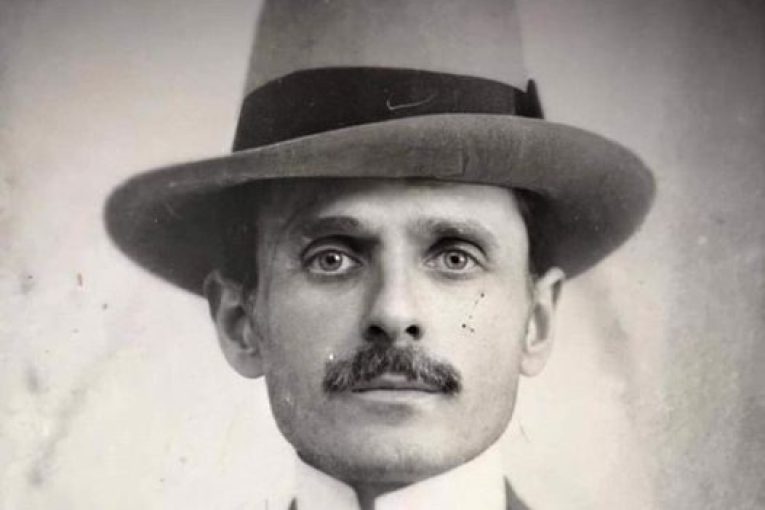
Kristo’s profile is broad and extraordinary – as a patriot, as a scholar, as a writer, as a journalist, as a poet, as a polyglot (he knew 7–8 languages), as an encyclopedist. He combined in one person not only the patriot but also the capable leader and organizer, the learned man and the successful businessman, as perhaps no one else did in the Renaissance. He was a publisher who knew how to mobilize the most distinguished patriots from the Albanian colonies of the diaspora, such as Bucharest, Egypt, Italy, America, and from Albania itself, around himself, in the newspapers he published and directed himself.
The sacrifice made by this man of Albania is magnificent and unparalleled; he was and remains a visionary Enlightenment Renaissance figure of great caliber. Shahin Kolonja, with whom he collaborated for eight consecutive years in publishing the national newspaper “Drita” (1901–1908), writes that: “Kristo’s contribution to the Albanian cause is more valuable than the contribution of all the emigrants combined.” The great Noli, from across the ocean, would define Kristo Luarasi as: “one of the 28 Albanian personalities who laid the foundations of the Albanian state” and as a “good businessman,” who placed everything – his life, his family, his fortune, and his possessions – in the service of Albania.
Despite all these merits as the greatest benefactor of the Renaissance, as Mit’hat Frashëri has called him, our scientific institutions owe a great debt to Kristo, to place him where he belongs, to review and re-dimension his figure to those proportions that he truly had. I have heard that there is a project for republishing the “Kalendari Kombiar” (“National Calendar”); it will be a marvel that will shed new light on the activity of this distinguished patriot and will fill a great gap on the shelves of our scientific libraries.
The historic house on “Rruga e Kavajës” and the problems with it
After the Declaration of Independence of Albania, Kristo Luarasi considered his Renaissance mission in Sofia, Bulgaria, to be complete, where for 25 years, together with many Albanians, he had found the hospitality of the Bulgarian state, where the patriotic society “Dëshira” had been created, where he had militated and strived together with his wife, Polikseni Dhespoti-Luarasi, after the establishment of the printing press “Mbrothtësia” (“Development”) for publishing the independent Albanian press, and had printed the progressive newspapers, such as “Drita,” “Liri e Shqipërisë,” “Dituria,” the “Kalendari Kombiar,” for many years, etc.
Their house on “Car Simeon” Street had become a shelter for Albanian insurgents, for the Topulli brothers, Mihal Grameno, and many others who had found in the third floor of that house refuge, bread, and meeting places – so, in 1920, he decided to return to independent Albania, to continue his publishing work for the new administration of the Albanian state. With his entire printing press, now larger than before, he returned to his homeland, to Tirana, first to “Rruga e Shkabës” (today near the “New Bazaar”) in the house of the large Stërmasi family, until he bought the necessary land to rebuild the printing press, which had become like his firstborn child.
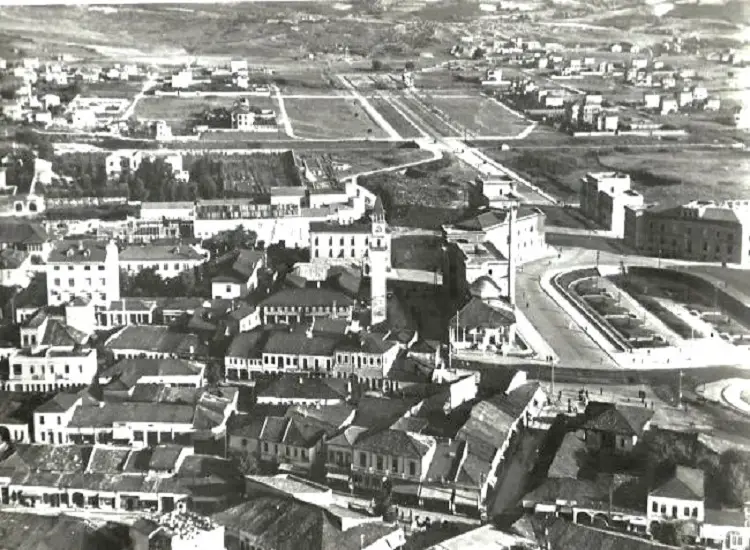
In those years, the western area of Tirana, called “New Tirana,” began to be populated and urbanized, where within 1931 he bought 1,800 m² of land, along the road called “Royal Road” and later on “Rruga e Kavajës,” which is still there today. On “Rruga e Kavajës” he built his new house, and on the purchased land, together with the old house, he placed his printing press, where he resumed his publishing activity with schoolbooks and materials for the state administration.
After his death, this activity was inherited by one of his sons, who expanded it even further with printing products, newspapers, books of Albanian and world literature, postcards and stamps, becoming a prominent activity in Tirana, in Albania, in Kosovo, and beyond Albanian borders.
In 1947, the printing activity was nationalized by the Albanian government of the time and was absorbed into the printing press “Mihal Duri” (“Hero of the People”), where besides Mihal Duri, Qemal Stafa had also worked, as well as many other typographers, such as Mulosmani, Dh. Lubonja, J. Banda, Xh. Hatibi, etc. At that time, the family of the third generation of the Luaras family lived in Kristo’s house. In the famous garden of Polikseni’s roses, known to the surrounding residents, many friends, both local and foreign, came and went.
During the Battle of Tirana in 1944, in the basements of the new house, 160 neighbors from the Lana and Spahij streets took shelter and calmly and patiently withstood the raid of the German forces, who under pressure took the owner of the house, Thoma Luarasi, to the wall of the Catholic Church. But Father Patër Meshkalla guaranteed the German commander that they were residents near that house and peaceful people.
After liberation, for 50 years, according to the laws of the time, dozens of families found shelter in that house, such as the pharmacist S. Papaj, where the soprano singer Luiza Papaj (Çako) and her sisters – engineer and musician – grew up; the family of the master printer J. Banda lived there; Sotir Spiro, prosecutor of the Teme Sejko trial, etc.
For a short period, the premises of that legendary house housed students of the Pedagogical School. Finally, in 1992, the house premises were vacated. The owners reconstructed the house twice, with the idea of restoring its identity as a house of architectural and historical value, where activities of the National Renaissance had taken place.
But still, from that time to this day, although it is a rare typical house that connects yesterday with today, nothing has been done by the Albanian state. And not only has nothing been done, but its rightful owners are faced with usurpers who have illegally occupied premises of this house. It is regrettable that these people are aided and supported in their illegality by people in power!…
Mit’hat Frashëri: “No one knew Kristo better than I did”
“Upon the death of Kristo Luarasi, all the Albanian press of the time wrote, both inside and outside the country, such as: ‘Besa,’ ‘Demokracia,’ ‘Gazet’ e Korçës,’ ‘Gazeta Shqiptare,’ ‘Minerva,’ ‘Vlora,’ ‘Albania,’ etc., but the best, most complete writing, which in extract summarizes Kristo’s entire life, is the article by Mit’hat Frashëri, published in ‘Minerva,’ which we present below to the reader:
‘…To speak of Kristo, I must take the path to the sources of my memories, of those very thirty-seven years ago. One evening, while returning home by steamer, Sami Frashëri told me that he had seen at Naim’s a new book that recounted the days and months, with articles and poems, a publication printed in Sofia, Bulgaria.
A new Albanian book? For us? For those of that time, it was an unprecedented event, a spiritual, social, and political event. Then for us it was a great wonder, the name of a new city where an Albanian book was being published…! …For twelve consecutive years, from 1897 to 1908, Kristo spread the right word, sowed the good seed, not only in Albania, but wherever an Albanian could be found, in all the cities of the vast Ottoman Empire, in the distant lands of both Americas, to the frozen tips of Siberia and the scorched deserts of Africa.
And this work was done with a noble patience, with a selfless ideal, with a rare sweetness of character. I emphasize these rare qualities of Kristo’s, because it seems to me that no one knew that man better than I did…! …Those first twelve years form the most beautiful epic of his work and his deeds.
And if the greatest kindness in life is to give others pleasure, joy, and satisfaction, undoubtedly Kristo should be regarded as a very great benefactor, a benefactor for thousands and thousands of readers of the books and newspapers that came from Kristo’s hands, and an even more valuable benefactor for his collaborators.'” / Memorie.al