From Elisabeta Ilnica
Memorie.al / He is considered the “Mandela of Mirdita” for his resistance in communist prisons, but fortunate in how he managed to escape the list of Mehmet Shehu’s mass execution, as revenge for the murder of his friend, deputy Bardhok Biba. His name was Gjon Mark Ndoj, and he spent two decades in the cells of the dictatorship, due to the staging by prosecutors and investigators, who “placed” him at the scene as the killer. We say “placed him” because Ndoj had been arrested on April 27, 1949, four months before Biba’s execution, on August 17, 1949.
At the time the event occurred, Ndoj, a teacher by profession, had been handcuffed in interrogation for 4 months, because during the time he attended the Franciscan High School of Shkodra, together with several other friends, he created the anti-communist organization “Albanian Endeavor.” After two intensive days of interrogation sessions and extreme physical violence, the investigators finally became convinced that he had absolutely no connection to Biba’s murder, but they still sentenced him as the “perpetrator” of the deputy’s elimination, placing him in prison at the age of 21. He was sentenced to twenty years, ten of which he spent in the Burrel prison.
Of course, Ndoj was not the only innocent victim of that massive communist revenge against the people of Mirdita. For the murder of Bardhok Biba, more than 500 men were arrested; women and children were interned in concentration camps in Tepelena and Lushnja, more than 300 families. Four hundred men were sent to the prisons of Shkodra. Another hundred were sentenced to long prison terms. And the most tragic of tragedies: Just 24 hours after the murder, on August 18, 1949, 14 people were executed without trial, exactly at the spot where Bardhok Biba was killed: Llesh Mëlyshi, Nikoll Bardhok Bajraktari, Bardhok Dod Lleshaj, Gjergj Keq Beleshi, Dod Marka Biba from Kthella.
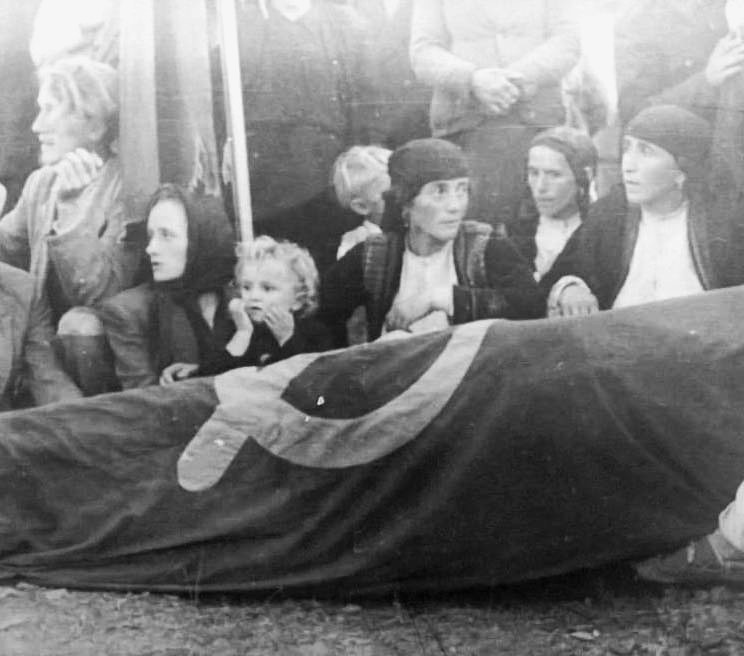
Ded Preng Gjomarkaj, Nikoll Llesh Nikolli, Preng Shkurti, Gjin Kaçi, Ndoc Gjet Palaj, Frrok Mata, Marka Ndrec Marku, Ded Paloka and Zef Vila. Of these, 4 were hanged on ropes and the other 10 were tied with this material when they were shot. As they were “riddled” with bullets, by order of Mehmet Shehu, they were all thrown into a pit, while their souls had not yet departed and they were writhing for help. The massacre was followed directly as an “artistic performance” by about 2000 people from the areas of Mirdita and Shkodra, who had been reluctantly summoned by Mehmet Shehu, who on the occasion of the genocide, as Ndoj would call it, had prepared a speech, where among other things he emphasized: “I have sworn on Bardhok Biba’s grave that until I have filled 101 executed for revenge, I will not leave Mirdita and Kthella!”
On this predicted death toll was also the name of Mark Gjon Ndoj, but Shehu’s catastrophe remained unfinished. Urgency called him to Southern Albania at the head of the First Division, where Greek provocations had just begun. Ndoj recorded the events of that time in a diary he kept in prison, as well as the part of his life “without a sky.” The writing comes in miniature letters, often coded and indecipherable. A short excerpt from this diary of the “Mandela of Mirdita” (who no longer lives), which deals with the situation in prisons after the murder of Deputy Bardhok Biba…!
Excerpt from Gjon Mark Ndoj’s diary
Without a doubt, the violent actions that the communists carried out in Mirdita were not, as was said, revenge for the murder of Bardhok Biba, but this was the reason they wanted to justify the action. These punitive measures were parameters of a complete genocide. So it was a pre-existing hostility and hatred. Never and at no time was this behavior softened? Even when the hatred became latent, the spite was visible. It was the events on the Greek-Albanian border that reduced the number of victims, from the 101 that Mehmet Shehu had planned, to 14 men, who were executed in Valmer. They had taken the majority of the prisoners that had been decided to be tried publicly, when the head of the Branch himself, Abedin Tajari, came and took me and ordered a civilian to type. Questions close to the required similarity. The letter was made into a copy (minutes) and with it in hand he took me with him, asking about Çarçani. Apparently his intention was to divert me from the trial.
I concluded my reasoning, that I had been imprisoned for about two months before. It seems that the head’s explanation was not taken into account, that, a short time before, after he asked me to confirm my name, he took a piece of paper and took me out into the corridor, and paired me with Mark Tuci, and then they took us to the school where the trial was held. Our comrades had been seated on some long benches. I recognized them, there were 24, and the two of us made 26. Outside there were many people and many soldiers. On the road there were some cars loaded with women, children and elderly. Now and then a child’s wailing, orders, threats… in front of us, was the table covered with the national flag. It was the classroom where I had taught my two classes.
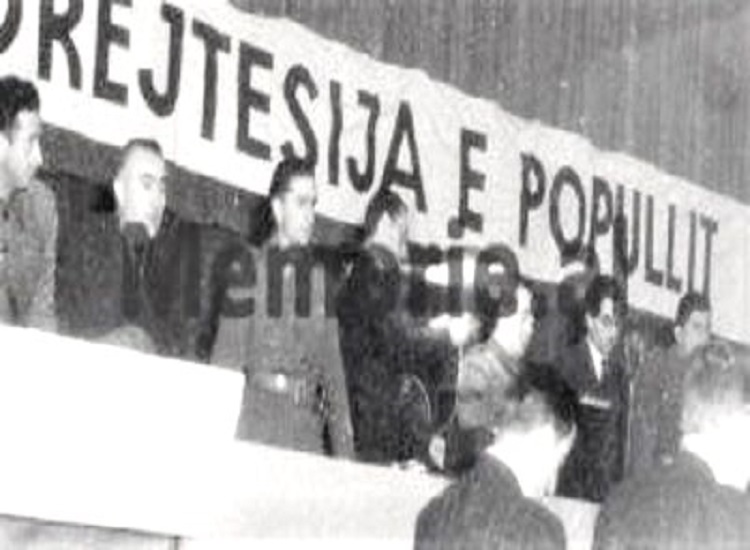
Where I had taught, where my predecessors had taught, the judicial body would sit. The procedure was quick. The first session, questioning about generalities, witnesses, the prosecution’s demand, and the court’s decision in four sessions over two consecutive days. The college of the high military court was composed of its chairman Bilbil Klosi with two captain members and the prosecutor, the deputy chief military prosecutor, Major Misto Bllaca. Since they completely lacked even the slightest incriminating evidence, to justify their decision, they needed to invent guilt in the eyes of the people, but the people refused to come forward as false witnesses.
This was done by employees and cadres of the district. Such witnesses were: M. D., chairman of the District Executive Committee, P.N.P., section chief, L.T., Security captain, etc. Starting from the arrest, guarding, investigation and surveillance, it was all done only by the M.P. [Military Police], leaving the regular police aside. The M.P. brigade, stationed in Qafë-Shtamë, under the command of Colonel Zija Kambos, after removing from its ranks all those few men from Mirdita who were incorporated into this brigade, entered at night and spread throughout the entire administrative district of Mirdita. They carried out about 500 arrests, forcefully gathered 300 families in various points to intern them in Tepelena. 14 men were executed, 4 by hanging and 10 by firing squad in front of the people. Some fell alive into the gravel pit. Then, machine-gunners ground and dismembered the corpses, terrorizing young and old who had been brought there forcibly to witness this communist butcher shop. The border conflict with the Greeks occurred, otherwise who knows how the killings would have stopped…
I had three witnesses. M.D. said that I had had a friendly conversation with the criminal Mhill Kol Gjata (who was killed in the mountains). I had given an account in court before and was sentenced to two years in prison. L.T. said that he had seen me in Shkodër walking with the criminal’s brother…! On the second day in the afternoon, the prosecutor held his demand. For 20 people he requested the death sentence by firing squad, in the same place (in Valmer, where Bardhok Biba was killed). One of these 20, who were sentenced to death and execution by firing squad, was also my name. It seemed that something inside me broke; my head felt like it would burst, like women’s wailing, the ringing of church bells that toll on one side for the deceased, and the mother of the damned.
An icy coldness like a current passed not only through me. But on pale faces, by no means from the fate of death, but anger caused by the wonder of a precious thing that falls from our hands and shatters into pieces. We were twenty people with a common fate, friends and loving comrades and above all we were required to show manly proof of resistance, to be worthy as our opponent characterized us – an enemy not by guilt, but in essence. This description applies little to me and the others whose sentence was commuted to prison. But it belongs to those men who neither melted nor weakened until they gave their last breath in a macabre death.
We who were spat out by death, we told the truth and it did not seem proper to accept to be separated from our comrades. They found the strength to wish us well, we who were being spat out. Among those who were spat out were: Ndue Gjon Fusha, a young man sentenced to life imprisonment, Mark Kola with 20 years, and Kol Ndue Gjoni with 10 years, but both died in prison after 2-3 years from lack of food. In prisons, labor camps and internment, other prisoners also died, since for that occasion even children, the elderly and women were sentenced…!
An irritation was noticeable among the judges, when Mrika, Bardhok Biba’s wife, expressed displeasure about the 14 captains. She stated that for Bardhok Biba, 100 should be killed. “We have taken your opinion into account,” the chairman of the judicial body said under his breath, but it was dropped. While Bardhok Biba’s other relatives tried to save people. Bardhoku’s sister, a young and handsome woman, had requested three by name, as they were young, to be pardoned by the court. The prosecutor, among the 20 people for whom he had requested the death penalty by firing squad, included me, Ndue Fusha, and Mark Tuci. Later it would be learned that it was Preg Kol Marku, her cousin and our friend B., who had encouraged and taught her.
In my final statement, after the prosecutor’s demand, I said: I have now been imprisoned for three and a half months and the Security organs have conducted their own investigations. And to this day there is not a single fact, not even to be on the defendant’s bench, let alone the prosecutor’s request for a capital sentence. Therefore I do not ask for mercy, only justice if there is any. When I sat down, a member, a first captain whose name I don’t remember, asked me: “When were you arrested?” – On April 27, I replied. He noted it down. There is a possibility that there was a change in the initial intentions regarding the number that was to be executed as revenge. The events on the Greek-Albanian border, which lasted for a few days, were alarming for Tirana. Thus they were forced to close the problem of Mirdita…!
After the court’s decision, during the night and the next day, many of those sentenced to death were called. If they would talk and confess their own hostile activities and those of their comrades, their lives would be spared. A cannibalistic mockery…! “You said in court that you are innocent.” That’s right, yes, I replied. He brought me a blank paper and a pen, declare here that you are innocent, and we will repeat the trial for you. The evil one wanted to keep me there under investigation, and accuse me as he wished and as he knew how. I understood his devilry. “The court’s decision is final,” I replied. I hadn’t finished my sentence when a strong fist struck me on the temple. “Get him out of my sight,” he told the guard. The military behavior of the guards was beastly when they took the condemned men.
They tightened their hands with pliers down to the bones. They turned them back and tied them two by two shoulder to shoulder. Although they resisted and insisted on walking further, they dragged them sliding, the car engines were roaring outside, threats, orders, insults. We heard them talking among themselves. Those men had died, but the torment and beatings were worse. That day we remained alive, we were only living corpses…!
Biba, a deputy through friendship with Mehmet Shehu
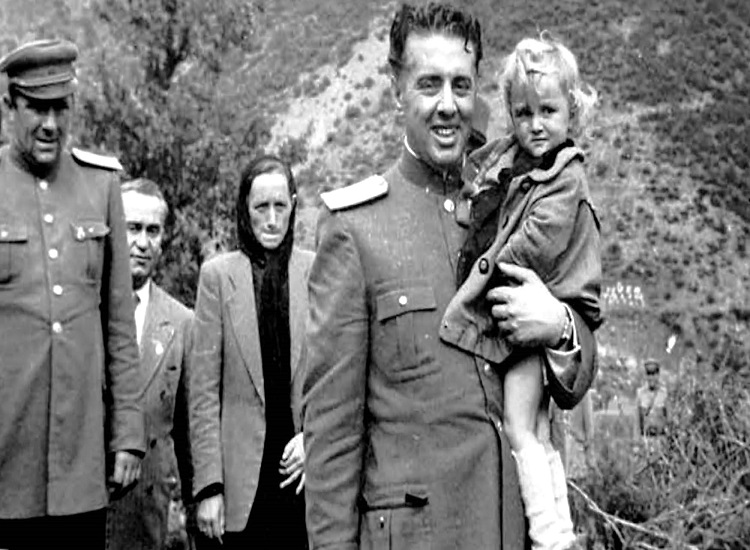
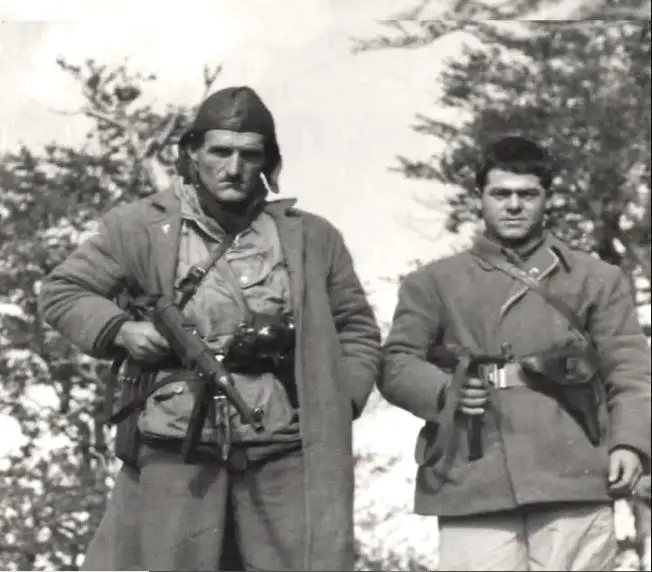
At the age of 28, Bardhok Biba connected with the communists of Tirana. During the fascist occupation, he propagated communist doctrine. When Mehmet Shehu entered Mirdita with his partisans, Biba presented himself as the greatest man of that region. Bardhoku subsequently chaired the sub-prefecture of Shën Pal in Mirdita and had numerous military forces at his disposal, which Mehmet Shehu had given him. He became a deputy of the People’s Assembly and a member of the Central Committee of the Party. Bardhok Biba was killed around 14:00 on August 17, 1949, in the stream of Valmer. His execution was organized by 53 people, members of the “Committee of the Mountains,” who were against communism.
After the action, all of them fled to Yugoslavia, while reprisals began in Mirdita. The communist government of Tirana sent military units, where the operation involved the First Division which was in the center (field) in Qafë Shtamë and commanded by Colonel Hito Çako from Korça, as well as the Special Brigade that was stationed in Mirdita, commanded by Major “Luftar Bolena.” The operation was headed by Mehmet Shehu himself, together with the Deputy Minister of the Interior, Kadri Hazbiu. Two Soviet colonels also participated in the operation: Sakolovaski and Voleskini.
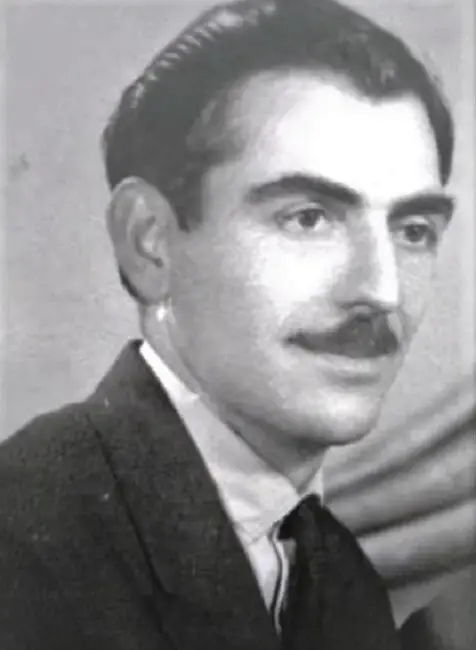
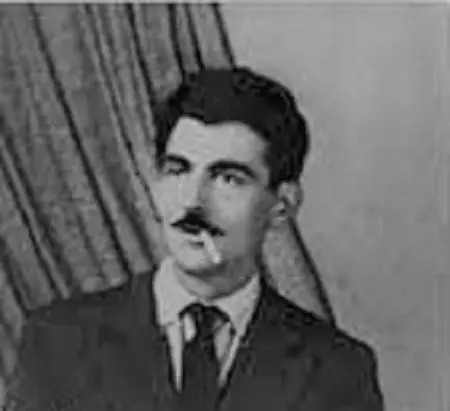
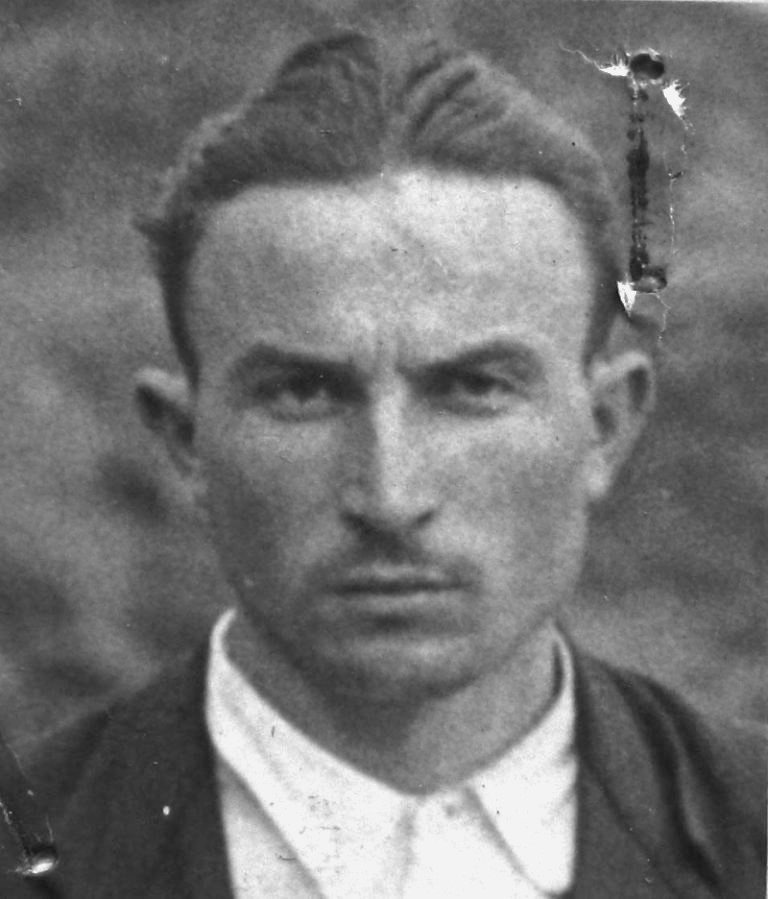
Who was Gjon Mark Ndoj?
He was born in 1928, in Orosh, Mirdita. He finished the Franciscan high school “Iliricum” in Shkodra and started working as a teacher. Due to anti-communist activities, he was arrested in 1946 and imprisoned for two years. After being released in 1948, he was re-arrested in April 1949 for “friendship with criminals” and other communist dogmas. While the 21-year-old was under investigation, he was cleared of the initial charges and was directly accused of the murder of Deputy Bardhok Biba, an event that occurred on August 17, 1949. Despite this temporal paradox, Ndoj was sentenced to two decades in prison, while escaping the death penalty by firing squad.
He served all his years in prison, a period during which he engaged in literature and translations. He wrote novels and short stories, as well as three two-act dramas: “Mujo Ulqinaku,” “Hasan Riza Pasha,” and “Kordiani.” He translated from French the History of Diplomacy and History of Modern Europe. He is co-author of the books “Mirdita” (1997) and “Poetic Contact” (1998). While he is the author of the works: “Cardinal Ahuni,” “Punishment of Innocence,” “Davida of the Kulak,” “Warriors of Mirdita.”
Ndoj was the longest-serving chairman of the association of former Political Prisoners and Persecuted in the districts, where in Mirdita he led it from its founding in 1991 until 2002, when he resigned due to poor health. He was on the verge of publishing his diary and organizing a manuscript about Kosovo, when he passed away in 2006. Ndoj left behind his wife Vitore and four children: three sons; Valentin, Albert, Leonard, and his only daughter, Vera. / Memorie.al