From HALIL RAMA
Part Two
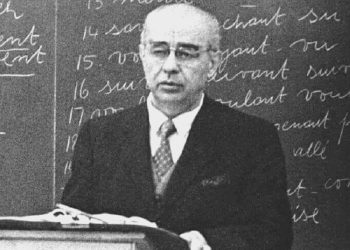
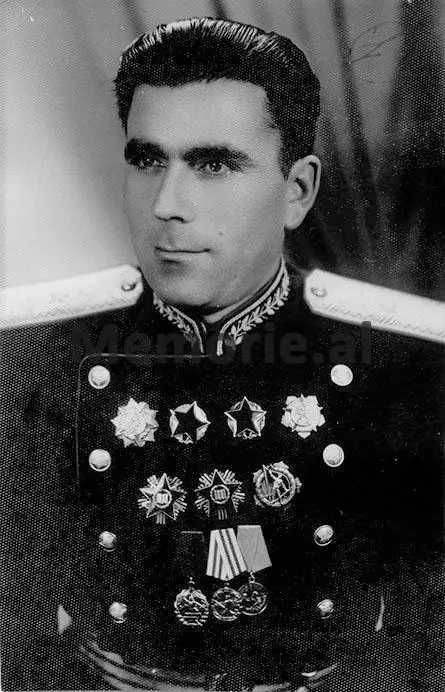
Memorie.al / During the 17 years of serving his sentence in the prisons of the dictatorship, the man-legend on the threshold of two eras read and summarized 96 works by the most renowned authors of world and Albanian literature. Within the Calvary of suffering over 16 years, 3 months and one day spent in the prisons of the dictatorship, there is also included a notebook of notes, a “rare treasure” of the Hero of the People and Honor of the Nation, Lieutenant-General Rrahman Parllaku. An arithmetic notebook from a distant time, yellowed by the weight of years, codified as “Notes from books read during the years of suffering of the sentence in prison, December 16, 1974 – March 17, 1991,” within 32 pages utilized to the maximum, line by line, carries special values, inextricably linked to the formation of the Hero-legend, on the threshold of two eras.
To be continued in the next issue
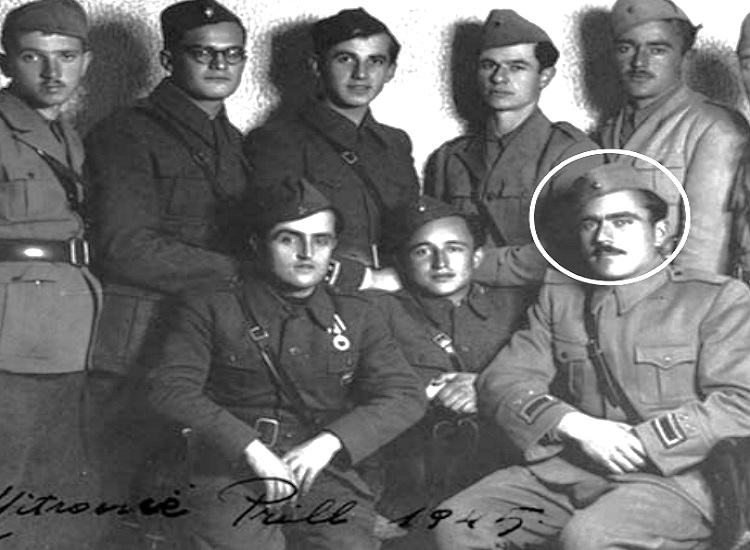
Rrahman Parllaku, as one of the legendary commanders of the Anti-Fascist National Liberation War, who led with rare talent and bravery, from the guerrilla units of Vlorë all the way to the 5th Assault Division that fought heroically for the liberation of the lands of former Yugoslavia, in Kosovo and up to the Sanjak, General Parllaku would undoubtedly be drawn to the literature dedicated precisely to the ANLC (Anti-Fascist National Liberation War). In his interesting notebook, alongside summaries of dozens of novels, we also find that of the work “Through the Annals of English Diplomacy” by Arben Puto, about which he has noted:
“Based on documents from the Foreign Office, the author describes the plans of the English government in its policy towards the National Liberation War of our people, through which it sought to increase its influence and steer it into the channels it desired. Even after the establishment of people’s power, in the first years after liberation, through its people, it made continuous pressures, even provocations, for our government to submit to its dictates?!”
Considering General Parllaku as a strategist formed in leading the Anti-Fascist War and in directing the Albanian army for 30 years, from this notebook of his it is not difficult to ascertain that he was drawn to literature dedicated to the historical battles of our people for freedom and national independence.
Therefore, it is no coincidence that the longest entry in this notebook belongs to Fan S. Noli’s book, “The History of Skanderbeg,” where we find listed chronologically almost all the battles, councils, and most pivotal events of the life and work of our National Hero, Gjergj Kastrioti Skanderbeg. Regarding these, as well as dozens of masterpieces of world literature, he had the “fortune” to discuss them also with representatives of the Albanian intellectual elite, such as:
Fadil Paçrami, Todi Lubonja, Vaske Gjino, Gjergj Titani, Lipe Nashi, Agron Çomo, Nevruz Demiri, Maqo Çomo, Bardhyl Belishova, Xhavit Qesja, Gjin Marku, Sadik Bekteshi, Arif Hasko, Muhamet Prodani, Abaz Fejzo, Halim Ramohito, Spartak Ngjela, as well as dozens of other fellow sufferers in Burrel prison. For today’s generation and generations to come, this notebook, with its rare archival and museum values, is a testament in words.
THE GENERAL’S TESTIMONY REGARDING THE SPECIFICS OF READING IN THE PRISONS OF THE DICTATORSHIP
Regarding the specifics of reading during the time in prison, but also now at the age of 98, General Parllaku has a surprising testimony. Surprising for the way he obtained books, but also for the time and conditions in which he read. Without further ado, here is his testimony about this particular specificity: “I spent my time in prison mainly reading.
I read whatever I could find in the library. I read works by our writers, from the most famous to the most ordinary, novels, short stories, poetry, history books; I just wanted to have something in my hands. When we were in Tirana, there was no library.
There was a room, a storage room with books. I asked to be allowed to organize them on shelves, according to genre, so that I could more easily find the book I wanted to read. They allowed me, and I made a certain division, which allowed me to put down the read book and take the one I desired. There were two of us in the cell. We would run out of things to talk about; during isolation in Tirana prison, we were only given “Zëri i Popullit” (The People’s Voice) to read.
We would read it and make some comments. But the rest of the time had to be filled, because even meditation was limited. Only reading filled the time. In Burrel prison, the situation was different. There, all the press arrived, newspapers and magazines; there was a library, although even there the books were limited, mainly by our writers.
But one could also find books translated from foreign writers. There, one had the opportunity to order and buy books, if one’s pocket allowed. Of course, only censored books were allowed. In the cell, there was reading, while during the two hours of yard time, I wouldn’t stay a minute in one place. I just wanted to move with a brisk pace. Even when it rained or snowed, I wouldn’t stop moving. Everyone else would go inside, and only the guard policeman would remain with me in the yard.
To withstand the snow, rain, and mud that formed there, my family had brought me a jacket, rubber boots; my sister-in-law had sewn me a cape made of plastic material like the military ones with a collar. Equipped with these clothes, I continued my movement in all kinds of weather, never separating myself from reading books.
But even inside the cell, on the wooden bed planks, several times a day I would loosen my limbs with gymnastic exercises and then continue reading the next book. Reading has been and remains a rule of my life. Even now, at the age of 98, I read at least one book a week. Likewise, movement, where even now as I approach a century of life, I walk on foot for at least an hour a day.”
Therefore, it is no coincidence that precisely he, the master of reading and benefiting from books, but also the author of two impressive books for thousands of readers, actively participates in several book promotions of various authors, and even speaks with competence and professionalism about their values.
NOT ONLY A READER, BUT ALSO A PRODUCTIVE CREATOR
The above testimony, as well as almost all of his military and civil activity, Lieutenant-General (ret.) Rrahman Parllaku will summarize in three books of memoirs. As a living encyclopedia, he brings events and facts not previously evidenced, which can serve as a source for Albanian historiography.
This is evidenced by his two published books: “Gratitude to the Vlorë families who kept me as their own son” and “Free Kosovo, the dream of my life,” publications appreciated also by renowned academics, such as Prof. Dr. Paskal Milo, Prof. Dr. Pëllumb Xhufi, Prof. Dr. Ana Lalaj, Dr. Bujar Leskaj, Dr. Auron Tare, etc.
The conclusion drawn from these two dignified publications by General Parllaku is that “our people, of 1 million inhabitants, within the framework of the Anti-Fascist Alliance of the peoples of the world led by England, the former Soviet Union, and the United States of America, gave a precious contribution to the Anti-Fascist National Liberation War.”
This, according to him, is due to the fact that the Albanian National Liberation Army, through its war for the liberation of the country, kept engaged in battle numerous Nazi-fascist forces, totaling up to 10 divisions, and inflicted upon them tens of thousands of killed, wounded, and prisoners of war. “Had these forces not been engaged on the Albanian front, they would have fought elsewhere against the allied armies.
With the Anti-Fascist National Liberation War for the liberation of the homeland, with the war for the liberation of Kosovo, with the war of the two Albanian divisions on the territory of former Yugoslavia for the liberation of Montenegro, the Sanjak, and Bosnia, and with the strikes against the forces of Army Group E in retreat from the Southern Balkans, the Albanian army in World War II dignifiedly ranked Albania alongside the most powerful states of the world that fought against Nazism-fascism.
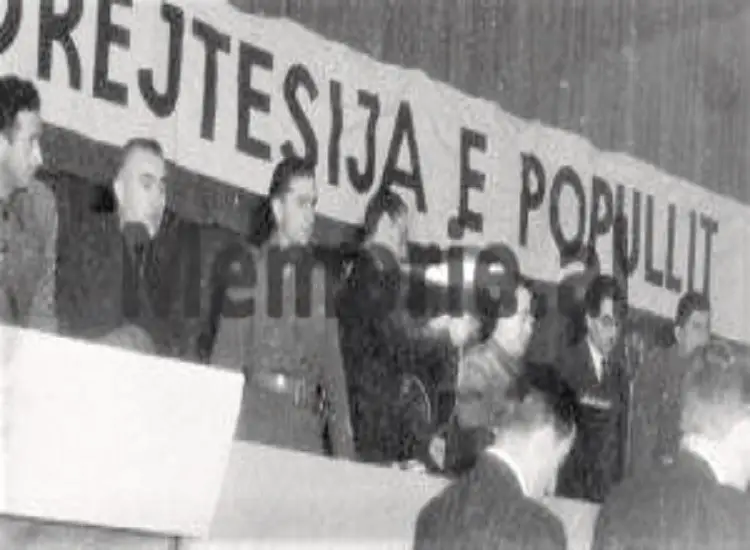
On the day of victory over Nazism-fascism, Albanians felt proud when the national flag flew proudly alongside the flags of the victorious states,” expresses General Parllaku. Meanwhile, regarding the values of the books in process, even the memories from the time when he was elected deputy for Luma in the first legislature of the first pluralist parliament are sufficient.
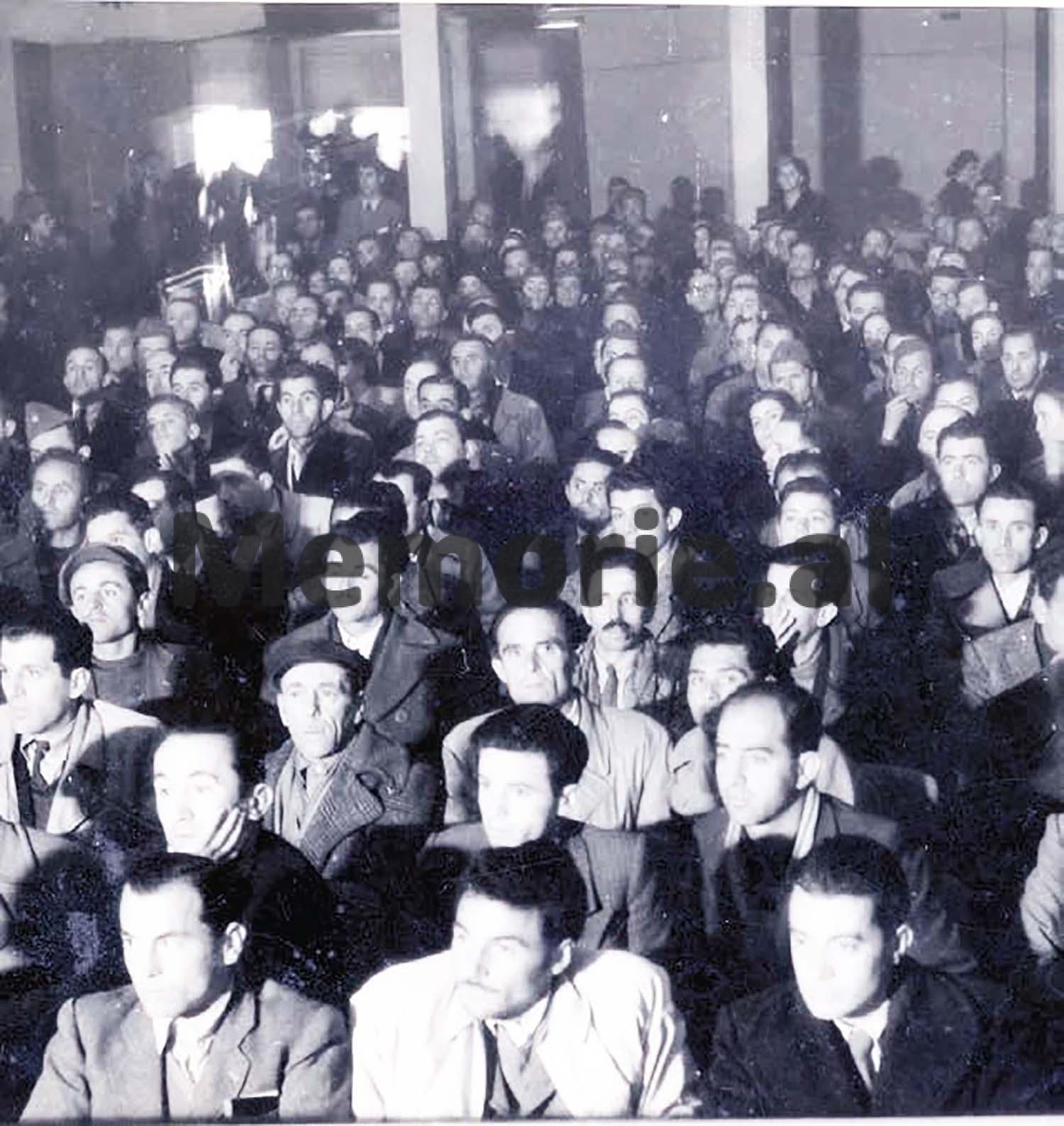
“The parliament consisted of intellectuals, people of different faiths and social strata, and generally included participants of the Liberation War, but also figures uncompromised with the enemy during the war. The parliament continued its work intensively, as the basic laws of the state were being worked on.
Fierce debates were held on the content of the laws, related to the reforms undertaken in all directions, especially in the economy,” emphasizes General Parllaku. He further continues that the voices heard most in parliament from the Party leadership were Sejfulla Malëshova, Nako Spiru, Ymer Dishnica, Shefqet Beja, Riza Dani, Gjergj Kokoshi, Andrea Sahatçi, etc. General Rr. Parllaku, as the historical memory of the nation, brings freshly to his memory the functioning of the Albanian legislature of 1945.
“There were also discussions about the form of the laws. Aleksandër Xhuvani demanded the formulation of each law in the Albanian language and when he found errors, he debated with Professor Kostaq Cipo regarding the linguistic revision of the law. As Professor Xhuvani constantly emphasized, the laws had to be precise both legally and linguistically, that is, they had to be Albanian in both content and form.”
In General Parllaku’s book currently in the publication process, we find the liberal stance of Sejfulla Malëshova in parliament towards other political forces, as he had acted during the war, to bring them closer to the National Liberation Front and involve them in the war against the occupier.
He condemned in harsh tones both extremism and terrorism at the Communist Party Plenum, held in Berat, in November 1944. Even in parliament, Sejfullahu was not for radical economic reforms. He showed this from the drafting of the first law on agrarian reform, where he spoke out against the party’s demands for extreme reforms.
Unfortunately, a good part of these reforms were revised and changed after Sejfullahu’s condemnation at the February plenum of the Party Central Committee. After the condemnation of Sejfullahu’s (opportunistic and liberal) line, General Parllaku asserts that the opposition in parliament was also struck. The oppositionists were labeled as representatives of reaction in the Albanian parliament.
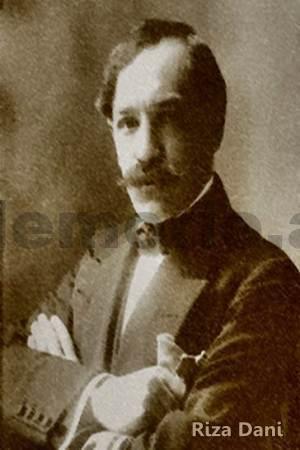
“I was sitting in the parliament hall among my friends, Riza Dani and Zija Dibra, whom I had myself proposed as candidates for deputies of Shkodër, and I was stunned when Riza Dani was directly accused from the parliament podium of representing the reaction in parliament. Riza jumped to his feet and responded vehemently: I, Riza Dani, represent the reaction here?!
Riza Dani, a representative of the democratic movement in Albania, a member of KONARE (National Revolutionary Committee) in exile, a participant in the Anti-Fascist War, and Chairman of the National Liberation Front in the Prefecture of Shkodër, is defending democratic rights in this parliament, not those of the reaction!”
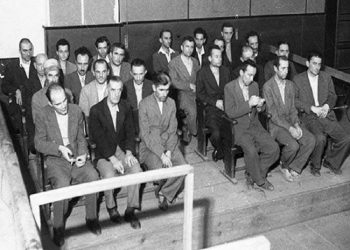
Even though 62 years have passed, General Parllaku still hears the words of Riza Dani ringing in his ears. He vividly recalls that fatal moment, because at the moment he came and sat among them, the general, as well as Zija Dibra, felt very bad and were left speechless. This was because Riza Dani, one of the finest representatives of the intellectual elite of that time, was being accused, and later the worst would come – the sentences and executions of the Group of Deputies.
Viewing from a temporal distance the crimes committed by the dictatorship, the author of these memoirs, which will soon see the light of publication in three volumes, expresses his conviction that they are an act of his national pride, as they not only shed light on the most monstrous crimes but are also a courageous distancing and condemnation of them. / Memorie.al