By ANTON PAPLEKA
Part Two
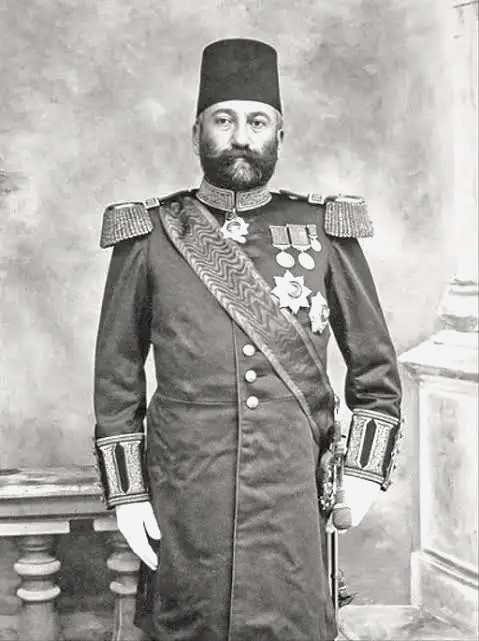
Memorie.al / Official publications to date show that Albanian historiography has not reflected with scientific objectivity the resistance of the population of Nikaj-Mërtur against the military expedition commanded by General Shefqet Turgut Pasha in 1910. In the text “History of Albania,” for secondary schools, Tirana, 1973, this event is written about in a general and cursory manner: “After the fall of the Kosovo uprising, the Turkish army corps, under the command of Shefqet Turgut Pasha, crossed in July into the vilayet of Shkodra to carry out there as well the disarmament of the population and the conscription of soldiers.”
Regarding this fact, Pal Duka-Gjini writes: “For three straight days, the battalions of the attacking army remained without regular bread. They remained without bread because Mehmet Shpendi with Shala had cut off their road and with their own invincible weapons gave them no rest day or night.” In the first days of July 1910, Bedri Pasha, the vali of Shkodra, had summoned to his headquarters the standard-bearers and leaders of Dukagjin, whom he had advised not to oppose the passage of Shefqet Turgut Pasha’s army through their territories. At the end of the meeting, he had given each of them a white mexhite (turban) for their heads.
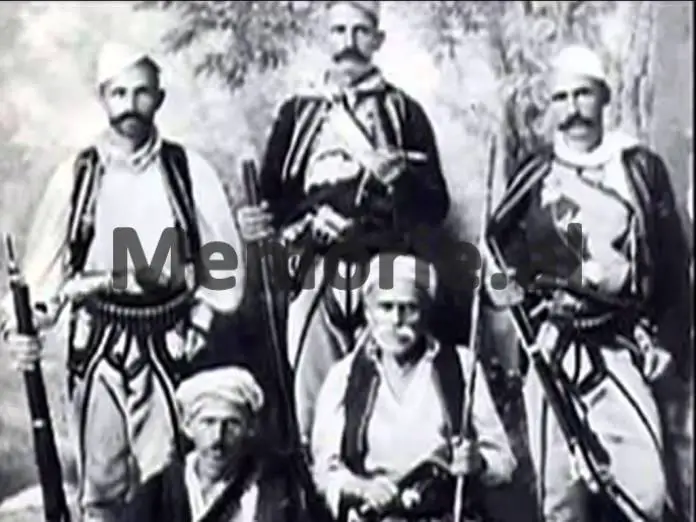
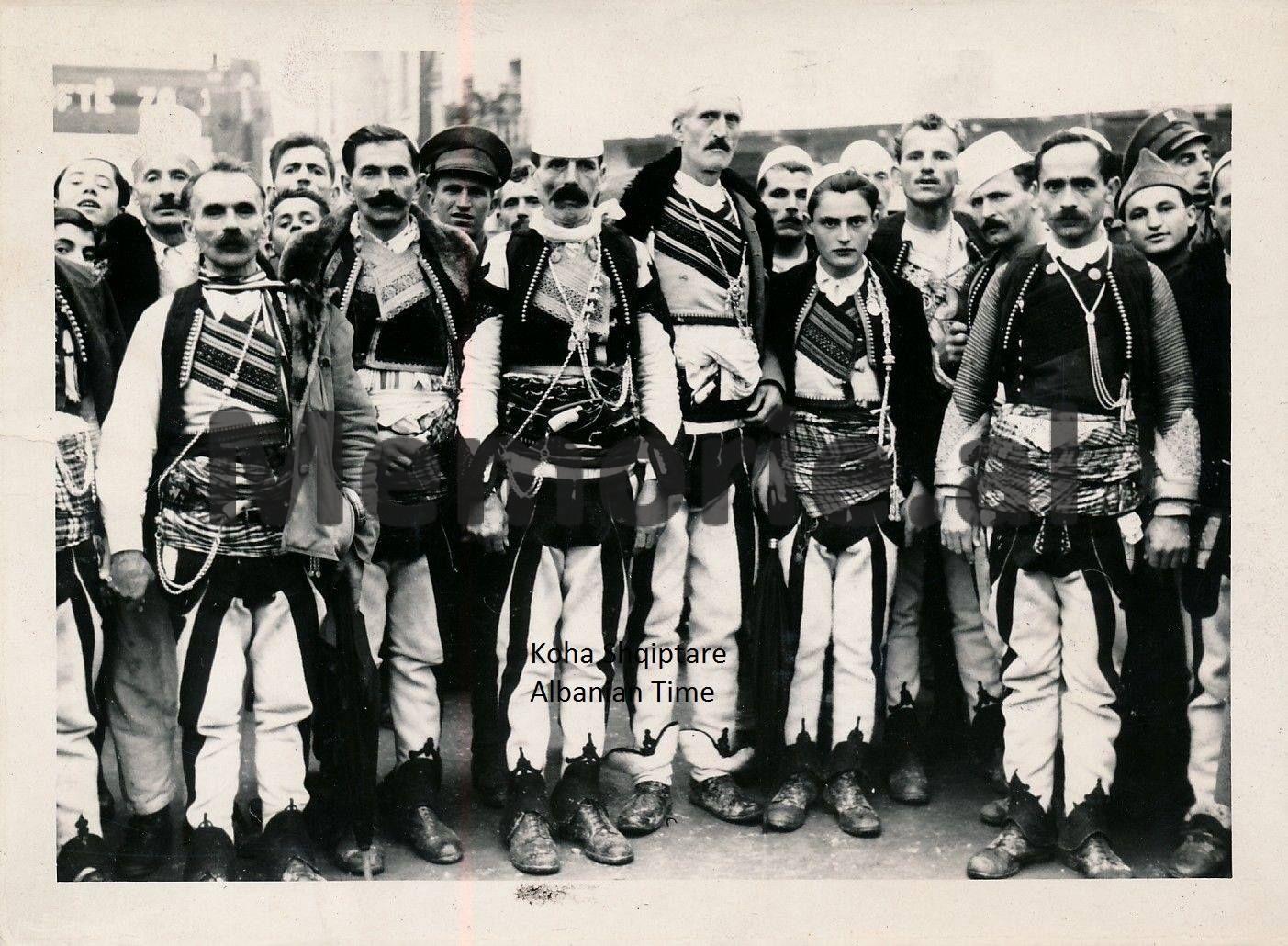
Upon the leaders and standard-bearers’ return from Shkodra, the call to arms had been sounded in Dukagjin for every able man to gather, to go out and meet Shefqet Turgut Pasha and not allow him to do in their region what he had done in Kosovo, in Gash and in Krasniqe. Gathered at the Church of Abat, the men of Dukagjin had sworn an oath (bessa) that unless they were left without women and without children (i.e., until all males were wiped out), they would not allow the foreign army to pass through their lands. Those who were fit for war had taken up arms, axes and mattocks, had seized the paths at the passes and ravines, had cut down trees to block the passage of cavalry, and had dug trenches, pits, and entrenchments.
The forces capable of fighting were positioned in several locations: the young men of Theth had taken Qafa e Pejës (Peja Pass) and Qafa e Valbonës (Valbona Pass); Lugu i Ndërmajnës (Ndërmajna Valley) was guarded by Lekaj, Abat, Pecaj, Vuksanaj, and Pjoll; Qafa e Agrit and Qafa e Agrorit (Agri and Agrori Passes) were defended by Gimaj, Nënmavriq, Lotaj, and Plani; at Qafa e Brashtës (Brashta Pass), Shoshi had set up ambushes; at Qafa e Shterziqes (Shterzica Pass), fighters from Toplana and Dushmani stood. The men who remained day and night in positions were supplied with food by their women.
In the letter that Father Cyril Cani, the parish priest of Shala, wrote on July 14, 1910, to Father Camillus Libardi, the parish priest of Shosh, among other things it is stated: “The people of Shala have decided to be torn to pieces and to stand for the Homeland with every sacrifice; but I fear they will not be able to hold out for long, since the places for resistance have a very open front and, therefore, they must be scattered in different positions: in Ndërmajna, in Agri and Agrori, and what is worse, they have only little food. Yesterday there was a great fright when they bombarded without reason, endangering many lives. Nothing is heard from all sides but the call to arms…”
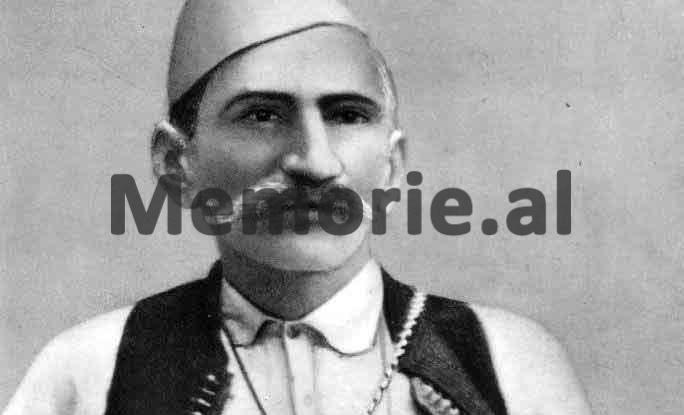
For the organization of the resistance of Dukagjin, the main merit belongs to the great hero Mehmet Shpendi. This is also reflected in the historical epic: “Mehmet Shpendi steps to the fore,/ His rifle crackles,/ He shouts to his lads:/- Fall in, lads, at this entry point,/ Because the young lads are being taken as soldiers;/ They demand redifs and mustafes,/ They demand irregulars and demand tithes,/ They demand tithes and demand regulars,/ But they cannot give them,/ They have gone out to those gorges,/ To those gorges as leaders,/ The rifle crackles with men!”
There is no doubt that participation in this armed resistance against the military expedition of Shefqet Turgut Pasha was broader than has been presented in some writings published to date. According to Lulash Palushaj, while fighting with Prelë Tuli, at Qafa e Agrit, three men from Malësia e Madhe were killed and wounded: Kolë Marash Vata, Zef Lani, Gjon Pllumi…!
The armed highlanders, who stood in the gorges and on the cliffs, made surprise attacks against the Ottomans, killing them to seize their modern rifles (Mausers) and ammunition. These incessant strikes, the insecurity they felt in that narrow valley, surrounded by harsh mountains that seemed at any moment ready to fall upon their heads, weakened the hearts of the foreign soldiers: “Oh Pasha, may you be hanged,/ Why did you lead us to Palç and Salcë,/ They will not let a single one of us out alive!”
Shefqet Turgut Pasha was informed that deep within the unknown mountains rising before him, thousands of fighters had set up ambushes, sworn to die with weapons in hand. To avoid any possible rout, he became convinced that it was more advisable to abandon the continuation of the march through Dukagjin. After fighting that lasted twenty-two days, circumstances forced him to make one of the most difficult decisions of his military life: to give the order to withdraw.
The monster that had surged from Anatolia gathered its limbs and claws, then rushed toward the Drin, as if wanting to wash away in its current the bloodstains it had spilled everywhere it had stepped. After crossing the Drin ford, the Ottoman army cut through the mountains of Puka and approached Shkodra.
As soon as the roar of cannons and the crackle of gunfire died out, silence fell over the valley of Nikaj-Mërtur. Again people could speak and laugh freely in their villages. They could even sing with the lahuta or the çifteli. And it was natural that the chief song of that time should speak of the repulsion of the Ottoman army:
“In Gjakova the wire is being strummed,/ To Istanbul the news is going,/ The news goes to the seven kings:/- I could not trample this Albania,/ I could not trample this race of slaves,/ Neither the rifle frightens me, nor the cannon!/ I fire with cannon, they catch the shell,/ To the machine gun they say ‘backfire’…!”
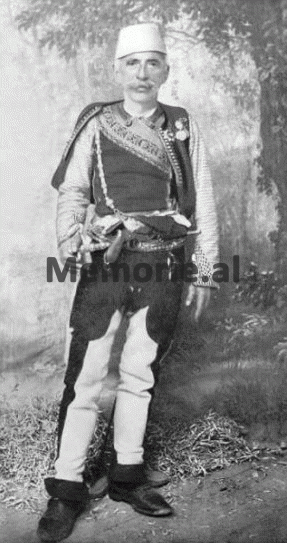
The call to arms for freedom would summon the people of Nikaj-Mërtur to new battles, such as the uprising of the Northern Highlands in 1911. In the book “The Highlander Sings,” Gjergj Hasanaj writes: “The highlanders, led by Dedë Gjon Luli, assisted by the highlanders of Shala, Shosh, Nikaj, Mërtur, and Krasniqe, decided not to obey the orders of the vali of Shkodra regarding the payment of taxes and the surrender of weapons.”
Among the nineteen tribal leaders participating in the uprising, who signed the document drafted and approved in Gerçe on June 12, 1911, appear the name of Bashë Bajrami, standard-bearer of Nikaj, and that of Bekë Delia, standard-bearer of Mërtur.
The freedom-loving spirit and the desire for progress drove the inhabitants of Nikaj-Mërtur to respond en masse to the call of the uprising that broke out in 1912. In a letter that Sali Hidri (Hoxha) sent to Ismail Qemal Vlora, it is stated: “At dawn, the voivode of Mërtur, which comprises 600 households, Prelë Tuli, together with the standard-bearer, came and informed me that 500 patriotic men were marching toward Gjakova by another, shorter route.”
During the bloody battles that took place in Çabrat of Gjakova, on May 12, 1912, the heroic act of Mic Sokoli was repeated. Seeing that an Ottoman cannon was causing great losses to the insurgents, the brave man from Nikaj, Ndue Zenel Paplekaj, shouted: “Leave that cannon to me,/ Dead or alive I will silence it!”
Unable to erect monuments of marble or bronze, the heroes who fell for the homeland were immortalized by the highlanders in the bronze of epic verses: “Ndue Zeneli was a brave man,/ He faced the cannon’s breath./ Ndue threw himself into the cannon’s mouth/ Like lightning amid the gunpowder’s flame.” In the battle of Çabrat, Ramë Ndou (Rrahaxhi) from Raja of Mërtur was also killed.
The insurgents from Nikaj-Mërtur took part in the fighting and marches that continued all the way to Skopje, which influenced the toppling of the Ottoman Empire and the creation of the independent Albanian state.
The contribution given by the inhabitants of Nikaj-Mërtur in these great events or in other important ones best demonstrates that their resistance against the military expedition of Shefqet Turgut Pasha in 1910 was not an isolated, accidental episode, but was a living testimony of their indomitable spirit, of their readiness to sacrifice themselves to protect personal and national dignity. / Memorie.al