
By Sheradin BERISHA
Part One
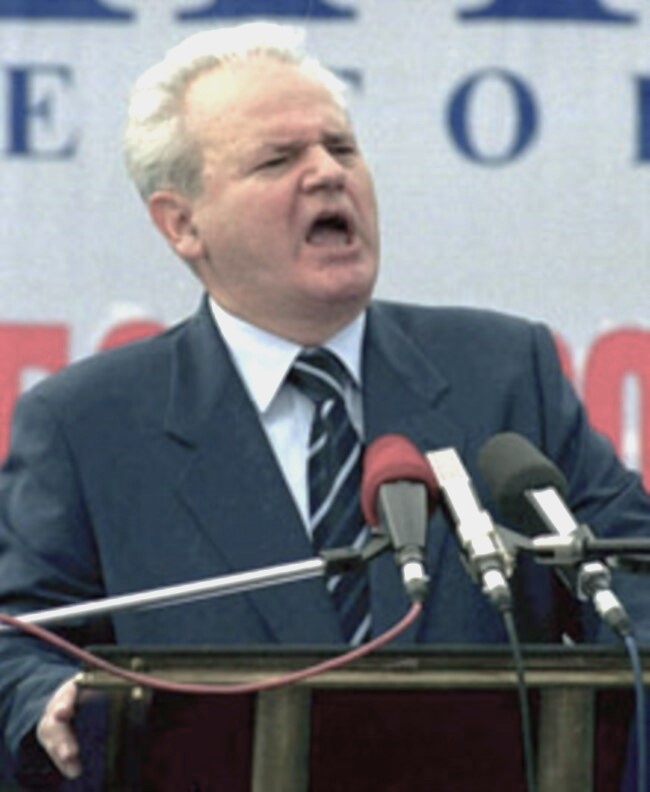
Memorie.al / It is well known that during the war in Kosovo (1998-1999), Serbia engaged a broad superstructure of military-police forces…, against the Albanian people and the Kosovo Liberation Army. These forces constituted a complex combination of special police structures of the Ministry of Internal Affairs of Serbia, special military units of the Serbian Army, numerous paramilitary units, as well as a spectrum of other volunteer forces that came from former Soviet countries such as: Russia, Belarus, Ukraine, then Romania, etc., etc. And this entire criminal superstructure had only one common commanding head, and that was the arch-criminal (read: the arch-gravedigger of Kosovo) Slobodan Milosevic.
To argue the involvement of this superstructure in criminal activities and as such with genocidal dimensions, I will refer below to a report by the organization “Human Rights Watch.” In the October 2001 report, this research (fact-gathering) organization on crimes in Kosovo writes: “The Yugoslav Army had overall command during the period of NATO bombing. According to law, it had under its subordination the police and paramilitary forces, although senior officials in the Serbian Ministry of Internal Affairs evidently exercised significant influence during the campaign.
The Army controlled the main roads and borders, thereby coordinating and facilitating ‘ethnic cleansing’ (in Kosovo). The police and paramilitary forces were involved more directly in the expulsion of civilians and the destruction of villages, for which they had the support of the army’s artillery (Serbian – my observation). During these operations, men were separated from women and children to be questioned about the Kosovo Liberation Army and were executed on the spot.”
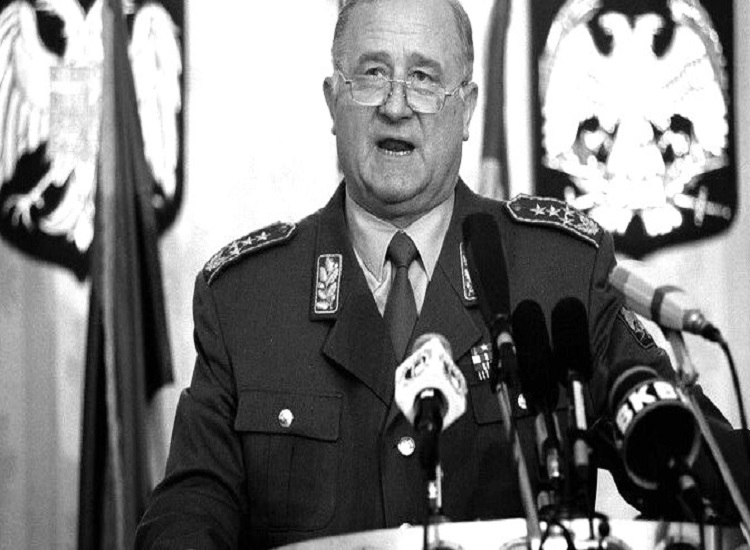
According to this report, the Serbian Army was under the full control of the Supreme Defense Council, composed of the presidents of Serbia, Montenegro, and “Yugoslavia,” and chaired by the Yugoslav president Milosevic. The Chief of the General Staff of the Serbian Army during the war in Kosovo was General Dragoljub Ojdanić. After the end of the war, Ojdanić would be appointed Minister of Defense of the FRY, and he remained in this post until October 2000.
What was the Serbian military structure during the war in Kosovo?!
The Serbian Army (in its entirety) consisted of three so-called armies, and of them the Third Army was the bearer of responsibilities for the war (1998-1999) in Kosovo. Strangely, even during the re-occupation of Kosovo (Vilayet of Kosovo) in October 1912, the Serbian government headed by the radical Nikolla Pashiq and King Peter Karagjorgjeviq engaged the Serbian Third Army headed by the infamous General Bozhidar Jankoviq (leader of the Serbian chetnik organization “Narodna Odbrana”).
While in 1912-1913 the commander of the Serbian Third Army was General B. Jankoviq, in 1998-1999 the commander of the same Third Army was General-Colonel Nebojsha Pavkovic. Meanwhile, the commander of the Pristina Corps, which constituted the military superstructure of the Serbian Third Army in Kosovo, was General-Major Vlladimir Llazareviç. The Pristina Military Corps (according to the “Human Rights Watch” report) consisted of: five brigades, a military police unit, and an aviation regiment.
What was the structure of the Ministry of Internal Affairs of Serbia (MUP) during the war in Kosovo?!
During the war in Kosovo, the structure of the Ministry of Internal Affairs of Serbia (Ministarstvo Unutrashnjih Poslova, or as it was briefly called MUP), was led by Minister Vlajko Stojiljkoviç.
Within the Ministry of Internal Affairs of Serbia were part of the regular police of Kosovo, commanded by Streten Lukiç; Special Police Forces (Posebne Jedinice Policije, or PJP) which were commanded by Gen. Lt. Obrad Stevanoviç, and the Anti-Terrorist Forces (Specijalna Antiteroristiçka Jedinica, or SAJ), which were commanded by Colonel Zhivko Trajkoviç. Meanwhile, the head of the Public Security sector in the Ministry of Internal Affairs was General Vlastimir Gjorgjeviç…!
The Ministry of Internal Affairs of Serbia also had the security service (secret police), the UDB, which was undoubtedly the eye and ear of the Serbian occupying regime in Kosovo. Until January 2001, at the head of the state security of Serbia was General-Colonel Radomir Markovic, while the head of the Serbian State Security (UDB) in Kosovo during the war was Mr. David Gajiç.
The Serbian secret service UDB, in order to uncover the activity of the KLA, recruited Albanians into its ranks as well. This infamous service in Kosovo also deployed the so-called “special operative unit,” the JSO (“Jedinica za Specijalne Operacije”), which assisted in various forms the criminal paramilitary units, known as the “Red Berets” or “Frenki’s Boys” (a designation taken from Frenki Simatovic, a key personality in the Ministry of Internal Affairs, and known as the founder of this group).
During the war, this special unit “JSO” was commanded by Milorad Lukoviç, known by the nickname “Legija.” Who designed the operation codenamed “Horseshoe” and which Serbian military and paramilitary forces took part in the realization of this exterminating operation for Albanians?! The operation codenamed “HORSESHOE” was designed by the Staff of the Yugoslav (Serbian) Army and was then approved by the political leadership headed by Slobodan Milosevic.
This project was based almost entirely on the anti-Albanian platforms designed as early as 1844 by Ilia Garashanini “Naçertanija” and up to the “Memorandum” of the Academy of Sciences of Serbia,” the creator of each being the Serbian academic Dobrica Qosiç.
The “Horseshoe” operation is planned to be implemented in three phases:
-The first phase was envisaged to be carried out during the month of January 1999, and its purpose was ethnic cleansing of the Albanian population from the northern part of Kosovo.
-The second phase was planned during the month of February to include the central part of Kosovo, namely Drenica and the surrounding regions, where in addition to killings and expulsion of the Albanian population, it also aimed to destroy KLA units.
-The third phase during March and April 1999, aimed to realize the ethnic cleansing of Kosovo. For this purpose, it opened two border crossings, the one with Albania at Qafë e Morinës and with Macedonia at Bllacë.
In the “Horseshoe” operation, in addition to the Pristina Corps, large forces from Serbia and Montenegro also took part, such as: the 21st Corps of Nish composed of the 211th Armored Brigade (Nish) consisting of 1258 troops, 75 tanks, 13 cannons and 4 RBVs, the 150th Brigade of Vranje consisting of 1300 troops, 72 cannons and 12 RBVs, the 78th Motorized Brigade of Vranje consisting of 1316 troops and 31 tanks, the 2nd Brigade of Nish consisting of 1600 troops and 10 tanks, the 175th Brigade of Leskovac consisting of 1600 troops and 18 tanks, the 4th Motorized Brigade of Pirot consisting of 1600 troops, 31 tanks and 18 cannons, the 352nd Engineering Unit of Prokuplje of 1000 troops and the 85th Logistics Unit of Nish consisting of 1000 troops.
The 37th Corps of Uzhice with the 37th Motorized Brigade of Rashka which had at its disposal 1695 troops, 31 tanks and 18 cannons and the 19th Brigade of Pozhega consisting of 1600 troops and 18 cannons. In Kosovo had also arrived the 24th Corps of Kragujevac, which consisted of the 80th Brigade of Kragujevac with 1600 troops and 18 cannons, as well as the 12th Corps of Novi Sad which in its composition had: the 18th Brigade of Novi Sad which in its composition had the 18th Brigade of Novi Sad with 1600 troops and 18 cannons. (See newspaper “Zëri,” 25 May 2005, p. 21-22 and “Koha ditore,” 31 December 1999, p. 11)
In Kosovo was also stationed the First Army of Belgrade, which in its composition had: the 252nd Armored Brigade of Kraljevo, with 1121 troops, 82 tanks, 12 cannons and 4 RBVs. Here was also the special Corps of Belgrade with the First Armored Brigade, the 72nd Special Brigade and the 63rd Paratrooper Brigade. The first had 1184 troops, 112 tanks, 12 cannons and 4 RBVs, the second had 1189 troops, while the paratrooper one had 460 troops. To go to Kosovo, the 2nd Corps of Podgorica was also engaged, in which were part of: the 5th Motorized Brigade with 1478 troops and 31 tanks. The 1st B/4 Alpine Brigade of Kollashin with 350 troops and the 4th Military Police Brigade of Podgorica with 359 troops. (ibid.)
Plan 1 + Plan 2 of Operation “HORSESHOE”
In addition to the above-mentioned military forces, in the operations in Kosovo, the most important and supporting pillar of the regime of the gravedigger Slobodan Milosevic was led by the special police forces, which forces from the beginning of the war had carried out ethnic cleansing operations in Kosovo. The commander of the special police forces in Kosovo (as we emphasized above) was Major General Sreten Llukiq.
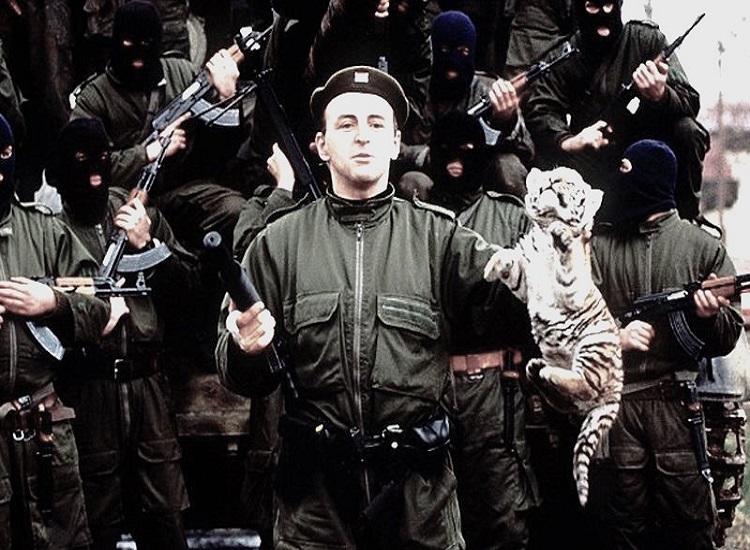
During this infamous operation, various Serbian paramilitary forces were also engaged, with the task of killing, burning, looting, and expelling Albanians from their ancestral hearths. Among the Serbian paramilitary units were: “Scorpions,” “Arkan’s Tigers,” “Beli Orlovi” (White Eagles) of Voisllav Sheshelit, “volunteers who came from the Serbian Republic of Bosnia and many volunteers and mercenaries who came from former Soviet countries.
Meanwhile, in the Serbian paramilitary units, all local – native Serbs and Montenegrins were also voluntarily recruited (there were also special local criminal units), who in interaction with other Serbian military-police forces carried out the most barbaric (cruel) massacres in the history of humanity against the unprotected Albanian population.
As I highlighted above, all paramilitary units were under the full control of the Serbian head of state. Many arguments speak to this fact. After the end of the war, many Serbian paramilitaries (but also foreign ones) gave interviews to various newspapers, and without hesitation declared that during the war in Kosovo, often senior officials of the Serbian army and police would give them lists with names of Albanians, who were to be executed by them!!!
Reward and promotion of criminals by the arch-criminal Milosevic!
On the eve of the end of the war in Kosovo, the Serbian head of state recorded hundreds of promotions and rewards for the personnel of the Serbian police and army, including here the highest leaders (Milosevic’s closest collaborators) such as: Dragoljub Ojdanic, Nebojsha Pavkovic, Vladimir Lazarevic, Obrad Stevanovic, Sreten Lukic, Vlastimir Gjorgjeviç, Zhivko Trajkoviç, as well as many brigade commanders in the Pristina Corps, etc.
On 7 June 1999, (only 2 days before the signing of the technical-military agreement in Kumanovo, between NATO and Serbia) the Serbian arch-criminal Slobodan Milosevic, decorated and expressed gratitude and support to 911 members of the MUP for, as he says, “the suppression of terrorism in Kosovo and for the defense of the country from aggression”!!!
Among those who were decorated, were:
Three generals,
Seventeen colonels,
Seventeen lieutenant colonels,
Twenty majors,
Thirty captains,
Forty-five lieutenants,
Thirty-seven sub-lieutenants,
Fifty sergeant majors,
Six hundred and fifty-two non-commissioned officers, and
Forty members of other structures of the Serbian MUP./ Memorie.al
Continues in the next issue