






By DASHNOR KALOÇI
Part Four
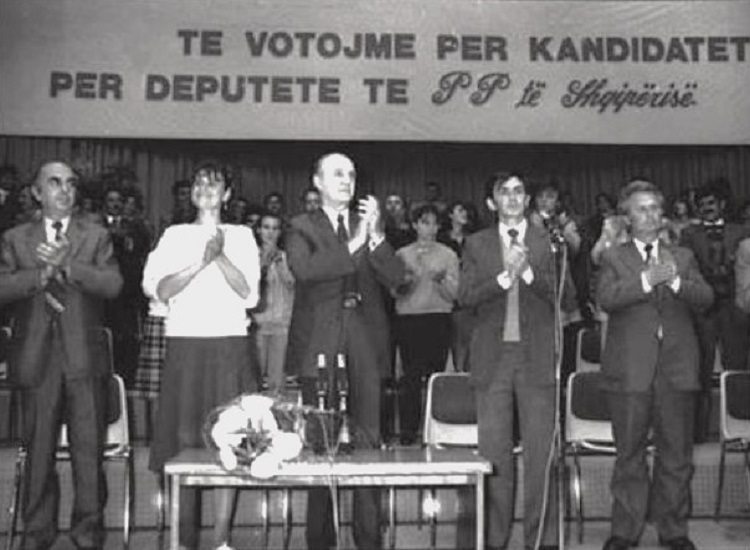
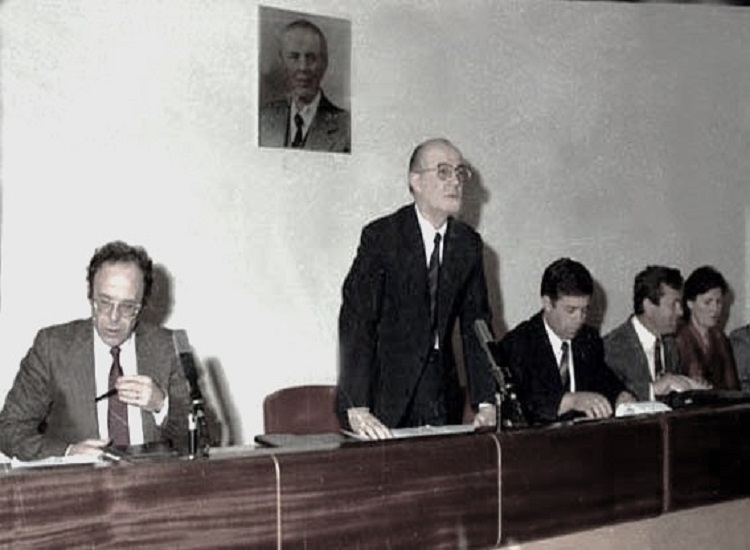
Memorie.al / Just ten days had passed since the holding of the first pluralist elections of March 31, and the two main political forces, the Party of Labour and the Democratic Party, together with their allies, which had emerged from those elections, were on the verge of opening the first pluralist People’s Assembly. On April 11, 1991, the Political Bureau of the Central Committee of the Party of Labour of Albania, led by its General Secretary, Ramiz Alia (who simultaneously held the post of Chairman of the Presidium of the People’s Assembly of the Socialist People’s Republic of Albania), held a lengthy meeting. There, in addition to the tragic events of April 2 in the city of Shkodra, which was the first item on the agenda, they also discussed the problems arising with the opening of the first session of the first pluralist Parliament. This was an extremely special event, as it was happening for the first time after 45 years of the rule of Enver Hoxha’s communist regime and that of his successor, Ramiz Alia.
As we shall see from the minutes of this meeting of the Political Bureau of the Central Committee of the PPSH, several of the most radical problems of the political drama that Albania was undergoing in the spring of 1991 were examined and discussed there. These minutes clearly reveal the behind-the-scenes machinations of the ruling communist power, led by Ramiz Alia, which was in its death throes and facing its inevitable fall, but amid bloody events such as those of April 2 in Shkodra, as well as the unknown challenges of political pluralism.
As outlined above, this archival document sheds light and illuminates three key issues that were agitating the country’s leadership dome during those critical days. The most interesting part relates to the political “architecture” that the PPSH was projecting for the new Assembly, which included 54 agronomists and 35 doctors. The discussions on the division of parliamentary commissions, the study of the Bulgarian experience, the proposal of new figures such as Kastriot Islami at the head of parliament, as well as the preparations for confronting the new opposition (the Democratic Party), clearly reveal all the efforts and démarches that the still-ruling PPSH was making, as it tried to maintain control of power through constitutional procedures and parliamentary diplomacy.
The document in question is published in its entirety, preserving all the dynamics of the speeches, the terminology of the time, and the interventions of the members of the Political Bureau, starting with its head, Ramiz Alia, and in turn Xhelil Gjoni, Adil Çarçani, Hekuran Isai, Spiro Dede, Abdyl Backa, and others.
Equally interesting are the discussions of the highest leaders of the PPSH, not only regarding the names of their own political force that they were selecting to head the government, constitutional institutions, or the parliamentary group and commissions—such as Fatos Nano, Ylli Bufi, Leontjev Çuçi, Haxhi Lleshi, Llambi Gegprifti, Shane Korbeci, Ismail Lleshi, Niko Gjyzari, Petro Dode, Fehmi Avdiu, Çun Jonuzi, Engjëll Kolaneci, Ajli Alushani, Kleanthi Koçi, Pëllumb Kapo, Bujar Kolaneci, Fatmir Minguli, Lush Përpali, Tahir Elezi, Lefter Xhuveli, Bilbil Jaupi, Agron Dibra, Hajredin Tahiri, Isuf Dautllari, Muharrem Mezini, Pavllo Bojaxhiu, Kostandin Hoxha, Sotir Kokeri, Fatmir Zaloshnja, etc.—but also regarding the opposition led by the Democratic Party. They speak and discuss specific names, such as Aleksandër Meksi, Genc Ruli, Emin Mysliu, Dhimitër Anagnosti, Petraq Kolevica, etc.
For more on this, etc., we are informed by the document in question, recently extracted from the Central State Archive of Tirana (the fund of the former Central Committee of the PPSH), which is published for the first time with the corresponding facsimiles by Memorie.al. This document in a way clearly shows all the behind-the-scenes of the Albanian transition of that period, which undoubtedly constitute some of the most important events in Albania since the creation of the state on November 28, 1912.
Continued from the previous issue
MINUTES OF THE MEETING OF THE POLITICAL BUREAU HELD AT THE MEETING OF THE POLITICAL BUREAU OF THE CENTRAL COMMITTEE OF THE PARTY
On April 11, 1991
Agenda:
- On the events of Shkodra on April 2, 1991.
- On the stance towards the demands of trade unions and the organizations and associations that are being created.
- The problems arising for the opening of the new pluralist Assembly.
(The agenda had not been distributed previously)
Comrades absent: Pali Miska, Vangjel Çërava, Xhemal Dymylja.
PROCEEDINGS OF THE MEETING
COMRADE SPIRO DEDE: For Deputy Chairman of the Assembly, we made a recommendation to those of the Democratic Party, which they received very well. I told them that we would be very pleased if the Vice-Chairman of the Presidency of the Assembly were, let’s say, Aleksandër Meksi. They took this very well.
COMRADE LLAMBI GEGPRIFTI: One of the best men they have.
COMRADE RAMIZ ALIA: Why, how do you know him, Llambi?
COMRADE LLAMBI GEGPRIFTI: I have had dealings with him.
COMRADE RAMIZ ALIA: Let they do as they please, we have our own worry.
COMRADE HEKURAN ISAI: Just a thought. But what if they do not participate in the Assembly meeting? What then?
COMRADE RAMIZ ALIA: Let’s see, let’s consider. But we have the absolute majority. We will continue the Assembly with two-thirds, we will continue all procedures; we will leave the seats empty for them. We will elect the Chairman of the Assembly and one Vice-Chairman, because the other Vice-Chairman’s seat will be left empty for the Democratic Party.
We will elect the Mandates Commission proposed from seven people, three seats remain empty: two for the Democratic Party and one for OMONIA, if they do not come either. But we must try to get OMONIA to come. In a word, we will follow all procedures and leave their seats empty. We will implement the procedures; we will continue the agenda as if they are absent for health reasons.
COMRADE SPIRO DEDE: Won’t this create a constitutional crisis?
COMRADE RAMIZ ALIA: No, not at all, as long as you have two-thirds of the deputies. A constitutional crisis occurs when you cannot approve anything (you don’t have two-thirds). But like this, if they want to participate, they can; if they don’t, let them not participate. However, when the Constitution is approved, two-thirds of the Assembly must be present.
COMRADE HEKURAN ISAI: No, I just said “what if.”
COMRADE RAMIZ ALIA: And I am telling you, “what if” they don’t come, we will act like this. We will continue the Assembly, stating that the deputies of the Democratic Party did not appear in the Assembly.
On Sunday (before the Assembly starts, which convened on April 15, 1991), our deputies must come here. At this meeting, the party bureau of the deputies will be elected, and they will be told what the procedure is.
There we will tell them that our parliamentary group will propose this and that, and on Saturday (April 13, 1991), we will also tell the Democratic Party.
COMRADE HEKURAN ISAI: Won’t we give them the position of any commission chairman, to those of the Democratic Party? They will say that you, the Party of Labour, have taken all the commission chairman positions.
COMRADE RAMIZ ALIA: We need to ask the jurists about this.
COMRADE HEKURAN ISAI: They have 30 percent of the deputies, so they should also have 30 percent of the commission chairmanships.
COMRADE SPIRO DEDE: That is correct.
COMRADE RAMIZ ALIA: Wait; don’t rush, because it’s not correct. Because there is a term for this matter; we need to ask Kleanthi Koçi.
COMRADE ADIL ÇARÇANI: If it is allowed, let it be done that way.
COMRADE SPIRO DEDE: There are 11 commissions; three could have chairmen from the DP, one from OMONIA, and seven from the PPSH.
COMRADE RAMIZ ALIA: And give one to OMONIA too? It needs thinking. But maybe we can have a vice-chairman from them. However, let’s think about it.
COMRADE HEKURAN ISAI: But won’t we give them the chairmanship of the Foreign Affairs or Public Order Commission? (No, not those, Comrade Ramiz says.)
COMRADE SPIRO DEDE: We could give them the chairmanship of the Commission for Education, Industry, and Construction. For example, Genc Ruli.
COMRADE RAMIZ ALIA: They themselves know whom they will appoint. Don’t take on the responsibilities for others! It’s strange what pleasure you have?! The important thing is whether you will give these positions or not.
Clarify this with Kleanthi and with the other jurists, how it should be properly done, Xhelil. Then we must determine which commissions we will leave to them. Where their chairman will be, our man will be vice-chairman, if they have a vice-chairman.
COMRADE NIKO GJYZARI: Until now, the commissions have been headed by: chairman, vice-chairman, and secretary.
COMRADE XHELIL GJONI: This Assembly will also elect the President.
COMRADE RAMIZ ALIA: After the Constitution has been approved.
COMRADE HEKURAN ISAI: When will the Constitution be approved?
COMRADE RAMIZ ALIA: In about two months!
COMRADE FATMIR ZALOSHNJA: We must work on the Constitution with our deputies, because otherwise they will raise issues in the Assembly later, and it will seem as if they are the opposition.
(Comrade Xhelil Gjoni will meet with the deputies on Sunday; Comrade Kleanthi Koçi will prepare for possible questions. They have all of Sunday at their disposal.)
COMRADE RAMIZ ALIA: This work cannot be done in one day; we need arguments article by article, because there will be objections to every article. (Comrade Xhelil explains that there is other work for elections in the districts, the Party Statute, etc.)
When the discussion on the Constitution begins, the deputies will need to be convened beforehand, because it will not start to be discussed on Tuesday, let alone Monday.
COMRADE HEKURAN ISAI:Will it be approved at this Assembly meeting?
COMRADE RAMIZ ALIA: At this meeting, but it depends on how long this work will last. It depends on the stance they will take. If they take an obstructionist stance, then the discussion of the Constitution could last up to two months because they will object to every word: “Why is it said that power derives from the people and belongs to the people?”
“This is a communist formula.” You will have as many of these as you like. Everything must be argued. (Specialists should stay close by to clarify things, says Comrade Xhelil.)
COMRADE SPIRO DEDE: As we have heard, usually (the Constitution) is presented with an explanation from the commission that presents it.
COMRADE RAMIZ ALIA: I will only address a letter to the People’s Assembly: “I have the honour to present to you the draft Constitution, which has been elaborated by the commission, which I chair based on the decision of the People’s Assembly.”
COMRADE HEKURAN ISAI: The Constitution has understandable points, but it also has points that are incomprehensible for the level of our deputies. There are also points that we have taken approximately or more or less from the rest of the world. These need to be explained.
COMRADE RAMIZ ALIA: There can be various proposals. Someone might say we should call the people’s council a municipality; someone might propose calling it a parliament. These will be debated in the Assembly meetings.
Anything else? (There is not.)
(Comrade Ramiz talks with Comrade Spiro, regarding the latter’s proposal to invite Bettino Craxi to come to Albania.) / Memorie.al
Transcribed the material by: K. Çupa
Date: September 20, 1991
Checked by: Elma Sherifi
Typed by: L. Xhagolli