By Albert Vataj
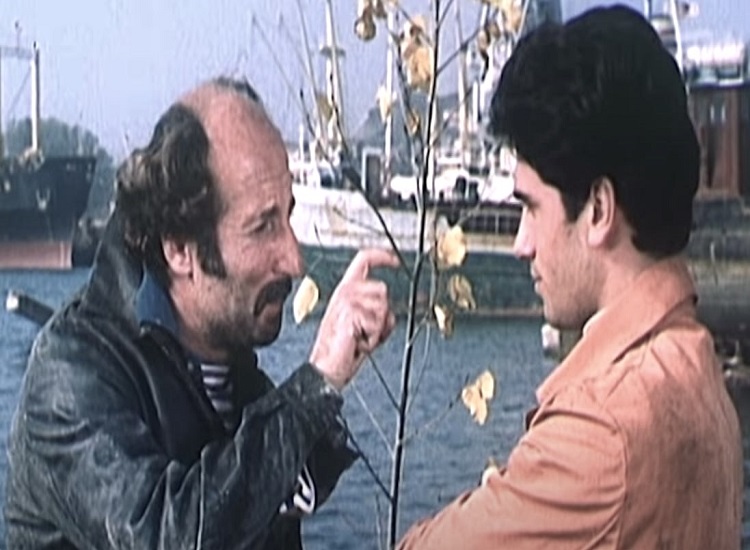
Memorie.al / On his birthday, Mirush Kabashi is not remembered as someone absent, but as a presence that continues to live in the voice, on the stage, and in the memory of an audience that loved him; an audience that experienced every moment with him and whose soul trembled from the deep vibrations, full of feeling and a surging call for awakening. Because his voice did not merely speak – it moved; it did not merely announce – it resonated. Because he had come not with the mission of an actor, but with that of a preacher of the faith of Albanianness, and he would do this with the devotion of an apostle and would defend it with that of a martyr. Because what he blessed with words he had lit in his heart, had illuminated in his mind, and had elevated to the most sacred promise to perform on stage, and everywhere he lectured like a coryphaeus before people, the missionary of the stage of art, because he believed that even the artist had words sufficient to perform his service to the homeland, the nation, and the sacred cause of freedom.
Today, on Mirush Kabashi’s birthday, he is not here to hear the applause. He will not climb onto the stage, will not recite a verse, and will not fill the space with that distinctive voice that knew how to give weight even to the simplest word. But art has a law greater than death; life may take the great artist, but it cannot take him from people’s memory.
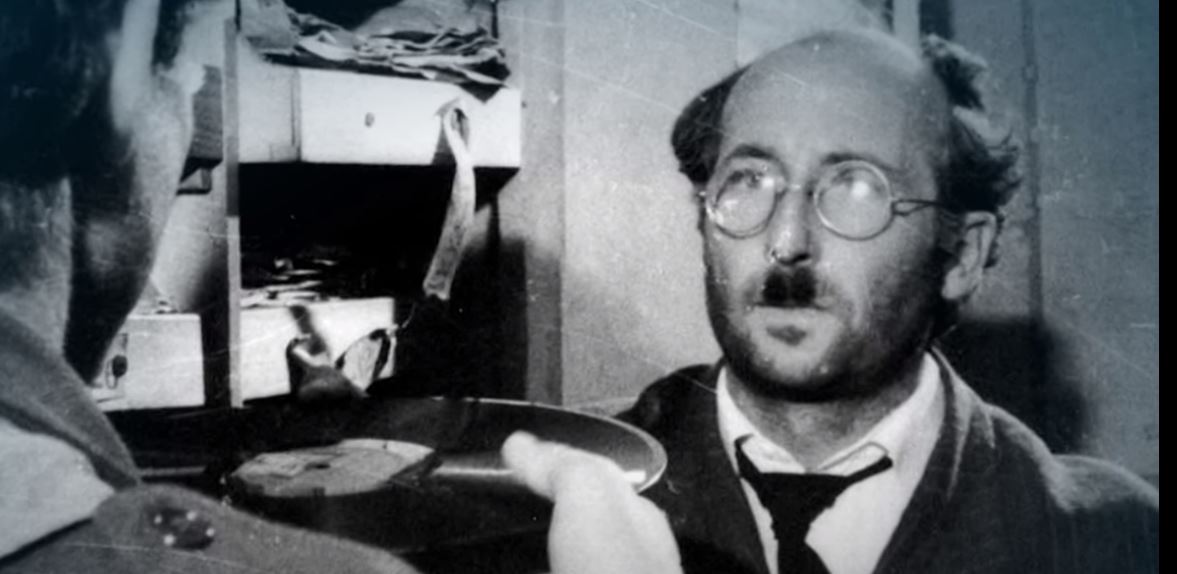
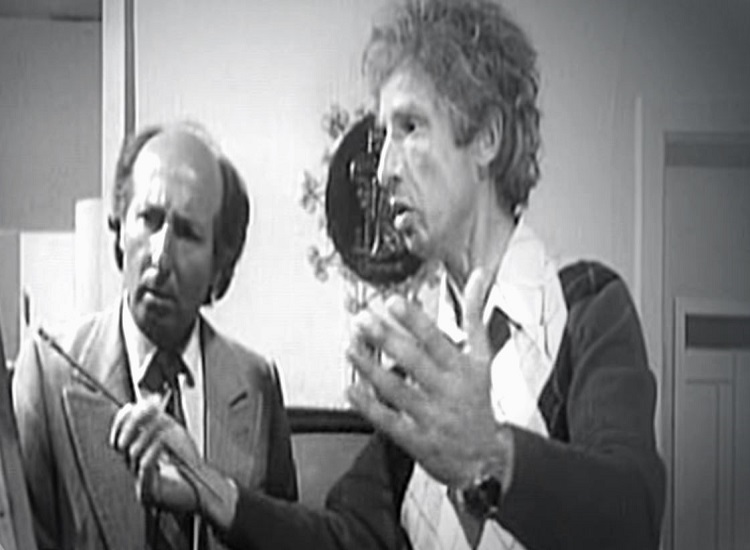
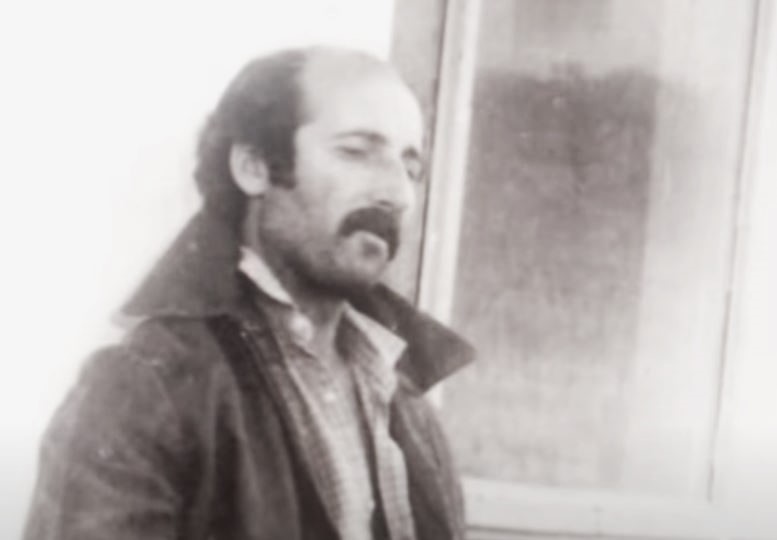
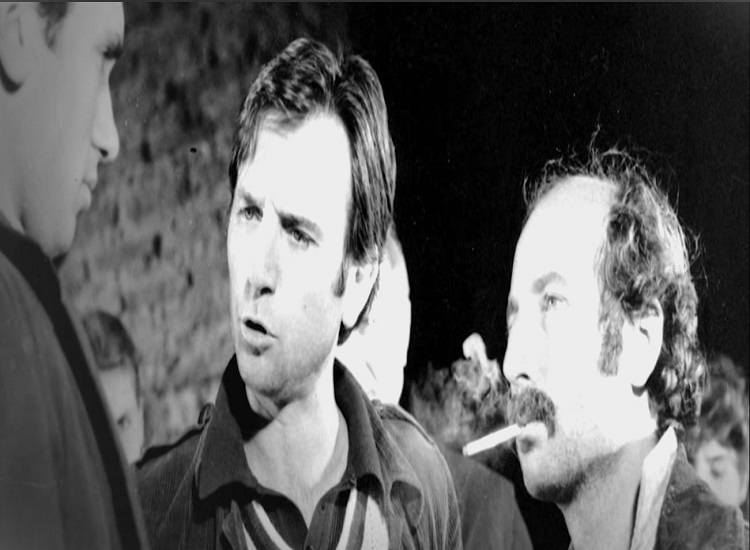
Mirush Kabashi was born on April 17, 1948, in Shkodra and grew up in Durrës. In 1970 he graduated in acting from the Higher Institute of Arts in Tirana and began an artistic journey that would last more than half a century. The “Aleksandër Moisiu” Theater of Durrës, Albanian Radio-Television, the National Theater, Albanian and international stages would become stations of a career in which he left around one hundred characters.
But the number of roles does not show the greatness of an actor. An actor is not measured by how many times he has appeared on stage, but by how many times he has managed to make the audience forget that there is an actor before them. And Mirush Kabashi had this gift.
He did not merely interpret the character. He entered inside it, sought it in the depths of human psychology, and then brought it before us with a truth that was often greater than the text. In his acting there was humor and tragedy, irony and pain, revolt and gentleness. Above all, there was the human being.
Therefore Mirush Kabashi was not only an actor; he was a voice. A voice that recited poetry and turned verses into experience. A voice that could fill a hall without needing any other decoration. A voice that knew how to laugh, to cry, to become angry, to ironize, to question and, above all, to unsettle the conscience.
In this sense, he was one of those artists who understood that the stage is not only the place where art is displayed. The stage is the place where man is judged before himself. And nowhere else did this become more powerful than in his “Socrates.” “The True Apology of Socrates” was not simply a show that Mirush Kabashi performed. Over the years, it transformed into a kind of artistic and moral identity of his.
In 1997, in an Albania shaken by crisis, insecurities, and the collapse of many illusions, Kabashi went to the Experimental Theater Festival in Cairo and was awarded the “Golden Sphinx” as the most successful performer, among actors from 46 countries of the world.
It was one of those moments when an Albanian actor stepped before the world not only to show his talent. He stepped out to prove that a small language can carry a great truth. Mirush’s Socrates was not a distant figure of ancient Greece. It was the Socrates of our time. It was the man who questioned when others were convinced.
It was the citizen who refused to sell his conscience for security. It was the artist who knew that freedom does not begin in the square, but in the mind of man. And precisely here lies the greatness of that interpretation. Kabashi did not bring us only the philosopher who defended himself before the court of Athens. He brought us the eternal trial of human conscience.
His Socrates also questioned Albania, power, politics, the citizen, the intellectual, the artist, and above all he questioned us: What value is there in saving your life, if to save it you have lost your soul?
Therefore Mirush Kabashi’s “Socrates” does not die together with the actor. It remains as a voice raised above time. A voice that will continue to accuse us whenever we replace justice with interest, truth with conformism, and dignity with fear. Mirush Kabashi belonged to a generation of artists who passed through one of the most difficult periods of Albanian history: dictatorship, transition, the fall of a system, and the long effort to find a new place for art and for man.
But he did not remain hostage to the times; he passed through time through art. Even in periods when the Albanian stage was surrounded by ideological restrictions, he preserved what is most difficult for an artist: the individuality of voice and the integrity of a disciple of the spirit who believed in the embodiment of characters and personalities, persons and identities.
In the transition years, when much turned into commerce, spectacle, quick protagonism, and noise, he continued to believe in the profession, in work, in the stage, in the audience, not infrequently also as a presenter, as the image of transmitting light in all the colors of the prism.
This is perhaps one of the reasons why Mirush Kabashi remained dear to people, a synonym of a goodness that claimed the human, from the simplicity of contradictory characters to the height of embodying lives that shone sunnily in the ether of consciousness and belonging.
Because beyond the actor was the man. And the audience always distinguishes this difference. It can be deceived by fame, by advertising, by noise, but before a true artist, sooner or later, it understands who is interpreting and who is living what he says.
Mirush Kabashi was one of those who did not need to feign greatness. It was in his work. The voice that gave longing to emigration. There is also another Mirush who perhaps has not been mentioned as much as he should be: the Mirush of poetry, of the spoken word, of meetings with Albanians outside the homeland. His voice had a rare quality – he did not read poetry, he lived it.
And when the Albanian word traveled with him to the diaspora, it took with it something more than art. It took the scent of the birthplace, the memory of childhood, the forgotten roads, the faces of people left behind.
For many Albanians far from the homeland, such a voice was not simply an actor’s voice; it was a piece of Albania, it was a piece of home, it was a memory, it certainly was and remained a longing that for a few moments became tangible, livable, and inspiring. Therefore his absence is not only the absence of an actor. It is also the absence of one of those voices that knew how to pronounce Albania with emotion.
Mirush Kabashi left behind around one hundred roles in theater and film and was considered among the most important Albanian interpreters of poetry. He was also a pedagogue of the actor’s craft and contributed to the education of new generations. But the great paradox of the actor is this: he lives by becoming many people, while in the end he must remain himself.
He could be comic, tragic, grotesque, gentle, harsh, desperate, or joyful. He could enter the skin of dozens of characters. But after all of them, Mirushi remained. That man with his smile, with his voice, with his energy, with that special way of being among people.
With that conviction that the body is temporary, while the soul is what remains. He had said it himself in one of those sentences that take on another meaning after death: “What do you want the body for? The soul has value.” Today this sentence sounds like a testament. Because the actor’s body returned to the earth, but his soul continues to travel through the stages where he has played, in the films where he has left traces, in the poems he has recited, and in the memory of those who have seen him.
Mirush Kabashi passed away on December 5, 2023, at the age of 75. Albania lost one of its most important figures of the stage. In 2014 he was honored with the title “Honor of the Nation,” after accolades such as “Merited Artist” and “Great Master of Work.”
But today, on his birthday, perhaps we should not only say, we miss you, Mirush; what remains is what he devoted to the artist’s mission, what he did, what you did – you made the stage a place where the Albanian could see himself, where the Albanian word could sound with dignity. Yes, you who gave body to characters, but soul to art. You who through Socrates claimed, like few others, that a man can lose everything and still not lose himself./ Memorie.al