From ROLAND GJOZA
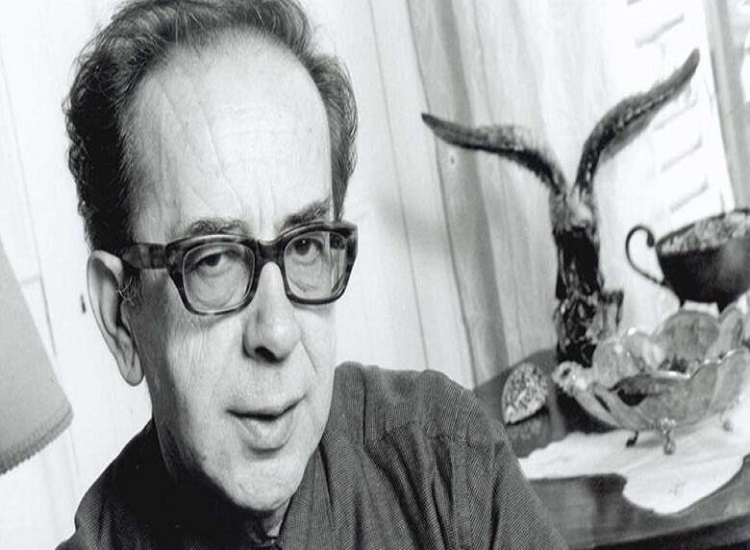
Memorie.al / Don’t let it seem strange to you. Years later, when I was in Bucharest, a few months before Ceaușescu’s fall, I learned that Romanians spoke in code out of fear of the ‘Securitate’ (the secret police). Kadare gave us lectures on modernist literature. He would come a little late. Straight from the street into the hall. He couldn’t enter. I remember as if now this highly emotional moment. Students from many other faculties came to listen to his lectures: Foreign Languages, Economics, Geology, History-Geography, and in silence they waited with a feeling of fear, lest some order come from above and expel them. This fear of expulsion resembled that gnawing anxiety that overwhelmed us in childhood, when we sneaked into a film screening where entry was forbidden for children under 16 years of age.
What did Kadare do? He didn’t trouble himself at all. He didn’t greet, nor did he say sorry for the delay. The least he could say was this: “The chairman didn’t give me the League’s car. I came on foot.” The hall held 80 people; there were more than 140 students there, who had come to hear whatever Kadare said about Kafka and Solzhenitsyn.
O God, why all this ravenous curiosity, where fear, mystery, and wonder were mixed? There was talk of forbidden things. The taboo subjects, like Saint Lazarus, Kadare held in his hands and unwrapped the bandages of immortality, to make them tangible, human.
But how did he achieve this difficult, almost impossible transformation? Through his code, the Kadare code, of the second reading between the lines, of the displacement of the text, with the skill of an alchemist and the concentration of attention on the discreet context. This delicate, dangerous maneuver, of a tightrope walker, could not but reveal Kadare’s beautiful mind and soul.
There was no way not to see it reflected in 280 eyes and in those eager gazes and, moreover, there was no way not to express itself in the most touching manner: the giving, the surrender, that silent entreating prayer: do with me what you will, I am your slave. Understand me, please; Kafka and Solzhenitsyn were being interpreted with the Kadare code, by a writer of their dimensions.
Every time I had the fortune to hear Kadare, the first three lines with beautiful girls came to mind. No, one and two lines, but three, because that’s how he wanted it. The dark Rrapi! I knew Kadare, because he had published many of my poems in “Drita.” Once, after the lecture, I asked him about this mannerism, the artist’s invention.
“It’s not a mannerism,” he told me, “nor an invention, but a correction through the eyes. It is known that the eyes of beautiful girls are very expressive. One has green eyes with a little sunlight, another black, another blue. Those eyes are at the age of love. At this age there is no falsity, but naturalness, sincerity.
I am a slave to them, not they my slaves, as one might think. So, I test myself, how attractive I am, because in the word is the soul. Naturally, I must not be misunderstood. Because I see that my actions and even the most insignificant ones are interpreted with ill intent. Why had Kadare worn a white turtleneck, why was he so gloomy, perhaps his foot slipped and we didn’t find out, why didn’t he speak to us? They concern themselves a lot with privacy. This sometimes shocks me, because I hear things about myself that I don’t know.”
Kadare was not the usual pedagogue when he came to give us a lecture. He was not the pedagogue of the pedagogical scheme: register in hand, taking attendance, beginning the lecture and students taking notes. Where would the aristocratic artist Kadare ask about these idiocies, because that’s how they seemed more correct to him; how could he sit at the lectern and call out the names of 80 students? It’s not even imaginable. He did not acknowledge the boring lectern, the squeaking chair, the rummaging in it; he never sat down.
Kadare began the lecture like this: “Those dogs of Solzhenitsyn kept me awake last night. Don’t think that in Solzhenitsyn’s works there is no great art. If you thought so, you have minimized the revisionist influence.” There, this was Kadare’s code. Let the owls hunt mice, let the cunning foxes profit.
It seems to me we all profited, without opening our mouths, in a gentlemen’s agreement. We would rather be killed than betray Kadare. No one whispered in the hall. A very beautiful girl, one of those from literature, was so moved by his words that she fainted. Kadare laid her on the lectern. Had Helena ever fainted?
This was the beautiful Kadare
But nevertheless Kadare had a somewhat ruined complexion. In general, writers were gloomy. We had great respect for them. We loved the book. I, from the age of thirteen, used to enter the bookstore (there was a large bookstore there where today the National Historical Museum is located and next to it the favorite café of Dritëro Agolli, Shuteriqi, Musaraj, Petro Marko and many other writers). Inside the bookstore I would stay almost an hour and look at the books.
I watched how I devoured the books. And I thought about the writers. Today they don’t have respect for writers like then. I was amazed at the writer’s gloominess. Why on earth would they be so melancholic? What do they have? What torments them? I remember my father, who called me a cripple because I occupied myself with literature. But he told me this with affection, with humor. At that time he worked as a nurse at the Central Polyclinic, in the Neurology department.
“Who is the greatest writer?” he would ask me out of curiosity, but more to please me. “Ismail Kadare,” I answered. “But this one has never come to Neurology. All the writers have appeared, taken medicines, been treated, while this Gjirokastrite hasn’t come to us yet. Doctor Luzi can hardly wait to see him.” Later, when he served in Cardiology, the same refrain: “Kadare isn’t showing up”!
When he served in the Emergency room, which had the chance to crisscross Tirana and enter every family, he told me with regret: “This favorite of yours who isn’t dropping his bundle on us doesn’t seem to be a man.” “Why, father, haven’t you met him yet?” “Doctor Xhumari died trying to pay Kadare a visit; the poor fellow burst, but that Gjirokastrite doesn’t suffer from any illness. He’s not a man, listen to me.”
But why were the writers gloomy? Kadare had it harder than all of them. The beast had fallen in love with the beauty. It was a complicated love, highly unpredictable. The dictator had found his beneficiary. It is no small thing that experts of world literature say that in Albania, in this isolated and enigmatic country, great literature is being made.
Kadare’s work was the fine and pleasing makeup for the face of the beast. But is Kadare to blame for this? It was a friendship from afar, a liking, but one that could turn into hatred. Careful. It is not known how tomorrow will dawn. This unexpected thing that tomorrow might bring was suffered by all writers.
The guillotine sometimes approached, sometimes withdrew. Heads were needed to justify the revolution. We, the “broduists,” passed below Kadare’s cubist building and performed the ritual as every night: Did he return? Yes, yes, he’s upstairs. Helena detached for a bit and bought something. He waited for her at the old bookseller’s. How did he look? Normal. Did he ask “Block” about that girl? No. Didn’t he want material tonight? That block story pleased him.
What was this “broduist” story with the block? Bujar Kapexhiu had seen a girl with a beautiful block [notebook]. He stuck to the girl. She, poor thing, couldn’t resist his persistence and agreed to go by the lake. At the time when she expected him to express his love, Bujar asked her for the block. She gave it to him. And again she waited for the declaration of love from him, but he, the “shameless one,” told her that he had followed her only to take the block.
Kadare sometimes blessed us with his presence. “Hey, Molo,” the older broduists, those of the second generation, called him. We could hardly wait to see him up close. There was no more ordinary person in the world. If he hadn’t become a writer of renown, we would undoubtedly have had him among us in “Broduej.”
And what happened there? When some weakling passed by, Tim Xhelaka would say: “The general crisis of capitalism is passing.” Saimir Kumbaro, the handsomest “broduist,” who walked with women, when some mama’s boy passed, would say: “This one is engaged in dry sport (masturbating).”
And right next to us was the guillotine. But we fools took life as it came to us. We waited for Panajot Kanaçi. We loved him because he bought seeds for pigeons and birds. He bought the whole bag from the wandering seller, Gon Qepa, and threw the seeds across the rooftops. He had planted a vine on the sidewalk, which now climbed up to the window.
Beb Daliu would ask him: “Panajot, did your grape grow?” “It grew, it grew, boys.” He never understood that they were joking, that they were throwing the word for something else. Kadare watched everything, listened to everything. That’s why we liked him, because he was like us; our life drew him.
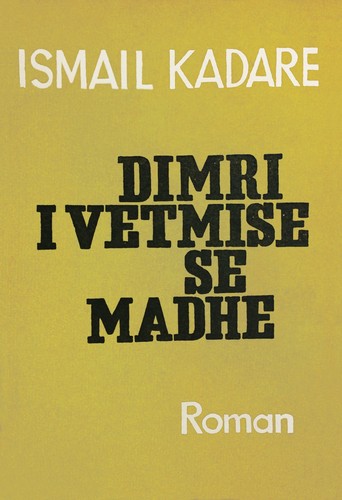
But why were the writers gloomy? Why was Kadare gloomy? It was not known how the dictator would dawn. When he published the novel “The Winter of Great Solitude,” an extraordinary novel where Kadare’s antipathy for the Ministry of the Interior, the cadre chiefs, the incompetent ones, came out openly, it happened that Saturn was mentioned; he became ready to give the fatal verdict.
Saturn was being considered. It was terrible. Almost everyone wanted Kadare’s head. It would have been a great example of the proletarian revolution. The guillotine had approached; it was at the entrance of the cubist building. It was getting ready to climb up to the second floor. Kadare had shut himself inside. The Great Boulevard darkened and paled without them, without the so attractive couple Kadare.
The chiefs of State Security wanted his head; the communists openly expressed their dissatisfaction and impatience, because they saw themselves in the cadre chief and in all that army of incompetents, on whom Kadare had not spared his contempt.
The popular spectacle was taking on tragic colors. She, the dictator’s wife, highly disappointed and angry, was expected to give the extreme sentence. Do you remember that troubled time? We asked with trembling hearts: “Is there any news?” “No, but this time he won’t escape.” “Don’t say that, what you are saying!” We heard them say: “Kadare finally got it. Thank God we’re saved, because this sold-out writer was going to be the end of us.”
By instruction of the Central Committee, it was allowed to criticize the work in the press. Do you remember what was written? “Kadare writes on purpose to please the West. What is this solitude, we are not alone.” The criticisms were devastating. “What does the great one say?” “He hasn’t said anything yet. But there have been many cases where he has forgiven him. This time he won’t escape. Everything comes from him, from Kadare. If he forgives him this time too, so be it”!
Enver Hoxha defended him, not for ideals, but as a beneficiary. He wanted this dangerous mess, which was taking on political dimensions, to be closed. The 30 thousand copies of the book had been sold within a day. Its photocopying had begun. That’s how it was with Kadare; it was sold under the counter. For his books, queues were formed from the morning. Have you forgotten?
Enver Hoxha himself went to a meeting with the workers of the metallurgical plant and after listening to their extremely harsh remarks about the novel, said more or less these words, which were commented on for a long time. “I ask you a question, as the working class, where does the fish rot from? Eh, no?” No one dared to speak.
One of those from the organization, who guarded the standing walls, signaled to someone, who rose as if on a spring and thundered: “From the head, comrade Enver”! “But the head in the novel is the First Secretary of the Party, it’s me, it’s the Party. That’s how it is! The class doesn’t think otherwise, does it?”
The guillotine was again moved somewhere far away, between the Great Boulevard and the League of Writers. Kadare had escaped this time too. We saw him again in the evening arm in arm with Helena, whispering with a thread of quiet laughter, as if nothing had happened. When the novel was translated in France, criticism compared it with Kafka and Tolstoy, for its absurd spirit and brilliant epic quality. / Memorie.al