




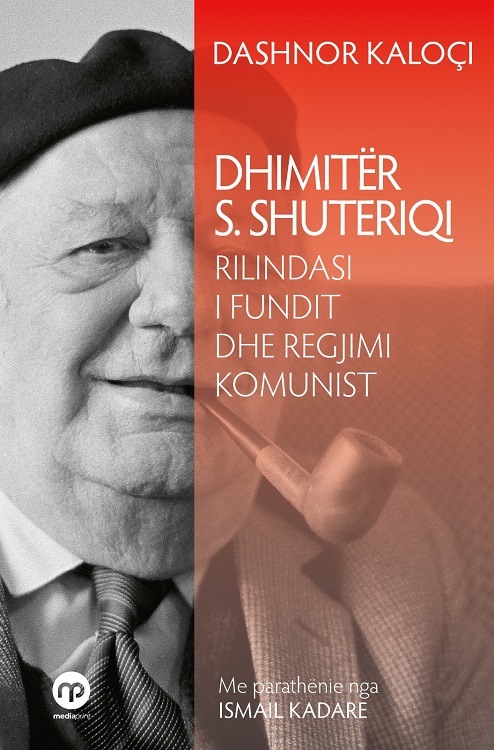
By DASHNOR KALOÇI
Part One
Memorie.al / The end of the 1960s would mark the beginning of the improvement of official relations between the communist regime of Tirana and Marshal Tito’s Yugoslavia, which came as a surprise after the military aggression carried out by the Soviet Union against Czechoslovakia in August 1968, when official Belgrade (together with Nicolae Ceaușescu’s Romania) not only did not approve the entry of Soviet tanks into Prague but publicly denounced it as an invasion, being de facto in the same “trench” as official Tirana. As a consequence of this policy that Belgrade was following at the time, which in a way also ensured the inviolability of Albania’s borders from a possible Russian aggression through Yugoslav territory, made official Tirana take advantage of the opportunity to mend the broken relations with Tito that had existed since the mid-1960s.
It succeeded so well that foreign observers following regional Balkan politics at the time considered the relations between Tirana and official Belgrade as a “honeymoon.” In this context of the development and course of events, from 1969 and the early 1970s, a series of official agreements were signed between Albania and Yugoslavia, not only in the economic field of goods exchange but also in the fields of education, culture, sports, etc. This led to numerous delegations from both countries making mutual visits.
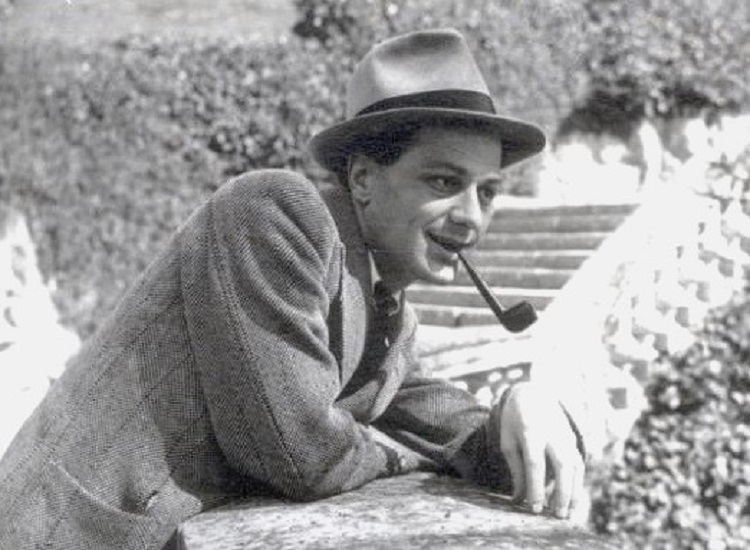
These agreements and visits were based mainly on the Albanian territories of Yugoslavia, such as the Autonomous Province of Kosovo, Montenegro, and Macedonia, where dozens of artistic, cultural, and sports groups, various individuals, and personalities from the educational and academic worlds traveled back and forth incessantly. But the flag-bearer of these visits would be Dhimitër Shuteriqi, chairman of the League of Writers and Artists of Albania, who around mid-December 1970 made a visit to Kosovo and Macedonia.
The appointment of such a major figure of Albanian culture as Shuteriqi (together with Professor Zija Xholi and the renowned composer Tish Daija) to carry out the first official meeting, after a long period of chilled relations between Tirana and Belgrade, showed the great importance that Enver Hoxha attached to relations with Tito’s Yugoslavia and, at the same time, it must be said that it was also a great appreciation shown to Shuteriqi himself by the high communist leadership of Tirana.
This visit, among other things, is also made known by this archival document that we are publishing in this part of the book, which is a report compiled by Professor Shuteriqi himself regarding that visit. This report was mandatory for every Albanian citizen who went abroad on official business or for friendly visits to relatives. It must be said that even the highest official personalities (deputies, ministers, and even the Prime Minister, Mehmet Shehu) could not escape this rule; immediately upon returning to the homeland, they were obliged to submit a written report and deliver it within the deadline to the relevant office or institution that had issued the permission to leave the country.
Even Enver Hoxha himself could not escape this rule, with the only difference being that for official visits, he reported orally before the Political Bureau, until 1960, the last time he went abroad. In this context is the report drawn up by Dhimitër Shuteriqi for the Central Committee of the Party of Labour of Albania, but given the great importance that official relations and reports between Albania and Tito’s Yugoslavia had at the time, an exception was made and Shuteriqi was obliged to also report orally to Ramiz Alia about that visit. The peculiarity of that visit of Dhimitër Shuteriqi to Kosovo and Macedonia was his meeting as head of delegation with Fadil Hoxha, one of the main leaders of the Socialist Autonomous Province of Kosovo, also of the League of Communists of Yugoslavia.
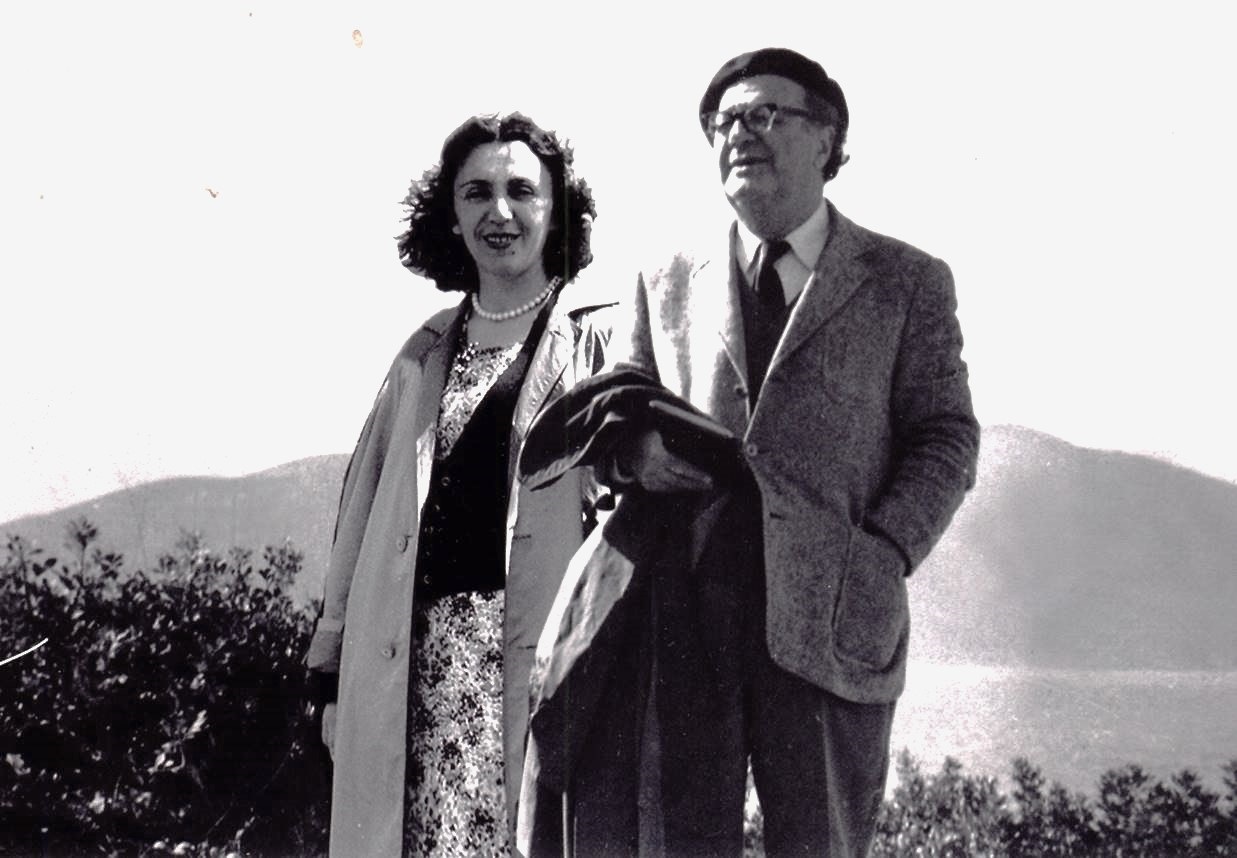
Based on Shuteriqi’s information report, the meeting with the Kosovar leader, Fadil Hoxha, was unexpected and, in a way, forced. This caused great concern in the high communist leadership of Tirana, where Shuteriqi was summoned to report immediately upon his arrival in Albania. Among other things, this is also made known by Shuteriqi’s wife, Mrs. Mynever Fico Shuteriqi, who exclusively, for the first time and publicly, recounted to the author of this book that distant event of 1970, which she had quite fresh in her memory, as it had brought much trouble to their family.
Regarding this, Mrs. Mynever recalled: “The first instruction given to Dhimitri before leaving for Kosovo was that he, under no circumstances and in no way, should meet with Fadil Hoxha, who at that time was the highest party leader of Kosovo and also a member of the Politburo of the League of Communists of Yugoslavia. But even though the instruction was categorical and the other members of the delegation begged Dhimitri not to meet with Fadil Hoxha, Dhimitri accepted the meeting, telling them that he took full responsibility for whatever might come or result from that meeting.
As Dhimitri himself told me upon his return, Fadil Hoxha had insisted on meeting him, telling the intermediaries that he had been a friend – the brother of Dhimitri, Pirro (‘Martyr of the Homeland’) – at the time they were studying at the Shkodra high school during the period of Zog’s Monarchy and the Italian occupation. This fact – the memory of the brother later killed in the War – made Dhimitri agree to meet Fadil Hoxha, thus meeting him as ‘a wartime comrade of his brother.’
However, this meeting was not well received and caused a great stir in the Central Committee of the Party of Labour of Albania, which I learned from Pirro Bita, head of Foreign Relations within the apparatus of the Central Committee of the PPSH, since I had known him for years because of the work I did in the Press Sector within that apparatus, where I worked for 30 consecutive years. Pirro met me at the club we had on the ground floor of the Central Committee building, where we went every day to eat something or have coffee, and he told me: ‘Mynever, how did Dhimitri do that to us, meeting with Fadil Hoxha? Who knows what will happen to him now?!’ To tell the truth, I was very worried by what Pirro told me, but I didn’t answer him, and when I went home, I told Dhimitri, who had been back from that visit for two days.
I was somewhat calmed by the fact that Dhimitri was not very worried by what I told him about my conversation with Pirro, or perhaps he didn’t show it – I couldn’t tell – but as a family, we only calmed down after Dhimitri met Enver Hoxha himself at his home. Dhimitri went there after Enver himself summoned him, and while he had prepared extensively to report about that visit, Enver did not let him speak at all, but spoke throughout that entire meeting with him.
As Dhimitri later told me, among other things, Enver had told him: ‘Fadil Hoxha and other Kosovar comrades with high party and state responsibilities in Kosovo and Yugoslavia ask to meet us, but we have kept our distance from them. Even in a letter that Fadil Hoxha wrote me, among other things, he says: “even when a postage stamp from Albania falls into my hands, I feel a great longing for my country…’?!”
Thus does Mynever Shuteriqi recall that conversation between Dhimitri and Enver Hoxha after his return to Albania? Enver had no interest in hearing from Shuteriqi about his meeting with Fadil Hoxha, about whom, in some of his books, Enver Hoxha would write the harshest words for the “Kosovar comrade,” who had also participated in the founding meeting of the Albanian Communist Party in November 1941 in Tirana.
For more about what happened during Shuteriqi’s visit to Kosovo and his meeting with Fadil Hoxha, we are informed by the report written by Shuteriqi himself, which, like all other documents in this book, we publish in full and without any cuts.
R E P O R T
On the visit to Kosovo of a delegation of the League of Writers and Artists of Albania.
The main issues have been reported orally to comrade Ramiz by Dh. Shuteriqi himself.
Certain determinations and remarks regarding the state of intellectuals, youth, and………… must be taken into account. Youth and the countryside are presented as two important elements.
The delegation consisted of: Dhimitër Shuteriqi (chairman), Professor Zija Xholi, composer Tish Daija. The delegation was invited by the Association of Writers of Kosovo, established last October as a separate association, which is directly linked to the joint Association of Writers of Yugoslavia, no longer being, as before, a branch of the Association of Writers of Serbia.
The delegation was invited to participate in the commemoration of the 70th anniversary of Naim Frashëri’s death, for which the Association of Writers of Kosovo organized an “academy” (academic evening) in Pristina. The outward journey was made via Struga, Ohrid, Bitola, Skopje, Pristina; the return journey via Pristina, Tetovo, Dibra, Struga.
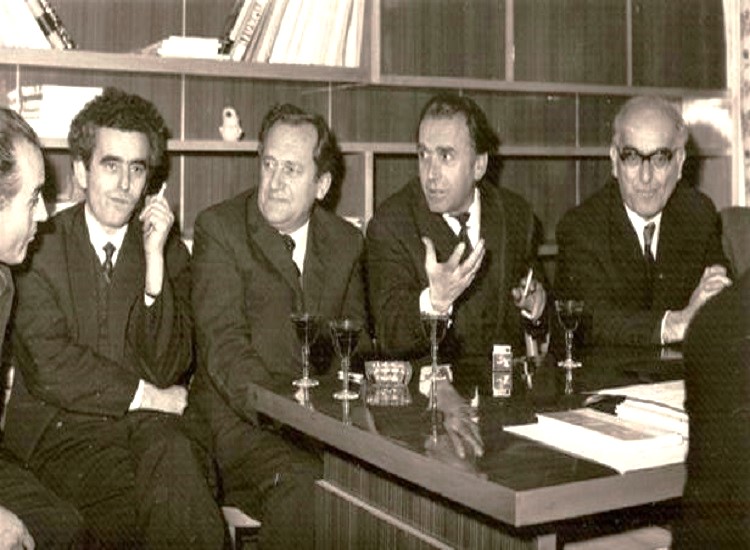
The delegation was received at the border by Dr. Mark Krasniqi, chairman of the Association, professor at the University of Pristina, and writer Vehap Shita, Secretary of the Association, editor at the “Rilindja” newspaper of Pristina, literary critic Azem Shkreli, member of the association’s presidency, director of the Provincial Theatre of Pristina, writer (he is a member of the Central Committee of the League of Communists of Yugoslavia for Serbia), Maksut Shehu, member of the association’s presidency, writer.
The delegation was escorted to the border by the first two and Ali Aliu, editor at the “Rilindja” Publishing Enterprise, literary critic. The delegation stayed in Yugoslavia for 11 days, including 3 days of travel to and fro. It spent most of the time in Pristina. The three members of the delegation visited Prizren for one day, while comrades Z. Xholi and T. Daija also visited Gjakova and Peja, together with Deçan, for one day. In Pristina, the delegation members visited the provincial museum, saw 2 theatrical performances, and saw (in the studio) several numbers of the “Shota” Folkloric Group.
In Prizren, they visited the Museum House of the League of Prizren, a Turkish bath where an archaeological exhibition was set up on the occasion, and a private house, which was preserved for its architectural values and visited for this reason. The delegation made these visits and meetings: at the Association of Writers of Kosovo, 3 meetings – a first welcoming meeting with a good number of writers, a second meeting where we discussed together (they asked, we answered) on literary problems, a third meeting with the expanded presidency of the association, where opportunities and ways of cooperation (exchange of writers, press, and books) between their association and our League were discussed.
Visit to the Rector of the University (the deans of the University participated, but only Albanians), meeting with professors and teaching staff of the Faculty of Philosophy (with some students also participating), meeting with students of the 2-year Higher Pedagogical School in Pristina, also with the teaching staff separately; also a meeting at the “Rilindja” Publishing House, a meeting at the Albanian Textbook Publishing House, a meeting at the Association of Painters of Kosovo, a meeting at the Higher Pedagogical School of Prizren (with the state staff), and likewise in Gjakova.
The delegation was invited to lunch or dinner by: the Association of Writers, twice – once a large lunch and once a private dinner (only with the presidency and with state and party personalities there, as will be seen below); the Association of Painters; the Education Community (on the occasion of the dinner for the professors of the University of Tirana, who were giving lectures there those days); and the “Rilindja” Publishing House.
The Academic Evening for the 70th anniversary of Naim was held at the Provincial Theatre of Pristina. Admission was ticketed. The demand was so high that the windows were broken and people flooded inside. The hall was filled to the brim. Many local personalities took part in the evening, whose names were published in the press the next day. People who had come from all four corners of Kosovo and who had insisted on participating well in advance took part.
On stage was placed the bronze bust of Naim, a work by Odhise Paskali, which our League, on this occasion, sent as a gift to the Association of Writers of Kosovo. There was no presidium of the meeting. The development of the meeting was as follows: The chairman of the Association of Writers of Kosovo, Mark Krasniqi, climbed onto the stage where the podium was, and gave a short opening speech (about 2 pages), first in Albanian and then he repeated it himself in Serbian.
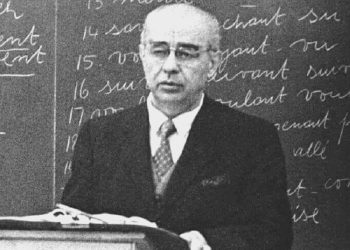
After he finished his speech, he said that “the floor has been requested by the chairman of the League of Writers and Artists of Albania, Professor Dhimitër Shuteriqi, head of the delegation of the League, who has come to Pristina on this occasion and who wishes to greet the ‘academy’ and say a few words about the 70th anniversary of the great poet.” The ascent to the podium by Dh. S. Shuteriqi was accompanied by very long applause.
His speech lasted about 15 minutes; he greeted the meeting, congratulated the Association, which had been formed not long ago, said a few words about Naim, and on this occasion presented to the audience and gifted the bust of Naim to the Association of Writers of Kosovo. The applause was equally sustained at the end. The occasion speech for the jubilee was delivered by literary critic Rexhep Qosja, lasting about one hour. / Memorie.al