By HALIL RAMA
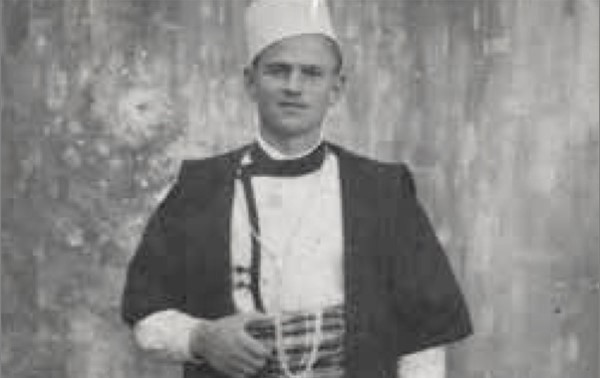
Memorie.al/ A hundred years ago, in Çidhna of Dibra, Adem Islam Hoxha was born – a name that entered the nation’s history for his unparalleled heroic act in the resistance against the Greek monarcho-fascists during the well-known provocations of August 1949. Left an orphan at six months old, after his father Islam and mother Lihja died from the typhoid epidemic of 1917, Adem would be raised and educated by his grandfather, Abdurrahmani (Hoxha Kuta). Known by the title “Hoxha of the 12,000” in Shehër i Thatë, one of the popular leaders for organizing the resistance of the Çidhna region and all of Dibra against the Serbo-Slav occupiers in the early 20th century (during the years 1912–1920), he would ensure that these virtues were also embodied in his grandson, Adem.
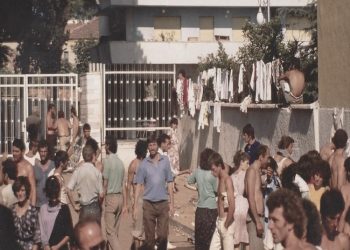
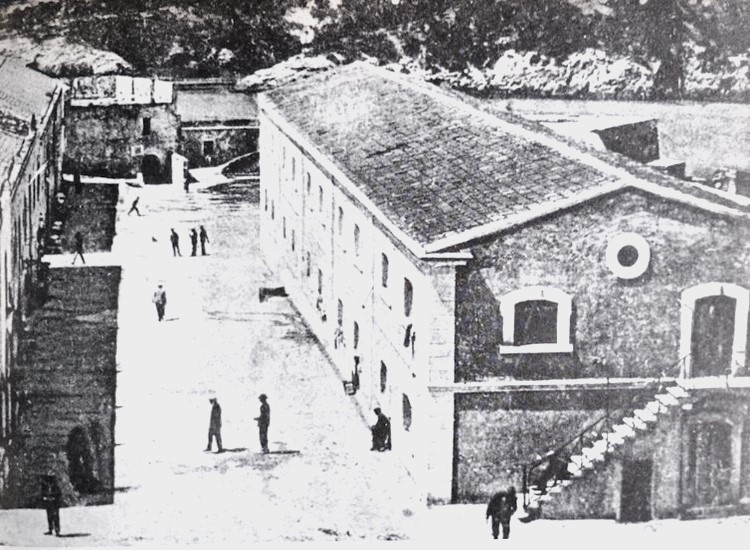
He received his first patriotic education – with love for the homeland and hatred for the occupying enemies – as early as the age of three, in 1920, during the Serbian occupation, to escape the massacres of the occupiers, when for three consecutive months he took shelter in a cave in Gjalica of Çidhna, at a time when the rest of the population of Dibra was displaced toward Tirana, just as in 1913. Since that time, and to this day, it is called “Hoxha’s Cave.” In 1940, for anti-fascist patriotic activity, he was imprisoned by the Italian occupiers and later interned in the Nazi-fascist concentration camp in Ventotene, Italy, where he was sentenced to 2 years and stayed from January 1940 until December 1941.
This fact is also verified by the register kept at the National Committee of Veterans of the Antifascist National Liberation War of the Albanian People, Tirana, on page no. 3, serial no. 21, where Mr. Adem Hoxha (then Kuta) is recorded as having been interned by the Nazi-fascists in the concentration camp in Ventotene, Italy, from February 11, 1940, until December 1941 – not including the time of pre-trial detention in Peshkopi before transfer to Italy, nor the additional 24-day stay in the Bari Prison in Italy.
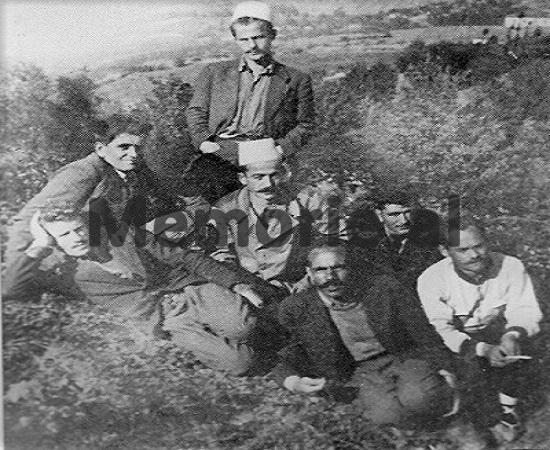
In the Nazi-fascist camp of Ventotene, Adem met and befriended such patriots and leaders of the Albanian resistance against the Nazi-fascist occupiers as Nazmi Rushiti, Sadik Bekteshi, Ibrahim Dervishi, Abdyl Këllezi, Zef Mala, etc., as well as nationalists like Safet Butka, Abas Ermeni, Prof. Isuf Luzaj, etc. The company and friendship with such figures increased Adem’s experience and political maturity. In December 1947, when he was over 30 years old, he was mobilized to perform compulsory military service in the Korça District (during the years 1947–1950), the last two years of which were spent at the border, in Bilisht.
Thus, at the time he gave the combat order to open fire on the aggressive forces of the Greek monarcho-fascists, Adem possessed all the qualities and abilities, as well as the ideological-political maturity and military training, to command and issue a combat order of such weight – one that was decisive for the fate of the homeland.
THE EVENT OF AUGUST 2, 1949, IN VIDOHOVA
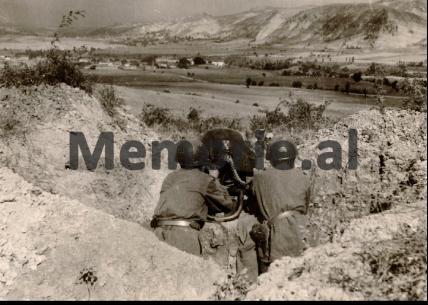
Greece attacked on August 2, 1949, after eight months of military provocations at the border. Archival documents, as well as eyewitnesses, confirm that in the attack of August 2, 1949, the Greeks used their army against Albania – with artillery, aircraft, ground forces, and everything that any army aiming to conquer another country employs. The Albanian army responded to the Greek invading attack with armed warfare, in defense of the borders and territories that were attacked.
It was a war of dramatic proportions. While Greece hurled over 70,000 armed forces, over 50 aircraft, 80 tanks, and an artillery echelon with nearly 400 launchers, mainly cannons, toward Albania, the Albanian state mobilized and committed 10,000 soldiers to the defensive war, while also keeping another 30,000 troops on alert near the attacked zone.
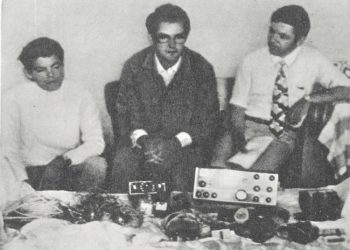
On August 2, 1949, it would be a simple switchboard operator from Çidhna, Dibra, who gave the order to open fire against the Greek monarcho-fascist provocateurs on the Albanian border at Kapshtica. Adem Hoxha, switchboard operator of the border post in Kapshtica, Devoll, was on combat alert duty on the night of August 1, into the dawn of August 2, 1949, when around 02:00 in the morning of August 2, 1949, the telephone rang.
He picked up the receiver, and on the other end, the person speaking introduced himself as the commander of the Vidohova Border Post. “At this moment I don’t remember his name,” Adem recounted, “but I recall that he was a young man, about twenty-two or twenty-three years old, whose mustache was just beginning to grow.” (According to contemporaries, he must have been Memo Nexhipi Bejko, moments before he fell as a martyr, later proclaimed a “Hero of the People.”)
When the commander of the Vidohova Post, Mr. Memo Nexhipi Bejko, asked switchboard operator Hoxha to connect him with the regiment commander, Adem replied: “The regiment commander at this hour is in bed, asleep in his house in Korça. He does not have a telephone at home.” Then Commander Memo asked the border guard from Dibra to connect him to the Ministry of Defense, but again received a refusal! “Since I cannot connect you to Korça, how can I connect you to the Ministry in Tirana?! We don’t have radio connection, only a simple wired switchboard!” – Adem Hoxha answered.
And with Greek forces having advanced 500 meters into our border territory, Commander Memo, pressed hard, asked the switchboard operator from Dibra for advice on what to do.
– Fire! – Adem replied.
-How can I open fire?! On whose orders do I open fire? – said the commander of the Vidohova Post.
– On my order! – replied border guard Adem like lightning.
– What do you mean, on your order?! – continued the commander?!
– I tell you: On my order!
When the Greek forces come to the post, are you going to offer them cigarettes and tobacco and light them with a match, right over your heart? Fire on the aggressors, because that is the only way the Homeland is defended! These were the last words exchanged between Commander Memo and switchboard operator Adem Hoxha, on the morning of August 2, 1949, before the defensive war began in Vidohova against the aggression of the Greek monarcho-fascists on August 2, 1949.
In other words, the combat order for the opening of the first fire, of the first rifles in Vidohova on August 2, 1949, was given on his own initiative by a simple soldier from Dibra, Adem Islam Hoxha, and former switchboard operator of the Kapshticë-Vishocicë border post. More precisely, with that mature, logical reasoning – extremely convincing in those extraordinary circumstances – he rightly convinced the commander of the Vidohova Post to open defensive fire against the aggression of the Greek monarcho-fascists on August 2, 1949, in that heated combat situation.
Such reasoning, like that of Adem Hoxha, is highly convincing and correct even now, more than six decades later, in peacetime and in a context of international relations completely different from that time. There could be no other solution than Adem Hoxha’s on the morning of August 2, 1949: to open fire on the aggressor. This is a historical truth, although unrecorded anywhere, like many other unwritten truths of the history of the Albanian people, clearly recounted by the protagonist of this event in 1993, when he was 76 years old.
WHAT DID “ZËRI I POPULLIT” WRITE ON SEPTEMBER 6, 1949…?
The heroic act of the Çidhnak Adem Hoxha is clearly presented, even from a fragment of the report by the special correspondent of “Zëri i Popullit,” Dhimitër Tona, titled: “On Pyramid 33, in the Bilisht Sector,” published on September 6, 1949. Among other things, it states: “…The connecting switchboard operator, Adem Islam Hoxha from Çidhna e Poshtme, Dibra, amid thousands of enemy artillery shells, where not a palm of ground remained un-hit, performed his duty heroically: three times during the night the line was cut, but all three times he reconnected it through artillery fire and the hail of machine-gun bullets.
‘In the National Liberation War,’ says soldier Adem Hoxha, decorated with the ‘Medal of Bravery,’ ‘I did not have the fortune to fight against the enemy; now I too stand proud among my comrades because I fought just as my brothers did yesterday for the liberation of the Homeland; today I fought for its defense against the monarchists who want to enslave our people and bring our enemies back to power…’.”
WHO WAS ADEM HOXHA?
So who was this soldier, Adem Hoxha, who took such an initiative – to give a combat order for the start of a frontal war like that of August 2, 1949?! What ideological-political and military preparation did this person have, who apparently took such an initiative to give a combat order like that – to open fire against the provocations of another state’s army, such as Greece?
Adem Hoxha, son of Islam and Lihja (1917–1993), from Çidhna, Dibra, veteran of the Antifascist National Liberation War of the Albanian people, interned in the Nazi-fascist concentration camp in Ventotene, Italy, from January 1940 to December 1941, and fighter on the front line of the battles for the defense of our homeland’s borders against the provocations of the Greek monarcho-fascists in August 1949, was extremely modest, so he left no written memoirs, only these oral accounts that are not easily erased from memory.
For his heroic act, the former Dibran switchboard operator of the “Guri” border post in Kapshtica, Devoll, Adem Hoxha was decorated with the “Medal of Bravery.” This is confirmed by the certificate issued by the former Presidium of the People’s Assembly of the People’s Republic of Albania, no. 6749 and Decree no. 911, dated August 23, 1949, bearing the signatures of former President Dr. Omer Nishani and former Secretary Sami Baholli. On this Medal is inscribed the following motivation: “During the battles for the defense of the Homeland’s borders in the Trestenik sector against the aggression of the Greek monarcho-fascists, he distinguished himself for bravery, determination, and loyalty.”
This certificate is yet another argument that unequivocally proves that Adem Hoxha was accurate in his accounts from two decades earlier. Moreover, his undisputed authority in civilian life, when he served over 60 years as an imam, religious and social leader, leaves no room for any shadow of doubt about the truth of his accounts regarding the organization of resistance against the provocations of the Greek monarcho-fascists on August 2, 1949. As an interlocutor from two decades ago, I preserve in my memory the episodes masterfully recounted by Adem about the Provocations of August 2, 1949.
He often said that in that battle, his life was saved by the former regiment commander, Mr. Baki Starja. “During the fighting, my duty was to maintain connection with the field switchboard, mobile, right where the battles were taking place. The position of the switchboard could not be changed without the commander’s order. At a certain moment during the fighting, an enemy mortar shell fell only a few meters away, right next to the position where I had set up the switchboard. Next to me was also Mr. Baki Starja, later a general. Immediately after that moment, Commander Bakiu ordered me: ‘Adem, quickly move the switchboard right into the crater made by the enemy’s mortar shell.’ As soon as I installed the telephone equipment in the designated place, only a few seconds later, the enemy’s mortar shell fell precisely on the spot where I had previously had the switchboard position.
If I had not changed the installation position, I would have been killed in that battle,” Adem recounted, simultaneously expressing respect and gratitude for General Baki Starja, who was a senior officer during the August 1949 Provocations. During a chance meeting, the retired general, Baki Starja, not only fully confirmed what I have related above regarding the relocation of the field switchboard, but after expressing his high regard and the memories he kept of his 32-year-old soldier from Dibra, his peer Adem Hoxha, he also told me the reason for giving that order – namely, his combat experience.
THE ACCOUNT OF GENERAL BAKI STARJA
General Baki Starja, who had performed compulsory military service during the Italo-Greek War, also recalls the time when he was mobilized in the Albanian army unit and his association with fellow soldier Vesel Bushi (Spata) from Blliçja of Peshkopi. From the experience of that war, they had learned that in the Greek army, the artillerymen were career soldiers with regular pay, not conscripts of ordinary compulsory service.
“Greek artillerymen, as qualified professionals, did not waste artillery shells; therefore, they did not aim two shots at the same spot, but for each shot they shifted the targeting graduation, to avoid having two shells fall consecutively in the same place. Knowing this experience, I ordered Adem to immediately relocate the switchboard equipment precisely to where the previous shell had fallen, because I knew that there we were safe from enemy strikes,” recounted General Starja.
Meanwhile, switchboard operator Adem Hoxha proudly asserted the fact that all the Dibran soldiers who took part in the battles against the August provocations excelled, standing out among others. The engagements between the parties continued intermittently from August 2 until September 5, 1949, in the areas of Bilisht, Kapshtica, Leskovik, and Konispol, causing Albania hundreds of civilian and military casualties, as well as material damage to border villages. Likewise, the Greek monarchist forces left dozens of soldiers killed on Albanian territory, and even prisoners of war. According to Mr. Starja, on the resistance front, dozens of soldiers from Dibra were present and gave their heroic example.
No Dibran soldier left the combat position where the command had assigned him; on the contrary, all of them, at the end of the battles, were found on the front line. This, perhaps, caused the Dibran soldiers to be viewed in a different, more favorable light by the command, unlike before, because prior to the test they gave in battle, they were viewed with suspicion due to the war that had been fought in Fushalie of Dibra in July 1944. In other words, the battles of the August 1949 provocations became the reason for the rehabilitation of the Dibran soldiers.
In this regard, among the most distinguished, besides officers Bajram Hysen Kovaçi and Isuf Daci from Grykë-Noka, he also recalled Arfi Pitarka from Grykë-Noka, who served at the Vidohova post, as well as others from other units such as Fali Konozi from Grykë-Noka, wounded, Sulë Daci from Grykë-Noka, Sali Pana from Kodër-Leshej who fell a martyr; all decorated with the “Medal of Bravery,” etc. Among the comrades and leading cadres of the resistance against the aggression of the Greek provocations of August 2, ’49, Adem held particular respect for Colonel Skënder Malindi.
This was also due to the fact that Colonel Malindi, just returned from the Military Academy of the Soviet Union in 1947, regarded Adem not as a simple soldier, but as a comrade, his equal. Therefore, the organizers and participants of that unparalleled resistance against the aggression of the Greek monarcho-fascists deserve special honor. / Memorie.al