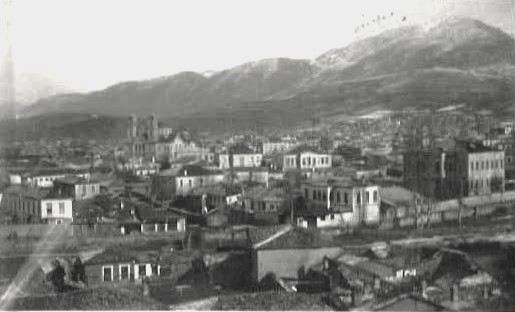
Memorie.al – The graves of the village of Trestenik in Devoll were located near the road leading to Llabanica, at the spring of the Drom River by the riverbank. There, they hastily dug a pit and threw his body inside. They threw a few shovelfuls of soil over him and left. One leg, one arm, and part of the green scarf remained outside. It must have been midnight. The year 1950. In the morning, when the residents of Trestenik went out to work, they found by the riverbank the half-buried body of a man. At first they stopped, frightened by what they saw…!
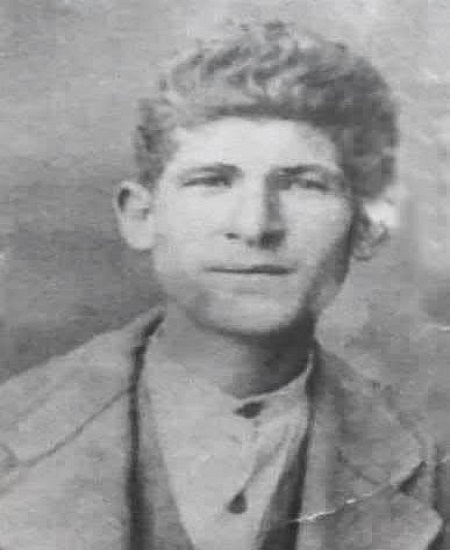
The leg and arm left outside the grave were terrifying. But suddenly they understood what had happened. They all recognized Haxhi Barolli’s green scarf. He had brought that scarf from Australia. He had been an emigrant there for years, since the 1920s. Homesickness for his family had brought him back to his birthplace. In the evenings, when they gathered at the village club, he would tell his fellow villagers about Australia. He hoped that Albania would become like that one day.
Everyone understood that the world far away had been different. From there, Haxhi Barolli had returned wealthy enough that his entire family could get by without difficulty. But a day came when he realized he should not talk too much about Australia. Government people said every day that capitalism starved people to death. He could no longer say the opposite of what the government said. He had often noticed that he was being watched. The Sigurimi people were always behind his steps.
Silent as a stone
Haxhi Barolli became silent as a stone, yet he was still surveilled just as before. The Sigurimi people did not stop. For them, it mattered little whether he spoke or not. Being well off economically was bad proof for the village of Trestenik, which barely managed to get bread. Barolli had begun to think that they might even imprison him, but he never believed they could kill him, looking him straight in the eye.
The murder plan had been ready for some time. Only the right moment for his execution was awaited. The Village People’s Council (as it was called then, “people’s”) assigned groups of three or four villagers to cut wood in the forest for the Border Post. On one of these days, they also assigned Haxhi Barolli to the group of Bariq and Haxhi Merolli. They set off early in the morning. After some time they entered the “Tëllog Woods” on the border with Greece.
From the moment they told him they would go to cut wood on the Greek border, he had a feeling things were not right, but he consoled himself by thinking he would be careful at every step he took. He would not give them a pretext to arrest him. He hoped to outmaneuver their staging. Nevertheless, it would be no surprise if he shared the fate of his brother, Selman.
Selman’s fate
For his brother Selman, the murder plan was woven urgently. An unexpected incident was exploited. Two small children of the village, 10 years old, cut the telephone line of the Border Post. They wanted to use the telephone wire to make chains for their pocket knives. They had no idea what they had done. The alarm for the cutting of the line was raised immediately.
Sigurimi people arrived in the village without delay. No one was left unasked. The perpetrators had to be found at all costs. According to the Sigurimi, there must certainly be hostile groups in the village. The anxiety was great. Someone might even be arrested. Very soon it was discovered that the line had been cut by two small children. The village breathed a sigh of relief.
At least there would be no arrests, but the Sigurimi people did not think that way. They could not let such an opportunity slip from their hands. They taught the two children to say that Uncle Selman had taught them to cut the telephone line of the Border Post, and they said that Uncle Selman had taught them. To make everything seem true, a witness was also fabricated. He said: “The scissors used to cut the telephone line were Selman Barolli’s.” That was enough.
The terrible news swept through the whole village. Uncle Selman would be shot that very day. “The criminal would not be allowed a single day more of life.” People began to eavesdrop on what would happen. Was everything said about Uncle Selman’s murder true? No one could say anything for sure. They prayed to God that the government people would change their minds and not take Uncle Selman’s life. It was the year 1949.
Preparation for execution
The preparation for execution was a true horror. They took Uncle Selman from his home and brought him to the square near Uncle Rakip’s shop. They stopped at the poplar tree near the mosque. Some thought they would hang him. People watched from their windows. No one dared go outside. That day, for anyone they had suspicions about, they could take them off the road and execute them without any hesitation, declaring them accomplices of Selman Barolli.
Suddenly an order was given: all the villagers were to be forcibly brought to the shop square; everyone had to see how a criminal who did not love the people’s power died. They managed to bring only a few people and the schoolchildren. No one looked at Uncle Selman. They did not want to see his death. They would try to remember him always alive. Suddenly a burst of automatic fire was heard. Uncle Selman’s life had stopped. The poplar tree and the nearby mosque stood silent. The children were overcome with terror.
For many nights, terrible dreams entered their sleep. Silent too was the crowd of people they had brought there. Especially unforgettable for Haxhi Barolli, Selman’s brother was that day – now he had been sent to the “Tëllog Woods” to cut wood for the Border Post. Why had they sent him all the way there? Could Haxhi Barolli possibly escape execution? Perhaps for the sons of Ibrahim Barolli, life had reserved the same fate!
In the forest
Haxhi Barolli, brother of Selman Barolli, who was shot without trial in the middle of Trestenik village, had been declared undesirable. Haxhi was a danger to the communists. He knew more than a man living in Albania at that time should know. He had influence in the village and his word was listened to because he was a wise man. In conversations with fellow villagers, he shed light on the life the world was living.
It was a de‑conspiracy of the informational hell that sought to keep people’s minds in darkness. While he was cutting wood in the forest, he noticed that the commander of the border point and a soldier from Peqin had approached him. He knew the soldiers because they came down to Trestenik every day. He stopped working and looked at them to understand what was happening.
“You are arrested for attempted escape,” they told him. Haxhi Barolli could not believe his ears. When had he ever attempted to escape? Hadn’t they found him cutting wood in the forest? Wasn’t he still there, in the same place they had left him in the morning? He had no time to think further. They handcuffed him. Then a sharp order was given to the soldier who was there: “Kill him!”
He could not believe that he was so close to death, in such an unbelievable way. The officer yelled: “Kill him!” The soldier did not carry out the order. He had no intention of obeying his superior. “Kill him!” – He kept yelling.
The execution
Of course, the order had come from above; it had to be carried out at all costs. Haxhi Barolli had to die in the forest, according to plan, while attempting to escape. The officer of the Border Post grabbed the submachine gun from the soldier’s hands and emptied the whole magazine into Haxhi’s body.
Haxhi Llëçi, chairman of the executive committee of Bilisht town, removed the watch from the victim’s wrist. He had also brought that watch from Australia. His lifeless body was brought to the middle of the village. They left him there where they had killed his brother, at the shop square, near the poplar tree and the mosque, and left.
A heavy rain fell all night long. Perhaps after midnight they came and took him to bury him somewhere by the riverbank. There they hastily dug a pit and threw his body inside. They threw a few shovelfuls of soil over him and left. One leg, one arm, and part of the green scarf he had brought from Australia remained outside.
They left them like that on purpose to show everyone that Haxhi Barolli and his Australia were finally dead. But even that did not satisfy them. The Chairman of the People’s Council, Hamdi Shpuza, and the Sigurimi people: Shahini, Qenani, etc., forced people to step on the corpse, but no one obeyed.
For the residents of Trestenik, the sons of Ibrahim Barolli were alive. A few days later, his family was interned. Only Rami, Haxhi’s eldest son, was missing. He had escaped. Then the other son, Nezhdet, also crossed the border. The fate of Ibrahim’s sons was also shared by Murat Barolli and his brother, Veli Ballolli, etc. Their families were interned, while their sons either escaped or ended up in prisons. / Memorie.al