

By Xhevdet Shehu
Part One
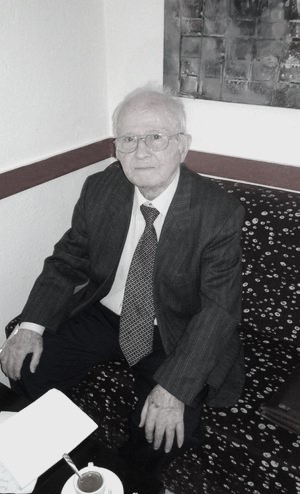
Memorie.al / The well-known translator Myfit Mushi, along with two others, served as the official translator for the PLA (Party of Labour of Albania) delegation headed by Enver Hoxha at the meeting of the 81 communist parties in Moscow in 1960. He could speak endlessly about that meeting, which was so significant for its time. However, despite his advanced age, he recalls with admirable clarity everything about another meeting in China…! In August 1967, right at the height of the Chinese Cultural Revolution, the two Albanian translators were unexpectedly invited to a secret meeting with the Chairman of the Communist Party of China, Mao Zedong, in a hidden region of Southern China near Shanghai, where he lived far from the noise of Beijing.
During the era of the friendship between China and Albania in the 1960s and 70s – a relationship as passionate as it was absurd – many Albanians visited the People’s Republic of China, but few managed to meet the Chairman of China, Mao Zedong. One of those few is Myfit Mushi.
In this interview, Myfit Mushi recounts the details of this sudden and unforeseen meeting with the head of communist China. He and his colleague listened in astonishment and shock to Mao Zedong’s idea that his quotations, which they had been translating for months, “were of no use at all to the Albanian people.”
This stance stood in complete contradiction to the position of communist Albania and of Enver Hoxha himself, who had ordered the urgent translation and publication of Mao Zedong’s quotations.
– Mr. Myfit, you visited China several times during the famous Albanian-Chinese friendship. Can you tell us something about these visits and which one marked their pinnacle?
– It is true that I have been to China several times, and I hold many memories from those visits. I visited that great Asian country – with which we suddenly found ourselves bound by a very strong friendship – in the capacity of a Russian language translator. During my stays there over various periods, namely in 1956, 1960, 1963–1964, and 1967, I was able to form somewhat of an impression of this vast country and its immense population.
I first became acquainted with China in 1956, as a translator for the Party of Labour delegation led by Enver Hoxha, which participated in the proceedings of the 8th Congress of the Communist Party of China.
In 1960, I happened to accompany, again as a translator, our country’s parliamentary delegation led by the Chairman of the Presidium of the People’s Assembly, Haxhi Lleshi, which conducted a visit to China, the Democratic Republic of Vietnam, the Democratic People’s Republic of Korea, and Mongolia.
I made my third trip to the People’s Republic of China around mid-1963, and it lasted until March 1964. My task this time was the publication in the Albanian language, at a printing house in Beijing, of the works of Mao Zedong in 5 volumes.
Meanwhile, I made my fourth visit in 1967, when my colleague, Vangjel Moisiu, and I received an assignment from the apparatus of the Party Central Committee to publish the quotations from the works of Mao Zedong there…! I believe this last one marked the pinnacle of my visits to China…!
– Because during this visit you met Chairman Mao, correct? Can you briefly tell us how that meeting came about?
– Yes, that meeting is indelibly etched in my mind. It was not easy, not to mention it was a stroke of fortune, to meet a leader like Mao Zedong, who was revered like a deity by nearly a billion people. Very few Chinese people themselves managed to shake hands with him. In fact, we had also encountered Mao Zedong on May 1st of that year.
Mao was supposed to appear on the podium. However, he was delayed by nearly half an hour. Everyone began to worry. Meanwhile, we saw several ambulances moving rapidly with sirens blaring. “What is happening?” we asked our Chinese comrades. “Chairman Mao is coming,” they told us. “When people see him, they faint from joy.” This was the reason for his delay in appearing on the podium.
He arrived late, and we, the two Albanian translators, even have a photograph with Mao Zedong from that day. It was more of a greeting, a handshake that was immediately captured by photographers and featured in all the Chinese newspapers the following day. But regarding this episode I am about to recount now, which took place in August 1967, it is worth pausing to share it with you at the newspaper DITA, which I read with particular pleasure.
This period, namely the second half of the 1960s, was very important for communist China and was known as the height of the Cultural Revolution. During this time, I witnessed events that deeply shook all of China and drew the attention of international public opinion, during which one faction of political forces, which also had the armed forces on its side, settled scores with the opposing faction and consolidated its power in all spheres of life.
And right at the peak of this revolution, in August 1967, my colleague from our joint work in Beijing, Vangjel Moisiu, and I completely unexpectedly found us at Mao’s secret villa.
– Had you not been notified in advance by the Chinese about this meeting?
– No. Everything happened completely out of the blue and with lightning speed. We had gone to Shanghai to spend a few days on holiday after exhausting work that often continued past midnight. Suddenly, Fani arrived from Beijing. He was the Albanian-language translator who worked with us, a very sharp young man who had completed his studies at the State University of Tirana and who knew Albanian relatively better than all the other Chinese who had studied alongside him in Tirana.
At that time, he worked in the International Relations Directorate of the Central Committee of the Communist Party of China. One day, while we were having lunch, Fani told us that he had urgently arrived from Beijing on a fighter jet on a highly important mission that involved us as well; however, as to what this mission was, we would find out later.
After we finished lunch, he told us that we were going somewhere. “You will find out what it is about when we get there,” he told us. The car left the large and noisy city of Shanghai behind and shortly after veered off the main highway. Then we entered a forested zone – a literal jungle of forest. It was a deserted, unpaved road on which we drove for over an hour…
– Did you sense or have a premonition that you would be meeting Mao?
– Initially, it was impossible to understand. But traveling for kilometers through the woods, I sensed something, whereas Vangjel did not. “We are going to meet Mao,” I whispered in Vangjel’s ear. He shook his head in denial as if to say, “What nonsense are you talking!” I repeated to him that we would surely meet Mao, while he insisted on his view: “Keep dreaming.”
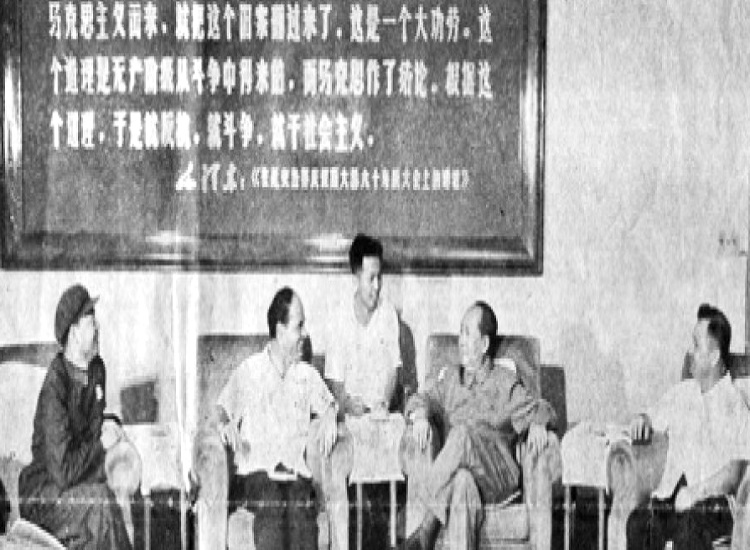
The car stopped in front of a villa surrounded by greenery. Someone stepped out of the villa and opened the car door for us. We got out of the vehicle and followed the escort. In a simple salon stood Mao Zedong. Utterly astonished, we shook hands with him. He invited us to move into another room that looked like a reception area.
We took our seats in armchairs: Mao, myself, Vangjel, and Yao Wenyuan (the youngest figure in the headquarters of the Cultural Revolution), along with Fani, our translator, who many years later would represent his country in Albania in the capacity of ambassador.
– Why was that meeting organized, and specifically with two Albanian translators?
– First of all, we must place it in the context of the time. It was in the Chinese style of that era to release some form of announcement to demonstrate that Chairman Mao was alive and well, thereby simultaneously refuting rumors in the world press expressing doubts that Mao had died.
Our Chinese escorts had told us in confidence that many attempts had been made to assassinate Mao, which is why strict measures had been taken for his protection. In fact, according to them, a plot to assassinate him on the Tiananmen podium with a missile had been uncovered. Since Mao’s appearance at the May 1st celebrations, I do not recall any official announcement being made about him. I believe it was precisely for this reason that our surprise meeting was organized.
In this meeting, which took place on August 16, 1967, at 6:00 PM and lasted a full 90 minutes -something unusual for Mao – the Chinese leader spoke to us in detail about the goals and tasks of the Cultural Revolution taking place in China, its progress, but also the shortcomings that had been observed and its future prospects. He also spoke about the differing stances of the forces operating within this movement and the positions of various political figures.
At one point, he interrupted the conversation and turned to our translator, Fani: “You come from Beijing. Can you tell us what happened at the meeting where Chen Yi was supposed to deliver his self-criticism?” (Chen Yi was a high-ranking military official with the rank of marshal, Minister of Foreign Affairs, and one of the most important leaders of the Chinese Communist Party). Fani explained that on the designated day, in a packed hall, Chen stepped onto the podium, bowed before Mao’s portrait, and said: “Mao Zhuxi, I beg your forgiveness.”
Then he bowed before Lin Biao’s portrait and repeated the same thing. He also bowed before Zhou Enlai’s portrait and begged for forgiveness again. Finally, he bowed before the audience and once again begged forgiveness from a student who had been arrested on his orders for posting a big-character poster (dazibao) against Zhou Enlai. This was, in general terms, the information Fani provided to Mao regarding Chen Yi.
– And how did Mao react?
– Drawing from what he heard, Mao told us that Chen Yi had made serious mistakes during the Cultural Revolution, but he was also a very capable man, and for the time being, they had no one to replace him with. Therefore, Mao said, he would continue to remain in the post of Foreign Minister.
He expressed similar thoughts to us regarding a number of other figures, primarily ministers. Continuing the conversation with us, Mao focused on the perspective of the Revolution, spoke about its four main phases, its immediate and long-term objectives, and the great difficulties being encountered./ Memorie.al