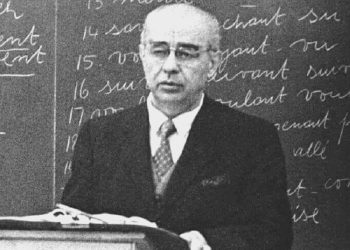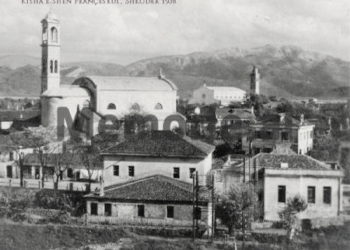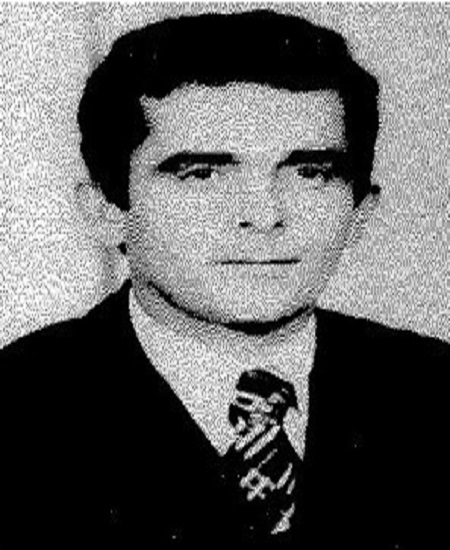
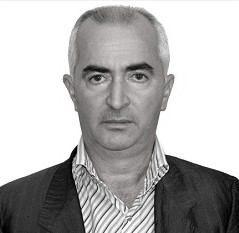
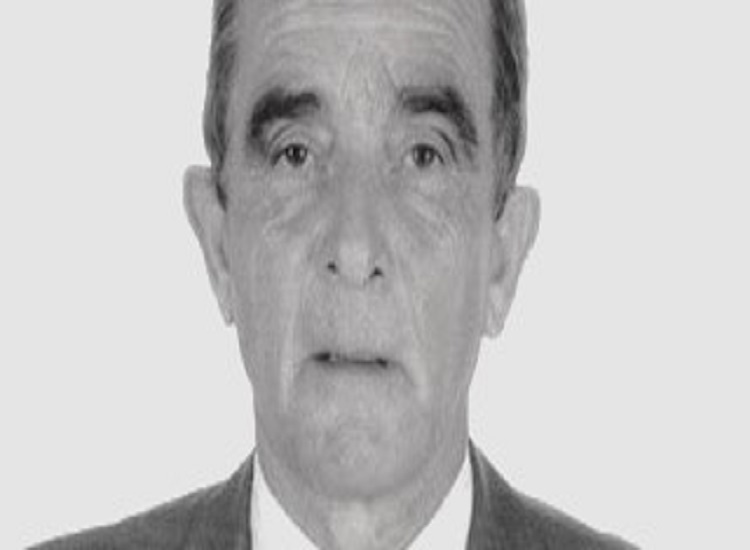


Memorie.al / “I was born into a wealthy family, with patriotic traditions and rare hospitality, in a village near Saranda, seventy years ago. I have lived through two social systems – dictatorship and democracy – and have worked as a geologist and head of geological expeditions in twenty districts of Albania, in one hundred villages of the country, as well as in twelve foreign countries on four continents. The first time I opened my eyes in this life, I saw the land and sky of Nivica, that place blessed by God, in the embrace of sea and mountain – a pearl of generous nature and a brilliant composition of the Creator. I saw the house of the Premti family, located somewhere in a corner of this coastal village of the South, distinguished for its many civic and human values.” Thus speaks, among other things, the renowned scientist, Prof. Dr. Irakli Premti, in his exclusive interview for the well-known journalist Dukagjin Hata.
Mr. Irakli, first of all, how do you remember your childhood and the family in which you were born and raised?
My mother used to tell me that I was a weak and naughty child, who never left two stones together, but quite intelligent. With my peers, I behaved like an adult, so they obeyed and respected me, because I imposed myself on them with my behaviour, as if I were grown up. When I played, I gave myself entirely to the game, as if nothing else existed in the world.
Football was my passion. I played all day with a rubber ball that my father had brought from Saranda, and I wouldn’t let it out of my hand. Perhaps the ball I had was the reason I attracted my peers to me like honey attracts flies, because at that time no one had such a ball. I would become closely connected with football later on, being part of national teams as a footballer and, a few years ago, part of its management and administration.
When I began to grow up a bit, enough to distinguish reality from dreams and illusions, I listened to my father’s accounts about the fate of our family. My father had heard these from his father, and so on, generation after generation, the story of our house had circulated. According to the account of my great-grandfathers, passed down orally to our days, the Premti family came from Israel, 400-500 years ago, during the migration of Jews to Europe and especially to the Balkans due to the persecutions of that time, which would continue into later eras.
My great-grandfather and brothers had many livestock, mostly sheep, which during the winter months they took to areas with milder climates to overwinter. One of these regions, where my ancestors spent the winter with their sheep – numbering up to 1,000 head – was Saranda and mainly Nivica, because of the abundant pastures favoured by the mild sea climate.
At first, the Premti family settled in Greece, and then they came to Albania, where they laid foundations in Kolonja. In Nivica, my ancestors finally settled, where they had much land and property, for which my uncle was declared a kulak.
You told me that your uncle was a partisan – how was he declared a kulak?!
Yes, he was a partisan, even deputy commander of the Coastal Battalion. When the Congress of Përmet was surrounded by Nazi and collaborationist forces, on my uncle’s order, our family handed over 200 head of sheep, which were slaughtered to feed the besieged delegates and the partisans guarding them. As a reward, after liberation, they made him a kulak, and we suffered the consequences of this whole story.
What consequences are you referring to?
When I went to higher education, I went with a hundred difficulties, because the village people didn’t want me, because they called me a kulak’s descendant. Three times I was expelled from higher education, from the Faculty of Geology and Mines, and all three times I returned through the intervention of political and state figures of that time. When they expelled me, they didn’t mention my biography, but I understood.
I eventually graduated from the faculty in 1967 with excellent results, but I very rarely returned to the village, to Nivica – once every three or four years – for fear of class struggle. I was followed by those from the village party, as a kulak’s daughter, even though my family had contributed to the war.
Nevertheless, that did not prevent you from making a career in the field of Geology, where at that time you also held important positions?
I have said and often say in conversations with my friends and acquaintances that the party at that time, with one hand hit me and with the other welcomed me. I knew that my biography wasn’t the obstacle, because our family was connected to the Movement and had contributed to the war and the construction of the new society, but rather some sick fanatics, jealous and malicious people in the village who didn’t wish us well.
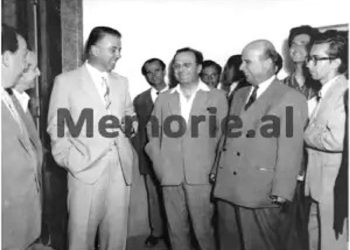
Thanks to my acquaintance with prominent personalities of the time, such as President Haxhi Lleshi, the former first secretary of Dibra, later Minister of Internal Affairs, Hekuran Isai, former Prime Minister Mehmet Shehu, and my course mate, the esteemed Llambi Gegëprifti, I managed to escape many traps of the time, the mechanisms of intrigues and blackmail, which I will speak about later.
Where did you start working as soon as you finished the Faculty? Some of your impressions from the beginning of your career in the field of geological research?
I was assigned to Peshkopi, in the geological enterprise of Dibra. There was a lot of work; it was a region with wide extension and great mineral resources. I made many friends from Dibra, with whom I formed a lasting friendship that continues to this day. The people of Dibra are distinguished for their hospitality, trustworthiness and manliness; they loved and respected strangers very much. Later, leading a team of geologists, we revealed the entire ore-bearing mineral zone of Dibra, from Dypjaka to the top of Pelpenik.
At this time, I want to highlight a problem that arose because of some letters apparently coming from the village, saying that I had a bad biography, that I was a kulak’s son, etc. Added to this were some intrigues of the time, fabricated by some people with full authority in the Bulqiza mine, who wanted to receive decorations by sacrificing others – in this case, me.
The prosecutor of Dibra called me to his office and pressured me, saying that I was not responsibly identifying mineral reserves. He was worried because I had declared more reserves than his friends who ran the Bulqiza mine wanted. They wanted to receive decorations and favours by speculating with the quantity of these reserves, declaring less than there actually was. It was a matter of elbows and clans, but it could also get you eaten – in fact, the prosecutor told me openly: “We are preparing the papers to send you to prison.”
Traumatised, I went out, when luckily I met Hekuran Isai, the first secretary of the district party, on the street. As soon as he saw me, he put his arm around me and said: “We will go home; it’s lunchtime and my wife has cooked beans. Let’s go eat and have a glass of raki.” Willing or not, I was forced to go, as he wouldn’t let go of my arm. There, during lunch, I found the opportunity and told him that the prosecutor had called me to his office, and I told him everything.
Without making it long, he got up and called the prosecutor, scolding him for playing the “games of the ‘pit of Dibra'” as he put it, at the expense of a capable and honest specialist, making pressures and fabricating dirty things! After that, he didn’t dare call me to the prosecutor’s office again, no one bothered me, and I continued my work in Dibra, where I stayed for thirteen years. In those years, I walked a lot, through mountains and fields, in search of mineral resources; I slept in tents and in the homes of Dibran villagers, who welcomed me with generosity and love.
You said at the beginning that you had contacts and friendships with some of the most prominent leaders of the time. Could you be a bit more specific?
During my work in Dibra and later in Tirana, I had contacts with Haxhi Lleshi, who often came to Peshkopi and kept me close, encouraging and helping me. As I said, Llambi Gegëprifti and I graduated together in the same course, and we were and have remained close friends, with family visits. For all the concerns of the time, during a truly turbulent era, I had complete trust only in him, and despite his high political position in the PPSh (Party of Labour of Albania), I addressed him as if he were a brother.
My work connected me with Mehmet Shehu, as I was one of his subordinates. He had a somewhat capricious nature, but he was fair and didn’t harm anyone; on the contrary, he supported the capable. He supported me because I managed to realise several projects in the geological field of defence that no one else would undertake. The former Prime Minister, at that time also Minister of Defence, was a bit strict, but pure and fair. The four times I met with him for work matters left me with an impressive impression of his figure.
What happened next with your life, after being transferred from Peshkopi?
I came to Tirana, where initially I started working in the Ministry of Industry and Mines as the chief specialist for chromium. The minister was Pali Miska. I had a lot of work, especially for field control of chrome-bearing areas and resources, because at that time the discovery and maximum exploitation of these resources were given top priority.
Then I was appointed to the Ministry of Defence as head of the geological sector. It was a job with great responsibility and one of the most strategic sectors of the People’s Army. During meetings with Mehmet Shehu, who at that time was also Minister of Defence, he assigned me several difficult tasks that were within my jurisdiction, and I completed them successfully. On one occasion, when I opposed him on an impossible project related to geological work in a strategic military area, he told me: “If you don’t complete it, you will hang here in the tunnel.”
“If the party asks me to hang, I am ready, Comrade Prime Minister,” I replied. He didn’t speak. We had just entered the tunnel, and in front of me walked Kadri Azbiu, who turned back and shook my hand as a sign of trust and coincidence, telling me: “Don’t speak.” He saw that the situation was dangerous and that any further word from me could have consequences. I completed that task and won Mehmet Shehu’s trust.
A few months before the former prime minister killed himself or was killed (the dots are still not definitively placed on the “i” regarding this matter), he called me and told me that they would send me for specialisation in Italy. That was a big deal at the time, because leaving the country was a forbidden apple, let alone specialisations. I spent thirteen years going back and forth to La Sapienza and the University of Ferrara, where I worked on geological projects, gave lectures and seminars with Italian students, travelling for work and projects in five Italian cities.
When I returned, many great changes had occurred. Mehmet Shehu had killed himself or had been killed, Enver Hoxha had died, Ramiz Alia had changed his political course, and signs of a strong economic crisis had appeared in the country, which would quickly bring deep political and social changes in our country.
What happened next with your life?
I experienced the democratic processes with joy, like most intellectuals and professionals, because under the dictatorship we had to live with our heads in a bag, as the people say – frightened and traumatised by everything that surrounded us. During the second government of the Socialist Party (PS), when Fatos Nano was Prime Minister, Ylli Bufi, then our line minister called me and said: “We have you projected as the General Director of Geology and Mines.”
“If you want, put Mehmet Zaçe,” I told him, “because I have several work contracts with Italy and not only am I busy, but this conflicts with the position you offer me. If you want, make me deputy director.” At first, Mr. Bufi insisted that I be director, but then he accepted my request and I became deputy director. After two years, I became director, while also being president of the national association of geologists of Albania, a member of EuroGeosciences, and a member of several international boards for the treatment and management of mineral resources.
I went to the post of General Director of Mines of Albania on the order of Fatos Nano and stayed until the end of his second government term, even a few months after the end of the elections and the victory of the right. During this time, I issued about seven hundred mining permits, which would give an energetic boost to competition in this sector, which until then seemed completely paralysed.
Something about your engagement after you left the post of General Director of Mines?
I remained without work for some time and in a difficult economic situation. My daughters were in school and had considerable expenses, while I had no source of income. My geologist friends and honest entrepreneurs, to whom I had given mining permits based on the rules and laws in force, knew my honour very well – because I hadn’t even drunk a coffee from them – and now they would come and meet me in a bar-café in the neighbourhood where I stayed and would treat me.
Later, I came across an international project for a tender to be held in Congo, to bring efficiency to one of the most powerful mines in that country. The American entrepreneur of the company “Xheonim”, with whom I contacted, after I presented the project with which I would compete, supported me and chose me to represent them in this tender. She told me to take two or three of my talented geologist friends and go to Congo.
I took Ilir Alliu, Çerçiz Durmishi and Arben Pambuku, and we set off. We arrived in Congo on 3 January 2005. The mine was located in Lumumbashi and was a powerful source for extracting polymetals (lead, zinc, some silver, some gold, small amounts of gallium and germanium). The mine was 2,020 metres deep with 2,017 levels and produced 2 million tons of polymetals per year. Mrs. Rebecca Caskini, of Jewish origin, was a wealthy entrepreneur and had her own bank in the USA. My idea was to compete with a spiral project, which we had used twenty years earlier in Bulqiza (Qafë Buall).
Someone had told Mrs. Rebecca, “Where did you find these Albanians?” but she was determined and did not waver for a moment in her belief that we would win. And her hopes were not disappointed, fortunately. Our project won, and I stayed for about a year in Congo, directing the work, where I truly worked very hard but also felt the satisfaction of having my work appreciated by an owner who knew how to respect people and values.
With Mrs. Caskini – although for family reasons I could not work longer for her, despite her insistence – to this day I have correspondence, messages, phone calls, and a friendship maintained through today’s means of virtual communication, even though she is so far away. I have also worked in Canada and other countries of the world, but the experience in Congo was truly impressive, and I would like it to be repeated once more in my life.
What are you currently doing?
Always working and researching in my field, in the geology and mining sector. In collaboration with some friends and colleagues, under the direction of the Polytechnic University of Tirana, we have carried out several important projects for drinking water, oil, gas, etc., which have great economic and social priority in the country. We have contacted government and state leaders, and we await that these projects – the implementation of which would once and for all solve the year-round drinking water supply for the population – will find practical application, as they are of great benefit and low cost. / Memorie.al