
By Prof. Gazmend Shpuza
Part Two
Memorie.al – The 7-month defense of the city of Shkodra represents, in terms of the power of resistance, one of the greatest battles fought within the context of the Balkan Wars. It will remain one of the brightest pages of patriotism and determination of the Albanian people, not only of that city and its surroundings, for the defense of the territorial integrity of their ancestral lands, a high example of inspiration for the ultimate realization of the Albanian National Revolution. It is also evidence of the wartime cooperation of our people with the realistic forces of Ottoman society at the time, primarily the Turkish people, in defense of mutual national interests and their future.
Continued from the previous issue
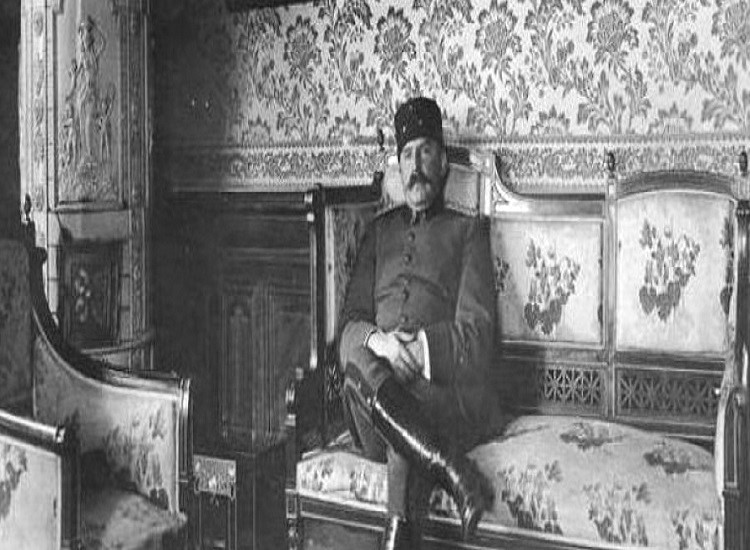
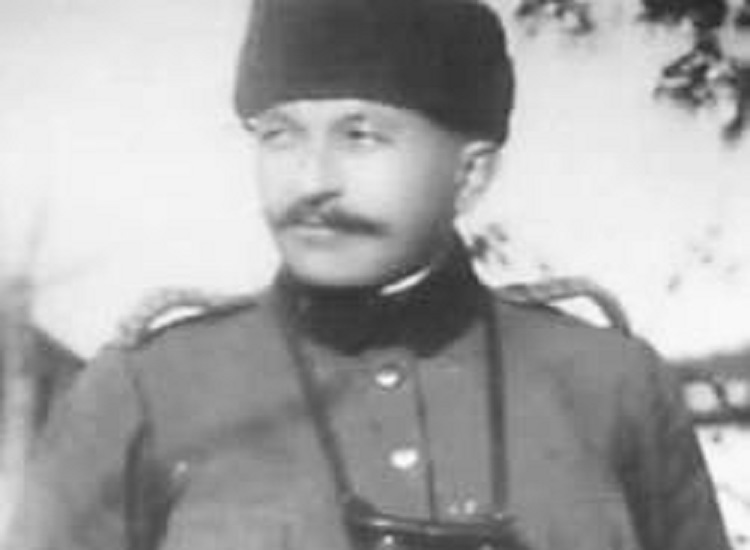
Albanian folk songs from Shkodra and the poetry of Dom Lazër Shantoja testify to the nationwide appreciation of the merits of the Turkish-Albanian general in the defense of Albanian Shkodra. In general, folk songs in Albanian lands depict the famous commander Hasan Riza Pasha as a legendary hero of this war, who was martyred for the interests of Albania.
The well-known researcher of our folklore, Prof. Sadri Fetiu, notes that the songs dedicated to the defense of Shkodra are widespread beyond the regions from which the reservists and volunteers came, all the way to Çamëria.
In the songs of this period, unpublished until recently, besides predominantly negative historical figures such as King Nikola, the Sultan of Turkey, Esat Pasha Toptani, the folk singer distinguishes Hasan Riza Pasha. Apart from him, no other individual positive heroes are encountered from a poetic perspective. His figure represents the generalization of those hundreds of thousands of fighters and martyrs who fell in the defense of Shkodra.
Hasan Riza Pasha had won the sympathy of Albanians during his own lifetime. When the issue of the candidacy for the prince of newly recognized Albania arose, within the ranks of the Catholic clergy, before Orthodox or Protestant candidates, that of a Muslim prince was preferred. According to his biographer, Preng Uli, that of Hasan Riza was also considered. Shkodra once again expressed its respect for Hasan Riza Pasha in 1936, when his remains were reburied in the Komani cemetery with a special ceremony.
In the park of the “Fusha e Çelës” Mosque, Father Gjergj Fishta, in his speech, wove a hymn not only to his military abilities but also to his Albanian patriotism: “Hasan Riza Pasha will be remembered as the best patriot for our salvation from the claws of the Montenegrins, and who was sacrificed by those who did not want the salvation of our homeland. Therefore, Hasan Riza Pasha deserves to be remembered equally with the heroes of the Albanian nation.” In his speech, Father Gjergj Fishta, among other things, openly acknowledges:
“Hasan Riza Pasha had fought and served for the independence of Albania. He was a true friend of Albanians and of Albania.”
While the Mayor of Shkodra, Zejnel Prodani, declared on behalf of the city’s people: “The people of Shkodra will never forget him; he had high feelings for Albanian independence. They curse the cruel hand that was pushed by Esat Toptani to make this Pasha a victim at the most critical time for Shkodra.”
Hasan Riza Pasha declared to the notables of Shkodra in his headquarters: “I too am of Albanian blood.” He had an Albanian mother. This is a major reason that explains why Hasan Riza embraced the Albanian cause and engaged with dedication, even to the sublime sacrifice, for its defense, as one of the best Albanians of that time. Anyone who considers themselves from Shkodra and seeks to reduce him merely to a Turco-Iraqi colonel has not taken into account the appreciation given to him, among so many others, by Father Gjergj Fishta and Dom Lazër Shantoja.
The aforementioned authors knew well that Shkodra’s resistance against Montenegrin forces continued for several months after Hasan Riza’s murder; nevertheless, they dedicate the months-long heroic resistance to his command and ability, and not to his successor. The epitaph composed by Father Gjergj Fishta on the new grave of Hasan Riza Pasha aims to generalize the personality of the legendary commander of Shkodra:
“GAZI (Hero) HASAN RIZA PASHA / A man like the old days / A brave, loyal soldier / Commander of the Ottoman / Armies in Shkodra / Friend of Albania and Albanians / … For the noble defense / Of the Rozafa Fortress / On 30 January 1913, he was killed by / A cruel, treacherous hand / This monument is erected by / The Municipality of Shkodra / An example of manhood for the present / And future times. Here lies buried / THE HERO.”
The agreement between Hasan Riza Pasha and the patriots of Shkodra to raise the Albanian flag in the fortress alongside the Turkish one was sabotaged by his treacherous murder by Esat Pasha’s man, Osman Bali.
All the military circumstances, regarding the combat determination of the Shkodra garrison and the city’s residents, the real ratio of combat forces at the front after the withdrawal of Serbian divisions, despite the scarce food reserves, in no way justify the act that could be called capitulationist by Esad Pasha for the surrender of Shkodra. This truth was thrown into the face of the Toptani Pasha by Sulço beg Bushati.
If we consider specifically the decision of the London Conference of Ambassadors that Shkodra should remain within the borders of the Albanian state, the treacherous character of Esad Pasha’s capitulation becomes even clearer, precisely at an unjustifiable moment. Moreover, units of the naval fleets of the Great Powers had blocked the Montenegrin coast to force the disobedient King Nikola to submit to their decision to withdraw his troops from Shkodra.
On the other hand, we must consider the severe consequences that Esat Pasha’s betrayal had on the determination of the borders of northern Albania. To save Shkodra, sold by Esadi, Dibra, Peja, and Gjakova were sacrificed. Therefore, the folk song of Shkodra sings to the hero of its defense, the Ottoman Pasha of Albanian origin, Hasan Riza, and not to the Albanian Pasha who signed the capitulationist act, Esat Toptani. The latter, as the French photojournalist testifies, humbly hands the key of the Rozafa Fortress to Prince Danilo.
The well-known writer Skënder Drini, after an in-depth study of literature and documents, aptly titled his novel dedicated to the defense of Shkodra in 1912-1913, “Kill the Treason”.
The annexationist policy of neighboring chauvinist ruling circles bloodied the Western Balkans not only at the beginning of the 20th century but also at its end, causing three additional Balkan wars at the end of it. Seen from this perspective, it can be said without exaggeration that the Albanian-Turkish defense of Shkodra in 1912-1913, on the eve of the world war, saved the peoples of the region, first and foremost the Albanian people, from another Balkan war.
Above all, it saved the inhabitants of northwestern Albania from nearly a century of oppression accompanied by an unprecedented ethnic and religious genocide, like that experienced by Albanians from other northwestern, eastern, and southern regions.
Folk songs speak of the nationwide appreciation that the resistance led by Hasan Riza Pasha received, not only in the besieged Shkodra region but also in the regions of Eastern Albania, today’s Western Macedonia, from which volunteer forces came to defend the northwestern city, and all the way to Çamëria.
Compared to the nationwide experience of the defense of Shkodra, some poems published in 1913 by Father Gjergj Fishta about “Toptanasi” (the man from Toptani) did not have a lasting echo, precisely because they were dedicated to the traitor of this heroic defense. They were apparently dictated to the author by emissaries from Vienna in the context of their efforts to detach Esad from the influence of Balkan and trans-Adriatic politics.
Father Gjergj himself did not include those “lofty verses about the unprecedented resistance in an extraordinary siege, where over 55,000 armed men fought around the heroic city” in his later published collections. Meanwhile, researchers of his poetic work no longer even mention them.
The war of the military forces of the Balkan allies inside the Albanian territories was not, as presented by Balkan historians and many European authors, a war for the Europeanization of the Balkans, for its de-orientalization. It was a war that, with the support it found in many European capitals, also led to the Balkanization of Europe.
The unjust, annexationist war of Montenegro for the conquest of Shkodra cannot be justified today with supposedly Euro-Atlantic stances. By claiming today the elimination of oriental mentalities, the annexationist policy of neighboring chauvinist ruling circles is essentially justified – a policy that bloodied the Western Balkans until the end of the last century. In the end, nothing else is done but to justify Esad’s betrayal.
The anniversary of the murder of Hasan Riza Pasha falls on the 30th of this month. Although it is not a full anniversary, at the very least, the Municipality of Shkodra, political forces, and patriotic civil society have a duty to honor the hero of the nearly seven-month heroic defense of their city. To send a wreath or at least a bouquet of flowers to the lapidary and the hero’s grave.
They can be fearlessly joined even by someone who, with pseudoeuropeanist, anti-Ottoman pretensions, had not agreed to the erection of the monument in memory of the Hero of Shkodra. The central authorities could also reconsider redecorating the hero in full accordance with his merits, clearly motivated.
This honor does not undermine efforts for Albanian-Serb rapprochement in the spirit of European unification, for which the Serbian government expresses readiness. But let us remember that its members, unseparated from the outdated mentalities of the King and Pashiq, even in our days, lay wreaths on Esad Pasha’s grave. In this honoring of Esad Pasha, reinterred in Belgrade, they express their preferences towards Albanian officials, not only in Pristina but also in Tirana, with whom they declare they are ready to enter negotiations.
The pro-Ottoman stance during the entire Balkan War of many personalities of the anti-Ottoman National Movement, even Christians and even clerics such as Fan Noli, Gjergj Fishta, and others, speaks of their realistic assessment of the deadly danger of Balkan aggression on Albanian lands. All this is difficult to explain, as is claimed, according to a supposedly Europeanist concept of recent years, by the oriental spirit of Albanian activists, which allegedly left Albania outside the Balkan Alliance.
Esad’s treacherous stance, the stance, even if brief, pro-Montenegrin stance of the Catholic chieftains of the Highlands above Shkodra – among whom there were no shortage of priests, and even, as Dom Nikollë Kaçorri testifies, the Archbishop of Shkodra himself – does not speak of a pro-European orientation on their part. Their perspective testifies that the national interests of Albanians even today are not in opposition to their European orientation today, even though certain segments in the Balkans, and why not even in Europe itself, have not yet been freed from the shadows of the past. / Memorie.al