By Bashkim Trenova
Part Nine
NAZIBOLSHEVISM – LITERATURE AND THE ARTS
PREFACE
Memorie.al / Historians, political philosophers, intellectuals from different schools or positions have devoted thousands upon thousands of pages, entire volumes, studies and articles to the comparison between Nazism and Communism. Generally speaking, their publications and studies focus on the police control of society by these dictatorships, the role of the dictatorial state hierarchy and the head of state as suppressors of free thought, the omnipresent role of official propaganda in society, the mass massacres and the network of concentration camps, the activities of the police – the NKVD in the USSR (later the KGB) and the Gestapo in the Third Reich. In his book Le Passé d’une illusion (The Past of an Illusion), François Furet notes that Nazism and Communism share the same opposition to liberal democracy and to what they call “capitalist bourgeoisie.” Both ideologies claim to be socialist and use the image of socialism. Communist countries called themselves “socialist.” “Nazism” is a shortening of National Socialism.
Continued from the previous issue
In 1936, while sailing on a tanker in the Caspian Sea, the writer Yuri Krymov, “inspired” by Stakhanov, wrote the novel Tanker Derbent. The author tells the story of the sailors of the Caspian Sea, the oil tanker workers, the engineers, etc., who, after the birth of the “Stakhanovite movement,” enthusiastically implements the first five-year plans. The novel shows the process of forming the “new man,” his personality under the conditions of socialist construction. Thus, Basov, an ordinary Party member, transforms into a talented leader of the working masses. In difficult trials, facing the flames, even risking their lives, the crew of the Tanker Derbent becomes even stronger.
In January 1939, for outstanding achievements in the development of artistic literature, the writer was awarded the “Order of the Red Banner of Labour.” Based on Tanker Derbent, Krymov, together with playwright M. Ott, wrote a play that premiered in July 1939 at the Central Theatre of Water Transport. In 1940, the book was published in English, German and French. That same year, director A. Fainzimmer and screenwriter S. Ermolinsky began work on the screenplay for the film Tanker Derbent, which was completed in May 1941. Krymov’s novel was published about 20 times and translated into many foreign languages.
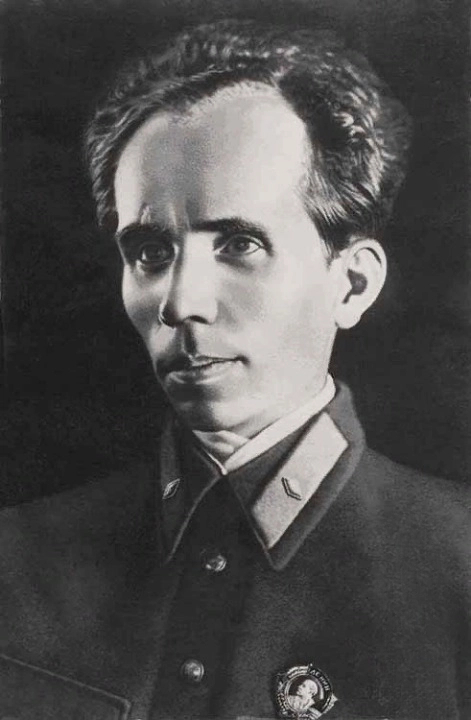
The most prominent example of this type of novel is perhaps that of Nikolai Ostrovsky, How the Steel Was Tempered (original Russian: Как закалялась сталь), written between 1930 and 1934. This autobiographical novel tells the life of an exemplary Soviet man, Pavel Korchagin. The author describes the years 1918–1924, the formation of the hero’s personality, how he was expelled from school, how he managed to forge his path in life, his participation in the Civil War, his active membership in the Komsomol (the communist youth organisation) and likewise in the Communist Party. In love with a Party comrade, he suppresses his desire to approach her through sheer willpower. Korchagin devotes himself to work, to the building of socialism. He works hard even though he is severely ill with typhus. At the end of the book, Pavli is only 24 years old, but it seems he has already lived an entire life. “The most precious thing a man has is life. It is given to him once, and he must live it so that it is not unbearably painful for the years spent without purpose,” he says.
The novel acquired a special heroic character because Nikolai Ostrovsky wrote it while he was seriously ill, completely paralyzed, nearly blind and on the verge of suicide. He dictated his novel. During the existence of the Soviet Union, 36 million copies of the novel were published (in several editions). It was also translated into many languages of the USSR and adapted for the screen several times. Entire generations grew up in the land of the Soviets with Pavel Korchagin as their model, embracing the hero’s values, his stance and his ideal, his courage, his fanatical love for work, his harsh attitude towards himself, his disagreement with and unbending stance towards the enemy, towards traitors, until their end. Nikolai Ostrovsky and his hero, Pavel Korchagin, served as symbols of the generation of the Civil War and socialist construction.
Another Soviet writer, Alexander Avdeenko, is himself an example of the re-education of a criminal, through work, into a “New Man.” This is the theme of I Love (Russian: Я люблю), published in 1933. This novel too is largely autobiographical. This can be understood from the writer’s later public statements. He himself declared: “Little by little I became a human beast. This kind of biped is the most terrible of wild animals. Nothing remained in me: neither love, nor kindness, nor sensitivity, nor regret, nor compassion.”
In his novel, Avdeenko contrasts his hellish past with the radiant future being built in Magnitogorsk. The novel’s hero, Sanya (short for Alexander), having lost his entire family, a victim of poverty, exploitation and alcoholism, becomes a gangster, thief and drug addict. Placed in an orphanage (detdom), he rebels, runs away, starts stealing again, robs trains, kills his accomplice, and is captured half dead by a community of former besprizorniki (homeless children), whose pedagogy was inspired by that of Makarenko. He then continues his studies, is accepted into the Komsomol and goes to work at a construction site in Magnitogorsk in 1931.
From assistant mechanic, he quickly becomes a mechanic, showing heroism at work. The bright future appears to him like a utopian dream. The novel, which begins with the disintegration of a working-class family before the Revolution, ends with the birth of a new socialist family. The life of the peasantry, the types, characters and problems of the village have always attracted Russian writers. From the late 1920s, Soviet literature, besides war and socialist industrialisation, devoted itself to collectivisation in the countryside. It is well known that renowned authors of the pre-October Revolution period – Turgenev, Tolstoy, etc. – dealt with the figure of the Russian peasant and the life of the Russian village in their works. Turgenev wrote A Sportsman’s Sketches (Russian: Записки охотника) while Tolstoy wrote War and Peace (Russian: Война и мир) and Anna Karenina (Russian: Анна Каренина). One can notice, especially in Tolstoy, a picture of the peasant family completely united by work in nature, a solidary family in whose chain each member has his place. The village in Tolstoy’s work is a happy, healthy and pure microcosm of “primitive man.” However, according to Soviet criticism, even the greatest pre-revolutionary artists failed to discern the immense explosive force accumulated by the Russian peasantry over centuries of oppression. This opportunity was given to them by the Bolsheviks and the new kolkhoz life! Still according to this criticism and the literary and artistic output of the time, no one noticed that a Chapaev could be born in the Russian rural environment.
And yet he was born! Thus, from its beginnings, Soviet literature was populated with a series of peasant characters of a new type, super-heroes of labour, and super-heroes of battles. Vasily Chapaev is perhaps the most prominent of this line. He is not an imaginary character but a hero of the civil war, whom writer Dmitry Furmanov brought to life in a chronicle-novel entitled Chapaev (Russian: Чапаев). Furmanov, himself of peasant origin, set out in January 1919 for the Ural front to fight the Tsarist Admiral Kolchak. There he met the future hero of his novel, who at that time commanded a division of the Red Army composed mainly of insurgent peasants. Sent to this division as commissar, Furmanov would live and fight alongside Chapaev for six months, almost until the latter’s death.
Chapaev, as Furmanov describes him, is a kind of superman, the son of his peasant environment, embodying its most typical traits. The novel, within the framework of Socialist Realism, is valued as a book dedicated to the revolutionary people, the sole creators of their own history and their heroes. From the very first pages of the novel, Furmanov gives a general, vivid portrait of the men and women who fight alongside Chapaev and adore him. They are presented as harsh, enthusiastic and ready to clash with the forces of oppression, ready to give even their lives for the revolution. In his diary, Commissar Furmanov writes about the self-taught peasant leader, revealing “what a personality, what an original, colourful figure he is against the background of the insurgent peasantry!”
The novel was made into a film and is a kind of ideological message. While people were still in a chaotic state as a result of the overthrow of Tsarism, the consequences of the Civil War and the coming to power of the Soviets, books like Furmanov’s reminded readers of the sacrifices made for a bright future, or for the socialist paradise that had to be built. The Bolsheviks demanded that writers reflect kolkhoz life in their work, that they participate personally not only in the building of socialism in the city but also in the countryside – i.e., to exalt not only the first industrialisation projects of the country but also the “new life” in the kolkhoz village. The muzhik, according to Bolshevik thinking, had to represent the strong kolkhoz peasant, the son of the revolution – in other words, a “Soviet muzhik” with a sickle in his hand, embracing Stakhanovism and solidary with the muscular worker who holds his pickaxe high.
During the years 1921–1926, many Soviet writers such as Leonid Leonov, Isaac Babel, Lydia Seifullina, etc., wrote about the birth of new notions of morality in the rural environment, against the patriarchal way of life and about the fierce struggle between poor peasants and rich peasants, the kulaks. In their work, the peasants who defended the revolution are distinguished from the kulaks and saboteurs because they aspire to a “true life,” they affirm human dignity. Later, in the years 1928–1932, Nikolai Kochin, Kuzma Gorbunov, Ivan Makarov, Vasily Kudashov, Fyodor Panfyorov, etc., would write a series of works on collectivisation. Essentially, they reflect its initial phase. The decisive events of the collectivisation years would be dealt with by Sholokhov.
Mikhail Sholokhov published in 1932 the novel Virgin Soil Upturned (Russian: Поднятая целина), dedicated to the collectivisation of agricultural land in the Don region. The novel tells of a Cossack village from January to July 1930. Soviet power has decided that the Don lands must be collectivised without delay. It is a decisive moment of what has been called the “Second Revolution,” which began with the Bolshevik campaign of 1929, with the pumped-up enthusiasm and dreams for a future that is always promised and passed on only to the next generation, with its contradictions that were accompanied by unbelievable crimes and savagery.
Sholokhov, without hesitation, reflects the Party’s decisions, even though instinctively he understands the Cossack peasant, who would rather die than accept collectivisation. In the novel, he emphasises the people’s anger against the kulaks. For him, collectivisation is the direct continuation of the revolution and the civil war: a revision of the psychology of the owner, the search for a fair organisation of collective work, the birth of new moral standards. A negative character also appears in the novel – a former White Guard – that incites rebellion and disobedience.
Virgin Soil Upturned is a special novel, still considered a masterpiece of Socialist Realism. Reading it became almost compulsory for the leaders of kolkhozes and sovkhozes (state farms). This novel, as well as other works published by Soviet writers of the time, stands out not for what it describes, not for what it gives, but for what it hides, for what it remains silent about: the opposition of the Russian peasantry to collectivisation, the terror exercised against them and the mass famine after the creation of the kolkhozes, the fact that a kolkhoz peasant had no right to be issued a passport and that without this passport he had no right to move to live and work in the city – that he was a kind of serf of the dictatorship of the proletariat, fatally bound to the kolkhoz.
Sholokhov served the Soviet regime in an exemplary manner, with an unwavering devotion to communist ideas, condemning opponents, demanding their elimination and cursing the “imperialist and rotten” West. His books became objects of public discussion in factories and kolkhozes. They also served as reference texts for young writers loyal to the norms of Socialist Realism. Finally, it should be added that he believed in a “better future,” but when hopes for that “future” disappeared, Sholokhov almost disappeared from literary life. He withdrew to his village of Vyoshenskaya – a name as important as Yasnaya Polyana had been in Tolstoy’s time.
To perhaps gain a more complete idea of the role of Soviet Socialist Realist literature and the conditions of its existence, a few titles of articles published in the contemporary press can be mentioned. They testify to the role of prison guard, of medieval inquisitor, that the Soviet regime played towards literature. Here are some examples: “Cosmopolitans of Science and Literature” (A. Tarasenko, Novy Mir, 2, 1948); “The Historical Novel and Its Criticism” (F. Aleksandrova, Novy Mir, 8, 1948); “Soviet Literature, Standard-Bearer of Soviet Patriotism” (N. Masslin, Oktiabr, 11, 1948); “Against Anti-Patriotic Aestheticism and Formalism in Poetry” (A. Dementiev, Zvezda, 3, 1949); “For Party Spirit in Critical Dramaturgy” (A. Pereventsev, Oktiabr, 2, 1949); “Against the Survivors of Formalism and Bourgeois Objectivism” (I. Grinberg, Znamia, 11, 1949); “For an Unyielding and Objective Criticism” (V. Novikov, Zvezda, 5, 1950); “On Some Errors in the Science of Literature” (A. Belik, Oktiabr, 2, 1950); “Research Work in the Poetry of Our Days” (B. Soloviev, Zvezda, 1-2, 1952); “Let Us Raise the Artistic and Ideological Level of the Works of Soviet Literature” (V. Ivanov, Znamia, 12, 1952).
Of course, it cannot be said that all Soviet writers fell into step with the marching rhythm of the Kremlin. Not all were rewarded, enjoyed privileges, were decorated, and won the smiles and praises of the Bolshevik leaders. Vladimir Lenin, in a speech delivered on 3 November 1920 at the General Conference of Political Education Organs attached to the popular education sections of the Russian Governorates and Uyezds, emphasised: “…every man must take this side, our side, or the other. All attempts to take neither side end in failure and scandal.” The post-Revolution writers who did not line up on either side – or more precisely, who for various reasons did not serve as “engineers of the soul,” who did not synchronise their inspiration with the chimes of the Kremlin clock – were threatened and left unemployed, faced slander, camps and prisons, psychiatric hospitals, emigrated or were even expelled from their homeland, committed suicide or were killed.
Almost immediately after the October Revolution, during the years of the Civil War, in 1919, the writer Aleksandr Ivanovich Kuprin immigrated to France. He died in complete poverty in 1937. The writer, novelist, short story writer, poet, translator and literary critic Vladimir Nabokov left the country on 15 April 1919. He first passed through Greece to France, then to Britain and Germany, eventually settling in the USA. Dmitry Merezhkovsky, known mainly as the author of historical novels, one of the most famous writers of the early 20th century, abandoned Russia in December 1919, settling first in Warsaw and then in Paris. The poetess Zinaida Gippius and the writer Dmitry Merezhkovsky (her husband) emigrated in 1920, first to Poland and then to France. During that year, Ilya Zdanevich also went into emigration.
In January 1920, Ivan Bunin – one of the greatest writers of 20th-century Russian prose, the future first winner of the Nobel Prize in Literature for a Russian writer – left the country to settle in France. After the October Revolution, the poet Konstantin Balmont also left the country and settled mainly in France. The poet and historian Ilya Zdanevich emigrated in 1920 and, after a short stay in Istanbul, settled in France, in Paris, in 1921. Followed by the Cheka, having been denied the right to publish, disillusioned by the consequences of the Bolshevik revolution, the poet Andrei Bely – one of the greatest Russian writers of the 20th century – left for Germany in 1921.
In 1922, the poets Vladislav Khodasevich, Marina Tsvetaeva and Georgy Ivanov also emigrated. Later, the poet Vyacheslav Ivanov also left. In 1922, Lenin expelled 150 intellectuals from Russia. Among them was the writer and journalist Mikhail Osorgin, who settled first in Berlin, then in France. The poet Vladislav Khodasevich also immigrated to France in 1922. The writer, novelist, short story writer, playwright, translator Boris Zaitsev finally left Russia in 1922, settling in France in 1923. Mikhail Petrovich Artsybashev immigrated to Poland during that same year. Nikolai Berdyaev, the most widely read writer among the Russian emigration, was also expelled from the Soviet Union in 1922. Mikhail Osorgin was also expelled in 1922. Vladislav Khodasevich emigrated in 1922. In 1923, the writers Ivan Shmelev and, after a stay in Berlin, Aleksei Remizov, also settled in France. The writer, poet and publicist Mikhail Artsybashev also immigrated to Poland during that year, while Lev Natanovich, writer and playwright, immigrated to Germany. After being banned from publishing, accused of “anti-Sovietism,” after a stay in Berlin in 1931, Yevgeny Zamyatin immigrated to France. In the following years, other writers were expelled or left the land of the Soviets. The poet Aleksandr Galich also immigrated to France, while Lev Kopelev immigrated to Switzerland. After leaving with his son for Marseille in 1940, the poet Victor Serge settled in Mexico, where he died in 1947 in deep poverty and under suspicious circumstances – as has been almost universally accepted – at the hands of Soviet agents.
In June 1973, Vladimir Maksimov, after being expelled from the Writers’ Union and spending several months in a psychiatric “service,” left to settle in Paris. In 1974, Vladimir Voinovich, after having his Soviet citizenship revoked, left to settle in Stockdorf, Germany. Subsequently, Aleksandr Zinoviev, after being tried as “anti-Soviet” and for failing to respect ideological norms, after being expelled from the Party and stripped of all his scientific titles and military decorations, after being expelled from the Institute of Philosophy of the Academy of Sciences and having his passport confiscated, emigrated to settle with his family in Munich, Germany. By mentioning only these authors, the picture of writers or poets who emigrated during the dictatorship of the proletariat is certainly not complete. It can be “enriched” with dozens and dozens of others who left the Soviet Union in the years 1970–1990 and afterwards. Bolshevism clashed with prisons and concentration camps – or, as they are known worldwide, “gulags” – secretly and openly executed, through show trials, many creators of literature. Several other well-known poets and writers who did not leave or could not leave ended up committing suicide or were killed by the dictatorship. / Memorie.al