By Thomas Frashëri
Part One
Memorie.al / “After the misfortunes of June, the sovereigns and ministers of Norway, Holland, Luxembourg, the president and ministers of the Polish government, and later the Belgian government cabinet had arrived in British territory. The Czechoslovaks began to organise, while the King of Albania undertook several contacts.” In General de Gaulle’s *War Memoirs*, this is the only allusion made to the royal Albanian government in exile. Laconic, almost insignificant, this note nonetheless conveys the opinion that the leader of Free France held regarding the situation of the Albanian Kingdom during the first years of the Second World War: he recognised the legitimacy of the King of the Albanians and, ranking him alongside the other exiled sovereigns of allied countries (Holland, Luxembourg, Poland, Czechoslovakia), considered Albania as a resistant allied country.
He did not change this opinion later and would repeatedly express regret that this allied country fell under the yoke of Slavic and communist rule. The conviction that General de Gaulle held on this point was not insignificant in the 1940s. By recognising the Albanian resistance, Free France overturned the Franco-British position of April 1939, which consisted of not openly denouncing the Italian aggression against Albania on 7–12 April of the same year.
If the French Third Republic had remained silent on this aggression, it was due to the fact that France did not want to repeat its open opposition in the League of Nations to the Italian invasion of Abyssinia three years earlier. This reaction had pushed Il Duce to sign the “Pact of Steel” with Hitler, even as Mussolini himself continued to express a desire for rapprochement with the Western “Plutocracies,” as he called the rich capitalist democracies, England and France in particular.
In 1939, while the fascist government was planning the annexation of Albania – which had long been under Italian influence – to counterbalance the annexation of Czechoslovakia by the German Reich, and was making efforts not to share the fate of Germany and Japan, France could do nothing but hope for a de-escalation of the seemingly imminent and inevitable conflict with Rome. Italy’s non-engagement had to be preserved at all costs, even though Paris and London were aware that Rome was not able to deploy full military units before 1942. Thus, any frontal clash with the Axis over Balkan issues, and particularly concerning Albania, had to be avoided in order to prevent German intervention, which might awaken the dormant sympathies of the Greek, Yugoslav, Bulgarian or Romanian governments for the Third Reich.
That is why the French Third Republic not only silently accepted the usurpation of the Albanian royal crown by King Victor Emmanuel III, but also acted in such a way that the denunciation of Italian aggression against Albania – transmitted officially to the Secretary-General of the League of Nations, Joseph Avenol, by King Zog I himself, who was in Greece on 9 April 1939 – had no echo in the international arena. As if by the cynicism of history, France would find itself in a situation similar to that of Albania in May–June 1940, when, aggressed by Mussolini’s Italy; it would find itself trampled under Il Duce’s “boot.”
Logically, and as a consequence of the denunciation of the irresponsible foreign policy of the 1930s pursued by the Third Republic, General de Gaulle would consider the overthrow of King Zog I of the Albanians by the Italians as invalid and non-existent – a fact evidenced by the correspondence between the two state leaders, through which the leader of Free France addresses a legitimate sovereign, not merely the representative of a certain group defending Albanian interests.
It was precisely the Italian invasion that forced the royal family to abandon Albania. King Zog I could not organise an internal resistance, for various reasons that historians still debate. But he hoped to organise a resistance outside Albania with more troops and matériel than what Albania currently had available – supplies that had long been in Italian hands. For him, a return to the country was possible through the unification of the forces that had remained loyal to him, just as had happened in 1924, when, driven from power and exiled because of a revolution, he had triumphed over his opponents. However, the international context in 1939–1940 was no longer the same as in 1924.
As the representative of the unity of the entire Albanian nation – autochthonous in some Yugoslav and Greek territories – King Zog’s presence was no longer welcome either in Belgrade or in Athens. Forced to leave Albanian soil by a long sea journey, he passed through Turkey, the Baltic countries, and France where, among other things, he also witnessed the defeat of the Third Republic.
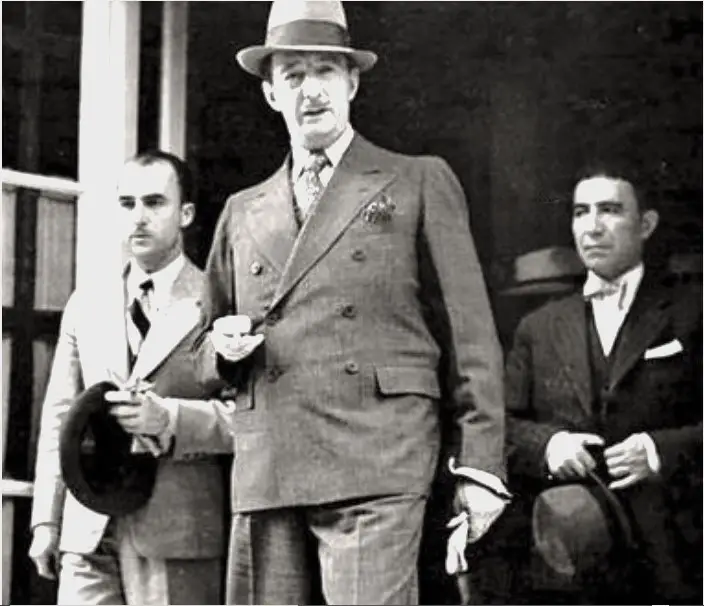
King Zog and his suite arrived in England on 26 June 1940, first at the Ritz Hotel, then at the villa “Forest Ridge” in Sunningdale, Ascot, and finally at Parmoor House in Oxfordshire. It is not impossible that King Zog and a good number of young Albanians, both inside and outside Albanian territory, heard General de Gaulle’s appeal of 18 June or that of 22 June 1940 through the waves of the BBC, as has been attested by some testimonies.
Even though the British had categorically forbidden him any kind of resistance act, King Zog attempted twice, between November 1940 and April 1941, to organise fighting troops who would penetrate Albanian territory via Yugoslavia or Greece to destabilise the Italians and incite the Albanian people to revolt. During this same period, King Zog tried to lay the foundations for a joint Greek–Albanian–Yugoslav anti-fascist action, but without success. These projects were not approved by the British, as the Yugoslav regency, which was drawing closer to the Reich, had informed them of its formal opposition. The Greek government did not want in any way to strengthen a nationalist Albanian resistance, which would compete with its own and which could become an obstacle to Greece’s future annexation of southern Albania. It is worth noting that the British had more faith in the future of the communist resistance, organised and strongly consolidated thanks to the ideology of the emissaries of the Yugoslav Communist Party.
In these rather difficult circumstances, King Zog, who was trying to gain as much credibility as possible before the Allied powers, deemed it reasonable not to abandon the possibility of weighing at least a little on the future resolution of the world conflict. For this reason, he decided to support the royalist resistance created within Albania, centred around an officer of the former regular Albanian army, Major Abas Kupi. For this same reason, the King began to encourage and authorise the officers of his entourage, as well as all Albanians who supported him outside Albania, to engage themselves within the framework of the armed forces of the Allied powers in order to be present in the various theatres of war operations. Even though this engagement could only be symbolic in numerical terms, it had to contribute to Albania’s participation in the final victory.
Inspired by the example of the Gaullist resistance outside France, the King of the Albanians wanted a military participation that was symbolic yet concrete. This is evidenced by various memoranda that the monarch sent to Roosevelt, as well as to the great powers gathered at the London Conference on 23 September 1941. General de Gaulle responded to the King’s request by means of a letter dated 3 December 1941, in which we read, among other things: “Your Majesty may be assured that France, much afflicted by war and foreign invasion, shares in the bitterness and sufferings of the Albanian people and remains faithful to the traditional friendship between our two countries.”
General de Gaulle was aware of the organisation of a resistance in Albania. He closely followed, with considerable interest, the Greek and Yugoslav war and resistance, expressing a marked and unapologetic preference for the nationalists at the expense of Tito’s communist partisans. As early as 1940, he had intended to send a French contingent to Albania in order to participate in the liberation of that country and of Greece, but the Foreign Office opposed it, basing its opposition on false pretexts. In fact, the British government did not look favourably upon the deployment of a French contingent in Greece, which might jeopardise British influence in the region after the final victory. In Albania, the communist resistance – which had somewhat adopted General de Gaulle’s motto, “One war, and one leader” – was well organised and prepared thanks to British missions.
Nevertheless, even though Enver Hoxha, the head of the communist resistance, listened to London’s radio broadcasts, no contact appears to have been made with Free France until the creation of the provisional government of the French Republic in Algiers and the entry of the communists into the government cabinet.
General de Gaulle had the opportunity to meet and appreciate elements of the royalist Albanian resistance who were abroad. These men had to fight under the flag of Fighting France, for their homeland and their sovereign, but also for France and for freedom everywhere in the world. This engagement would not be without consequences for the conception of France’s Balkan policy during the first moments after the Second World War.
The engagement of Albanians and the diaspora under the French flag
The first to openly show their engagement were members of an Albanian group in Istanbul, loyal to the King, led by officers of the Albanian Army – particularly officers of the Royal Guard who were in the old capital of the Ottoman Empire, one of the rare places where the Albanian consulate was still open. The Republic of Turkey had not, in fact, recognised the Italian annexation of Albania and continued to maintain diplomatic relations with King Zog.
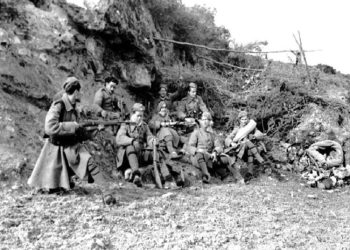
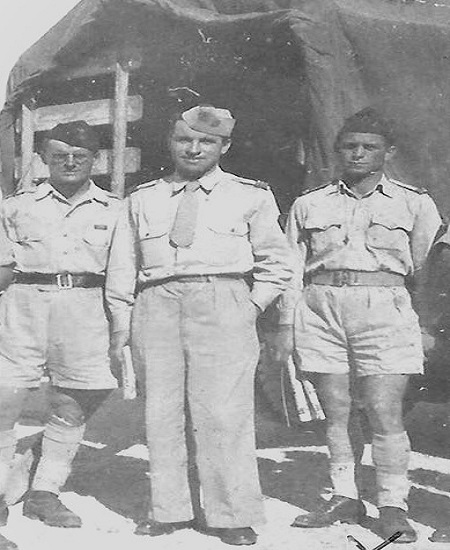
Mobilised by British agents of the SOE (Special Operations Executive), the Albanians living in Istanbul insisted on participating in the war under French uniform rather than British. A few days after General de Gaulle’s reply to the King regarding the Allied Conference at the end of 1941, 38 Albanians joined the Free French Forces of the Foreign Legion in Syria, Lebanon and Palestine.
The majority of the Albanian volunteers were pro-Monarchy. Their constant contacts with King Zog were ensured by officers of the Royal Guard: Captain Adem Shehi and Faik Elmazi, Second Lieutenant Rexhep Bajraktari, and Sergeant Ismail Shemsedini. All were led by the King’s advisory chief, Colonel of the Guard Hysen Selmani. Among those who engaged under the Free French Forces, there were not only individuals upon whom oblivion has cast the dust of time. King Zog’s intimate circle did not fail to set the example.
We cannot fail to recall Commander Hysen bey Agolli-Doshishti (1914–2004), the nephew of King Zog, a member of the royal family and former student of Saint-Cyr, who joined the Foreign Legion as early as 1941 and fought alongside the Albanian forces incorporated into the Free French Forces in the Levant. From the moment of his recruitment as a volunteer, he took part in the 6th Infantry Battalion of the 3rd Brigade of the Levant forces, created after their reorganisation by General de Gaulle on 16 July 1943.
King Zog also had to part for many years with one of his most loyal men, Guard Lieutenant Jusuf Begeja (1912–1992). This former student of the Military School of Rome (Collegio Scuola Militare di Roma) had begun his military career as an infantry lieutenant in the 1st Battalion of the 1st Regiment of the Royal Guard in Tirana in the 1930s, just like Commander Hysen bey Agolli-Doshishti. An officer of King Zog in exile, he had asked the sovereign’s permission to volunteer for the Free French Forces. / Memorie.al