
By Armand Plaka
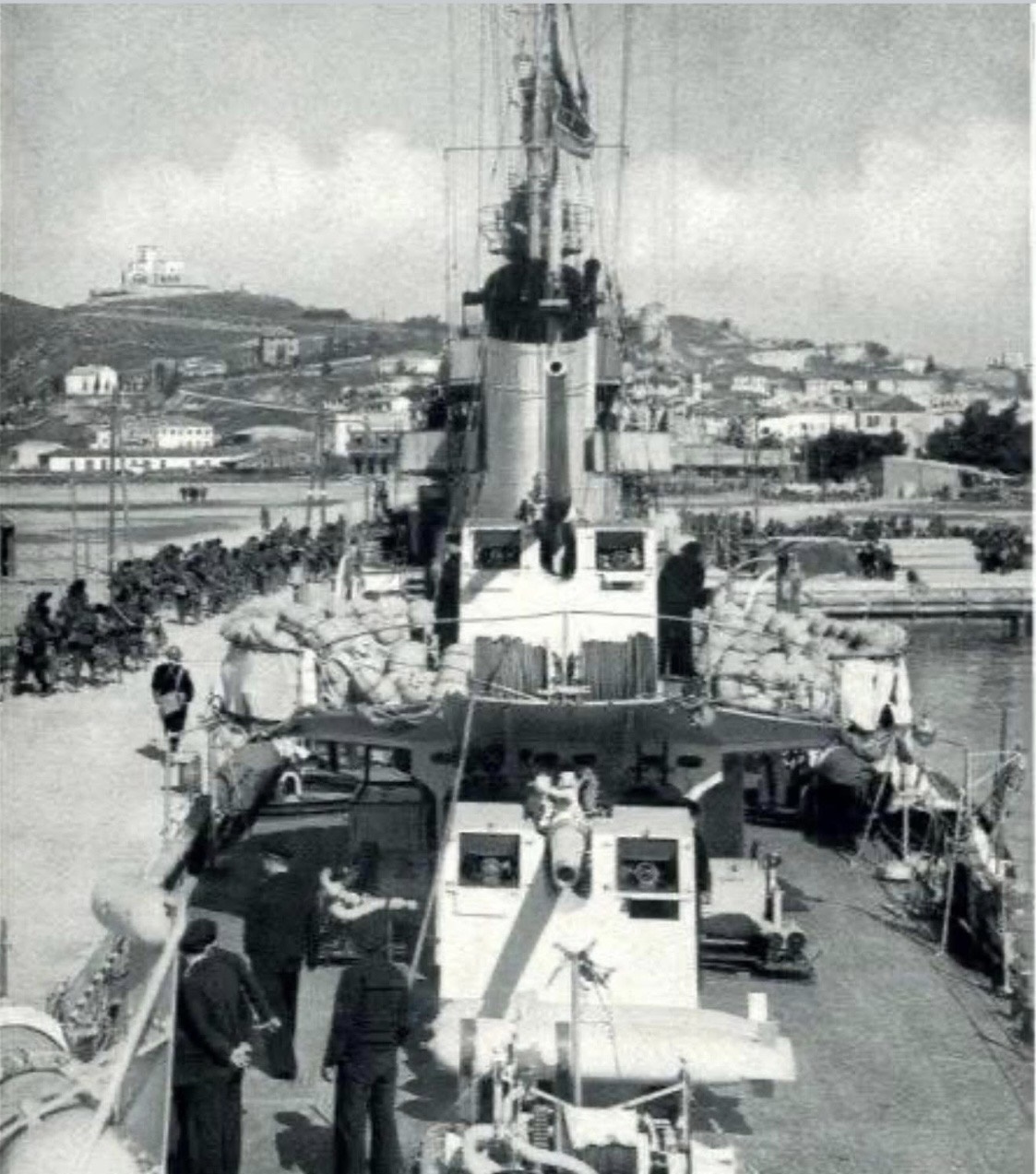
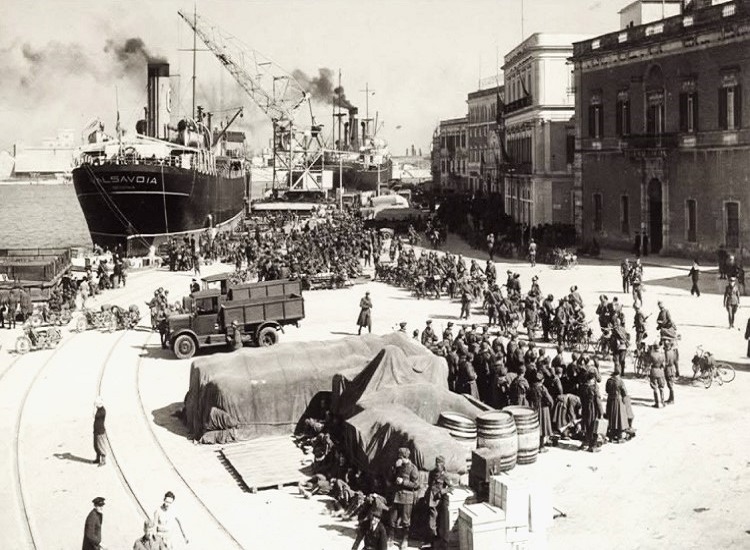
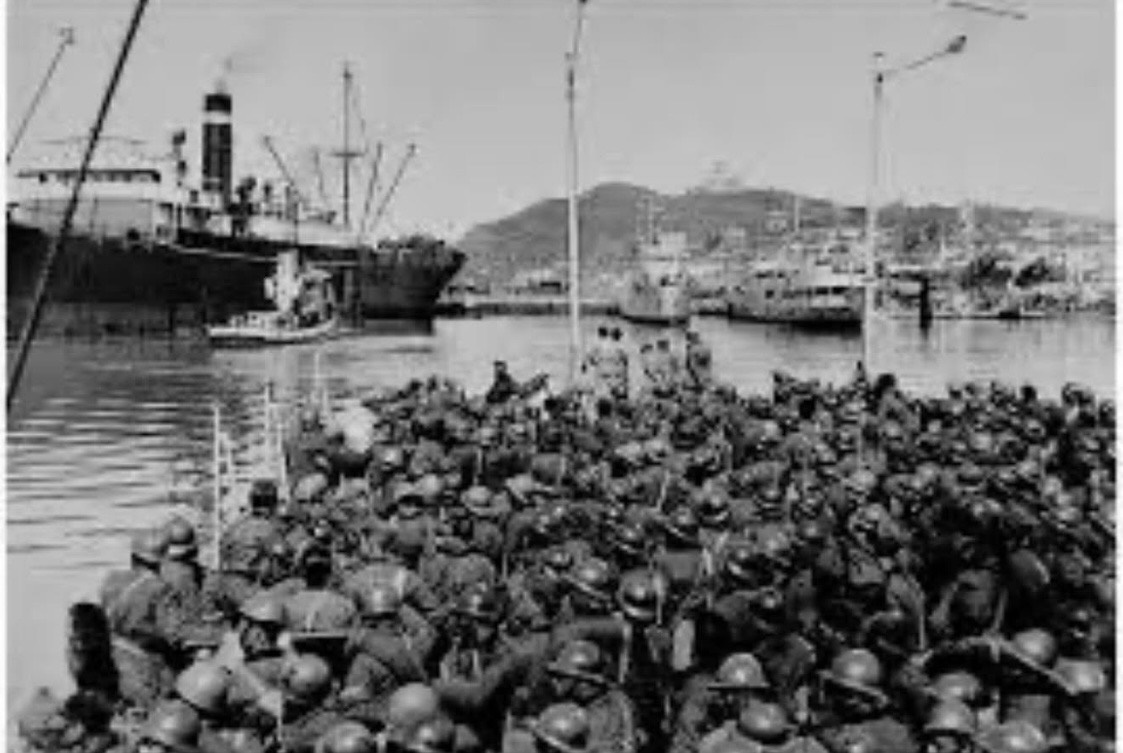
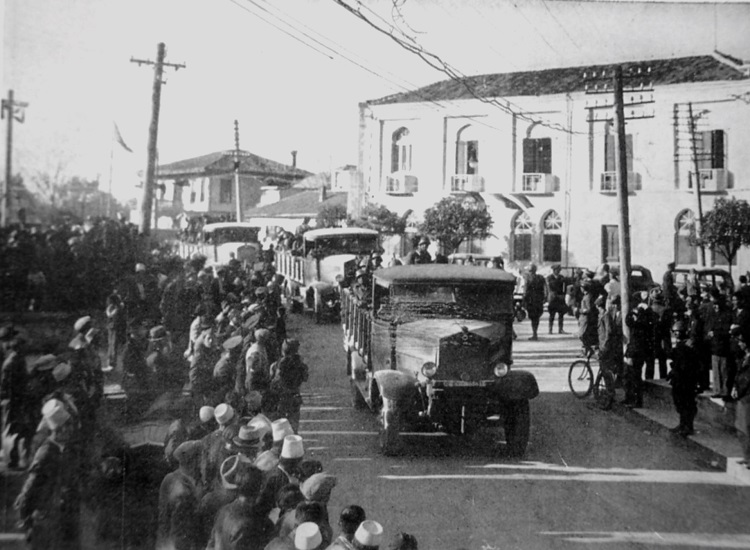
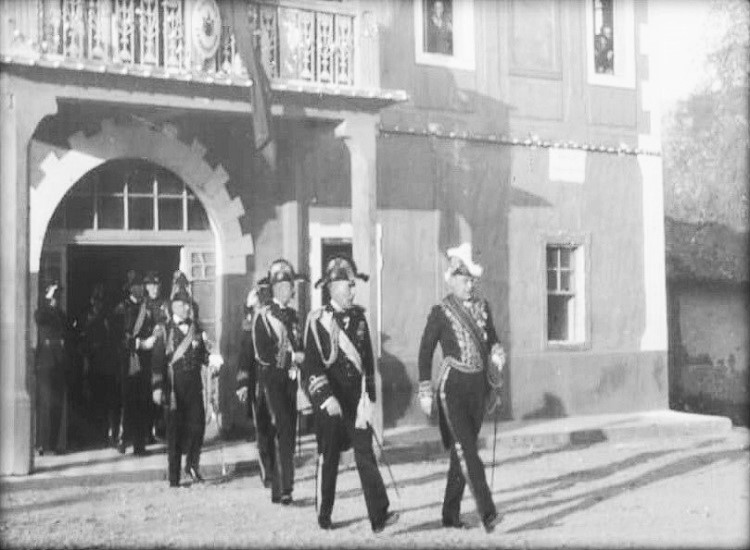
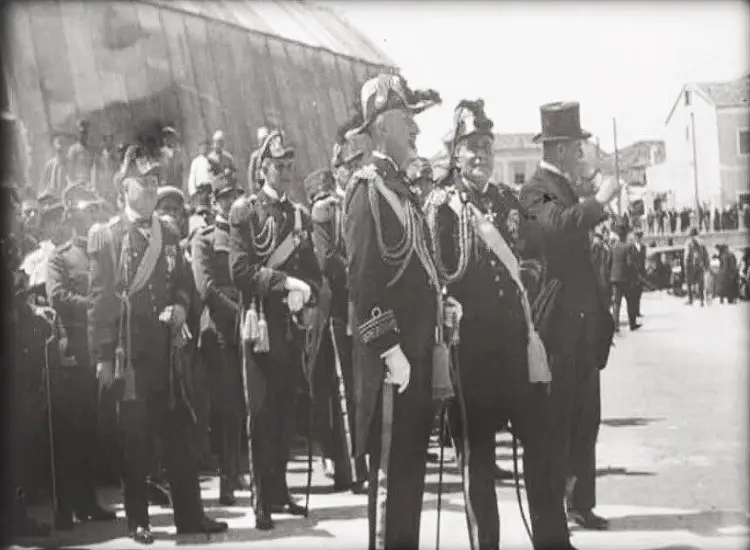
Memorie.al / April 7, 1939 – not only in Albanian historiography but also in the world historiography of the last century – seems to have constituted an event to which a considerable place and attention have been reserved. And this, more than anything else, is verified by its reporting and analysis in the media of almost the entire world. Of course, the dynamics of events and the opposing interests reflected by the two rival camps (the Axis powers and the Western democracies), which at the time we are speaking had not yet been clearly delineated as sworn enemies of each other, meant that the respective media conveyed to public opinion mainly news and viewpoints with opposite directions, but sometimes also very contradictory and unclear. Here, the most directly interested were certainly the Italian and British media, accompanied respectively by those of the Third Reich and their allies on one side, and the French and American media on the other.
Their concern began a few days before the actual invasion of Albania by Italian troops, casting shadows of doubt over the results of the negotiations between the Albanian and Italian sides, in a final attempt to avoid the invasion, which was not long in coming. But let us come to the Invasion, April 7 and the days that followed, and let us see what the combat actions were, how many losses each side suffered, how much fighting took place, what was said in official statements and international reactions regarding this event, when the invasion officially ended? – How was it reported and thought in England, the USA, France, etc., and what did the press of the Berlin-Rome Axis talk about?
Looking at these materials, presented for the first time in Albanian, one becomes even more convinced that many details still remain to this day to be discovered regarding that event which in Albanian historiography, with considerable consensus from all political parties, has been labeled “Black Friday”. In purely historical terms, April 7 constitutes a strong turning point for Albanians and their fates, given what the times that would follow had in store for them.
But we also learn about the public statements of Albanian “patriots” – which foreign media cited according to the aims they had undertaken to fulfill – and their calls inside and outside the country, to await the Italian troops with weapons or with flowers – as the case may be – accompanied by the relevant arguments. Thus, in the French press we also find the famous statement or telegram sent to Mussolini by Mehdi Frashëri, which, as Tajar Zavalani once wrote in his “History of Albania” (see: Tajar Zavalani, “Histori e Shqipnis”, Tirana 1998, p. 305), was read throughout the day of April 7, 1939, in several European languages by various speakers.
It is interesting to note that from the French newspapers we also get reactions coming from Albanian emigrant circles there, where at one point Qazim Koculi is mentioned, a known opponent of Zog and supporter of Noli, who initially had opposed the Italian invasion and later became one of the founders of the Albanian Fascist Party and a devotee of Italy. Koculi’s statements are found in the newspaper “L’Humanite”, the organ of the French Communist Party, at that time a highly biased media platform, which on this occasion appeared very aggressive towards the Italian invasion and supportive of the Albanian cause, reporting intensively from the field and broadly analyzing and commenting on the consequences of these developments.
Likewise, on the other side, we learn about the appeal made from Bari by a former Albanian prefect with the surname Kodheli, cited also by the German press, who called on the Albanian people to welcome Italy as a friend, pointing out the abuses – according to him – that King Zog and his entourage had committed with public money and Italian aid. An interesting aspect is also the behavior of our northern neighbors, the Yugoslavs, who seemed for the moment to rejoice in the fact that from everything that had happened, their interests remained untouched, and being rewarded by Il Duce for the “understanding” they had shown.
We also learn that in support of the Albanian people, demonstrations were also held in Morocco, Lebanon, and Syria, by angry crowds of Muslims who, overcome by a sense of religious solidarity, from that moment declared Italy as “Enemy No. 1 of Islam”. A selection of interesting materials appearing for the first time in this issue, from the newspaper archives of that time, from London to New Zealand, from the USA to France, and from Italy to Austria and Germany, and even from Luxembourg, Spain, the Netherlands, and Argentina, best illustrate some of these claims.
Lord Halifax: Britain still does not know what to say!
Rarely has a political event in England caused as much diplomatic activity on a holiday as the sudden military action of Italy in Albania. The Foreign Minister, Lord Halifax, who until late Thursday had been talking with the Polish foreign minister, was at the Foreign Office from the early hours of the morning. He held talks with representatives of no less than eight different countries of the world. The British government has so far not yet been able to get a clear picture of what has happened in the last 24 hours.
For this reason, an official statement has not yet been prepared for the public. In a semi-official statement, it is said that technical problems have made it difficult to connect the British Foreign Office with its consulate in Tirana, thus preventing the British government from having a clear picture of the situation. It is clarified, among other things, that a statement from the Italian government is also temporarily awaited to clarify its intentions regarding Albania going forward, before Britain takes an official stance. Today’s London press is much less reserved than the government.
It warns that the dynamics of political developments have brought increasing threat since March 1937, but further degeneration of the situation had become impossible thanks to the Anglo-Italian agreement. Now England – it says there – is faced with a fait accompli, an act which under these circumstances has remained unanswered. Meanwhile, the “Times” wrote clearly that the time has come for Yugoslavia, Greece, and Turkey to be included in the European coalition, which should be convened by the British government. …The movement of Italian troops towards Albania found London government circles completely unprepared.
(Source: “Wiener Neuste Zeitung”, April 8, 1939, p. 2)
American press: The invasion of Albania, an act that deserves due attention
Washington, April 8, 1939
– President Roosevelt and Secretary of State, Cordell Hull, today denounced the Italian invasion of Albania, calling it a threat to world peace. The public denunciation was made during an official statement by Secretary Hull at a special press conference after his conversation with the President at “Warm Springs”, Georgia. He said that he and the President had agreed on the terms of the statement. Below is Secretary Hull’s statement: “The violent and forced invasion of Albania is without any justification another threat to world peace.
It would be shortsighted not to pay attention to this act and its subsequent developments. Any threat to world peace seriously concerns all nations and violates the desire of all people in the world that their governments should lead them not towards war, but along the path of peace. It is extremely necessary to add that the inevitable effect of this incident, attached to other similar acts, is above all the destruction of trust and the undermining of economic stability in every country of the world, thus directly affecting our own well-being.”
(Source: The Whittier News, USA, April 8, 1939, p. 1)
Mehdi Frashëri, Telegram sent to Mussolini by the former Prime Minister of Albania
Sent from Tirana, April 7, 1939 – Mr. Mehdi Frashëri, former President of the Council of Ministers of Albania, has sent a direct telegram to Benito Mussolini. “From the spirit of Gjergj Kastriot Skënderbeu, we appeal for a supreme sacrifice. We would prefer death rather than dishonor. We know that you possess powerful artillery; you have machine guns, asphyxiating gas, airplanes, and all the other destructive things that war brings. We have only the spirit of courage and sacrifice to fall as martyrs.
Five centuries have passed, filled with rivers of blood, starting with the Asian barbarians. And now, in the twentieth century, you, in the name of the Italian people, undertake to commit barbarisms under the label of the West? I would like to remind you that this will bring irreparable damage. Accept Albania’s independence as it is, Mr. Mussolini, because this warning is the intimate desire of the Albanian people. Otherwise, the fascist army will pass not only over the corpses of the men of this country, but also over those of its women.”
(Source: French newspaper “Le Temps”, p. 1, April 9, 1939)
Arabs after the invasion: Italy, our Enemy No. 1
April 14, Casablanca, Morocco – Crowds of locals demonstrated against Italy and Germany over the invasion of Albania, declaring that Italy was “the public enemy No. 1 of Islam.” Demonstrations against the invasion of Albania were also recorded in the main cities of Syria and Lebanon, where their number reached three thousand protesters.
(Source: The Independent, UK, April 15, 1939)
Kodheli on Radio Bari: Zog the thief! The Italians have a mission for peace!
In an appeal that a former Albanian prefect, Kodheli, made on Friday via Radio Bari to his compatriots, it was said, among other things, that: the current events are the result of a destructive and unjust policy of King Zog. For a long time, the Albanian people hoped – for reasons of moral and material support from Italy – which has invested large sums in Albania – that better days would come. But instead of serving the country’s development, this money went only to fill the pockets of a few, led by Zog. His life was one of luxury, and so was that of all the princes and princesses of the entire court.
The state treasury and Zog’s private treasury became one. His expenses no longer knew boundaries or measure. Suffice it to recall the millions thrown away on diamonds and precious stones for the princesses for their travels abroad, while the people suffered hunger. Even the money donated by foreigners for aid to the poor ended up in the King’s pockets. Albanians! – Thus the appeal in question concluded – You will see that Mussolini, as a true friend of the Albanian people, will create a united, independent Albania that will be strong for centuries. The Italian troops that have landed in Albania have a mission: to bring order, peace, and justice, which Zog’s regime destroyed.
(Source: “Wiener Neuste Zeitung”, April 8, 1939, p. 1)
British correspondents: How many were killed on April 7?
A correspondent of “The Times” from London, subsequently recirculated by almost the majority of newspapers of the British Commonwealth, from Canada to Australia, first wrote on April 8, 1939, referring to the latest developments filled with informational confusion, that King Zog, dressed in national costume, was leading his army towards battle and that the whole country had enthusiastically responded to the call to arms. Men and women took to the mountains, attacking the Italians who were advancing deeper, approaching Tirana. The famous local fighters, historically known as “sons of eagles”, ceded ground to the invaders, while inflicting considerable losses on them.
The Albanian government reported on Friday that its troops, aided by volunteers, had forced the Italian troops to fall back to Durrës four times. Some messages received from Tirana say that the first Italian forces that had landed in Vlorë and Sarandë were also forced to withdraw, but some later claims say that Albanian resistance has already been overcome and that the fascist phalanxes are marching into the depths of the territory. Italian sources emphasize that the losses among Albanians from Friday night reach the figure of 140 and hundreds wounded, and that Italian losses are 25 dead and 60 wounded.
Meanwhile, the correspondent of the “British United Press” from Shkodër was quoted as saying that during their first attempt to land in Durrës, the Italian troops had left 30 dead behind and that those who remained had turned back to their boats. He also describes how in Tirana, the Albanian armed forces fired with strong batteries from the hills around the city, while the Italians responded with grenades and bombs, aided also by light aircraft and machine guns.
Washington Times: The people united around the King!
The American newspaper “The Washington Times”, dated April 9, wrote that: King Zog sent a message to all Albanian diplomats abroad, including Washington, saying that the Albanian people will defend Albania with all their forces. He called on the people to keep high their love for the homeland and closed his appeal with the words: “Long live Albania.” Prime Minister K. Kotta, also via a radio transmission to the people on Friday evening, in which he described the Italian invasion as “barbaric”. He called for a cessation of hostilities and said that “the people are united around King Zog in this difficult moment.”
Albanian ambassador in Rome abandons post
At the request of the authorities, to avoid demonstrations, the members of the Albanian Legation in Rome removed the flag from the consulate building. The whereabouts of Ambassador Serreqi and his assistants are currently unknown. The Legation is reported to be surrounded and guarded by police forces. A later communiqué made known that Mr. Serreqi had resigned on Wednesday from his post, arguing that it was impossible to continue his work, serving a regime that was openly serving the violation of the Italo-Albanian Pact, and that he had thus decided to fight for the interests of his people.
(Source: The Examiner, Australia, April 10, 1939, p. 7)
L’Humanite, April 9, ’39: Solidarity with the Albanian people
The meeting of communist leaders in the Grenoble region of France, expressing sympathy for the Albanian people in their fight against the Italian invasion, becomes the subject of the official organ of the French Communist Party. There, the head of the Albanian community there, Qazim Koculi, is mentioned, widely known as an opponent of Zog since the time of Noli, who also delivered a fiery speech assuring that all Albanian emigrants there, workers, students, etc., are united to come to the aid of their homeland.
Among other things, he says in his statement that the Albanian people are fighting for the independence of their country and security in the Balkans, subsequently also requesting the help of France. Below, the “L’Humanite” article recounts that a spontaneous rally was held, with Albanian and Italian emigrants in front of the Italian consulate there, as an expression of solidarity of free people against bloody fascism. The Italian community of Grenoble, it says there, is fully in solidarity in its feelings against aggression.
Belgrade: Everything is OK for us, as long as our interests are not harmed
Yugoslav newspapers, meanwhile, seemed to have devoted entire pages to events in Albania. On the surface, they were trying to calm any fear of public opinion regarding more advanced future objectives of Italian plans, as evidenced by this paragraph: Belgrade, April 8, 1939 – Italy’s Charge d’Affaires in Belgrade, Indelli, on behalf of Il Duce, conveyed special thanks to the Yugoslav government for its friendly stance on the Albanian question. At the same time, it is learned in tight political circles in Belgrade that Il Duce also sent a special telegram to the head of the Yugoslav government, details of which are not yet known.
It is also learned from the semi-official newspaper “Giornale D’Italia” that the Yugoslav ambassador in Rome stated that news according to which the Yugoslav government had taken special security measures after the events in Albania are false, and that the Yugoslav government, as before, will continue to have very good relations. There, the non-violation of Yugoslav interests by the Italian government and also the respect for the Italo-Yugoslav pact are emphasized.
(Source: Volksdeutsche Zeitung, April 9, 1939, p. 1)
La Stampa: Albania was conquered on April 16
When was the Invasion considered complete? Citing first the title of a relatively long article in the Italian daily “La Stampa”, written by Giovani Artieri (see: “L’Occupazione dell’Albania sarà completata oggi”, La Stampa, April 16, 1939, p. 5), one immediately understands that the invasion of Albania by Fascist Italy became an accomplished and complete fact in purely military terms on April 16, 1939. At the beginning of the article it was written: “With the march towards Burrel, which tomorrow will reach the departments of bersaglieri and grenadiers accompanied by a multitude of motorized vehicles supported by the aviation service, the invasion of all Albanian centers is considered complete with this step.” / Memorie.al