

Hafiz Riza Adem Boriçi – The Last Turban of the Boriçi Family of Shkodra
Memorie.al / The Boriçi family is among the most well-known families of Shkodra. It is distinguished by its wide reach and significant dimensions in religious careers, administrative activities, the field of justice, the realm of education, and, closely linked to these, its unique patriotic contribution. From this family emerged not only learned men but also prominent patriots, such as Daut Boriçi, who through his multifaceted activity managed to enter the nation’s pantheon, becoming one of the most noted patriots of the National Renaissance for his great role and valuable assistance as the leader of the Inter-regional Committee of the League of Prizren and its Shkodra branch. Various monographs of historical, scientific, cultural, educational, and biographical character, encyclopedic and pedagogical dictionaries, documentary publications, memoirs, institutional histories, summaries of scientific sessions, and numerous writings in the print media, as well as radio and television programs, have reflected the breadth of the subject matter treated regarding this family and the deserved values it has earned in scientific and civic opinion, both locally and nationally.
The Boriçi family was an Albanian family that migrated from the village of Boriç in the outskirts of Tivar, settling in Shkodra at the beginning of the 18th century; first in the Sudbege neighborhood near the Old Mosque, then in Perash, and later dispersed throughout various neighborhoods of the city.
In addition to Daut Boriçi, other clerics from this family included Molla Halili, Hafiz Musai, Hafiz Shefqeti, and Hafiz Rizai, who served as mejtep teachers, religious instructors in state schools, imams, preachers (vaiz), and scholars (myderriz).
Within this family, Hafiz Riza Boriçi holds his own place for the contribution given in the religious aspect. He was born and raised in such an environment, preserving with love and honor the name, tradition, and path of his predecessors.
Riza Boriçi was born in Shkodra on February 4, 1895. His life was filled with the concerns accumulated and presented by the times. He never remained in a position of indifference but was active, measured, and careful, always maintaining certain unshakable, wise, and just positions as a respected and devoted believer and religious leader, a consistent patriot, and a cultured, humanitarian, and exemplary citizen.
He conceived and implemented the ideas of “Albanianism” interconnected with the principles of the Islamic faith; therefore, he consciously became the heir to the Boriçi turban, closing a cycle of over three generations of hoxhas from this family.
Adem Efendi Boriçi, Riza’s father, was a very well-known jurist, a serious investigator and judge, and a respected, authoritative personality. He cultivated in his son a desire for knowledge, holding as a principle the Islamic command: “Seek knowledge from the cradle to the grave.”
Education and family heritage were the leaven of his formation. In the Boriçi family, Daut Boriçi’s statement in his 1869 ‘Albanian Primer’ had become a motif: “The Albanian, with the manner of letters I have shown in the Albanian alphabet, can within a short time write in his own language” or “learn to write Albanian.”
From childhood, positive values were discovered in Riza, and his zeal for schooling became evident. After finishing primary and civic school, he continued his studies at the Turkish “Ruzhdije” gymnasium in Shkodra, which at the time had become an important center for the cultural and educational formation of Muslim youth.
Following his general education, he pursued his theological training. He did not have the fortune of attending Islamic universities abroad; therefore, he followed his theological formation according to a widely spread tradition transmitted through generations by renowned, experienced theologians authorized for this type of education.
As his guide, Riza Boriçi had the well-known Shkodran theologian and myderriz, Haxhi Hafiz Isuf Kelmendi. He completed his theological preparation excellently, earning the title “Hafiz.” In a grand gathering and the traditional graduation feast (ixhazet), his professor, Haxhi Hafiz Isuf Kelmendi, placed the turban on Riza in a festive ceremonial setting in June 1917. He would wear this turban with dignity until he passed away on November 24, 1960.
Riza possessed a broad intellectual formation. He mastered three Oriental languages – Arabic, Turkish, and Persian – and also utilized French. He took pride in his inherited personal library, which he carefully enriched, administered, and utilized. It contained numerous theological, linguistic, cultural, and scientific works, even extending to medicine. His library also included archival documents related to family and personal activities.
His theological formation under teachers was coordinated with individual study. The clerics were admirable autodidacts and spent most of their time, after performing religious duties, in their personal libraries, reading and studying to broaden their general horizons.
His life remained closely tied not only to high levels of devotion as a believer and religious leader but also as a respected citizen, an exemplary husband, and a model parent. Throughout his life, he was active and distinguished for his dedication and discipline in work, and for the preservation, maintenance, and administration of mosques. He never understood his religious activity as being outside national interests or separated from civic needs and problems. The intertwined and coordinated propagation of religious, patriotic, and civic values was constantly in his focus – in his family relationships and his interactions with the faithful and citizens.
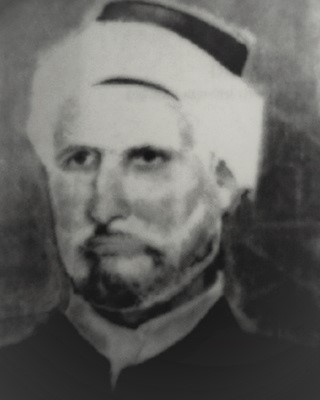
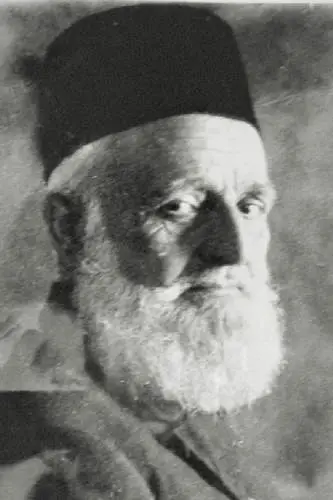
He had an attractive overall appearance and an impressive physical portrait. His uniform was always clean, ironed, and neat, with a turban that stood out for its carefully arranged folds, expressing nobility, culture, and Islamic education. He was truly a model of a hoxha in the mosque, in public settings, and in the family.
Life and the responsibilities of duty moved him across Albania. Initially, he was an imam in the city of Shkodra and was later appointed imam in Ishëm, in the Durrës district. Here, he gained sympathy not only as a man but also as a cleric. His word was listened to with interest and carried weight in resolving the social problems of the faithful; he lived with their joys and sorrows. His lectures as a preacher (vaiz) were convincing and influential, never offending anyone, full of sweetness, and always benevolent and educational. After several years of work, but also of troubles and grief far from his family, around 1933–1936, Hafiz Rizai returned to his city of birth.
Now with greater experience, he served as an imam in various mosques of the city, such as Luguçesme, the White Mosque, the Red Mosque of Perash, Fushë-Çelë, Ndocej, the Old Mosque, and the Parruca Mosque, serving across almost the entire geography of the city. Shkodrans loved, respected, and valued their son – the well-known preacher – for his beautiful, artistically chosen words, which were deeply understandable, always clear, and supported by Quranic sources, prophetic experience, and Islamic history and culture.
The themes of his lectures were diverse, harmonizing with religious holidays, the pillars of Islam, the obligations of the faithful, and the social problems of citizens. This work practice was the fruit of his concern to connect closely with the congregation (xhemat), which made him an able and exemplary preacher.
Hafiz Rizai had a clear and farsighted vision regarding the historical fact of the heterogeneous composition of religious faiths in Albania. He viewed coexistence and interreligious tolerance as a national value, as well as an important manifestation of the principles of Islamic morality in general. Because of this, he was a propagator and practitioner of mutual understanding, respect, friendship, visits, and the creation of a peaceful atmosphere in the city among its residents.
Although he was an idealist in conviction, he was not directly involved in politics; however, as a patriot with democratic views, he remained in a silent opposition toward both the occupier and the dictatorship. The socio-political changes that occurred in our country after the Second World War affected him greatly and caused him spiritual suffering as a result of the new historical, political, and ideological situations.
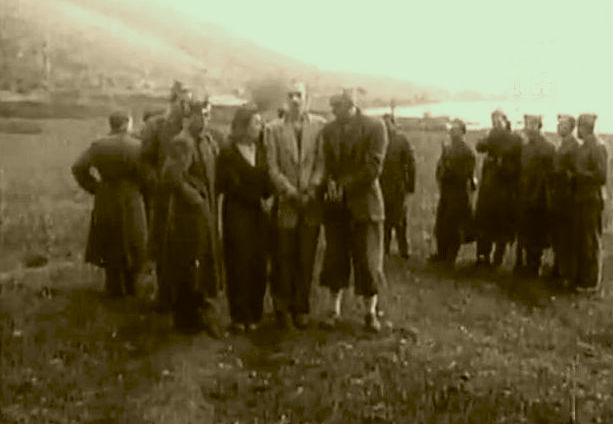
In the period 1945–1951, Hafiz Rizai carried a heavy emotional and psychological burden, causing a state of stress that exhausted him and brought consequences later on. He was tasked with a very delicate and heavy duty: to perform the religious services for political prisoners sentenced to death, on the day of their execution.
Family members recall with deep sadness the trembling that would overcome Hafiz Riza when, in the morning before dawn (sabah), the sound of a car stopping in front of the house was heard; it would take him, together with a priest, to where life was being reaped. This was among the most difficult religious duties he ever experienced. When he returned home, he would lock himself in his room, neither eating nor drinking, but reading the Quran for hours. No one dared to interrupt his meditations, which were accompanied by states of shock and devastating insomnia.
Another difficult moment for Hafiz Rizai was with the families of the executed. They would come in groups to meet him to learn from him the details of the bloody drama and the final testament left before the shooting. He would sit and converse with them for long periods in his room, without anyone else present. Usually, the executed were well-known figures – nationalist patriots and personalities of the time, respected and traditional, even his own friends and colleagues. Thus, as the family members wept, his eyes would also redden and tear up; his noble beard would be wet with his tears as if he were a child. There is no other reason why an acute heart attack would cut him down in the prime of his life, when he was only 65 years old.
Hafiz Riza Boriçi was also distinguished for his citizenship and enjoyed the sympathy of a large mass of people. Such a thing increased the dimensions of his authority, not only in the family environment and the circle of believers but also in the relations he built with religious authorities, local government, and the city’s intellectual elite. Hafiz Rizai was always present among them, participating in discussions, offering opinions, making proposals, and maintaining a dignified stance, as befitted a religious official.
At the same time, he was an ideal husband and parent. Through sacrifice, he raised seven children and shared an admirable harmony with his wife, who stayed by his side and became his right hand, especially during the difficult days of life. His brother, Qamili, also remained very close to him, sensing Riza’s economic difficulties and acting to alleviate them.
Hafiz Rizai never agreed to extend his hand, fiercely fighting against alms. Regarding this, family members recount: “It was night! The Bajram of 1950. Rizaja was at the mosque. There was a knock at the door and a person delivered a package of food, allegedly sent by the hoxha. When the Hafiz returned home and learned of the event, he became very upset. Family members remember his response: ‘I have constantly instructed you not to accept anything from others.’ It was never discovered who brought that package. It was a civic value of honest people, a human act so religious and meaningful.”
In the exercise of his duty, Hafiz Rizai expressed himself decisively against the practice of amulets (nuska). During his life and activity, besides many friends and well-wishers, he had special relationships with Hafiz Halim Hajdari, Hafiz Myrto Vuci, Hafiz Sheuqet Boriçi, Hafiz Sabri beg Bushati, and Hafiz Muhamet Gogoli, of whom he spoke constantly with high regard.
His contemporaries and their descendants have spoken and continue to speak with honor, appreciation, and gratitude for Hafiz Riza. His life and activity have left traces in the history of the mosques and muftis of the cities where he served with zeal and devotion. His contribution was noted in the print and electronic media, through commemorative talks and themes; assessments were reflected in the scientific session titled: “Daut Boriçi, a prominent personality of Albanian history, culture, and education,” in biographical works such as “A Life in Service of Religion,” in encyclopedic monographs like “Shkodra and the Seasons” (by Hamdi Bushati), and in the book: “In Memory of Generations,” dedicated to 40 prominent scholars, educators, patriots, and hoxhas of Shkodra.
Meaningful are the evaluations that Haxhi Hafiz Sabri Koçi, honorary chairman of the Albanian Muslim Community, gave to this prominent personality on two occasions: at the opening of the “Haxhi Sheh Shamia” madrasa in Shkodra on December 12, 1991, and during the inauguration of the Fushë-Çelë (Ebu Bekr) Mosque, also in Shkodra, on October 27, 1999:
“We always remember with honor and special appreciation personalities such as: Sheh Shamia, Hafiz Jusuf Tabaku, Hafiz Ahmet Kalaja, Hafiz Ibrahim Repishti, Hafiz Jusuf Karakaçi, Hafiz Sali Muftia, Hafiz Shefqet Boriçi, Hafiz Abaz Golemi, Hafiz Muhamet Bekteshi, Hafiz Sabri Bushati, Hafiz Esat Myftia, Hafiz Sulejman Lluja, Hafiz Riza Boriçi, Hafiz Abdullah Bërdica, Hafiz Ymer Bakalli, etc., etc. They are many, and it is difficult to count and list them. The youth of Shkodra received from them a healthy education, with deep morality and great honor; they had a desire to learn much and benefit as much as possible from general knowledge and especially moral-religious education.”
“…Today’s mosque has revived us all, beautifying our place and our soul. Oh, if only Hafiz Sabri beg Bushati, Hafiz Sulejman Lluja, Hafiz Qamil Abdyli, Hafiz Riza Boriçi, etc., were among us today—those who are no longer here and who saw the misery with their own eyes and shed tears. Their tears and ours have today turned into joy and cheer!”/Memorie.al