

By VISAR ZHITI
Part Two
When we read Mërgim Korça…!
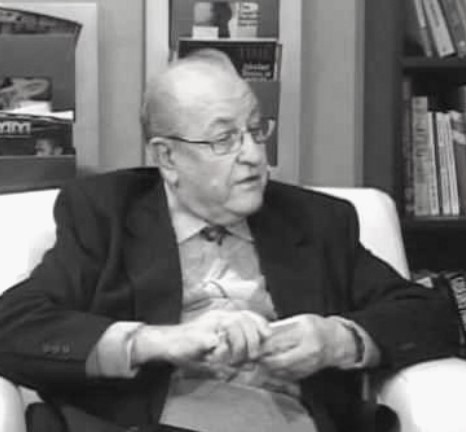
Memorie.al / This is the third book of writings by Mr. Mërgim Korça – the sharp analyst, essayistic orator, researcher of our recent history, its polemicist, and consequently also of current affairs. He entered the field of such writings powerfully and confidently, with a full arsenal of genuine knowledge and experience – not as a late fiction of his own, granted by the conditions of freedom, but rather he felt called by the time to tell the truth where it was unknown, covered up, or forgotten intentionally or not; to uncover unknown facts of national importance that would restore dignity to our history where it had been squandered. Nearly ten years ago, Mërgim Korça published his first book, “Unwritten Histories,” which surprised us with the analyses he brought, making us acquainted with major intellectual, religious, and patriotic figures – he performed a sort of defiant resurrection of them, but also an accusation against those and against the system that did the opposite.
To be continued in the next issue
Even on the second day. Moreover, with pride. A slight dizziness passed through the others, but it had to be his as well. On the third day, his body felt a kind of numbness, anxiety, and strange exhilaration. It even crossed the walls. The lying down had turned into a battle… after which destruction had to come. The straw of the mattress was turning deathly yellow through the tears. The lying man was wasting away even more. His eyes had grown large and his lips cracked. The beard hairs could not cover the hollowing of his jaws. Bruising had begun.
His appearance there was unusual within the unusualness of the prison. A threatening determination, as if the powerlessness of limbs, muscles, even the skeleton, was overcome by another irresistible force – that of the spirit. He knew how to escape the terrifying condition. The others in the cell were becoming worried. Xhevat Korça among them was fading away. Perhaps it was too soon for him to die. What was to be done? Death is yours, but we are together, around your death. How could they convince Xhevat? What did Father Pjetër Mëshkalla think? The wise Jesuit approached the straw mattress. He knelt down there. A biblical, shattering scene:
– Brother, Xhevat, I beg you, don’t lose your soul for me… give up! – his voice was heard low, and it was as if candles were lit all around. Deep silence. Everyone had frozen, waiting for the answer. – Father, thank you… I have you as a friend, that’s how I have thought… – Xhevat’s voice had a kind of hoarseness and weakness, as if rubbed against tombstone, that mystery. – I am continuing the path I started… so as not to become a toy of the oppressors, you are trying to break me… I expected other help…!
Two drops of tears flowed from the Father’s eyes, asks the imprisoned lawyer, Xhevdet Kapshtica, he testifies to it. I shivered all over even now as I speak, look how my arm has become, all goosebumps, bump by bump. Father Mëshkalla kissed the lying man on the forehead and walked away backwards, slightly bent. The hunger strike continued. Xhevat’s blackened eyes saw beyond everything, pierced even the ceiling, perhaps searching for the sky, and they would faint, who knows for what – his wife, his sons. He had been in prison together with the eldest, but he got out and escaped.
What will be the fate of the other one with a father dead in prison…? – and Tirana would blur with its tyrants… his throat had dried up, good enough, he escaped that offensive soup, why did the trays clatter so much, nerve-rackingly? … But he had seen Gjergj Kastrioti’s helmet in Vienna. How can a helmet become a tray? And the hero’s sword – a prison spoon! Oh God… and he fell into another faint, abyss after abyss.
Who is this who came near him, another Gjergj this one, who called him? The rooster is crowing, dawn is breaking, there is no morning, no…! They did not speak together… why he had gone up to the mountains with the partisans, his regrets now could change nothing anymore…! Gjergj Kokoshi grabbed his thinned hand, but heavy, like the weight of objects…! He was there, kneeling before him, and moved, he said:
– Xhevat, you are closing your life with a gold coin cover, may it be blessed! You are doing what we could not do, – and he almost stumbled because he could not see through his tears, not knowing where he was going. Another friend of his had also killed himself; he too had studied in Austria, a teacher, son of the Butka family, as a challenge to the fratricidal war, with a bullet. Enough blood…! Xhevat’s blood seemed to be stopping among its branches. It was visible. There was frost on his face. External reality no longer entered inside him. His interior was spreading everywhere – breath, Korçë, morality, responsibility, Kosovo, Vienna, pain, pride, reproach, kindness, and anxiety… terror…!
Even when we did not look, everyone looked over there, where a life was extinguishing, more than that. An ideal, hope…! We too had no appetite… we were extinguishing together…! Was he escaping punishment or was he punishing punishment? His eyes no longer moved. Going by him towards death? By suicide…! He lay frozen… gone, nevertheless… the challenge remained… contempt for the prison and the entire dictatorship…! That is what we do, Xhevat the martyr! In his place appeared to us marble columns, capitals, a temple, it shone so much that it became translucent…! And what will you do after this, murderesses?!
They came… Two people held the blanket from the sides. Inside it was the dead Xhevat Korça. They went outside. Silence and deep grief. Where would they go? Into oblivion… into the frightful pits of memory. Man unites the depths and the heights; he is the cross of flesh between earth and light. Just as in his life there is death, so in his death there is life. To go to the great conscience, to heaven…! The cherry tree… its roots… through bones and skulls…! The future waits definitively. Do you know what Xhevat told me with his cracked and dried lips, in the deathly silence? He who knows how to live also knows how to die. Above, they were levelling the earth with shovels, tamping it with their feet.”
Shocking! Heavy! Gloomy and heroic! It seems to me that the regime had condemned history itself, had put it underground, in prison, and was killing it, it died. And such a son, Mërgim Korça, in the greatest dictatorship of the smallest country in the communist empire, had his perverse fate predetermined. To survive all‑encompassing and permanent persecution, one needed a spiritual strength and an unusual intelligence to preserve oneself, first as an existence, then again first as a human being, and one had to protect as much as possible one’s inner freedom, maimed desires and corpses of murdered dreams; one had to create the secret temple where one awaited the holy hope of being human, with the dignity that was so often endangered…!
And another passage, we are still under dictatorship, I have just come out of prison, back in Lushnjë of internments. The meditations or inner monologue of someone who refuses to become a collaborator of the State Security: “And engineer Mërgim Korça – whose is he? Say as much as you want that you don’t know them – get to know them, they say – we’ll give you money to treat them. And Mërgim’s wife, Doctor Mimoza, used to visit you with special care. Why? Because they have 8 executed persons in their family. When her father was in prison, in the clothes they received from him, they would find pieces of skin inside… he was tortured. Then they shot him.
Even Enver Hoxha knew them as kin, they were cousins, first or second I think, and they blamed Koçi Xoxe for the executions, and he, the dictator, was said to have cried when he learned of it. A deception, but this was the black paradox – his orders now acted by them, the machinery of the dirty work had started, it could continue even without pressing the buttons sometimes. Let the daughter of Syrja Selfo come to the university, he had said. But they criticised Mimoza in meetings at the hospital: ‘Why do you want to become Mother Teresa? We do not allow such mistakes, there is no way you could have done what you did,’ shrieked the first or second secretary, class struggle even among the sick…!
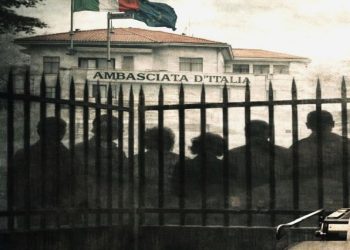
There is something mythical in the Korça family, from modern myths, of course, that spread among us like a secret, frightened murmur. And finally, the Berlin Wall falls, the communist dictatorships are falling one by one, and Albania must inevitably change, open up. Engineer Mërgim Korça, while leaving forever for the USA, stopped for a while in Italy and managed to get in touch with Indro Montanelli. With the great journalist? – I asked, surprised. Yes, yes, his father was my father’s advisor when he was Minister of Education…!
‘You Albanians,’ Montanelli had said, as Mr. Korça told me, ‘you had Romania’s example. While you were cutting off one head of the Hydra, two others would grow in its place, and there was no Heracles to burn their necks like in the myth. And so the dog‑monster body of the dictatorship kept growing new snake heads, because you did not try to remove that vulnerable head,’ Montanelli had concluded. On the streets I saw known communists walking with dogs – dogs with one head. The dogs have started staying with us, I would rejoice cynically.”
That’s it. A quick browsing like an unfinished chronicle. Thus it fell to Mërgim Korça’s lot as well – to witness the dramas of his country. And he must make choices when he tells the story. And he writes what not everyone would be able to tell.
IN LIEU OF AN EPILOGUE. THE BEAUTIFUL DUEL…
Mërgim Korça is a mechanical engineer by profession. His talent was extremely rare, so much so that he managed to overcome the terrible class struggle and the tyrants made way for him because he was capable of preparing – designing them himself – various agricultural machines, unique of their kind, so necessary for work and development. A scientist in the provinces, whose mind and labour had to be exploited when Albania was closed and enigmatic to the world.
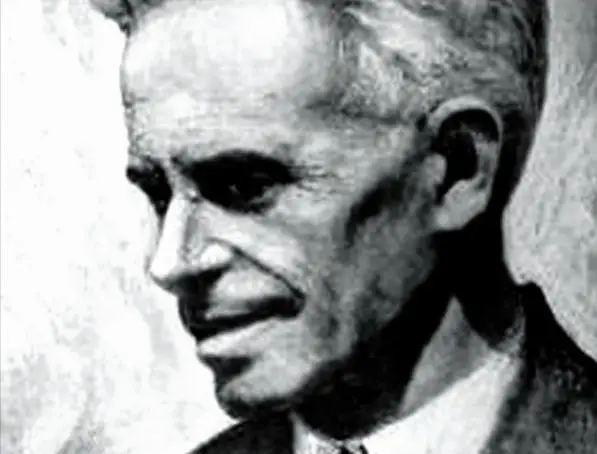
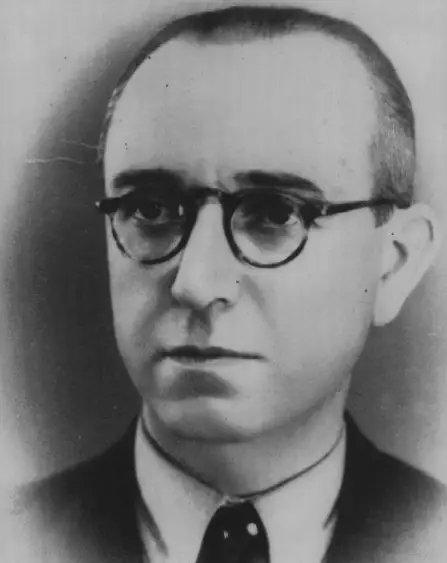
Mërgim Korça broke the fate determined for him by the dictatorship – which he should not study at any university, but should remain persecuted all his life, a slave to hard physical labour. Because he was the son of Xhevat Korça, a high intellectual and patriot, a founder of Albanian education, etc., who would emigrate as an opponent of the monarchy and Mërgim would be born in exile, in Graz, Austria.
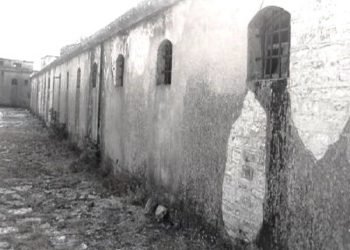
They would return to the homeland and Xhevat would become Minister of Education, etc., and the communists, after taking power and establishing the dictatorship, would imprison him as an opponent, and he would end his life in Burrel prison, leaving only his wife and two sons. Genci, Mërgim’s elder brother, would escape to the USA, where he would become a senior executive at General Motors, in the American industrial colossus.
Mërgim would perform heavy labour in his homeland – a worker in a quarry like a slave, a soldier, on farms, etc. – but from his family he had received a solid moral education, culture, and freedom of mind and spirit, love for his homeland, for books, and for his mother tongue. The gods had predetermined that he should be a son of knowledge, and he insisted on overcoming obstacles… he succeeded, without interruption from work, taking advantage of some deliberate relaxation of the class struggle, to graduate as a mechanical engineer.
He is assigned to Lushnjë. The Machine and Tractor Station – there they would have such an indefatigable scientist, so much so that he attracted the attention of the government, especially of the then prime minister, himself a connoisseur of mechanics. He is appreciated for the extraordinary work he performed, awarded the highest title in the scientific field – “Distinguished Worker of Science and Technology”.
As a citizen, everyone knew him – polite and cultured. He looked like a foreigner. A handsome, tall man, as serious as enigmatic. With his hair combed upward, attentive eyes, he smiled generously, just as much friendly and warm. The city’s writers would speak of him as an intellectual who had read everything, read in several foreign languages, and knew literature, the great works, better than them, the city’s writers, because he had them inherited in the original. “He has a passion for literature,” they said. But he did not write, no! In Albania, socialist realism reigned, and you would be condemned if you spoke sympathetically about foreign bourgeois‑revisionist literature.
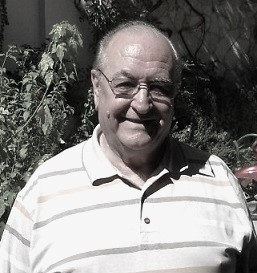
Mërgim Korça immigrated immediately to the USA, as soon as Albania opened up and was changing – the dictatorship could no longer sustain itself, and the communist empire was falling. He settles in Detroit, where he still lives today with his family. He is a grandfather, but he works as before – on books, of course, returning to his early but repressed passion: writing. He quickly became known in the nationwide Albanian media. His writings are eagerly and avidly welcomed, for their broad range and the truths they bring, with the engineering correctness and certainty given by the logic of his profession.
The characters and events are interconnected among themselves as well as with the region, with Europe and the Atlantic world; likewise, Mërgim Korça’s writings carry such novelty – we add here the stubbornness of fact, mixed with a nostalgia for return, with the conservative elegance of the Albanian language, and with patriotic messages in the time of global opening, where cultures collide and values need to be preserved wisely.
This is best shown by the book we have in our hands, which even if it may disagree on this or that point and would have liked to polemicize – and that is the intellectual pleasure of the author – remains convinced that everything is sought in the name of the greater good. Meanwhile, little and distant Lushnjë, its municipal council, has declared Mërgim Korça an “Honorary Citizen”, while in the equally distant USA, Mërgim Korça is part of the teaching faculty of Wayne State University.
I cannot help but recall at the end how Mërgim’s father, Mr. Xhevat Korça, once challenged an Austrian lawyer to a duel because in one of his writings he had insulted Albania and the Albanians…! And Mërgim, in a certain way, continues these belated duels. With his writings and polemics, he constantly seems to throw down the gauntlet with courage and elegance, and invites to a duel anyone who comes out against truth and national honour, and just like his father; he leaves you to choose the weapon. For him, the weapon of knowledge, already proven in his love for the homeland, is enough…! / Memorie.al