• Rreth Nesh
  • Kontakt
  • Albanian
  • English
Tuesday, March 3, 2026
Memorie.al
No Result
View All Result
  • Home
  • Dossier
  • Interview
  • Personage
  • Documentary
  • Photo Gallery
  • Art & Culture
  • Sport
  • Historical calendar
  • Others
  • Home
  • Dossier
  • Interview
  • Personage
  • Documentary
  • Photo Gallery
  • Art & Culture
  • Sport
  • Historical calendar
  • Others
No Result
View All Result
Memorie.al
No Result
View All Result
Home Personage

“Professor Ramadan Sokoli told me that the song for Çelo Mezani by the Chams of Rrogozhina was planned to be included as early as the ’73 Folk Festival, but…” / The rare testimony of the renowned journalist

“Profesor Ramadan Sokoli, i qaset nga metodologjitë e etno-muzikologëve të tjerë evropianë, në veçanti, të B. Bartokut, K. Brailout, Z. Kodali, S. Djudjev, etj., që…”/ Refleksionet e muzikologut të njohur nga Kosova
“Profesor Ramadan Sokoli më tregoi, se kënga e grupit çam të Rrogozhinës për Çelo Mezanin, ishte në plan për t’u futur që në Festivalin Folklorik të ’73-it, por …”/ Dëshmia e rrallë e gazetarit të njohur

Professor Ramadan Sokoli’s “Legacy” Regarding the Dance of Osman Taka

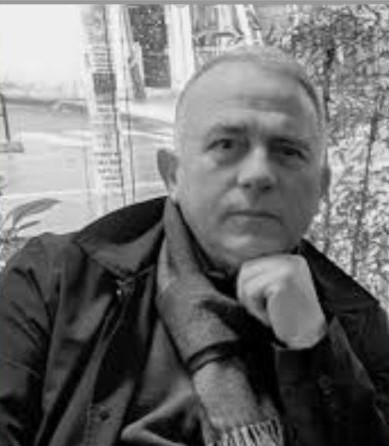
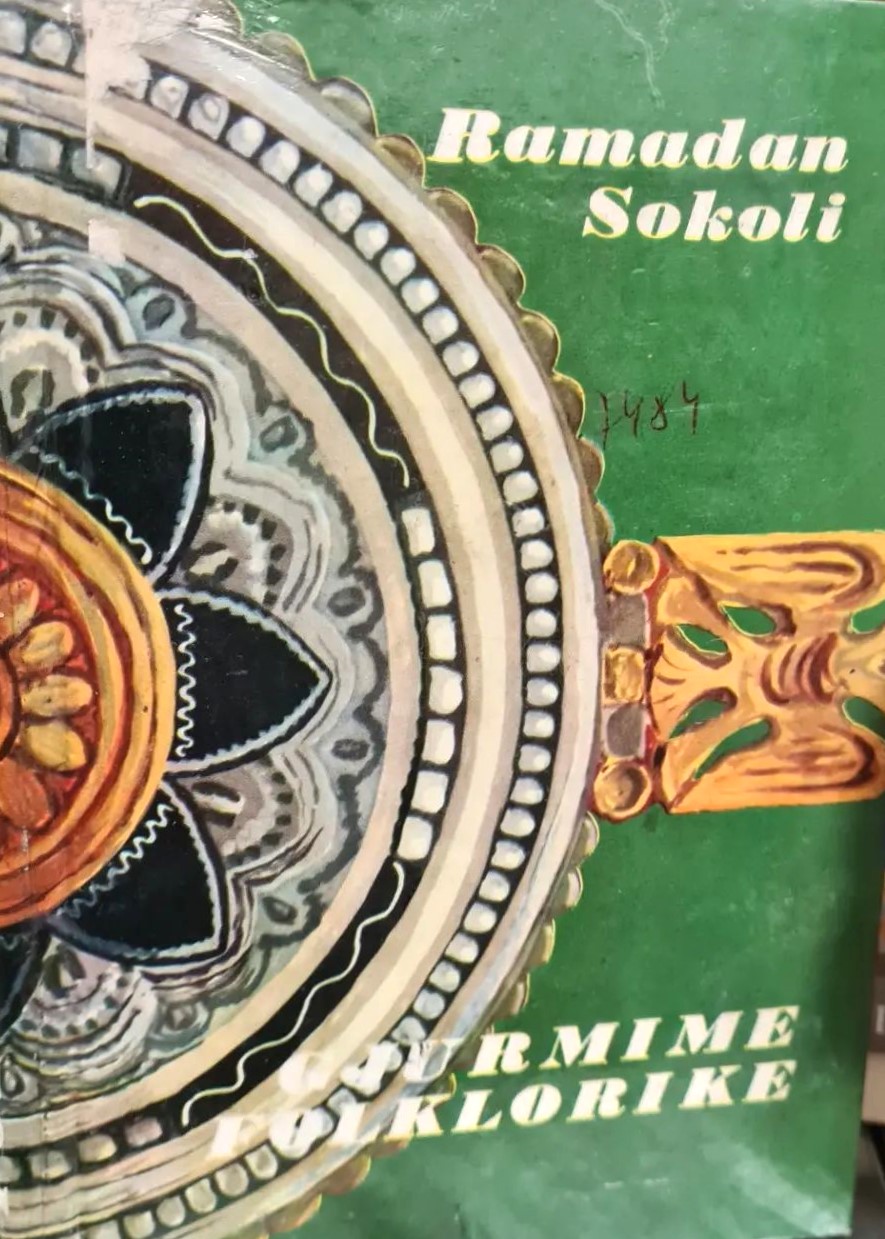
Memorie.al /In 1984, when I began working on my diploma thesis titled “The Values of Cham Folk Poetry,” my friend Llazar Siliqi – then Secretary of the League of Writers and Artists – recommended that I meet Ramadan Sokoli. Only two years prior, in 1982, Sokoli had published his book Gjurmime Folklorike (Folklore Research). Thus, I had the fortune of closely knowing this colossus of our spiritual heritage: the eminent Albanologist, folklorist, and musicologist, and the founder of Albanian ethnomusicology, Prof. Ramadan Sokoli, author of over 1,200 scientific works.

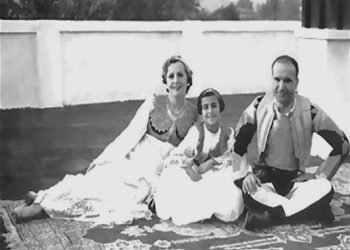
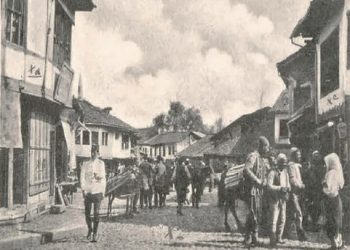
Prof. Ramadan Sokoli congratulated me on my choice of topic. He possessed an expansive knowledge of the culture, customs, traditions, and folklore stretching from the southernmost regions of Thesprotia (ancient Chameria) to the northernmost tip of Dardania. He then began to speak with nostalgia about the joint German-Albanian exploratory expedition of 1957, which had come to record, the folk music of the three southern Albanian groups: the Tosks, the Labs, and the Chams.

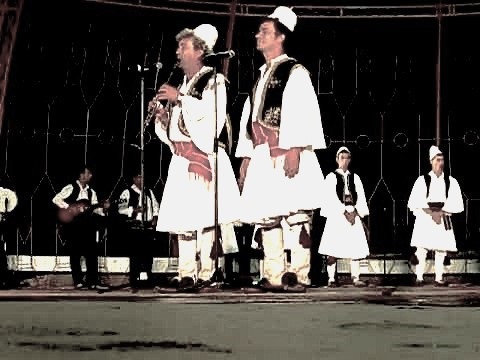
The Professor held a rare passion and love for the values of our cultural heritage. For minutes on end, he spoke with great reverence about the folklore of the Chameria region, the international expedition’s meetings with the Chams of Fier, Vlora, and Saranda, and the popularization of Cham musical values across Europe and beyond. He viewed polyphonic folk songs such as “Çelo Mezani,” “Tanë, moj Tanë,” and the song of Osman Taka as the most beautiful of the Cham repertoire.

Gjithashtu mund të lexoni

“In September 1944, Abaz Ermenji met with three British officers, Maclean, Smiley, and Amery, and it was agreed that a joint group would be formed to fight…” / The unknown side of the former head of Balli Kombëtar.

“In the meeting held at the Korça municipality, the Committee of ‘Public Salvation’ was formed, with Fazlli Frashëri as chairman, and Selman Riza and Masar Shehu as secretaries…” / The unknown history of the professor from Kosovo.

From Ramadan Sokoli, I learned that the Song of Çelo Mezani was planned to be performed at the Gjirokastra National Folklore Festival in 1973, but the political regime censored it. This song was one of the best ways for the Albanian public to better understand the Chameria region and its history. It finally managed to enter the festival only in 1978, performed by the famous group from Rrogozhina, accompanied by violin, clarinet, lute, and tambourine.

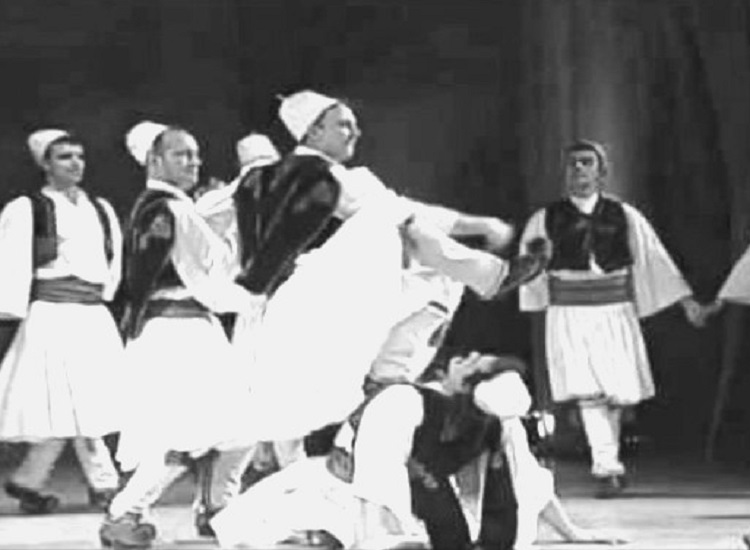
I also learned from Professor Sokoli how much effort it had taken him and his colleagues to include the Dance of Osman Taka – one of the most beautiful and masculine dances of Chameria – in the 1973 Festival. It was the first time this legendary dance was performed at a nationwide festival, leaving an entire nation mesmerized, danced magically by the great Taip Madani!

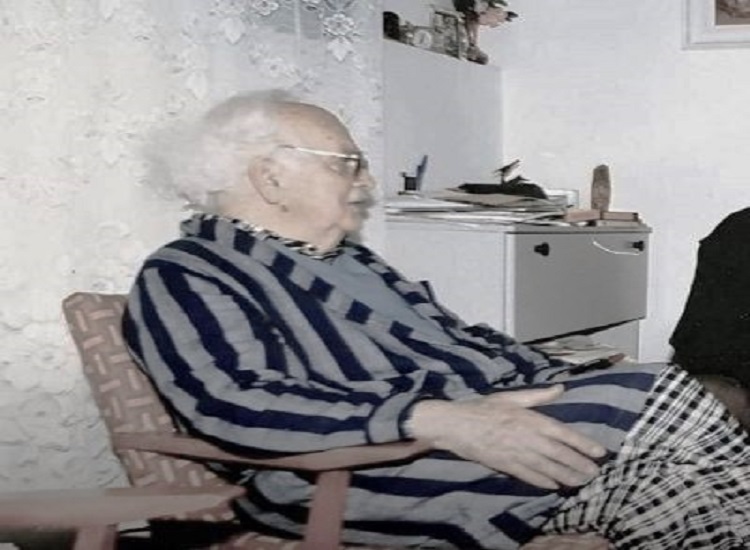
In early September 2006, I met Professor Ramadan Sokoli again; two months after the American Biographical Institute (ABI) included him in the “List of the World’s Most Respected Experts.” He lived alone not far from the capital’s center, near “Rruga e Barrikadave,” on the ground floor – or more accurately, in the basement – of an old Tirana house owned by the well-known Petrela family. Prof. Sokoli, his knees trembling from age and poor health, could barely stand.

Deeply exhausted by a life full of endless suffering and stress, the professor continued to work on his creations, though he felt marginalized and lacked any support from the state authorities of art and culture. He told me he was working on a monograph about Cham musicology and folklore.

He spoke with great emotion about the originality of the Dance of Osman Taka, which, according to him, deserves to be in the golden fund of intangible cultural heritage – not only Albanian but also the global heritage of UNESCO – as one of the most precious treasures of cultural identity, of extraordinary value.

He then began describing the dance as if giving a lecture to his students: “It is danced with great elegance. The start is calm; it follows the orchestra, harmonizing entirely with it. The dance begins with a simple step, making you truly believe that something is about to happen. At the end of the first musical verse, the dancer, moving his head and hand slightly forward, gives the impression that something is about to unfold.

Surprisingly, the narrower the space, the more beautifully this dance is performed – even on top of a table. It is an epic dance, but within this epism, there is a lyricism and fluidity where the entire body dances in organic unity with the soul of the performer and with those playing the instruments. Greeks, Macedonians, Bulgarians, and Yugoslavs also perform this dance, but they all call it the ‘Dance of Osman Taka.’ In fact, the choreographic school of Ioannina even provided the lyrics in Albanian.

The dance has several points of climax. The ultimate peak occurs when you acrobatically turn into a ‘bridge,’ and two or three dancers perform on your stomach. To be able to support two or three dancers with your abdominal muscles as they dance one after another for about a minute and a half – this is where we deal with the historical aspect of the dance. We are not dealing with an ordinary bridge, but with what is called the ‘bridge of generations,’ of history, of struggles, of sacrifices, of blood, and of folk wisdom.”

Prof. Ramadan Sokoli, adopting a hallowed expression as if leaving a final testament, said: “This dance is identity. And identity is the definition of the self; it is self-identification; it is the feeling of belonging that individuals have toward a group that reaffirms itself.”

The Dance of Osman Taka is a magnificent art that never fades – a great cultural asset of the Albanian nation, possessing a rare and beautiful authenticity. It inspires many artists and ordinary people alike as a metaphor for endurance, freedom, and humanism.

It is a monumental choreographic work where time and art express each other brilliantly. Let us hope that the National Council of Intangible Cultural Heritage and the National Center of Traditional Activities will give this unique and epochal work the place it deserves in our cultural heritage. / Memorie.al
ShareTweetPinSendShareSend
Previous Post

“As if Israel’s aggression were not enough, the British and French governments, under the pretext of ensuring passage through the Suez Canal, have dispatched...” / The political diary of Enver Hoxha, November 1956–’57.

Artikuj të ngjashëm

“In September 1944, Abaz Ermenji met with three British officers, Maclean, Smiley, and Amery, and it was agreed that a joint group would be formed to fight…” / The unknown side of the former head of Balli Kombëtar.
Personage

“In September 1944, Abaz Ermenji met with three British officers, Maclean, Smiley, and Amery, and it was agreed that a joint group would be formed to fight…” / The unknown side of the former head of Balli Kombëtar.

March 1, 2026
“In the meeting held at the Korça municipality, the Committee of ‘Public Salvation’ was formed, with Fazlli Frashëri as chairman, and Selman Riza and Masar Shehu as secretaries…” / The unknown history of the professor from Kosovo.
Personage

“In the meeting held at the Korça municipality, the Committee of ‘Public Salvation’ was formed, with Fazlli Frashëri as chairman, and Selman Riza and Masar Shehu as secretaries…” / The unknown history of the professor from Kosovo.

March 1, 2026
“Aziz Biçaku was forced to kill Rexhep H. after the latter joined the Pursuit Forces and the Sigurimi to track anti-communist groups; therefore, they declared him a ‘Martyr of the Fatherland’ and…” / Reflections of researcher Ali Buzra.
Personage

“Our friend Esat Dine was killed during the escape attempt, whereas our group leader, Selim Haxhija, surrendered because he was an infiltrator for the State Security…” / The rare testimony of Jonuz Ndreu, from the USA.

March 1, 2026
“Around ‘Balli Kombëtar’, under its command, the flower of youth rushed forth; part of them were reaped while defending the Albanian tradition, others were…” /From the speech of Prof. Abaz Ermenji at the funeral of Mid’hat Frashëri, New York 1949.
Personage

“Around ‘Balli Kombëtar’, under its command, the flower of youth rushed forth; part of them were reaped while defending the Albanian tradition, others were…” /From the speech of Prof. Abaz Ermenji at the funeral of Mid’hat Frashëri, New York 1949.

February 27, 2026
“Vangjel Zhapa and other benefactors such as Apostol Arsaqi, Georges and Simon Sina from Përmet, Jani Banga from Korça, and Jani Dhima from Himara, financed…” / The unknown history of Albanian philanthropists in Greece.
Personage

“Vangjel Zhapa and other benefactors such as Apostol Arsaqi, Georges and Simon Sina from Përmet, Jani Banga from Korça, and Jani Dhima from Himara, financed…” / The unknown history of Albanian philanthropists in Greece.

February 26, 2026
“Petro Marko recounted that during a reconciliation meeting with the communists, Mit’had Frashëri told him: ‘Go and ask your comrades whether they want unification with Kosovo, or…'”
Personage

“Petro Marko recounted that during a reconciliation meeting with the communists, Mit’had Frashëri told him: ‘Go and ask your comrades whether they want unification with Kosovo, or…'”

February 22, 2026

“Historia është versioni i ngjarjeve të kaluara për të cilat njerëzit kanë vendosur të bien dakord”
Napoleon Bonaparti

Publikimi ose shpërndarja e përmbajtjes së artikujve nga burime të tjera është e ndaluar reptësisht pa pëlqimin paraprak me shkrim nga Portali MEMORIE. Për të marrë dhe publikuar materialet e Portalit MEMORIE, dërgoni kërkesën tuaj tek [email protected]
NIPT: L92013011M

Na ndiqni

  • Rreth Nesh
  • Privacy

© Memorie.al 2024 • Ndalohet riprodhimi i paautorizuar i përmbajtjes së kësaj faqeje.

No Result
View All Result
  • Albanian
  • English
  • Home
  • Dossier
  • Interview
  • Personage
  • Documentary
  • Photo Gallery
  • Art & Culture
  • Sport
  • Historical calendar
  • Others