
By Mr. Sc. Nikollë LOKA
Part Three
Memorie.al / The ancestors of the Gjika family left Zërec of Përmet and settled in Constantinople in search of a better life. They engaged in trade and managed to enter the “Phanar” quarter, where the wealthy Christians of the Empire resided. They continued the profession of merchant, and even George Gjika, the founder of the dynasty, practiced this profession when he met the Grand Vizier of Albanian origin, Mehmet Pasha Qypriliu, who helped him climb the social ranks and opened the doors of power for him. The Gjika family, possibly during George’s time, relocated from Constantinople and settled in the Romanian territories, which benefited from the status of “Dar al-sulh” – the land of conciliation, which allowed these territories to have their own political, administrative, and military structures, thus possessing full internal self-governance, while they were obliged to harmonize their foreign policy with the Ottoman state, according to the principle that the Danubian principalities would be the “friend of the friend and the enemy of the enemy” of the Ottoman Empire.
In addition to ten reigning princes of Wallachia and Moldavia and two prime ministers of Romania, the Gjika family has produced several other prominent figures, not only for the Romanian society of the period in which they lived but also for European society as a whole. In fact, the final word cannot be said regarding the distinguished personalities of the Gjikajs, as they are numerous, all over the world, in important functions and professions. Some of the prominent Gjika personalities will be mentioned in this article, while we feel it is an obligation to reflect their other biographies in future writings, as the universe of the Gjikajs remains an undiscovered world for the Albanian public.
Albert Gjika
In addition to the well-known Gjika princes, Albert Gjika is also mentioned in his time, having carried out diplomatic missions to the Sublime Porte. He was the head of the Ottoman Empire Delegation in negotiations with Austria and a signatory of the Treaty of Belgrade in 1738.
Elena Gjika
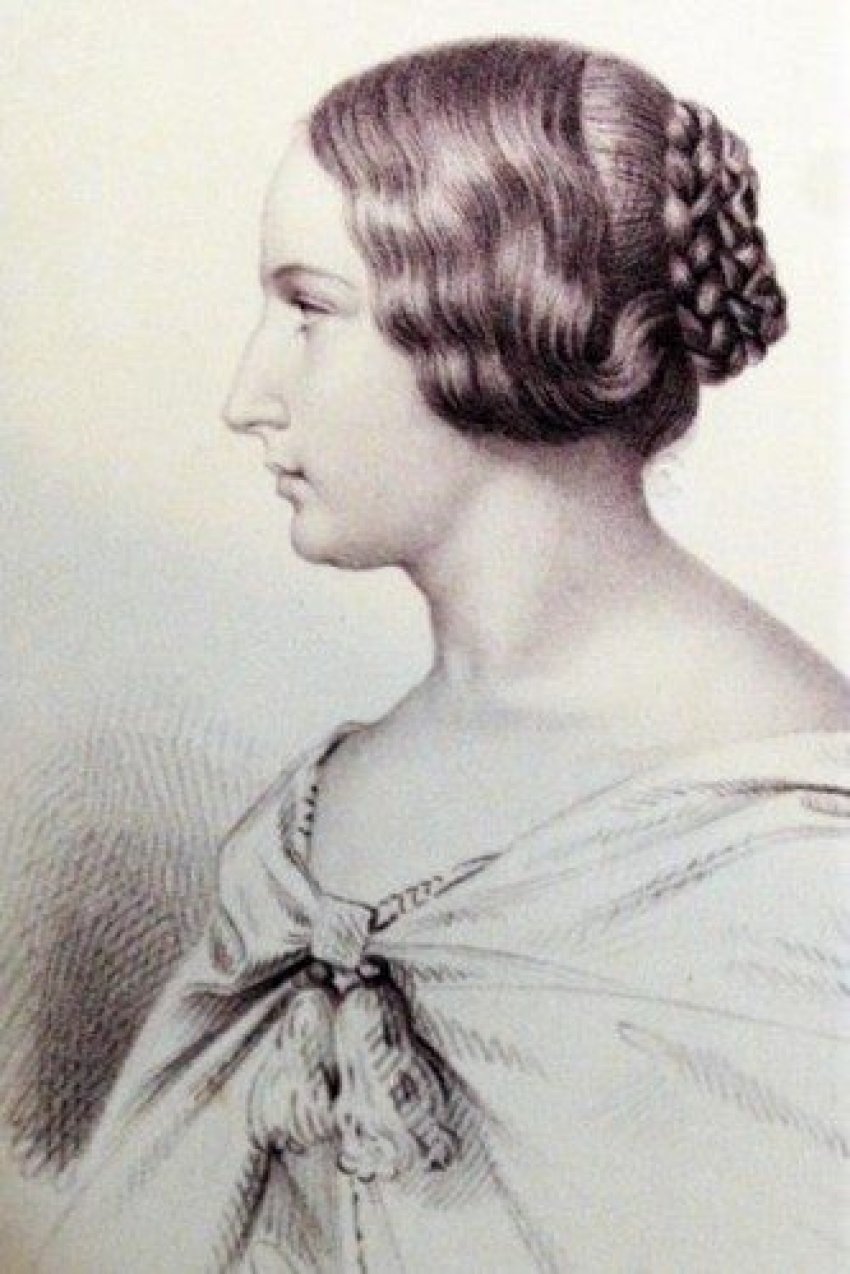
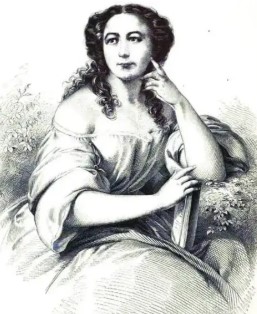
Elena Gjika, known to the public by her literary pseudonym Dora D’Istria, was a writer, historian, ethnographer, mountaineer, and a prominent fighter for the liberation of Albania and its emancipation. Elena was born in Bucharest on January 22, 1828. She was the daughter of Mihal Gjika (1794-1850) and the niece of the reigning prince, Gregory IV Gjika. Her father was an archaeologist and numismatist, founder of the postage stamp collection at the National Museum of Bucharest. Her mother, Catinca Gjika (Foca), was a writer and translator, a woman of rare beauty. Elena had a brother, Gjergj, and a sister, Gjeorgeta, who married Prince Stefan Lupasco in 1929. Elena herself received an elite education. She completed her primary and secondary education in Constanta and Bucharest, while she began her higher education in Vienna and finished it in Dresden and Berlin. Elena became one of the most cultured European women of her time. By the age of fourteen, she knew nine foreign languages. During her first European tour with her family, she amazed the courtiers of William IV of Prussia when she translated the Latin inscriptions of an old artifact, brought to the Palace by Humboldt, into German. The “little miracle,” as they called her at the time, knew Homer by heart in German. Elena wrote many books dealing with issues of art, political economy, history, philosophy, folklore, as well as stories, impressions, travel reflections, etc. She published her first work in French in 1855. In her publications, she used not only Romanian but also Italian, German, French, Latin, Ancient and Modern Greek, Russian, and Albanian. In nine of her works, she deals with the lives of Albanians and their problems. Among them, we mention the books: Women in the East, Volume I, 1859; The Albanian Nation according to Popular Songs, 1866; Albanian Sketches, 1868; The Albanians of Romania, Florence 1872. Her culture was cosmopolitan, although researchers view her as a propagator of Western civilization in the East and an activist for female emancipation.
Marriage to the Russian Prince
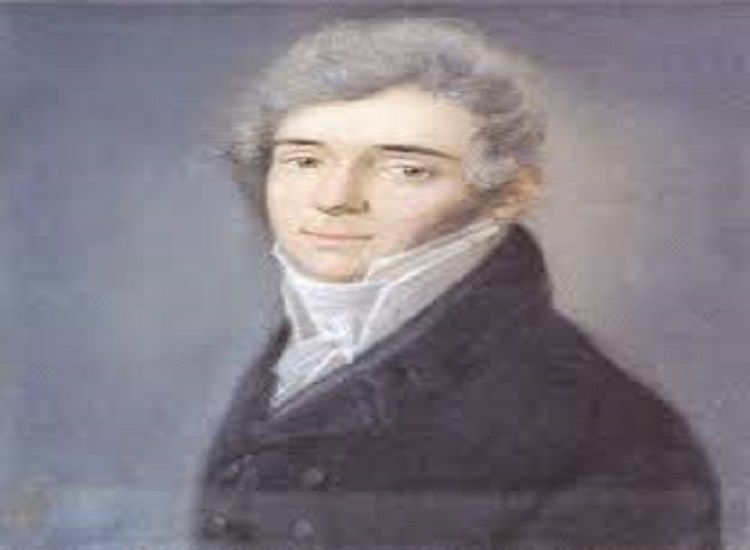
Elena led a turbulent life. Her romantic soul did not find peace when she married the Russian prince Alexander Koltsov-Massalsky and found herself at the Imperial Court of Tsar Nicholas I. Palace life stifled her soul; therefore, she left for Switzerland and later traveled to other countries, as far as America. In 1862, she became an Honorary Citizen of Athens, becoming the second personality after Byron to win such an honor. The Russian Ambassador, presenting her as a Russian princess due to her marriage to a Russian prince, introduced her to Queen Amalia of Greece. During her frequent travels, Elena met the political and intellectual elite of the time, making the Albanian cause known to them. She encouraged the American poet Longfellow to write a poem about Scanderbeg. Of great importance is the friendship and long correspondence she had with the prominent Arbëresh poet Jeronim de Rada. Elena Gjika’s patriotic activity reached enslaved Albania. The Albanian National Revivalist Zef Jubani dedicated an inspired poem to her as a sign of gratitude for the valuable help she had given to the Albanian cause. Meanwhile, another revivalist, the Arbëresh Leonardo de Martino, on behalf of three hundred Albanian girls, presented Elena Gjika with a filigree-crafted pen to express the deep gratitude that Albanian girls had for her. Elena Gjika’s literary heritage is scattered in several countries: Romania, Albania, Italy, Switzerland, and Greece. Through her extensive correspondence with De Rada, Camarda, De Martino, Mitko, Jubani, and others; in meetings with high political figures of other nations like Garibaldi, and meetings with prominent albanologists such as Xylander, Bopp, Hahn, Schleicher, etc., she became the most prominent representative of Albanian women in the world. Elena Gjika died in Florence in 1888. She is considered one of the most distinguished European women of the 19th century.
Literary Works of Dora D’Istria
The themes of Elena Gjika’s works are very broad. In the book Monastic Life in the Eastern Church (Brussels 1855; second edition, Paris 1858), she calls for the abolition of monastic orders. Meanwhile, in the work German Switzerland (Geneva 1856 in four volumes; second German edition, Zurich 1860 in three volumes), a description of the country and people of Switzerland is provided. The book The Women of the East (Zurich 1859, two volumes) speaks of the emancipation of women in the Levant and other Eastern countries. It also discusses the condition of Albanian women. In the book Women for Women, Dora D’Istria compares the situation of women in Latin Europe with Germany, loudly calling for equal treatment of men and women. In the book Excursions in Rumelia and Morea, she shows that Ancient Greece had as many civilizing demands as the Germany of her time. Worth mentioning is the work The Albanians of Romania, where a description of the Gjika princes from the 17th to the 19th century is given, published in Florence in 1873. Elena Gjika also published the book Poetry of the Ottomans, second edition, Paris 1877. She also wrote a large number of articles on issues of literary history, poetry, politics, religion, social problems, history, art, etc., in several well-known press organs such as Revue des Deux Mondes in France; Libre Recherche in Belgium; Diritto, Antologia Nuova, Rivista Europea in Italy, as well as in Romanian, Greek, and American magazines. Dora D’Istria was also involved in painting.
Works Written About Elena Gjika
Armand Pommier, Madame la comtesse Dora D’Istria, Brussels 1863. Charles Yriarte, Portraits cosmopolites, Paris 1870. Bartolomeo Cecchetti, Bibliografia della Principessa Elena Ghica, Dora D’Istria, Florence 1873. Luisa Rossi, Dora D’Istria. I bagni di mare. Una principessa europea alla scoperta della Riviera, Sagep, Genoa, 1998. Nicolae Iorga, Lettres de Dora D’Istria, see in Revue historique du Sud-est Européen No. 1-3, Paris 1932. Dictionar Mondofemina, femei romane, Vol 1: A-K, p.139-140
Meanwhile, several works of Elena Gjika have been published in the Albanian language, and several monographs have been written about her life.
Dora D’Istria, “Gra të para nga një grua” (First women by a woman), Elena Gjika Publishing House, Tirana 2003. Elena Gjika, “Letra drejtuar Jeronim de Radës” (Letters addressed to Jeronim de Rada), Bargjini Publishing House 2004. Elena Gjika, “Fyletia arbenore” by Kanekate Iaoshima, translated by Demetrio Camarda, Livorno 1867. Vehbi Bala, “Jeta e Elena Gjikës” (Dora D’Istrias), Rilindja, Pristina, 1970. Koli Xoxi, “Zvicra dhe Dora D’Istria”, Tirana, Alta 1995. Koli Xoxi, “Erazmi i Roterdamit dhe Helena Gjika”, Marin Barleti, Tirana, 1994. Koli Xoxi, “Franca sipas Dora D’Istrias”, Tirana 1997. Ahmet Kondo, “Dora D’Istria për çështjen kombëtare shqiptare”, Tirana 2002. Cristia Maksutoviç, “Elena Gjika dhe shqiptarët e Rumanisë”, Tetovo 2001. / Memorie.al