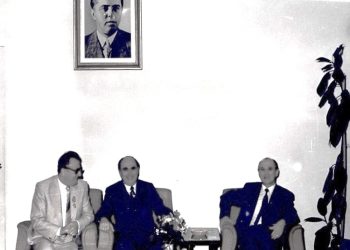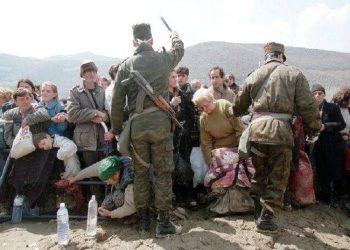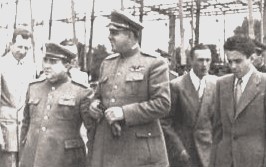
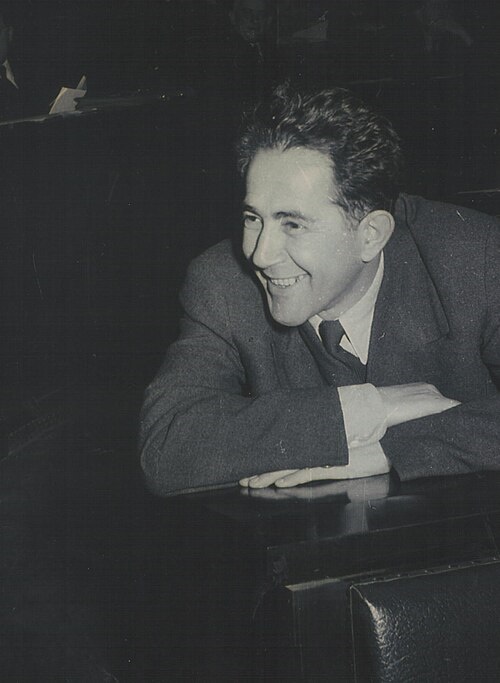

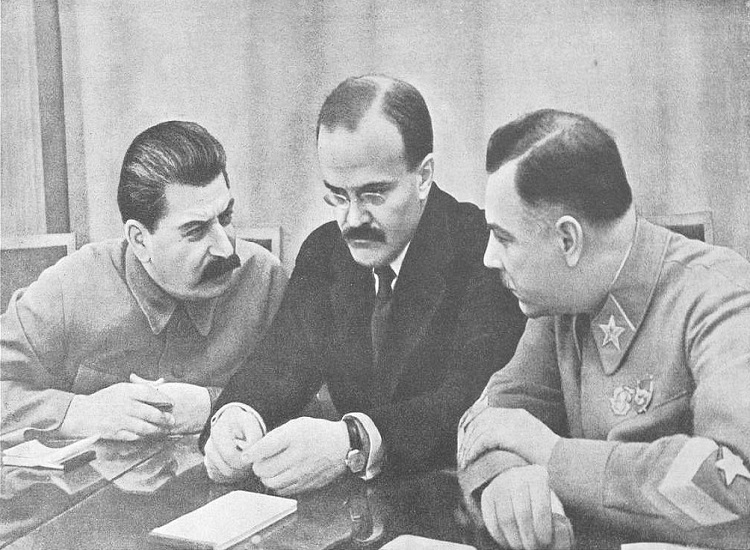
Memorie.al / At the meeting of February 10, 1948, between the Yugoslav delegation and the Soviet delegation, led by Eduard Kardelj and Josef Stalin, the issue of developments in Albania was raised. Stalin was well acquainted with those developments, while the Yugoslavs, maneuvering tactically, showed no interest in revealing all their “cards” to Stalin regarding the Albanian question. Nevertheless, they spoke about Enver Hoxha, about Nako Spiru’s suicide, about the Yugoslav-Albanian federation, etc. *Telegrafi* presents the Albanian issue in the Soviet-Yugoslav talks, according to the version of Milovan Djilas, prepared by historian Agim Zogaj.
“So, I left for Moscow – if my memory serves me right, on January 8, 1948 – with a double feeling: gratitude that Stalin had invited precisely me, but also with suspicions that this was not accidental and not with pure intentions towards Tito and the CC of Yugoslavia,” writes Djilas.
Testimonies of Milovan Djilas, Stalin: We have no interests in Albania!
I had received no special instructions or suggestions from Belgrade. Since I was in the inner circle of the leadership, also during Albanian-Yugoslav relations, the stance was that the Soviet representatives should not hinder the now more pronounced course toward the union of Yugoslavia and Albania through any untactful line. So, no instructions were needed…!
Only a few hours after my arrival in Moscow – we were deep in a cordial conversation with our ambassador, Vladimir Popović – the telephone on his desk rang: the Soviet Ministry of Foreign Affairs asked if I was tired, because Stalin wanted to meet me immediately, that same night.
As usual, around nine in the evening, they sent me to the Kremlin, to Stalin’s office. There were Stalin, Molotov, and Zhdanov, who was also in charge of relations with foreign parties in the Politburo. After the usual greetings, Stalin immediately turned to the topic: “They are killing your Central Committee members in Albania! That is very bad, very bad!” I began to explain: “Nako Spiru opposed Albania’s union with Yugoslavia; he was isolated in his Central Committee.”
But before I could finish, Stalin, to my surprise, said: “We have no special interests in Albania. We agree that Yugoslavia should swallow Albania!” On that occasion, he gathered the fingers of his right hand and, moving them toward his mouth, made a swallowing gesture.
I was surprised by that swallowing gesture of Stalin’s, but I don’t know if it showed on my face, because I tried to turn it all into humor and to interpret it as Stalin’s usual figurative way of speaking.
I explained again: “It’s not a matter of swallowing, but of union!” But then Molotov intervened: “Yes, that is swallowing!” And Stalin, again with that gesture: “Yes, yes, swallowing. But we agree with that. You must swallow Albania, the sooner the better.”
Despite that manner of expression, the whole atmosphere was cordial and more than friendly. Even Molotov said the swallowing issue with a certain humorous emotion, quite unusual for him.
Enver Hoxha is a petty bourgeois!!!
I had approached the rapprochement and union with Albania with sincere and revolutionary inspirations. I had thought, as had many others, that the union, with the voluntary consent of the Albanian leadership, would not only be beneficial for Yugoslavia and Albania but would simultaneously put an end to the traditional impatience and conflicts between Serbs and Albanians.
This, in my opinion, was of particular importance, because it would enable the union of the large compact Albanian minority with Albania, as a separate republic in the Yugoslav-Albanian federation.
Any other solution to the problem of the Albanian minority seemed unrealizable to me, given the fact that simply ceding Yugoslav territories inhabited by Albanians would provoke insurmountable resistance even within the Yugoslav Communist Party itself.
And, although it did not occur to me to deviate from the views of my country’s leadership and to agree with Stalin, Stalin’s interventions initially imposed two thoughts on me: the first had to do with something being wrong with the Yugoslav policy toward Albania, and the second that the Soviet Union had swallowed the Baltic states – Molotov’s remark directly signaled this.
Both thoughts converged into one – a feeling of discontent. The thought that there was something unclear and unprincipled in Yugoslav policy toward Albania was far from my accepting that policy as “swallowing,” but it occurred to me that this did not match the desire and will of the Albanian communists.
Why had Nako Spiru been killed? Was he not so “petty bourgeois” and “burdened with nationalism”? And what if the Albanians, like us Yugoslavs, wanted to have their own separate state? If the union were realized against their will and by exploiting Albanian misery and isolation, would that lead to unforeseen conflicts and difficulties? Would the Albanians understand the union as a loss of independence?
As for the second view, that the USSR had swallowed the Baltic countries, I connected it with the first, repeating and proving to myself that we Yugoslavs, in uniting with Albania, did not want and dared not go down the same path, nor was there a direct danger that some imperialist power would crush Albania and use it as a base against Yugoslavia.
But Stalin retorted: “Enver Hoxha, what is he in your opinion?” I hesitated to give a direct and clear answer, but Stalin expressed exactly the opinion that had been spoken about Hoxha in the Yugoslav leadership: “He is a petty bourgeois, isn’t he? Yes, we think so too. ‘Apparently, the strongest man there is Xoxe?’ I confirmed his questions.”
The Question of the Balkan Federation!
Stalin ended the conversation about Albania, which had lasted ten minutes. “There are no differences between us. But you personally write a dispatch to Tito in the name of the Soviet government regarding this and bring it to me tomorrow.”
At that moment, I felt this as a sign of special trust in me and as agreement with the Yugoslav policy toward Albania. This dispatch was never sent to the Yugoslav government, but it was used against Yugoslavia in the later conflicts between Moscow and Belgrade.
Kardelj and Bakarić arrived on Sunday, February 8, 1948 (in Moscow). In fact, the Soviet government had invited Tito, but in Belgrade they pretended he was unwell – indeed, this interpretation itself showed mutual distrust, so instead of him, Kardelj came. At the same time, the Bulgarian delegation, i.e., the Central Committee, had also been invited, about which Lesakov had informed us, deliberately saying that the “top leaders” had come from Bulgaria…
Kardelj then, or immediately upon arrival, told me that the direct cause of the disagreements with Moscow was the agreement between the Yugoslav and Albanian governments on sending two Yugoslav divisions into Albania. The divisions were now fully assembled, and the Yugoslav aviation corps was now in Albania. So Moscow had opposed, not accepting the Yugoslav justifications that the Yugoslav divisions should protect Albania from a possible attack by the Greek “monarcho-fascists.”
In its dispatch to Belgrade, Molotov had threatened public disagreement. No one had informed us of anything, and there were no signs from the Soviet side until the next evening, January 10, around 9 p.m., when they gathered us and sent us by car to Stalin’s office in the Kremlin. There we waited for the Bulgarians for 15 minutes – Dimitrov, Kolarov, and Kostov – and as soon as they arrived, they took us in to Stalin. We sat so that to Stalin’s right were Molotov, Zhdanov, Malenkov, Suslov, Zorin, and to his left were Kolarov, Dimitrov, and then the Yugoslav representatives, Kardelj, myself, and Bakarić…
Stalin said: “The customs union, the federation between Romania and Bulgaria – these are nonsense! Another matter is the federation between Yugoslavia, Bulgaria, and Albania. There are historical and other ties here. This federation must be created, and as soon as possible, the better. Yes, the sooner the better, immediately! If possible, tomorrow. Yes, tomorrow, if possible! Agree on this immediately.”
The Stalin-Kardelj Conflict!
Someone, I think it was Kardelj, pointed out that work was now being done on the Yugoslav-Albanian federation. But Stalin emphasized: “No, first the federation between Bulgaria and Yugoslavia, and then between these two and Albania.”
And then he added: “We think that a federation between Romania and Hungary should also be formed, as well as between Poland and Czechoslovakia.” The discussion quieted for a moment. Stalin did not develop the federation issue further. Only later, in a direct manner, he repeated that the federation between Yugoslavia, Bulgaria, and Albania should be formed immediately…
Finally, Kardelj spoke. He was flushed, showing signs of concern, because he had his head buried in his hands and made pauses in sentences even where they didn’t belong. He emphasized that the agreement between Yugoslavia and Bulgaria, signed in Bled, had been sent in advance to the Soviet government, but the latter had made no objections except regarding the duration of the agreement: “Instead of ‘forever’ – 20 years.”
Silent and not without reproach, Stalin looked at Molotov, who nodded and, with pursed lips, confirmed Kardelj’s words. Kardelj said that apart from that remark, which we accepted, there were no disagreements… But Stalin interrupted him, with considerable bitterness, though with less insult than to Dimitrov: “Really! There are disagreements, and deep ones! What did you mean regarding Albania? You didn’t consult us at all about sending troops into Albania.” Kardelj said that the Albanian government had agreed to this. Stalin shouted: “This could have led to serious international complications – Albania is an independent state! What do you think? Whether you justify it or not, the fact remains that you did not consult us about sending two divisions into Albania.”
Kardelj explained that this had not been finalized and added that he could not recall any foreign matter on which they had not consulted the Soviets. “That’s not true,” shouted Stalin. “You do not consult at all. With you, this is not a mistake, but a stance, yes a stance!” Kardelj, broken, fell silent and did not present his own views. / Memorie.al