

Dashnor Kaloçi
Part Six
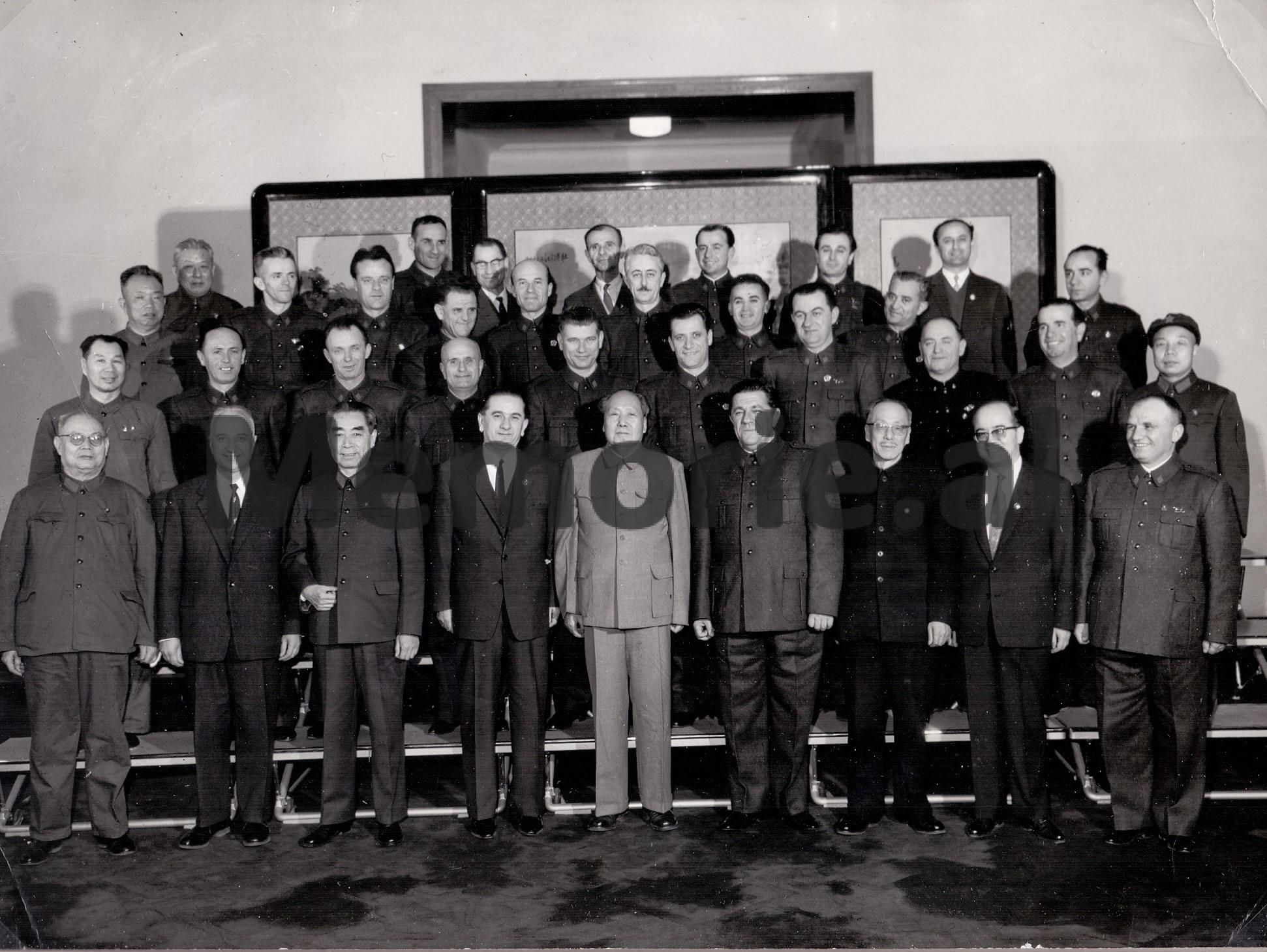
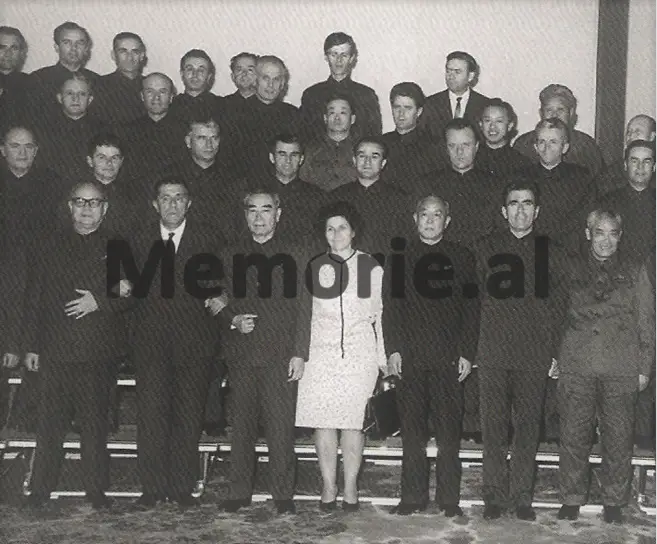
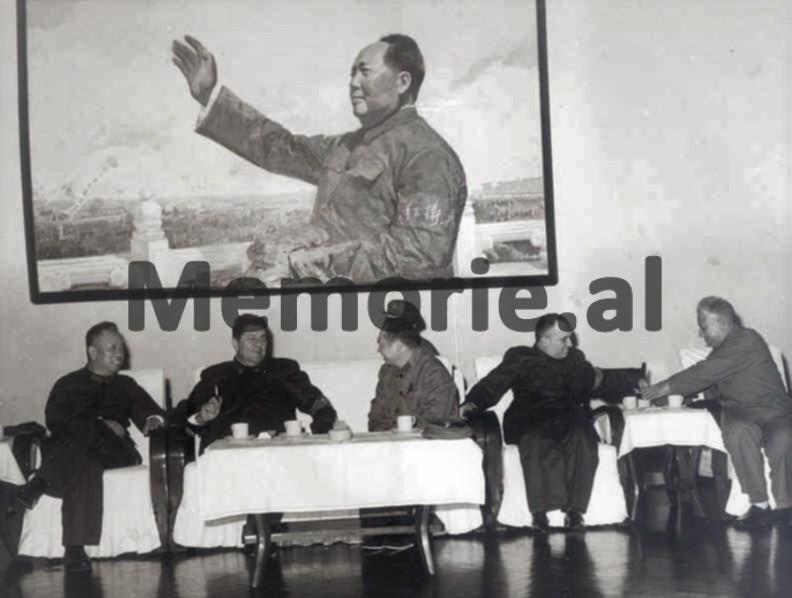
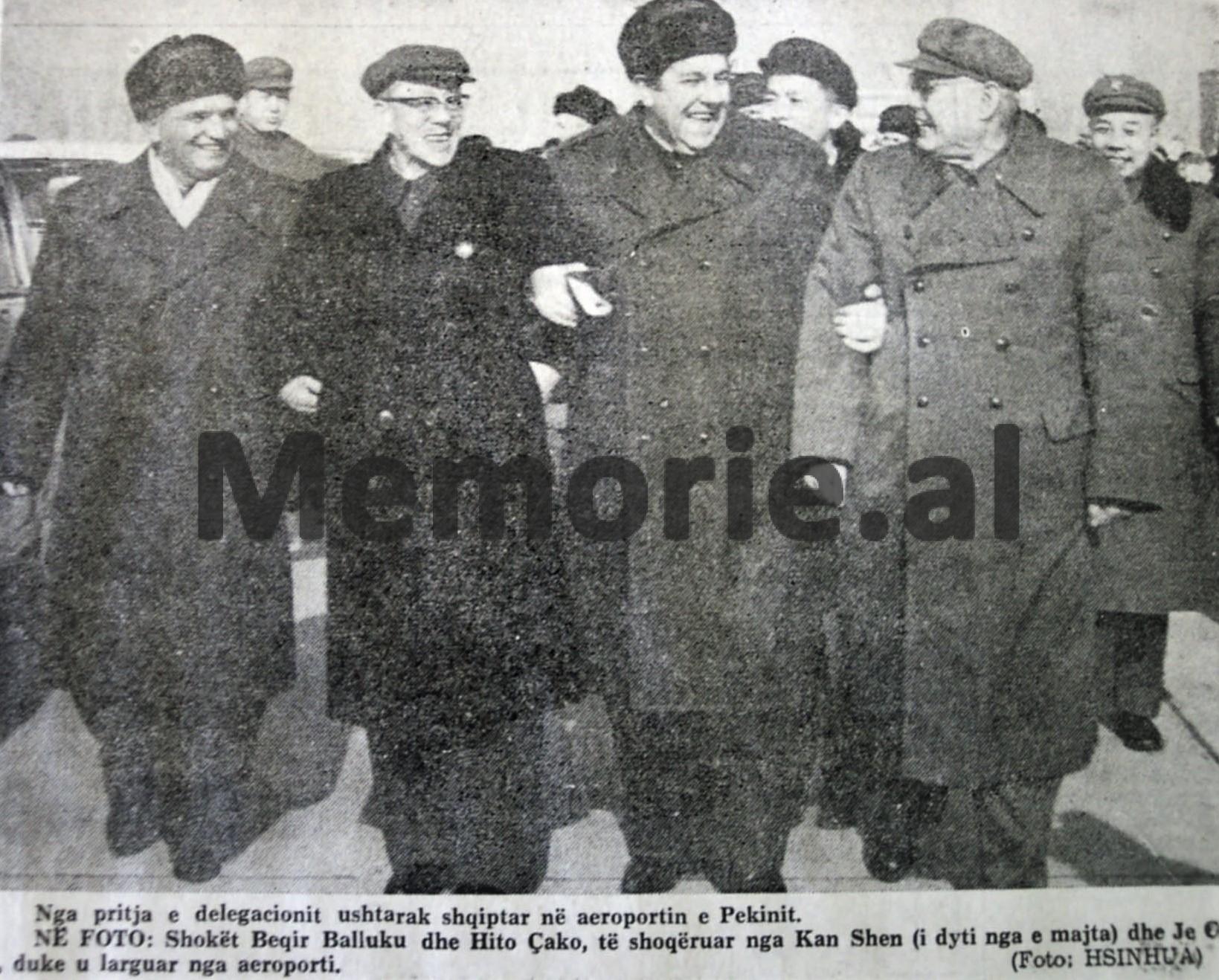
Memorie.al/ publishes several archival documents marked ‘Top Secret’ taken from the Central State Archive in Tirana (fund of the former Central Committee of the Party of Labour of Albania), containing the minutes of meetings of the high party and state delegation of the People’s Republic of Albania, headed by the Minister of People’s Defence, Beqir Balluku, with the high delegation of the People’s Republic of China, headed by the chairman of the military commission of the Political Bureau of the Central Committee of the Chinese Communist Party, Je Çen Ji, where military issues were discussed, as well as the delegation headed by the Minister of Trade, Kiço Ngjela, with the Chinese delegation headed by the Premier of the State Council of the People’s Republic of China, Çu En Lai, where economic issues were discussed, as Albania had an urgent need for bread grains, but the Chinese government could not help, because as a result of drought, they had not fulfilled their plans and were buying wheat that the French had imported from the Americans! The unknown documents published for the first time include the complete minutes of two meetings held in Beijing on November 7, 1972, where the Albanian military delegation headed by the Minister of People’s Defence, Beqir Balluku (with the participation of all directors of directorates and heads of various branches of the Albanian army), requested that the Chinese government assist the Albanian army with all types of armaments, ranging from: light infantry weapons (rifles), anti-aircraft, ground and coastal artillery, tanks, armored vehicles, ships, torpedoes for the naval fleet, chemical weapons, engineer equipment and materials, communications, radio-location, motor transport vehicles, aircraft and helicopters, mechanical industry plants for repairing tanks and armored carriers, combat ammunition and explosives, rear services materials, etc., because according to Minister Balluku, the Albanian army was in a very difficult state regarding armaments, as it possessed World War II armaments brought by the Soviets back in the 1950s.
Fund: CENTRAL COMMITTEE OF THE PARTY OF LABOUR OF ALBANIA
Relations with the Communist Party of China
Content: FIRST MEETING OF THE MILITARY DELEGATION OF THE PR OF ALBANIA (HEADED BY BEQIR BALLUKU) WITH THE CHINESE COMRADES JEH ÇEN JI, LI TEN SHEN, AND XAN CAJ ÇIEN, DATE 7 NOVEMBER 1972. CONCERNS: ON THE FRIENDSHIP AND FIGHTING COOPERATION BETWEEN OUR TWO PARTIES, PEOPLES, AND ARMIES. ON THE GEOGRAPHICAL POSITION OF ALBANIA WHERE THE INTERESTS OF THE AGGRESSIVE PACT OF NATO AND THE WARSAW TREATY CROSS, THE CHAUVINIST AND ANNEXATIONIST AIMS OF THE STATES SURROUNDING US. ON THE MEASURES TAKEN BY THE PPA (PARTY OF LABOUR OF ALBANIA) FOR THE DEFENCE OF THE COUNTRY AND THE PRESENTATION OF CERTAIN REQUESTS FOR STRENGTHENING DEFENCE.
FIRST PLENARY MEETING OF OUR DELEGATION WITH THE CHINESE COMRADES, DATE 7.11.1972
Speech of the Minister of People’s Defence, Beqir Balluku, at the meeting with the Chinese delegation in Beijing, 7 November 1972
Balluku: We have supply shortages in the cities, in food items such as bread, oil, meat, sugar, etc.
But despite this, we are currently unable to meet our needs, because we have great demands for importing food for the population, which require foreign currency. We have supply shortages in the cities, in food items such as bread, oil, meat, sugar, etc. We do not include the countryside in our supply system, and for this the Party receives complaints. As a result of this situation and condition, regarding the material provision, equipment and supply of the army with rear services materials from the country – both for peacetime army and wartime – we have difficulties and great shortages. The equipment and supply of the army with rear services materials do not meet the demands of a prolonged people’s war on the regular front and in enemy rear lines. It does not meet the demands of our country’s terrain, climate, atmospheric conditions, etc.
Some of these weaknesses in the material provision of the army have been exposed by various exercises we have conducted at operational level over the last 3-4 years, under different terrain and climate conditions. These exercises showed that the clothing and footwear of the troops, the existing structure of supply with food processed by our industry, as well as the equipment of the staffs, do not provide the army even at the most minimal desirable level. Based on the factors mentioned, as well as on the current state of our army’s rear services, we have considered it necessary to include in the request list some main materials for the rear services. The supply of food for the army during mobilization, for a one-year war period, includes various food products such as: wheat 75,000 tons, beans and rice 25,000 tons, fats 6,000 tons, and canned meat over 7,000 tons. These food contingents, within your possibilities, we have thought to be provided to us within 5 years.
We need factories for food items and clothing for the army
Also, based on the possibilities of supply for items and articles, substitutions can be made. It is known that in the past from the PR of China we have received a quantity of food items such as: wheat 50,000 tons, sugar 5,000 tons, and rice 5,000 tons, but we emphasize that the main part of the wheat reserve we were forced to spend on food for the population, as a result of the unfavorable atmospheric conditions for our agriculture during these last two or three years. Also, we think to be assisted with raw materials to complete and equip the army for mobilization with clothing, equal to 350,000 sets (outer clothing, underwear, and leather shoes). We also consider it necessary to submit the request that you assist us by giving us a workshop for tailoring military clothing, as well as a workshop for producing shoes by the vulcanizing method. This method will help improve the quality of shoe production, which we currently do in a backward artisanal manner.
Also, we have a great need for a food canning factory, as well as a factory for supplying medicines needed by the army. To improve the material supply of the army in peacetime, which forms the basis for preparing the large contingents of reservists for mobilization who conduct one-month training exercises, we propose that over the 5 years 1973-1978, our economy be placed in conditions to meet its needs, and the PR of China supply us with 50 percent of the quantity of food and clothing, based on the existing norms of our army. I note that such an agreement we had with the Soviet Union back in 1949, and it was interrupted in 1961 by the Soviets, for known reasons.
Comrades, All the points I touched upon in this short exposé should be included in the request list, which we are ready to submit. It is known that the protocol-agreements between us for supplying our army expire at the end of 1972. We think that for equipping our army in the future, after we discuss and sift through these requests together and match them with your possibilities, we should conclude a new agreement with a 5-year term, i.e., 1973-1977. Based on this proposal of ours, we have divided and calculated the requests over the years. Let us discuss and harmonize this proposal of ours, also in relation to your possibilities. I want to underline once more, comrades, that these requests we are putting forward we have measured and weighed for a long time, but we present them to you, comrades and co-fighters, because we can secure them only from the People’s Republic of China and from no one else. Concluding, I express the deep conviction that our requests will always be considered seriously by the Party, the State Council, and the Chinese People’s Liberation Army, and in accordance with possibilities, ways of solution will be found in brotherly understanding as always. We are convinced that what you will have and dispose of, we will also have and dispose of.
Thank you for your attention.
Minutes of the meeting and discussions of the Albanian delegation headed by the Minister of People’s Defence, Beqir Balluku, with the Chinese Premier, Çu En Lai, in Beijing, on 7 November 1972
Fund: CENTRAL COMMITTEE OF THE PARTY OF LABOUR OF ALBANIA
Relations with the Communist Party of China
Content: MEETING OF THE MILITARY DELEGATION OF THE PR OF ALBANIA (HEADED BY BEQIR BALLUKU) AND THE ALBANIAN TRADE DELEGATION (HEADED BY KIÇO NGJELA) WITH THE PREMIER OF THE STATE COUNCIL OF THE PR OF CHINA, ÇU EN LAI, DATE 7 NOVEMBER 1972. CONCERNS: ON THE FULFILLMENT BY THE PEOPLE’S REPUBLIC OF CHINA OF OUR REQUEST FOR GRAINS, THE AID GIVEN TO VIETNAM, AND THE EXPORTS MADE FROM FRANCE. ON THE CARE TO BE TAKEN FOR AGRICULTURAL PROBLEMS, INCREASING YIELDS, SENDING PEOPLE FROM THE CITY TO THE COUNTRYSIDE. ON THE REQUESTS PRESENTED BY THE PR OF ALBANIA FOR THE KOMAN HYDROPOWER PLANT, METALLURGY, THE EXPANSION OF THE BALLSH PLANT, AND THE FIER STEEL PLANT. ON THE CONSPIRATORIAL AND TREASONOUS ACTIVITIES OF LIN BIAO. ON THE ADMISSION OF THE PR OF CHINA TO THE UN, AND THE EXPANSION OF DIPLOMATIC RELATIONS WITH MANY COUNTRIES OF THE WORLD.
MEETING OF OUR MILITARY DELEGATION WITH COMRADE ÇU EN LAI, DATE 7.11.1972
In this meeting, on our side, the comrades of our military delegation and the comrades of the trade delegation with comrade Kiço Ngjela at the head participated.
On the Chinese side, in this meeting were comrades: Jeh Çen Ji, Li Sien Nien, Xan Caj Çien, Deputy Minister of Foreign Affairs, Deputy Minister of Foreign Trade, and Deputy Minister of Economic Relations with the Outside World, representatives of the State Planning Commission, representatives of the army and of the government.
Comrade Çu En Lai: I am very glad that today we meet together with you comrades. You passed through the Middle East to Urumqi?! The main drawback of Urumqi is that its airport is very far from the city. When the new airport is finished, a new line will be opened, because now it is very far, more than 70 km.
Comrade Beqir Balluku: Comrade Sej Fu Din told me that in one month the new airport will be finished.
Comrade Çu En Lai: The initial phase may be finished, but fully completed with all equipment may be finished by the end of the year. Comrade Kiço Ngjela has decided to leave tomorrow and has given me an ‘ultimatum’ regarding his departure, isn’t that so comrade Kiço?! How many tons of wheat do you want to take?! Why are you in a hurry?! I communicated to the comrades that they should tell comrade Kiço that he will leave China when comrade Beqir arrives on 6.11.1972. I say this as a joke. The bread issue is an urgent issue that must be solved. Chairman Mao has said that hunger does not wait. This year we have not had good agricultural production, we have taken 4 percent less than last year. I believe that as a percentage it is lower than yours. In our grain production, sweet potato is included. You two know, while the other comrades are learning it now.
During the decade 1962-1972, we have continuously had increases in grain production; on average we have taken 5 percent more. Only this year this phenomenon occurred that we have taken less, which negatively affects the supply of the city with agricultural products. We have small reserves scattered in the four corners of the country that we cannot touch, so we are forced to import grains from abroad. When we buy for ourselves, let us also take for Albania. This is the people’s bread, and one does not joke with that. Exports take a big place in our country, i.e., supplying with grain, because besides you, we also help Vietnam, since there has been much damage there due to the heavy bombings by the Americans. They have mined the entire coast, even the mouths of small rivers. Also around the islands, they have placed mines. The Vietnamese take the grain we send them with small boats, but many of them are damaged by bombings. Supplying them by ship has not been possible because there are many difficulties. So what can we do?!
We put the grain in plastic bags and throw it into the water, so that the Vietnamese can take it. But we cannot always throw it accurately into the designated places. Sometimes it has happened that they have gone as far south as the Philippines. We cannot help it, but we cannot remain without helping them. Even the Soviets said they would help Vietnam with grain, but so far they have given only half, and that of poor quality. Next year the Vietnamese cannot have hopes in the Soviets, regardless of whether there is war or not. For securing bread, measures must first be taken for the exchange of goods, exporting rice and importing grains. Now grain prices have risen. Canada, for example, has raised prices. Only the USA has the lowest grain prices. Nevertheless, we decided to buy grain not from the USA, but from France.
When we had concluded the contract with France, we learned that this wheat we were to receive was not French but American, which was also declared in the French press. We asked the French why didn’t you tell us that this wheat is American?! For this reason we broke the contract. Later we again started negotiations with the French, and again it was published in the press that China had bought American wheat from France. We asked the French again why did you publish in the press that China bought wheat?! They apologized. To import grain, transport means are needed; this problem is not easy. With the imperialist states we trade, we buy aircraft and other materials. Once comrade Mehmet told us that even at Rinas airport, an American Boeing can land, so we are buying 10 of them, and on the new Beijing-Tirana line we will put such aircraft. Please, convey this to comrade Mehmet.
Comrade Beqir Balluku: I will convey this message of yours to comrade Mehmet. Boeing aircraft are good.
Comrade Çu En Lai: The Viscount is also very good. The Soviets took the copy of the Viscount to produce their own aircraft, but they did not succeed with the IL-62. I have heard that two or three aircraft have crashed, so traveling with that type of aircraft is dangerous. One should not travel with these aircraft. It’s good that Nixon didn’t crash either, since he also travels on such aircraft. For your travel on the IL-62, I was very concerned. I gave orders several times to our aviation comrades to be careful, so that no accident would happen. As I have been informed, you too comrade Beqir have had misfortune in grain production this year. So we will help you. How much will you take, comrade Kiço?!
Comrade Kiço Ngjela: I have presented our requests to your comrades.
Comrade Çu En Lai: Take all the wheat according to your request, but not rice, because the Vietnamese need rice more, as they do not eat bread.
Comrade Kiço Ngjela: Thank you, comrade Çu En Lai, for this help.
Comrade Çu En Lai: Wheat is the main thing, since it is the people’s bread. The point is that agricultural problems must be taken seriously; we must pay attention to it. In our country, there is a large population, much land, but the average yield is not as high as it should be. In some places like Beijing, Hangzhou, etc., yields are good. For example, in Shanghai, rice production was 90 quintals per hectare. This is a good yield, but if we had good yields everywhere, we would have solved the bread problem definitively. We foresee that in the future we will have higher yields. The population increases, so when the population increases, the area of productive land must also increase. The land must be managed so that it is not eroded. We foresee that by the end of the 20th century, we will secure 40 quintals per hectare. Then we will have an average yield and will meet our needs domestically. Of course there may be even higher yields. But I cannot say that we are in a bad state.
We have advanced, but in relation to our population, we are still behind. In terms of production we have a lot, even more than some other countries of the world. But in comparison to the population, we still have deficits and do not meet our needs. Agricultural work is not easy, so care must be taken during campaigns – planting, irrigation, weeding, etc. When there is possibility for two harvests, we should do that too, for example, after wheat, plant corn. In Shanghai we achieve this. You, comrade Beqir, will go to Shanghai and see for yourself. Today is the 55th anniversary of the victory of the Great Socialist Revolution in Russia. But today the Soviet Union is a revisionist country, and has taken a zigzag road. For agriculture there, no care is shown, because personal gardens are being created. This is a great lesson for us. They spend huge sums on nuclear weapons – not in millions, but in billions. They do not care about people’s lives, and in light industry and agriculture they are still behind. Even the Americans spend on nuclear weapons and satellites, but they have a good base in agriculture and industry. Your country is small, but as we are both together we are strong. I have talked several times with our comrades about your country. Nevertheless, I cannot say that I know Albania’s agriculture well. However, low yields, both in our country and in yours, are caused by shortcomings in work, because we do not provide all the agro-technical services. If we work to such a degree that natural disasters are eliminated, the situation will improve, so it is our duty to work as much as possible to increase yields, otherwise we will be in a tight spot in wartime. Now this is one of the biggest tasks we have done to move forward. Another issue is to mobilize citizens to go to the countryside. Is this not also a problem for you?!
Comrade Beqir Balluku: Certainly it is.
Comrade Çu En Lai: I have seen one of your films titled “Old Wounds.” This film showed a family that was assigned to go to the countryside, where the husband was willing, but the wife hesitated, and with difficulty she finally agreed to go. Naturally, this is not easy. This phenomenon also occurs in our country. Every year we send thousands of people from the city to the countryside. You too should do such a thing. Large populations should not be concentrated in cities. In case of war, the people’s militia organizes better in the countryside than in the city./Memorie.al