Part Fourteen
Memorie.al – The CIA has shown the great role that the Soviet Union played in communist Albania. In several “Top Secret” documents, declassified years ago, it is shown that the USSR built several important military bases, especially in the south of the country. There, details are given about the submarines that Moscow had on the island of Sazan and in the Bay of Vlorë, as well as air bases, such as those in Rinas, Kuçovë, etc. Then a panorama of political developments is presented, mentioning the dismissal of Defense Minister Beqir Balluku in the summer of 1974 from all military and party functions. Likewise, a special place in the declassified CIA documents is given to those that speak about Albanian political émigrés in Yugoslavia, who were integrated into the Committee of Prizren, initially chaired by Apostol Tanefi, and under the pressures of the UDB (Yugoslav secret police), which recruited them through coercive measures, such as returning to Albania, etc.
Continued from the previous issue
Yugoslavia Creates a Committee against the Kominform Communist Countries
September 1950
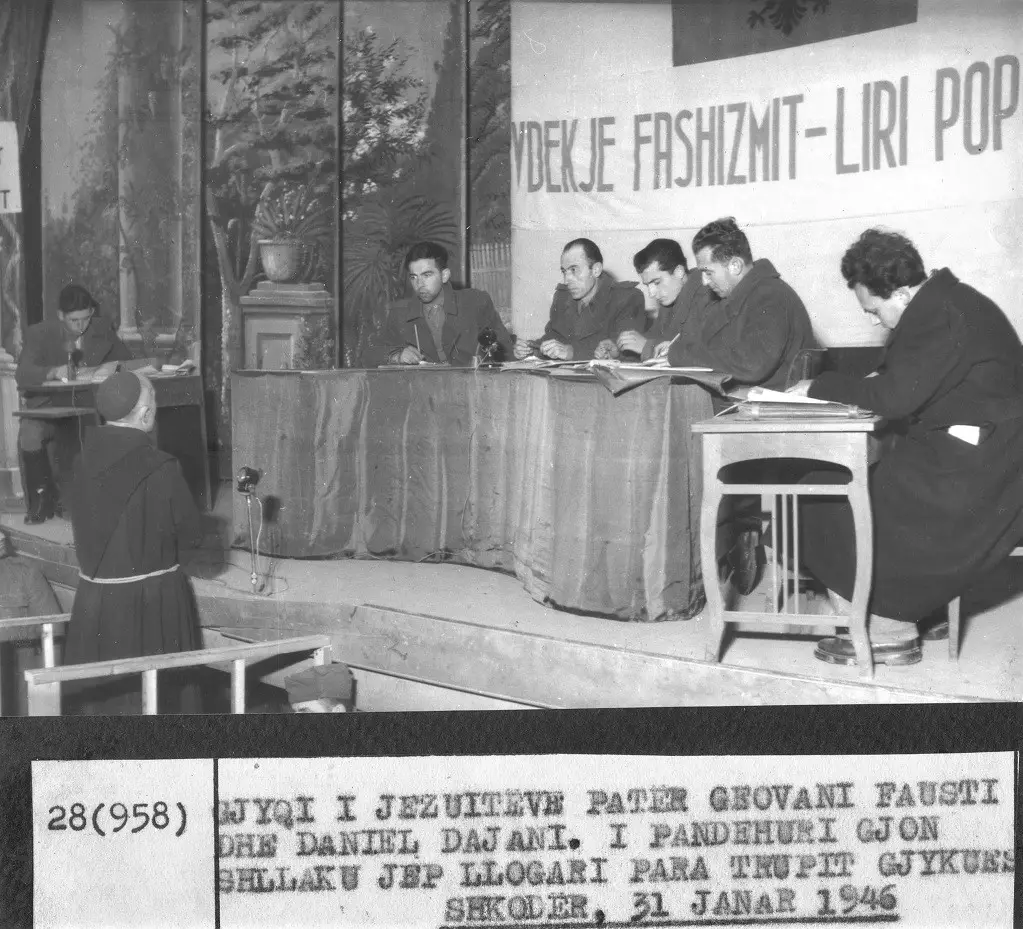
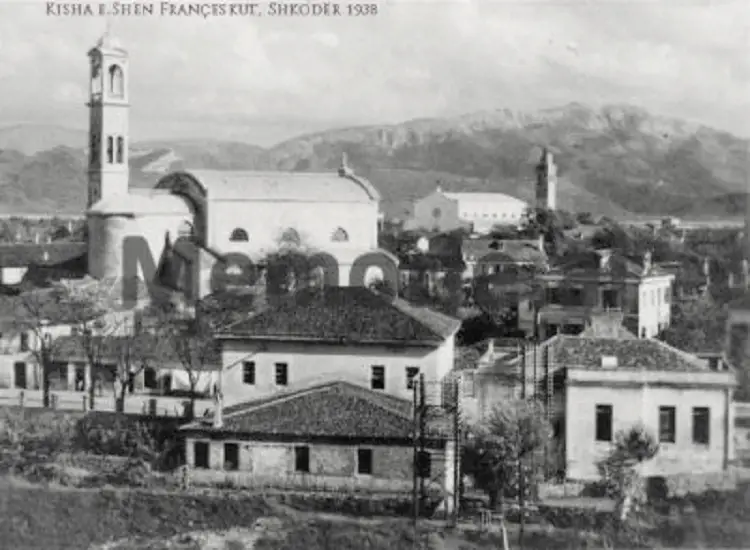
Shkodër Resistance
Anti-communist nationalists in the Shkodër area include at least 16 persons of considerable influence in this region. They belong to different political movements, but all are ardent anti-communists. At present, they are not promoting the expansion of the resistance movement, as they believe that without outside help this is futile in the face of the harsh repressive measures of Hoxha’s government police.
In Shkodër, the main anti-communist faction consists of followers of the former King Zog, while two other movements are the Balli Kombëtar (National Front) and the Social Democrats. Balli Kombëtar never had great support, and the remaining members lack self-confidence because of their collaboration with the communists during the war.
The Christian Democratic Party, on the other hand, commands more respect, even though it is a relatively newer movement. The Zogists enjoy greater support than the Ballists and Social Democrats combined. The strength of the communist police in Shkodër consists of about 250 men, most of who are stationed at the main headquarters, while the rest are distributed across two substations and two prisons.
The main prison is guarded by about 25 men under the command of Director Riza Alia. It holds 437 political prisoners. The smaller prison, which holds 207 non-political prisoners, is guarded by about 20 men.
The two police substations have eight men each. Initially, the Shkodër police treated the local population badly and sometimes brutally, but recently their behavior has improved somewhat, and the police seem to turn a blind eye to many things.
Members of the Sigurimi (secret police) operate in civilian clothes and primarily watch the known gathering places of anti-communist nationalists. The latter are loyal communists, unlike the regular state administration, which is considered to be communist to about 20 percent.
November 1960
In a major speech before the Albanian Assembly on October 25, Prime Minister Shehu reaffirmed Albania’s support for China in the debate with the Soviets. Shehu had just returned from the UN General Assembly, where, to everyone’s surprise, in most of his comments he had struck out against Khrushchev’s proposals, saying that his ideas were not practical.
Shehu’s speech, which – as in other cases – reflected a world view similar to that of the Chinese communists, comes at a time of strong friendship between China and Albania and as another signal of the break between the Soviets and Tirana. Shehu’s comments were a continuation of the ideas previously put forward by China, through which he presented the reasons why the Soviet proposals could not be realized.
For example, on the issue of disarmament, he said that Albania supports the idea in principle but believes that the Anglo-American imperialists will never agree to disarmament merely through discussions. He said that only through the determined effort of all peace-loving nations could the West be forced to accept disarmament.
Indirectly, Shehu criticized Khrushchev’s meetings in New York with Tito, and directly expressed opposition to two Soviet proposals previously presented by the leaders of satellite countries.
He condemned the idea of total disarmament in the Balkans, previously proposed by Georgiu-Dej of Romania and Zhivkov of Bulgaria, calling it “absurd and dangerous” as long as the armed West surrounds the Bloc. He also rejected Gomułka’s suggestion that the first step toward disarmament is the acceptance of existing military bases on foreign soil.
Mehmet Shehu said that this would imply accepting the presence of hundreds of American bases around the Soviet camp, and for Tirana this was a threat to the importance of the Soviet Bloc as a beacon of socialism in the Adriatic area.
Shehu’s speech comes at a time of tension between Albania and the USSR and its rapprochement with China. In a telegram of thanks to Albania, China congratulated Tirana on its steadfastness in preserving the purity of Marxism-Leninism.
Deputy Prime Minister Këllezi, in a speech on October 26 after returning from Beijing, expanded Albania’s support to include Chinese domestic policies, praising “the great step forward in the development of Marxist theory in China.” According to an unconfirmed report from France, the Soviet ambassador in Tirana has not been in Albania for several weeks, officially for health reasons.
The Soviet chargé d’affaires has been denied entry to the Foreign Ministry, while the Chinese ambassador is received there and at the Political Bureau every day. Reports also speak of the withdrawal of Soviet technicians from the country. Shehu also hinted that rotations in the Albanian communist party would continue. He declared threateningly that in Tirana one could still find revisionists and opportunists who describe China as “dogmatic or inclined toward war.”
February 1961
Beijing emphasizes unbreakable friendship with Tirana; the Soviet Bloc criticizes Albania’s deviation. In contrast to the Soviet Union and the communist satellite countries of Eastern Europe, which have criticized Tirana’s deviation since the Moscow Conference, communist China continues to highlight what it calls “unbroken friendship” with Albania.
On February 2, Beijing announced the signing of six economic documents with Albania, negotiated during the Albanian delegation’s visit to Beijing. Details of the agreements have not yet been made public, but most likely further loans have been approved for Albania.
In an article in the Chinese state newspaper on February 3, ridiculing Moscow, it emphasized the correctness of the USSR’s statement last November that all socialist countries, large and small, have equal rights and must support one another.
The Albanian regime has supported Beijing in its debate with Moscow, and as a result it has been criticized by the Soviet bloc countries since the close of the Moscow Conference in early December.
The leader of the East German communist party, Ulbricht, on December 18 publicly accused Albania and Enver Hoxha of “dogmatic and sectarian” policies in his speech at the conference.
This was the first censure of Albania since the break with Tito in 1948. The other satellite countries and the USSR have also criticized Albania on several occasions.
In Moscow’s annual New Year’s greetings to Albania, the usual phrase “dear comrades” was omitted, while the greetings for Republic Day on January 11 were this time addressed only to the official head of state, Lleshi, and the Albanian people, without mentioning the communist party.
On the same day, an article in the main Bulgarian daily about Albania omitted the usual term “comrade” when referring to leader Hoxha. But Tirana has continued its deviationist line, perhaps due to its belief in continued Chinese aid.
In contrast to the treatment that the Soviet bloc reserved for Albania, communist China wrote in an editorial on February 3, concerning the new trade agreements, praising the conduct of the Albanian regime.
It spoke of the correctness of Albanian officials and party leader Enver Hoxha. Hoping to maintain ties with Albania, Beijing will most likely continue economic aid despite its own internal problems. Between 1954 and 1958, Beijing provided about $20 million in economic aid to Albania, mainly through the financing of goods and services shipments.
Under the 1959 agreement, China provided another $13.8 million in credit to Albania for use from 1961 to 1965. In the new economic accords just concluded in Beijing, economic aid to Albania is expected to increase significantly.
One of the primary examples of serious support for Albania is the shipment of grain to Albania at a time when the food situation is critical in China. In 1960, total exports to Albania reached approximately 105,000 tons, of which only a small portion came from China, while the rest was purchased by China specifically for Albania from Western European countries, Australia, and the USSR. Such shipments are expected to continue throughout this year. / Memorie.al